Introduction: The new frontier for brand value and growth
Global brands today must think beyond a single nexus of presence on a brandable .com. Cybersquatting, accidental misspellings, and the rapid expansion of the DNS through new generic top-level domains (gTLDs) create both risk and opportunity for defensible, scalable digital real estate. A deliberate, volume-aware approach to domain portfolio management can reduce renewal risk, strengthen brand protection, and unlock strategic value across regions, lines of business, and product launches. This article explains a practical framework for building and managing a global domain portfolio that aligns with brand strategy, budget realities, and operational capabilities.
Recent data underscores the ongoing growth and evolution of the domain market. For example, Verisign’s quarterly Domain Name Industry Brief reported continued growth in registrations across all TLDs in early 2025, totaling 368.4 million domains and signaling sustained demand for both core and niche extensions. This macro context matters for any brand seeking to protect and monetize its digital footprint. Verisign DNIB Q1 2025.
Why global TLDs matter for modern brands
A growing set of trusted sources points to a more dynamic DNS landscape, driven by policy evolution and technology-enabled brand protection. The New gTLD Program from ICANN is central to this shift, creating space for brand-owned TLDs and a wider array of extensions that brands may leverage for regional, product, or vertical identities. The program’s ongoing development and the public-facing round information emphasize two core implications for brand strategy: diversification can reduce risk and enhance market-specific reach, and disciplined evaluation is needed to avoid overextension. ICANN: New gTLD Program and ICANN press materials outline how a future round might enable more expressive branding and multilingual strings, which in turn affects how brands plan acquisitions and protection efforts.
From a risk-management perspective, brand owners face the reality that disputes and infringements are not confined to a single domain class. WIPO’s domain disputes framework highlights the elements necessary to prevail in RPMs (rights in a trademark, absence of rights in the alleged infringing domain, and bad faith use), underscoring the value of a proactive portfolio that anticipates conflicts across multiple extensions. WIPO Domain Name Disputes.
A three-layer framework for resilient domain portfolios
Think of a global domain portfolio as a layered architecture that integrates strategic intent, operational discipline, and tactical execution. The following framework provides a practical blueprint you can apply to most mid-to-large brand portfolios, balancing defensibility with growth opportunities.
| Layer | Focus | Key Actions / Examples |
|---|---|---|
| Strategic Foundation | Brand protection, risk assessment, and governance |
|
| Tactical Deployment | Geographic and vertical diversification guided by brand strategy |
|
| Operational Management | Ongoing monitoring, renewal discipline, and rights protection |
|
The table above is not a theoretical construct, it’s a practical, iterative process. A real-world portfolio should revisit each layer quarterly, adjusting for product launches, market entries, and evolving brand risk profiles. For brands evaluating a broad portfolio, this framework translates into concrete decisions about which domains to register, which to monitor, and which to pursue through targeted, confidential acquisitions.
Key considerations when diversifying beyond .com
Many mid-market and enterprise brands still anchor in .com, but there are compelling reasons to extend protection and presence across a curated set of TLDs. The decision should be guided by brand risk, regional market strategy, and cost considerations. Here are the most impactful factors to weigh:
- Brand protection vs. cost: Diversifying to reflect regional markets can prevent misdirection and domain hijacking, but it must be weighed against renewal and management costs. A disciplined approach helps avoid over-extension.
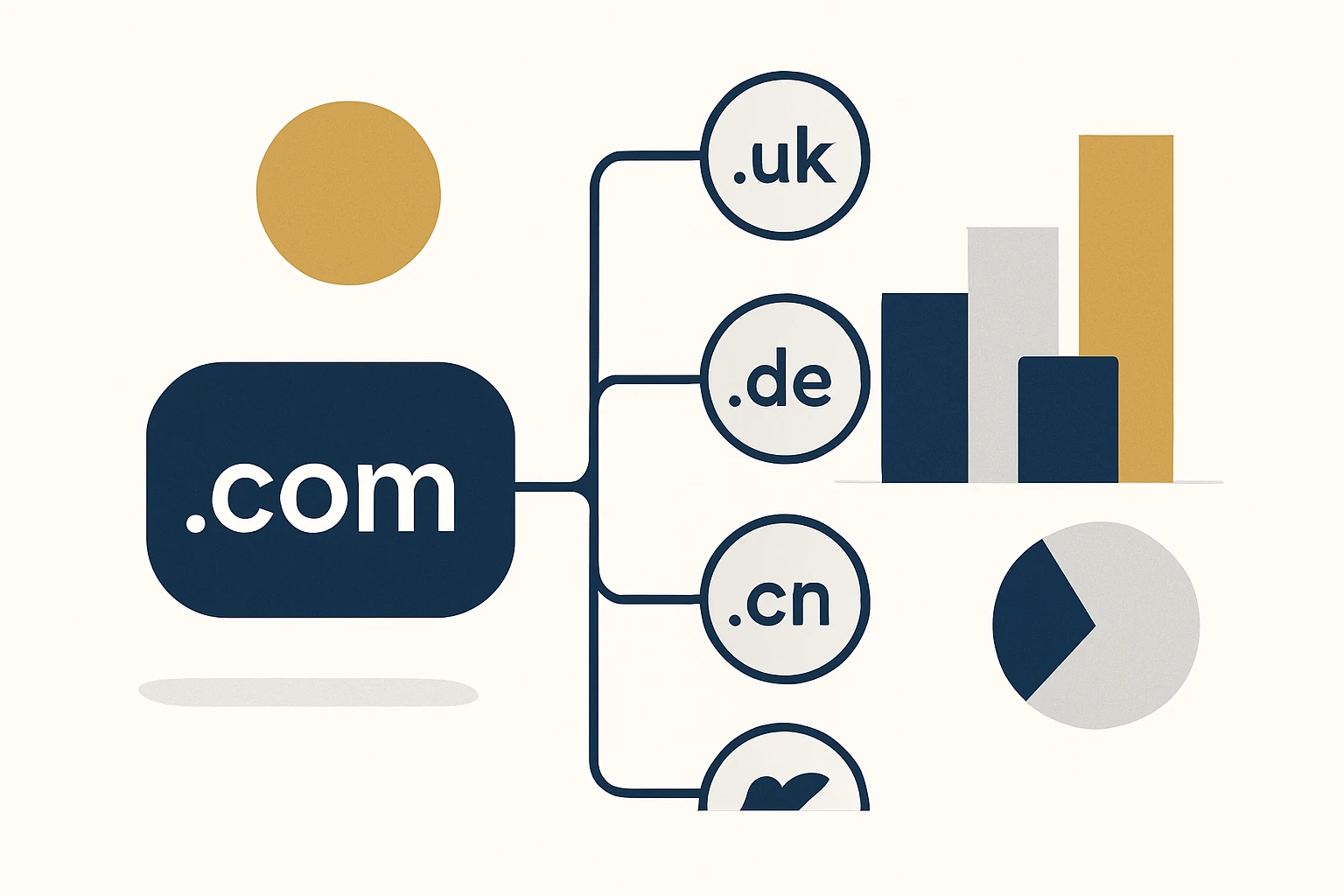
- Regional and product alignment: Geographic TLDs (like .uk, .de, or city-specific TLDs) can reinforce market-specific campaigns and increase local trust, a point echoed in ICANN’s ongoing exploration of branding opportunities through new gTLDs. ICANN New gTLD Program.
- Rights protection and dispute risk: As brand portfolios expand, so does exposure to disputes. WIPO’s RPM framework emphasizes the need for documented trademark rights and a proactive strategy to respond to challenges. WIPO Domain Name Disputes.
- Acquisition strategy: Some premium domains may require confidential negotiation or a structured brokerage approach. This is where a premium domain brokerage practice can be a critical capability, alongside internal governance.
- New gTLDs as strategic assets: The 2026 round and related initiatives push brands to consider personalized, brand-specific TLDs as part of a longer-term strategy for digital identity. For observers, ICANN’s detailed guidance is essential reading. New gTLD Program.
In practice, brands often start with a defensible baseline (a core set of high-value domains) and gradually expand into regional or product-specific extensions as campaigns justify the cost and complexity. The growth trajectory is not linear, it’s data-driven and iteration-heavy, with renewal discipline and risk management at the core.
Expert insight and common mistakes
Industry observers consistently note two themes when advising on domain portfolios. First, a disciplined, layered approach reduces long-run risk and lowers total cost of ownership. Second, a misalignment between brand strategy and domain acquisitions invites avoidable conflicts and expenses. An analytics-driven domain strategist recently summarized the reality this way: “Diversification should align with brand architecture and market strategy, not simply chase every new extension.” This perspective informs why the domain portfolio management function must sit at the intersection of brand governance, legal, and digital strategy.
There are clear limitations and common mistakes to avoid:
- Over-diversification: Expanding too broadly without clear strategic value inflates maintenance costs and creates governance complexity. Start with high-priority domains and phase in additional extensions as product lines grow.
- Under-investment in RPMs: If RPMs are weak, disputes can escalate quickly or go unmanaged, undermining the portfolio’s defensibility. A formal RPM framework linked to trademark rights is essential.
- Neglecting confidential acquisition workflows: For premium names, a strategic, discreet negotiation plan can prevent signaling that drives up price or creates suboptimal terms.
External market data supports the premise that the DNS landscape remains dynamic. As brands consider better positioning via TLD strategy, a data-informed approach - backed by industry briefings and policy developments - helps inform decisions about which extensions to pursue and which to deprioritize. For example, Verisign’s quarterly updates show ongoing growth and renewal dynamics across all TLDs, underscoring the importance of a steady, risk-aware portfolio approach. Verisign DNIB Q1 2025 and ICANN’s ongoing program updates provide essential context for any global brand contemplating strategic TLD choices.
Practical integration: a structured playbook for confidential acquisitions
One of the most sensitive aspects of portfolio management is acquiring premium domains with minimal market disruption. A practical workflow includes the following steps, which align with best practices in confidential domain acquisition and premium brokerage services:
- Baseline inventory: Identify core brand terms, market priorities, and potential defensive extensions that align with brand architecture.
- Market intelligence: Assess availability, potential exclusivity, and acquisition feasibility for high-value domains. This is where a brokerage can provide access to off-market opportunities while preserving confidentiality.
- Valuation and ROI modeling: Estimate renewal costs, transfer fees, and potential uplift from regional campaigns or product launches. Prioritize domains with clear strategic payoffs.
- Negotiation framework: Establish guardrails for price, terms, and confidentiality. A structured approach improves outcomes and reduces negotiation fatigue.
- Rights protection alignment: Integrate RPMs with the new additions, ensuring brand protection policies cover the expanded portfolio.
- Operational integration: Onboard new domains into DNS, hosting, and monitoring tooling, implement automatic renewal reminders and risk alerts.
For brands evaluating the economics of growth through new domains, the pricing and service options from digital asset advisory and domain brokerage firms can be decisive. See the client’s global TLD resources for a practical starting point and pricing considerations. Global TLDs and pricing provide a concrete reference for scope and cost expectations as you build a diversified portfolio.
Limitations or trade-offs: what to watch for
Even with a robust framework, several limitations require attention:
- Limited availability of premium names: The most valuable terms are often already registered or owned by others, which can constrain the pace of growth. A disciplined broker-led approach can uncover off-market opportunities, but it requires time and capital.
- Maintenance overhead: A larger portfolio demands governance, monitoring, and renewals. Automating these tasks is essential to avoid lapses and inadvertent disputes.
- Strategic misalignment: Introducing a new TLD without a clear empirical case (campaigns, product lines, or regional strategy) can dilute brand resonance and waste budget.
- Policy and regulatory shifts: As ICANN evolves and new gTLD rounds unfold, brand strategy must be adaptable to regulatory changes and policy RPMs. Ongoing education and policy tracking are necessary.
To stay on the right side of these trade-offs, a periodic review cadence - at least quarterly for large portfolios - helps ensure alignment with brand objectives, legal risk posture, and budgetary constraints.
Structured block: quick-start framework you can apply today
Use the following compact framework to translate the concepts above into an actionable plan for your organization. It’s designed to support decision-making during budget cycles and quarterly strategy reviews.
- Define primary brand extensions: Select 3–5 high-value extensions (including at least one country-code TLD if market-specific presence is important).
- Assess risk exposure by market: Identify regions with higher risk of cybersquatting or brand confusion, and prioritize those domains for protection.
- Set a disciplined acquisition pace: Limit confidential acquisitions to a fixed quarterly budget and escalate only when ROI indicators are clear.
- Institute RPMs and governance: Tie new acquisitions to trademark rights, monitoring, and dispute response readiness.
- Monitor performance: Track campaign lift, local market engagement, and total cost of ownership to justify ongoing investments.
For organizations seeking a longer runway, the framework also supports scenario planning for future rounds of new gTLDs, as ICANN continues to evolve the brand-identity potential of the DNS. The 2026 Round documents offer a roadmap for those who want to formalize their long-range domain strategy in line with corporate growth objectives. New gTLD Program.
Conclusion: a disciplined, growth-minded approach to global domains
Brand resonance and digital presence increasingly depend on a portfolio strategy that spans beyond .com while staying aligned with brand architecture, regional needs, and business goals. A structured, three-layer framework - strategic foundation, tactical deployment, and operational management - enables brands to protect against risk, unlock international opportunities, and manage a dynamic DNS landscape with clarity. By combining rigorous governance, data-driven decision-making, and confidential, expert acquisitions when necessary, brands can build a durable, scalable domain portfolio that supports growth without compromising control.
As the DNS ecosystem continues to evolve - driven by policy developments, new gTLDs, and changing consumer expectations - working with a domain brokerage and digital asset advisory partner can turn complexity into advantage. The result is a portfolio that not only guards the brand but also accelerates its global reach and market impact.