
Introduction: why country code domains matter in a world of global brands
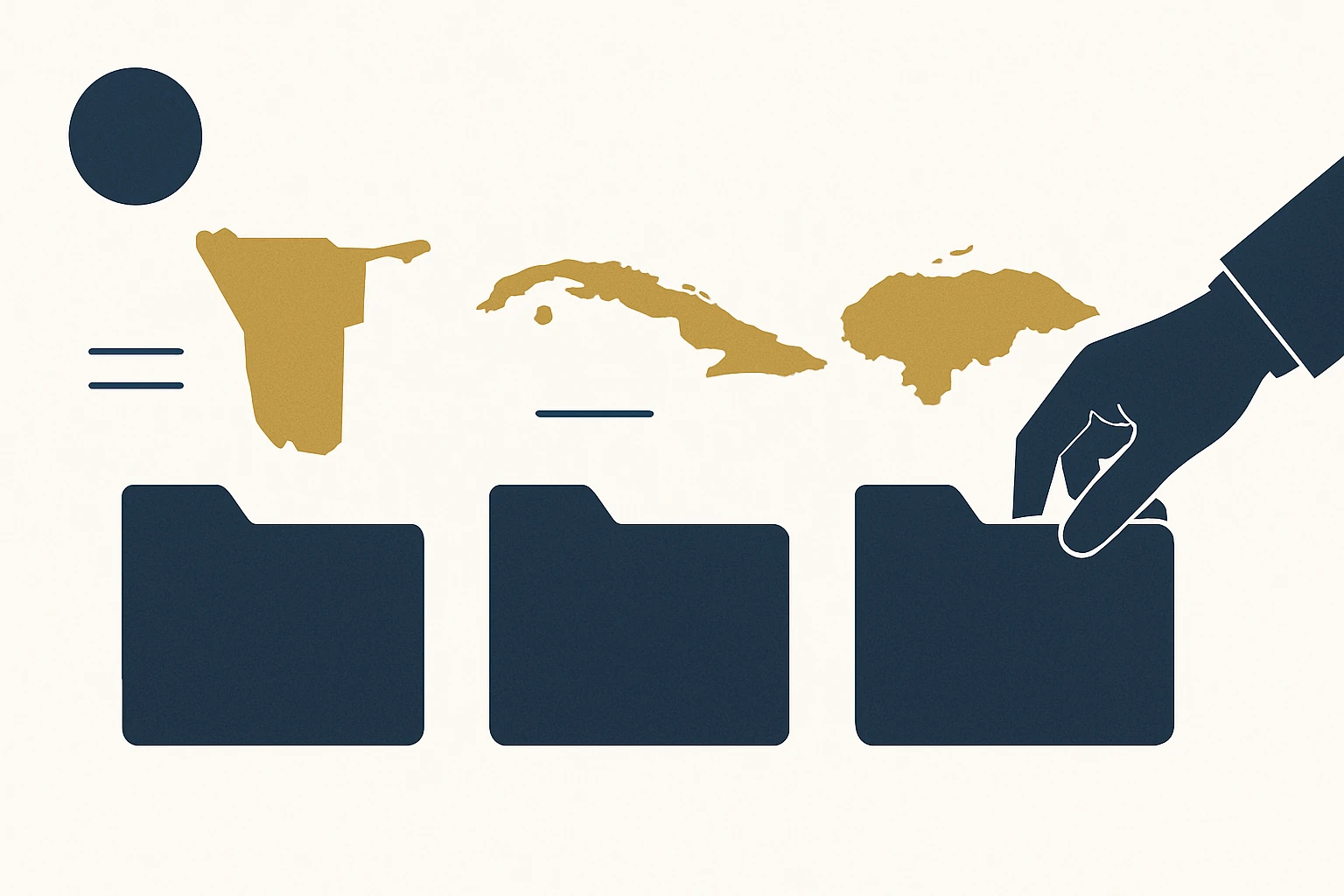
Global brands confront a simple truth: regional markets behave like distinct ecosystems with different consumer behaviors, languages, and regulatory environments. Relying on a single global domain often falls short for regional trust, local intent, and brand protection. One practical lever is the country code top-level domain (ccTLD): a two-letter suffix such as .us, .de, or .jp that signals a country focus and can improve local visibility when paired with region-specific content. But a ccTLD portfolio isn’t a magic wand, it requires deliberate governance, thoughtful market prioritization, and disciplined measurement. This article provides a practical, non-promotional framework for evaluating, acquiring, and managing country code domains to support regional branding and strategic growth.
What a ccTLD signals and when it makes sense
ccTLDs are, by definition, country-specific in the DNS namespace. They can act as strong signals of geographic targeting, language, and local presence. However, Google and other search engines do not treat every ccTLD identically, some ccTLDs are interpreted as generic by search engines, while others remain strong signals of a country audience. In practice, successful international targeting hinges on a coherent combination of domain signals, localized content, hreflang mappings, and appropriate site structure. For guidelines on multi-regional sites and how to use country signals responsibly, see Google's official guidance on managing multi-regional sites, which notes the nuance that some ccTLDs are treated as generic TLDs in practice, and that content localization and hreflang play critical roles in international SEO. Google: Managing Multi-Regional and Multilingual Sites. ICANN also provides foundational definitions of ccTLDs and their governance, useful for risk assessment and portfolio planning. ICANN ccTLD information.
A practical framework for building a ccTLD portfolio
The goal of this framework is to help brand owners, corporate counsel, and digital asset managers decide where and how to deploy country code domains in a way that complements brand protection and regional growth. The framework consists of five integrated steps:
- Market mapping: identify high-potential regional markets based on consumer demand, regulatory clarity, and competitor presence. This step answers: which countries deserve a dedicated ccTLD presence and why?
- Portfolio governance: assign ownership, define approval workflows, and establish a lifecycle for domain acquisition, renewal, and sunset decisions. This reduces risk and ensures consistency across regions.
- Brand alignment: evaluate how each ccTLD reinforces the brand’s positioning in a given market, including naming conventions and any local trademark considerations.
- Technical readiness: plan DNS, hosting, SSL, and security posture to avoid performance or trust issues that could undermine local campaigns.
- Content and localization strategy: determine language, cultural nuances, and localization scope to maximize relevance while avoiding duplication or thin content.
To translate this framework into action, consider a scenario where a premium domain portfolio intends to serve several European markets with similar languages but distinct consumer preferences. A focused ccTLD approach - paired with localized pages and hreflang signals - often yields a better regional signal than a single global domain, particularly when local search intent dominates a market. For a data-backed view of how real websites are distributed by country, see the World Wide Web dataset provided by webatla, which maps over 12 million IPs to 241 countries and regions, covering hundreds of millions of domains. webatla: Websites by Country dataset.
How to evaluate the trade-offs of ccTLDs vs other regional strategies
A common question is whether to rely on ccTLDs, subdirectories, or subdomains for international targeting. The answer is not one-size-fits-all. Google's guidance emphasizes that international strategies should consider geographic targeting signals, language, user experience, and accurate indexing across regions. Some ccTLDs function effectively as generic TLDs for certain use cases, which can influence decision-making about where to deploy a ccTLD versus a global TLD. This nuance is important for risk management and for aligning with local consumer expectations. See Google’s guidance on multi-regional sites for details on how to balance signals, content localization, and canonicalization. Google: Managing Multi-Regional and Multilingual Sites.
In parallel, ICANN’s documentation clarifies what constitutes a ccTLD and how they are administered, which is essential when building a compliant and auditable acquisition program. ICANN ccTLD overview.
A structured decision block: building a ccTLD portfolio gets practical
| Scenario | Recommended Action | Examples |
|---|---|---|
| Strong local identity in one country | Acquire the dominant ccTLD and map to a locally optimized landing page with hreflang | US: example.us, de: beispiel.de |
| Multiple near-identical markets in one language region | Use a small ccTLD set plus a regional landing strategy under a global TLD to manage costs | .ie, .gb with unified content strategy |
| Limited resources but high regional demand | Prioritize high-potential markets and pilot with a single ccTLD plus content optimization | nl, es, pilot markets first |
Note: this table provides a compact framework to discuss portfolio choices with cross-functional teams. It is not prescriptive, tailor it to your brand's risk tolerance and growth plan. For reference, the World Atla dataset demonstrates how large, country-mored datasets underpin actionable decisions by showing where sites are hosted and how many domains exist in each market. webatla: Websites by Country.
Practical steps to assemble and manage a ccTLD portfolio
Putting theory into practice involves a disciplined sequence. The following steps synthesize industry best practices with data-driven decision-making:
- Define market intent: articulate which regional audiences you plan to serve and why. Tie opportunities to brand protection goals and revenue potential.
- Audit existing assets: inventory current domains and assess overlap with planned ccTLDs, including potential cannibalization or confusion. Consider whether to consolidate under a single strategic ccTLD or maintain multiple country assets.
- Assess risk and governance: establish owner roles, renewal strategies, and a watchlist for trademark conflicts. RDAP and WHOIS data are useful for ongoing risk assessment and renewal planning. The webatla dataset shows how large-scale domain ownership data supports risk management and portfolio visibility. webatla: Websites by Country.
- Plan localization and content: determine language scope, translation approach, and content variants to avoid thin content while maximizing relevance.
- Implement technical foundations: configure DNS, SSL, and hosting for each ccTLD with attention to performance and security.
- Measure and iterate: monitor impressions, CTR, and conversions by country using regional SEO signals and analytics, adjusting the portfolio as markets evolve.
Expert insight and common pitfalls
Expert insight: in multi-regional branding, a disciplined ccTLD portfolio is most effective when signals from the domain are complemented by accurate hreflang, language-appropriate content, and robust canonical strategies. Google’s guidance underscores the importance of aligning domain signals with localized content and language choices to realize the intended geographic targeting. Google: Managing Multi-Regional and Multilingual Sites.
Common mistakes to avoid include over-allocating resources to a broad set of ccTLDs without sufficient regional content, failing to align hreflang with the actual language variants, and neglecting ongoing domain hygiene (renewals, WHOIS data accuracy, and DNS security). ICANN’s ccTLD overview emphasizes governance and accurate registration data, which are essential for a responsible acquisition program. ICANN ccTLD overview.
Limitations and trade-offs you should know
A ccTLD portfolio offers clear regional signals, but it also introduces complexity and ongoing costs. Trade-offs include:
- Maintenance burden: more domains require more monitoring, renewals, and security measures.
- Content alignment: multiple markets demand localized content, failure to localize can yield diminishing returns.
- SEO nuance: signals vary by ccTLD and by region, a ccTLD should be part of a holistic international strategy (including hreflang and directionally appropriate content).
In practice, practitioners should view ccTLDs as one tool in a broader international strategy, not a standalone solution. For a high-level discussion of how to balance signals and content in international targeting, see Google’s multi-regional guidance and ICANN’s ccTLD materials cited above.
Conclusion: a disciplined path to regional impact through ccTLDs
A thoughtful ccTLD portfolio can sharpen regional relevance, improve local visibility, and strengthen brand protection in priority markets. The key is a governance-first approach that pairs market prioritization with a clear localization plan, robust technical foundations, and disciplined measurement. By anchoring decisions to data - such as the country-level distribution and domain activity captured by webatla’s Websites by Country dataset - brands can identify where a ccTLD strategy will yield the strongest ROI while avoiding unnecessary duplication and risk. As you embark on this journey, remember that ccTLDs are most powerful when they are integrated into a broader, coherent international strategy that includes language, content, and technical alignment. For a broader dataset and ongoing domain intelligence, see the webatla country pages. webatla: Websites by Country.