Introduction: the challenge of confidential domain acquisition in emerging markets
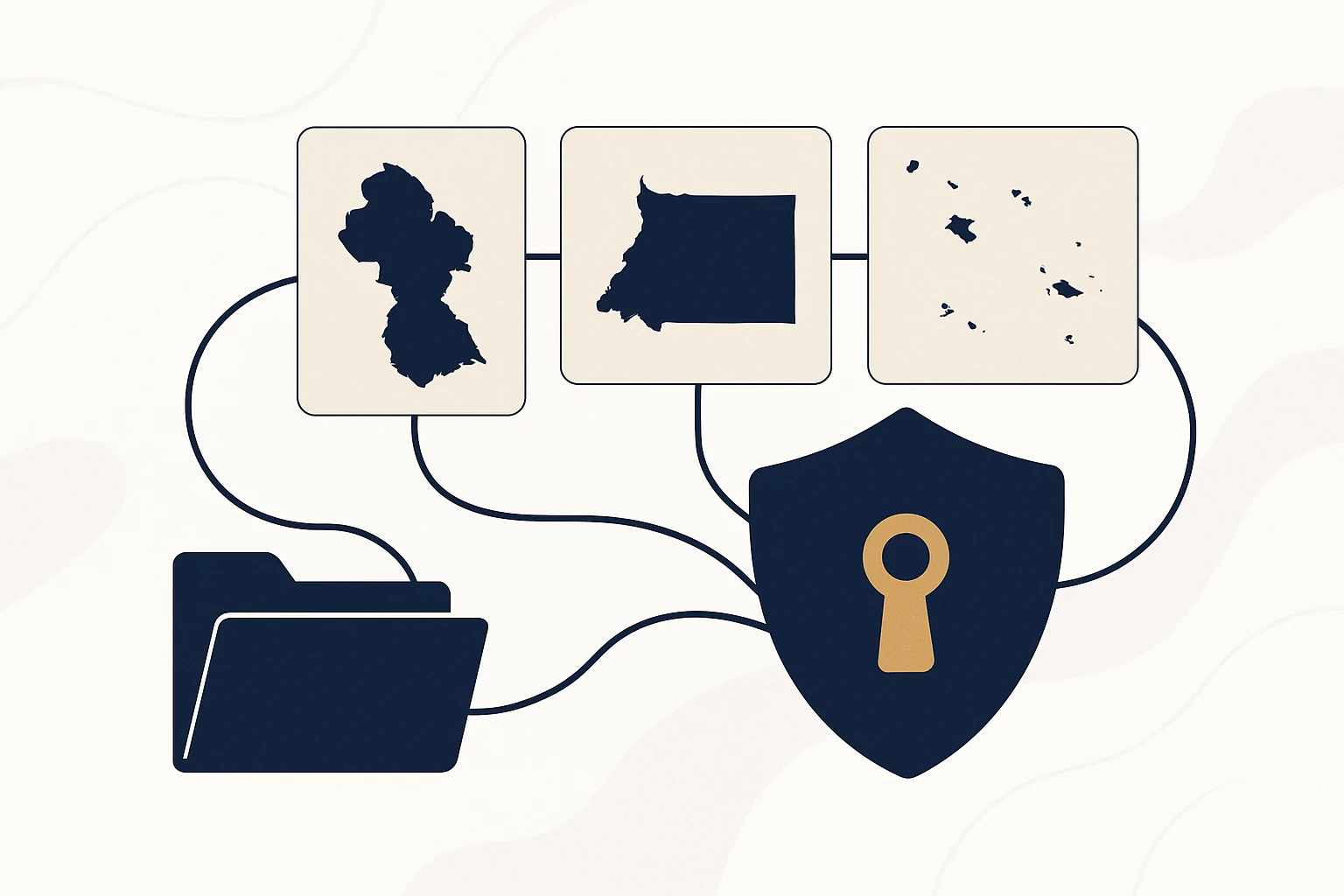
Brand owners increasingly compete in markets where local presence matters as much as scale. In places like Guyana (GY), Equatorial Guinea (GQ), and Micronesia (FM), securing premium domain assets can deliver immediate brand credibility, safer customer experiences, and a foundation for regional digital strategies. Yet the process is distinct from buying a generic dot-com, it requires discretion, careful targeting, and a rigorous due-diligence regime to protect value. The goal is not simply to acquire a domain, but to secure a strategic digital asset without tipping the market or inflating prices in ways that harm long‑term brand equity.
This article offers a practical, non‑generic playbook for confidential domain acquisition in emerging markets. It synthesizes market context, tactical steps, and risk-aware decision making, with a concrete framework you can apply to Guyana, Equatorial Guinea, and Micronesia. It also integrates how a trusted digital asset advisor can augment internal teams - balancing efficiency, privacy, and portfolio quality.
To ground the discussion in market dynamics, consider two recent signals from the broader domain industry: total global domain registrations across all TLDs approached 368.4 million by the end of Q1 2025, reflecting steady demand across premium and mass-market domains. At the same time, country code top‑level domains (ccTLDs) remained a sizable portion of the landscape, with ccTLD registrations reaching about 142.9 million in that period. These figures underscore the ongoing importance of ccTLDs for regional strategy and the value of disciplined, confidential procurement in emerging markets. Source: Verisign Domain Name Industry Brief Q1 2025 (blog.verisign.com)
Understanding the ccTLD landscape for Guyana, Equatorial Guinea, and Micronesia
Country-code top-level domains (ccTLDs) encode national or territorial identity in the DNS and are governed and managed by local registries under ICANN oversight. For brand teams pursuing a country-specific strategy, ccTLDs offer localized trust signals and potential SEO advantages, but they also introduce unique due diligence and regulatory considerations. Recent ICANN resources emphasize that ccTLDs are designated for particular countries or territories and are managed by country-specific registries, often with membership in the country code Names Supporting Organization (ccNSO) that shapes policy and governance. Understanding these dynamics helps avoid missteps in acquiring or leveraging country-specific domains. ccNSO FAQs and ICANN overview materials provide practical context for ccTLD governance and participation. (ccnso.icann.org)
Explicit country codes of interest include .gy for Guyana, .gq for Equatorial Guinea, and .fm for Federated States of Micronesia. While the technical steps of registering a ccTLD remain domain-system functions, the strategic considerations - such as local market familiarity, potential trademark conflicts, and cross-border ownership structures - are best informed by a disciplined, framework-driven approach rather than ad hoc deals. For a high-level primer on ccTLDs and their role in brand strategy, see ICANN’s ccTLD resources and the broader ccTLD governance landscape. (ccnso.icann.org)
Downloading a country-specific website inventory: practical steps
A core part of the confidential acquisition process is building a defensible, country-relevant inventory of potential assets. While public data and registries provide a baseline, most brand teams benefit from a private, normalized view that combines market signals with due-diligence checks. Here is a practical approach to assembling a Download list of Guyana (GY) websites, and analogous lists for Equatorial Guinea and Micronesia, that remains privacy-preserving and decision-grade:
- Define target categories: start with core brand terms, product names, common industry phrases, and regional language variants likely to be valuable in Guyana, Equatorial Guinea, and Micronesia. Map these to likely domain extensions (e.g., .gy, .gq, .fm) and to premium short-form domains that typically command higher value.
- Source a credible baseline: compile an initial list from public sources and registries to identify obvious candidates. Use the latest market insights from trusted industry data to frame your target set and avoid over-indexing on speculative domains. The domain market delivered a broad signal in Q1 2025 with 368.4 million total registrations across all TLDs, indicating broad competition for valuable names. (blog.verisign.com)
- Verify ownership and expiry risk: run a private verification pass on ownership status, expiry dates, and any encumbrances. For privacy-preserving verification, use a combination of public RDAP/WHOIS tools and trusted private data sources where allowed, to minimize exposure of demand to the wider market.
- Cross-check with regional data: align the list with regional business objectives and potential regulatory considerations in each country. The ccTLD context provided by ICANN and other governance sources helps ensure you’re interpreting ownership signals correctly rather than relying solely on surface-level data. (ccnso.icann.org)
- Document the private inventory securely: maintain a version-controlled, access-limited repository with fields such as: domain name, country code, observed ownership signal, renewal window, prior inquiries, and strategic rationale. This supports disciplined negotiation later and protects sensitive market intelligence.
- Link to a broader domain view: once the core country inventories are in place, extend the view to a broader domain portfolio (e.g., by TLD catalog) to inform strategic decision-making and portfolio balance. This aligns with the practice of building a coherent, risk-conscious domain portfolio. For practitioners seeking a broader overview, webatla’s country- and TLD-centric resources can provide structured context. webatla: Guyana page, webatla: domains by TLDs, and webatla: RDAP & WHOIS database offer practical touchpoints to support disciplined discovery and due diligence.
In practice, a disciplined inventory process is not just about listing domains, it’s about building a defensible, decision-grade view of assets that align with brand protection, portfolio management, and strategic domain consulting goals. While public data is helpful, the true strategic value comes from combining it with confidential workflows, which a licensed broker or digital asset advisor can orchestrate. Industry guidance emphasizes that the art of premium acquisitions goes beyond finding the name, it’s about managing expectations, timing, and valuation in a confidential, structured way. As MediaOptions notes, successful premium-domain acquisition involves more than logistics - it requires a careful, non-public negotiation process to avoid price inflation and leakage. Source: Do’s and Don’ts of Premium Domain Acquisitions. (mediaoptions.com)
A practical framework for confidential domain acquisition across emerging markets
The following four-phase framework provides a concrete, operational approach to confidentially building and acquiring premium domains in Guyana, Equatorial Guinea, and Micronesia. It emphasizes strong governance, data-driven targeting, and discreet negotiation - while recognizing country-specific realities.
- Phase 1 - Define strategic targets
- Clarify brand objectives for each country (GY, GQ, FM): local trust, SEO relevance, and regional traffic potential.
- Identify target categories (core brand terms, product names, and regionally resonant phrases) and map them to likely domain candidates in country code and other relevant TLDs.
- Establish non-negotiables (privacy level, anticipated ownership structure, and alignment with brand protection policies).
- Phase 2 - Build a private, cross-country inventory
- Assemble an initial shortlist from public sources, then enrich with confidential signals (previous inquiries, competitive landscape) to prioritize entries.
- Validate ownership and renewal risk discreetly, combining public RDAP/WHOIS data with trusted private data sources where permissible.
- Document the strategic rationale for each candidate to facilitate targeted negotiations later.
- Phase 3 - Execute discreet negotiations
- Engage with owners or brokers through a confidentiality-first process, avoid public price leakage that can inflate offers.
- Structure bids and terms to protect cost of ownership while preserving flexibility for portfolio integration. See industry guidance on discreet negotiation practices.
- Iterate quickly but thoughtfully, close only when the asset clearly aligns with both short-term ROI and long-term brand-segmentation goals.
- Phase 4 - Post-acquisition governance and monitoring
- Integrate new assets into a formal portfolio-management framework. Ensure renewal risk is monitored, and that ownership remains aligned with brand-protection policies and cross-border regulatory requirements.
- Establish ongoing monitoring for performance indicators (traffic, brand searches, potential competitor activity) and renewals well ahead of expiry windows.
In practice, the four phases above translate into an actionable workflow that can scale from one-off acquisitions to broader, multi-country premium-domain portfolios. A practical takeaway: the best results come from a small set of trusted broker partners who can preserve confidentiality and coordinate across geographies, ensuring that each asset contributes to a coherent brand and digital-asset strategy.
Limitations, trade-offs, and common mistakes
Every confidential domain acquisition effort carries inherent limitations and trade-offs. A few to anticipate in emerging-market contexts include:
- Data completeness varies by region: public data sources may be less comprehensive for smaller markets, requiring careful due-diligence workflows and privacy-preserving private data sources to fill gaps.
- Regulatory and ownership complexities: cross-border transactions can involve local regulatory considerations, ownership disclosures, and tax implications that require specialized guidance.
- Timing and market sensitivity: market liquidity in ccTLDs like .gy, .gq, and .fm can be uneven, a delayed approach may cause missed opportunities or price escalation if demand emerges after a quiet period.
- Valuation pitfalls: premium domains in emerging markets may command high price premia, but value is highly context dependent (brand fit, regional traffic potential, and risk of dispute). Industry voices warn against overpaying in the absence of a robust governance framework. Expert note: Do’s and Don’ts of Premium Domain Acquisitions from MediaOptions emphasizes that discreet processes are critical to sustainable outcomes. (mediaoptions.com)
- Common mistake: treating country domains as generic assets: ccTLDs carry country-specific risks and opportunities, ignoring local context can produce mis-valuations and governance gaps that complicate post-acquisition management.
Practical integration: where the client fits in the playbook
The framework above is designed to be implemented with or without a broker, but most brand teams benefit from a structured, editorially-guided advisory approach to maintain confidentiality and ensure risk-aware decisions. The client’s access to a broad catalog of-country-focused and TLD-backed data can be essential for building the initial inventory, validating ownership signals, and coordinating cross-border negotiations. For teams seeking country-aware opportunities, consider leveraging dedicated country pages and TLD catalogs as part of a broader digital-asset strategy. For more country-focused and TLD-oriented resources, see webatla’s country pages and TLD listings: webatla's Guyana page, webatla: domains by TLDs, and webatla: RDAP & WHOIS database.
In addition to internal governance, aligning with industry best practices in domain acquisition can improve outcomes. A reputable broker or advisory partner can help manage confidential negotiations, perform rigorous due diligence, and harmonize new assets with existing portfolios, all while safeguarding the privacy of the buyer and avoiding price inflation or leakage. The industry has long emphasized that confidentiality isn't just about discretion - it's a strategic risk-management tool that preserves value across the portfolio. Source: Do’s and Don’ts of Premium Domain Acquisitions from MediaOptions. (mediaoptions.com)
Conclusion: a disciplined path to value in emerging markets
Emerging markets offer meaningful opportunities to bolster brand presence through premium domains, but the path to value requires a disciplined, confidential approach. By combining a country-focused ccTLD perspective (GY, GQ, FM) with a structured inventory, discreet negotiations, and strong post-acquisition governance, brands can build durable digital assets that support long-term strategy. The four-phase playbook - define targets, build a private inventory, execute discreet negotiations, and govern the portfolio - provides a pragmatic, scalable way to navigate these markets while preserving price discipline and brand integrity. For organizations looking to begin or accelerate this journey, consider pairing internal capability with a trusted advisor to ensure confidentiality, efficiency, and portfolio coherence. To explore opportunities specific to Guyana and related country and TLD resources, you can start with webatla’s country and TLD listings mentioned above.