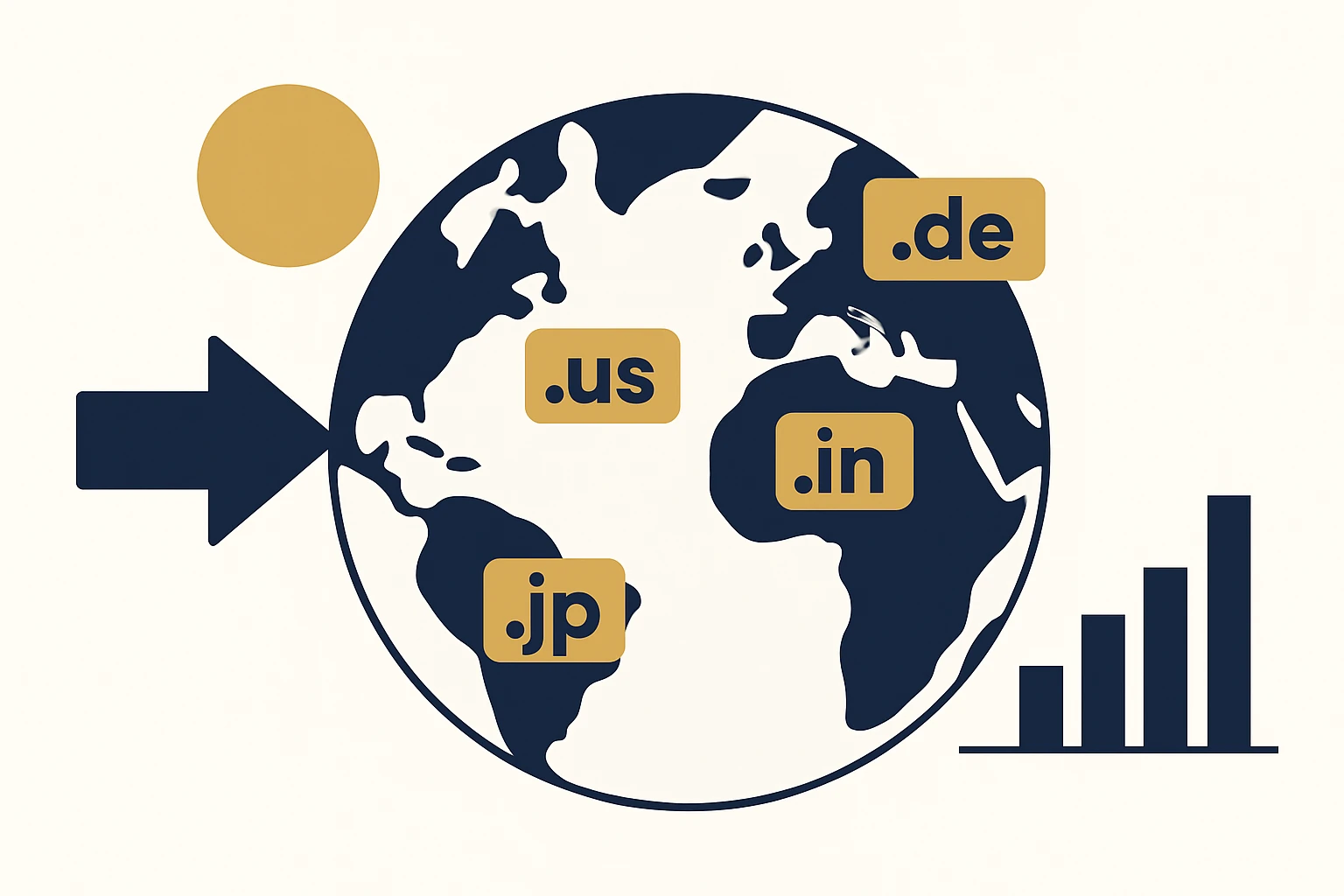
Global brands increasingly depend on a carefully crafted country-by-country domain presence to win trust, local relevance, and measurable growth. The question is not merely which domains to acquire, but how to structure a portfolio that balances local signals with brand coherence, while remaining scalable and manageable across markets. This article outlines a practical framework for building a country-focused domain portfolio, grounded in current search and branding realities, and it shows how to translate that framework into concrete decisions for a multinational brand or a growth-focused company.
As brands expand into new markets, they often confront divergent consumer expectations, regulatory environments, and competitive landscapes. A structured country-domain strategy helps align your online presence with each market’s realities, while preserving a clear global identity. In practice, this means choosing between country-code top-level domains (ccTLDs), subdomains, or subdirectories, and pairing those choices with robust localization, technical SEO, and protection of your brand assets. The decision is not fixed, it should reflect your market priorities, internal capabilities, and the level of local trust you need to build. This nuance is widely discussed in contemporary international SEO guidance and reflects the evolving nature of geo-targeting in search.
Why country-focused domains still matter in 2026
Two forces drive the ongoing relevance of country-focused domains: signals that search engines use to geo-target content, and the local trust brands gain when their digital presence feels native to a country or region.
Local signals and trust: For many markets, ccTLDs continue to serve as clear indicators of country-targeting and can help capture local search visibility. Research and industry commentary have repeatedly documented the strong performance of ccTLDs in local SERPs, particularly when paired with regionally tailored content and links. This dynamic suggests that a well-structured ccTLD portfolio can meaningfully improve market-specific visibility, especially when a brand has a strong local strategy and dedicated localization resources. Source: Study: 56% of Google’s top three positions are held by ccTLDs.
Geotargeting and hreflang: Search engines rely on a combination of signals to determine the most relevant country and language for a user. Google’s official guidance emphasizes the use of hreflang annotations and other labeling methods to signal regional variants, while also noting that multiple delivery methods (ccTLDs, subdomains, and subdirectories) can work when implemented correctly. This means your country-domain strategy should integrate language and region signals, canonicalization, and clear audience targeting. Google Search Central: Managing Multi-Regional Sites.
Implementing country-targeted domains is more than a branding exercise, it’s a practical SEO choice with real-world tradeoffs. A ccTLD approach can maximize local trust and search visibility, but it increases operational complexity and requires ongoing localization, market-specific content, and region-specific link-building. In practice, many brands balance these benefits against the cost and effort of managing separate properties across dozens of markets. Source: International SEO: Everything you need to know.
For brands evaluating this path, it’s helpful to acknowledge a broader industry trend: there is no single universally "best" solution. The optimal structure depends on the audience, product category, and internal capabilities. Some large brands successfully deploy ccTLDs for certain markets while consolidating others under a single gTLD with smart localization, hreflang, and canonical signals. This pragmatic stance reflects Google’s evolving guidance and the fact that search ecosystems are increasingly capable of delivering localized results through multiple architectural choices. Source: The Egg – International SEO Best Practices for Domain Strategy.
Choosing your international structure: ccTLDs vs subdirectories vs subdomains
When expanding globally, brands typically consider three architectural approaches, each with distinct advantages and challenges. The decision should be guided by market priorities, internal bandwidth, and cost considerations. Key tradeoffs include control, local trust, and the complexity of content operations.
- ccTLDs (country-code top-level domains) signal geographic targeting and can maximize local trust and SERP visibility in many markets. They also enable country-specific branding and domain-level analytics. However, they require distinct content, localization workflows, and ongoing management for each market. A 2025 industry overview notes that ccTLDs can offer strong local performance but come with higher operational overhead. Source.
- Subdirectories on a single gTLD (for example, example.com/fr/) centralize authority and simplify governance, while enabling language/region targeting through URL structure and hreflang. This approach can reduce maintenance overhead but may require more sophisticated localization and backlink strategies to achieve comparable local visibility. Google’s guidance highlights that subdirectories, when properly configured, remain a valid path to international reach. Source.
- Subdomains for each locale (fr.example.com, de.example.com) offer a middle ground, granting some localization autonomy while keeping a shared primary domain. Subdomains can complicate authority distribution across the site, so they require deliberate internal linking and consistent global SEO governance. The choice between subdomains and ccTLDs often hinges on the scale of the international program and whether you can sustain separate SEO teams for multiple regions. Source.
As part of this decision, consider brand protection and risk management. A diverse portfolio increases exposure to cyber risk and brand confusion if not coordinated. A robust governance model helps ensure consistency across markets, control over naming disputes, and alignment with regional regulatory requirements. A practical starting point is to map markets to objective outcomes (brand equity, conversions, or awareness) and then select the architecture that most efficiently achieves those outcomes. For brands seeking a guided, hands-on approach, WebAtLa's country-domain catalog provides a curated view of country-focused domains and related options, and WebAtLa pricing offers a framework for budgeting acquisition and protection efforts.
A practical roadmap: Building your country website list
To translate theory into action, consider a structured path that starts with market prioritization and ends with a measurable program. The following framework is designed to help brands assemble a country website list that is both strategic and actionable.
COUNTRY-PORTFOLIO CHECKLIST
- 1) Identify target markets – List where you plan to compete aggressively and where brand presence matters most to revenue and growth.
- 2) Map domain structure options – Decide whether ccTLDs, subdirectories, or subdomains best fit each market’s needs and your internal capabilities.
- 3) Align with localization strategy – Ensure language, tone, and cultural nuances are embedded in site content and UX.
- 4) Plan acquisition and due diligence – For each market, assess domain availability, dispute risk, and negotiation levers to secure the right names.
- 5) Implement hreflang and canonical signals – Design a robust international SEO scaffold so users see the right version in their locale while avoiding duplicate content issues. Source.
- 6) Build local authority – Plan country-specific link-building, partnerships, and content marketing that resonates with local audiences.
- 7) Govern and monitor – Establish governance for renewals, brand protection, and performance metrics, adjust investments as markets evolve.
This checklist is designed to be practical rather than theoretical. It foregrounds the need for local relevance, the realities of multi-market operations, and the administrative discipline required to sustain a global domain program. If you want a structured, editorially rigorous support system, consider engaging a domain advisory partner to help with portfolio construction, risk assessment, and ongoing optimization. For more concrete examples of country-by-country domaining in practice, explore WebAtLa’s country-domain catalog and pricing as starting points.
Practical use cases
Real-world scenarios help illustrate how a country-domain strategy translates into action:
- Consumer brand entering Germany and France – Use ccTLDs for Germany (.de) and France (.fr) to maximize local trust, paired with German and French content tailored to local consumer expectations. The approach may be complemented by hreflang mappings and a parallel strategy under a shared gTLD when scale requires broader reach. Industry analysis shows ccTLDs can deliver strong local signals, especially in markets with high brand trust in local domains. Source.
- SaaS company serving multiple regions – A hybrid model might deploy ccTLDs for high-priority markets while using subdirectories for others to optimize resources. Google’s guidance supports mixed architectures if localization and canonicalization are coherent. Source.
- Global retailer with localization across languages – A strategy that pairs a single global gTLD with language-specific subdirectories and hreflang can balance brand cohesion with regional relevance, particularly when the organization has centralized content production and regional marketing teams. This pattern aligns with contemporary international SEO guidance that emphasizes flexible URL structures and strong localization processes. Source.
Limitations and common mistakes
Even a well-conceived country-domain strategy can stumble if key pitfalls are ignored. Here are the most common issues and how to mitigate them:
- Over-reliance on ccTLDs without market readiness – ccTLDs are powerful signals, but they demand market-specific content, translation quality, and local link-building. Without these, the local advantage can erode. See guidance on international strategy tradeoffs and resource requirements. Source.
- hreflang errors and misconfigurations – Incorrect or missing hreflang annotations can cause duplicate content issues and mis-serving users. A key finding showed that a sizable share of international sites contain hreflang errors, underscoring the importance of correct implementation. Source.
- Google's evolving stance on ccTLDs – While ccTLDs historically carried distinct geo-signals, ongoing platform changes and guidance suggest a more nuanced, signal-based approach to localization. Brands should monitor updates and adapt their architecture accordingly. Source.
- Operational overhead and governance complexity – Managing multiple country properties increases maintenance costs and risk, many firms find a hybrid approach with selective ccTLDs and consolidated gTLDs to be most practical. Source.
Putting it into practice: a structured, editorial-ready framework
To translate the insights into a repeatable process, consider the following framework - designed to be executed across teams and geographies. It blends SEO discipline, brand governance, and market-specific insights, creating a coherent path from market assessment to ongoing optimization.
Framework: COUNTRY-PORTFOLIO CHECKLIST (repeatable across markets)
- Market prioritization – Rank markets by revenue potential, competitive intensity, and regulatory clarity.
- Domain-architecture decision – Choose ccTLDs, subdirectories, or subdomains per market based on capability and ROI targets.
- Localization program – Align content, currency, time zones, and legal terms to each country’s context.
- Acquisition and risk management – Screen and secure domain names with a plan for renewals, disputes, and backups.
- SEO scaffolding – Implement hreflang, canonicalization, and robust internal linking to prevent content duplication and ensure correct regional delivery.
- Authority-building – Invest in country-specific content marketing and local backlinks to strengthen market-specific visibility.
- Governance and measurement – Establish dashboards, renewal calendars, and risk controls to monitor performance and adapt allocations over time.
Adopting this framework helps ensure that your country-domain investments are connected to measurable business outcomes rather than existing as a purely theoretical exercise. If you’re seeking a vendor-agnostic, editorially rigorous approach to portfolio construction and ongoing optimization, consider working with a domain advisory partner who can help with due diligence, negotiation, and governance. For a practical starting point, explore WebAtLa’s country-domain catalog and pricing to understand the landscape and budgeting implications.
Conclusion
A robust country-domain strategy is not a silver bullet, but when designed with market priorities, branding discipline, and operational governance, it can unlock local trust and global reach in a scalable way. The optimal configuration is context-dependent: ccTLDs can offer powerful localization signals where the market demands them, combined with a thoughtful localization program and strong hreflang practices, they can form the backbone of a resilient international presence. As search ecosystems continue to evolve toward intent-driven localization, brands should remain pragmatic: build a country website list that reflects real market needs, invest in local content and authority, and maintain a governance model that keeps the portfolio coherent and auditable over time. For teams seeking a practical starting point and ongoing support, WebAtLa’s country-domain catalog can illuminate available paths and help structure a concrete acquisition plan.