Introduction
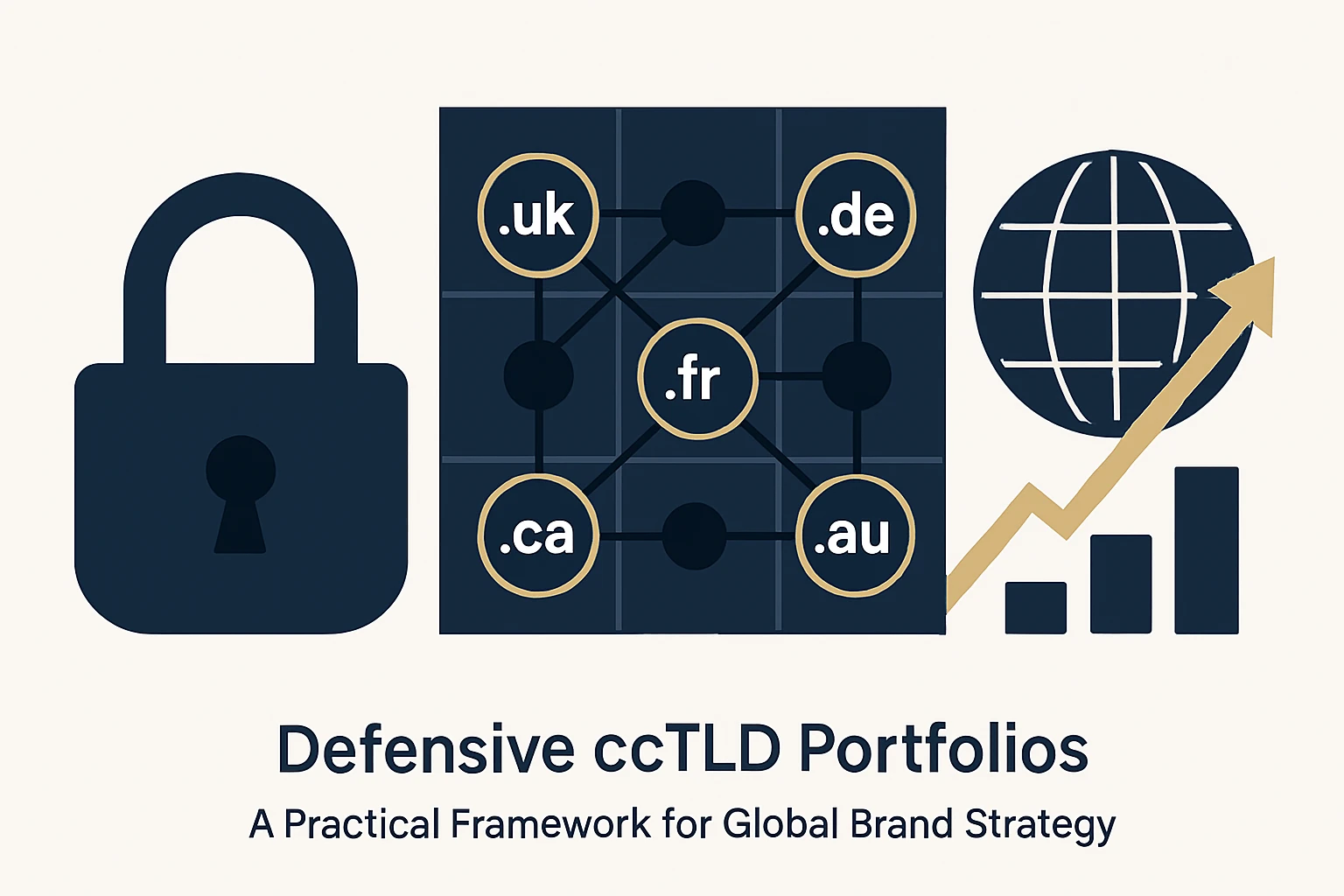
As global brands extend their reach, simply owning a .com domain is no longer sufficient to protect market position or earn local trust. A well-designed defensive country-code top-level domain (ccTLD) portfolio helps safeguard brands from cybersquatting, improves local relevance, and supports region-specific marketing and e-commerce strategies. Yet building and governing such portfolios is not trivial: it requires clear objectives, disciplined data, and governance capable of balancing risk, cost, and speed. This article presents a practical framework for evaluating, sourcing, and managing ccTLD assets - using a defensible, risk-aware approach that aligns with a premium domain brokerage and digital asset advisory perspective. For practitioners, the goal is to move beyond reactive acquisitions toward a strategic, measurable program that protects brand value across markets. WIPO ccTLD Best Practices emphasize structured dispute prevention and resolution as foundational to any ccTLD strategy, a cornerstone of the framework described here.
What ccTLDs are and why they matter for global brands
Country-code top-level domains (ccTLDs) are a country-or region-specific suffix such as .bd (Bangladesh), .lv (Latvia), or .rs (Serbia). For many brands, ccTLDs offer a signal of local relevance and trust that can be more impactful than a generic marketing approach alone. They enable localized content, regulatory alignment, and regional marketing campaigns without abandoning a global brand architecture. However, ccTLDs also come with governance, privacy, and dispute considerations that differ from generic TLDs. A thoughtful strategy weighs these trade-offs - balancing local credibility with the operational burden of managing multiple registries. Leading practitioners reference a mix of defensive registrations, shared ownership models, and well-defined dispute frameworks to minimize risk while remaining responsive to regional opportunities. Using ccTLDs for Global Brands: A Geo-Targeting Strategy provides a practical lens on when to deploy ccTLDs as part of a broader international branding program. ccTLD Policies also highlights how registry rules and brand protection objectives intersect in practice.
Framework: evaluating ccTLD opportunities (5-step decision model)
To transform ccTLD opportunities from speculative bets into a repeatable program, use the following five-step decision model. The model is designed to be data-driven, scalable, and compatible with a premium domain advisory workflow.
- Market relevance and brand fit - Assess how central a market is to your growth plan and whether a local ccTLD would meaningfully improve user perception, trust, or conversion in that market. Consider regulatory alignment, local consumer behavior, and search visibility impacts. This step answers: Is there credible demand for a local domain footprint?
- Regulatory and dispute risk - Map the regulatory environment, dispute mechanisms, and long-tail risk for each ccTLD (registrar rules, brand rights protection processes, and anticipated resolution timelines). WIPO’s best practices illuminate how to structure rights protection and dispute resolution to minimize disruption. WIPO ccTLD Best Practices.
- Operational capability and governance - Confirm you have the registry relationship, registry tooling, and internal governance to manage registrations (renewals, DNS management, privacy compliance, and data handling). This includes setting up dedicated teams or partners for ongoing administration, risk monitoring, and renewal cadence.
- Legal and brand risk management - Evaluate potential trademark conflicts, cybersquatting exposure, and rights protection mechanisms. Lexsynergy’s ccTLD policies offer practical insights into how brands navigate local enforcement regimes. ccTLD policies.
- Cost, ROI, and portfolio balance - Estimate total ownership costs (registration, renewal, privacy, and security), and compare against anticipated brand protection value, localized marketing benefits, and risk reduction. A defensible portfolio prioritizes high-ROI markets and limits overextension, preserving budget for gaps that truly move the needle.
Applying this framework creates a structured path from exploratory lists of country domains to a live, governance-driven portfolio. The framework is deliberately agnostic about market size, it emphasizes the discipline of evaluation and the governance discipline needed to manage a potentially expanding constellation of ccTLDs.
Bangladesh, Latvia, Serbia: market-context and decision considerations
While every market requires bespoke due diligence, Bangladesh (.bd), Latvia (.lv), and Serbia (.rs) offer a useful cross-section of regional dynamics - emerging growth, EU-adjacent markets, and accelerating digital adoption. A defensible ccTLD program for these markets should consider:
- The local trust signal a ccTLD provides in commercial contexts, particularly where consumer perception of local presence affects purchase or inquiry behavior. Local domains can improve click-through rates and dwell time when paired with locally optimized content and privacy disclosures aligned to regional standards.
- Regulatory and privacy considerations, including data protection requirements and registry-specific governance. EU-adjacent Latvia, for example, entails alignment with broader European privacy norms, while other markets may have different regulatory expectations.
- Strategic fit with your global brand architecture. If a market is critical to revenue or regional strategy, a carefully curated ccTLD footprint may deliver more durable brand protection and market presence than reactive acquisitions.
- Operational costs and risk management. Managing multiple ccTLDs adds renewal, DNS, and monitoring obligations that must be supported by scalable tooling and clear ownership.
In practice, brands often start with a targeted, high-value subset of ccTLDs and expand only as the governance framework proves effective and as regional opportunities mature. Data-driven market maps, sourced from reliable registries and data services, can support this planning. For ongoing data services, the RDAP & WHOIS database is a critical reference point for registration status, ownership history, and data hygiene - resources you can access through vendor portals such as the client’s RDAP/WHOIS offering. RDAP & WHOIS Database.
Structured block: a practical framework in action
The following framework blocks the decision process into repeatable steps you can apply to BD, LV, RS or any other market. Use it as your go-to rubric when assessing new ccTLD opportunities, and integrate it into your portfolio governance playbooks.
- Market relevance - Which markets are strategic for your brand growth in the next 12–24 months? What share of voice, search visibility, and conversion lift would a local ccTLD deliver?
- Risk mapping - Identify local dispute mechanisms, potential cybersquatting risk, and brand rights management needs. Map out the expected time-to-resolution and required legal resources.
- Operational readiness - Do you have the internal ownership, registrar relationships, and technical capability to manage the portfolio with consistent renewal, monitoring, and DNS hygiene?
- Cost of ownership - Build a TCO model (registration, renewal, privacy, security, monitoring, and potential dispute costs). What is the expected ROI in terms of risk reduction and local brand impact?
- Governance and review cadence - Establish quarterly reviews, escalation paths for disputes, and a policy for adding/removing ccTLDs based on market performance and risk metrics.
Limitations, trade-offs, and common mistakes
Every ccTLD program involves trade-offs. A few of the most common missteps include over-expansion without governance, insufficient data hygiene, and underestimating local regulatory complexity. A defensible framework avoids these traps by tying registrations to explicit business value, maintaining rigorous data sources, and implementing disciplined renewal and dispute-monitoring processes. WIPO’s guidance underscores the importance of anticipatory, rights-based protections to decrease the likelihood of costly, protracted disputes. WIPO ccTLD Best Practices. In practice, brands often misjudge the operational load of multi-ccTLD ownership: it is not merely about registering domains, but about ongoing governance, risk management, and aligning with regional privacy expectations. Lexsynergy’s ccTLD policies illustrate how registry rules shape brand protection strategies on the ground. ccTLD Policies.
Limitations also arise from data sources. Lists of country websites, while useful for mapping, must be used with caution and in compliance with local data privacy laws. For strategic due diligence, combine public market signals with verified registration data, which you can source through trusted databases and professional services. A practical approach blends broad market intelligence with precise registration insights to avoid overpaying for marginal assets while still protecting your core markets.
Practical integration: building a defended portfolio with editorial discipline
To keep the portfolio aligned with risk-mitigated growth, engage a structured process that mirrors advisory best practices in the domain industry. The client’s suite of data resources - such as a comprehensive RDAP & WHOIS database, pricing information, and country-by-country domain lists - can support ongoing governance and decision-making. For example, you can anchor your market-entry plan with direct references to BD, LV, and RS registries’ data and tie subsequent expansion to measurable outcomes. The client resources include a dedicated RDAP & WHOIS database portal and country-specific listings that help you validate ownership, availability, and transfer feasibility before you commit to a purchase. RDAP & WHOIS Database | List of domains by Countries | Pricing.
Conclusion
Defensive ccTLD portfolios are not an optional add-on to a global brand strategy, they are a core capability for safeguarding market presence and earning local trust in a multilingual, privacy-conscious world. By applying a disciplined five-step decision model, brands can move beyond opportunistic acquisitions toward a scalable, governance-driven program. The approach respects legal risk, operational capacity, and cost considerations, while remaining flexible enough to adapt as regional opportunities evolve. For practitioners seeking authoritative data and practical guidance, a reputable blend of policy frameworks (like WIPO’s ccTLD best practices), market-oriented insights, and dependable data sources provides the foundation for durable brand protection in an increasingly diverse digital landscape. If you are evaluating new ccTLD opportunities, consider combining the framework above with targeted data reviews and a tested procurement approach, and keep an eye on how a professional advisory partner can help you balance ambition with governance. This approach ensures you protect what you’ve built while staying prepared to seize the right international opportunities as your brand expands.