Introduction: The Hidden Asset in Your Brand’s Digital Real Estate
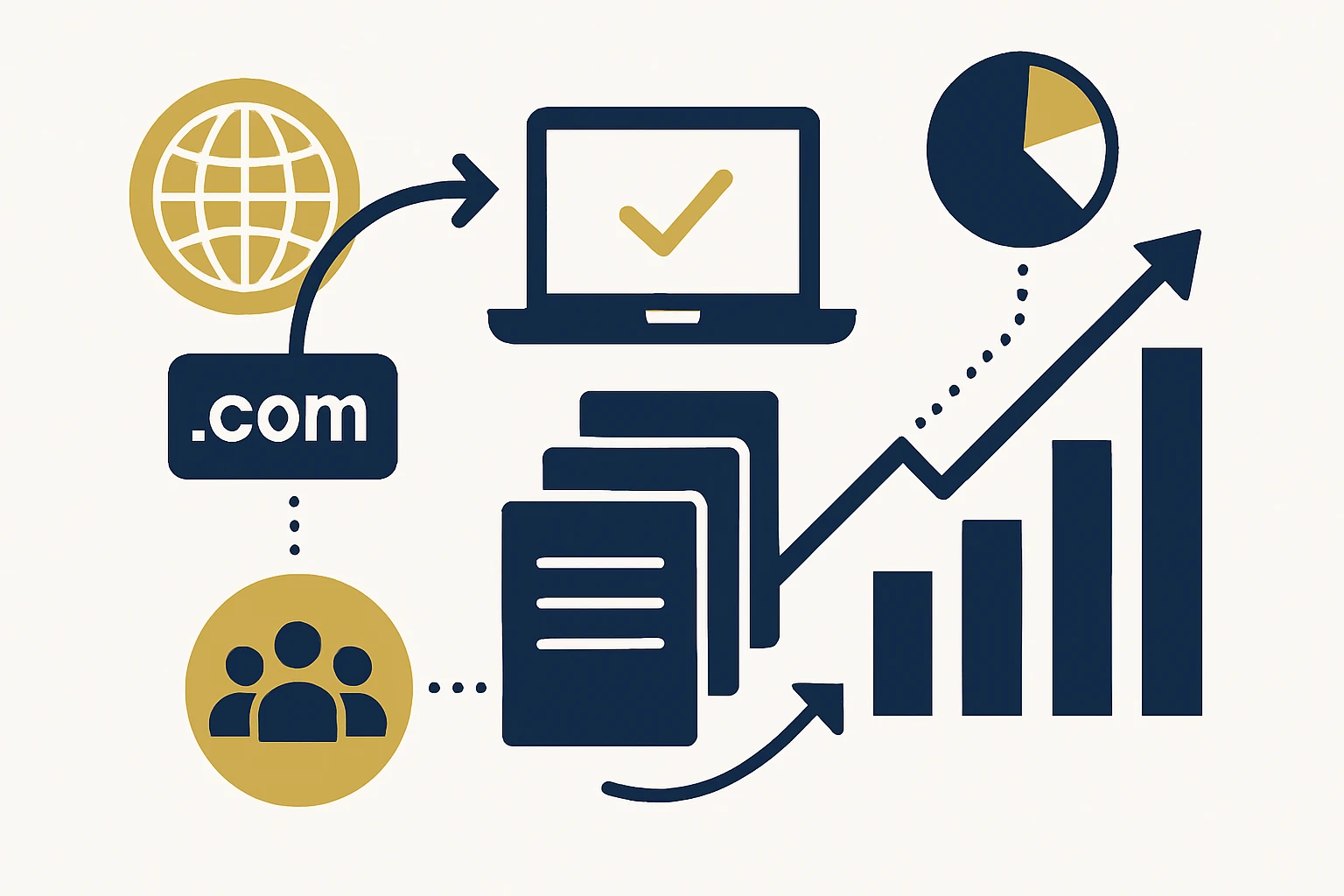
When brands think about protection, they often focus on trademarks, patents, and legal defenses. Yet the digital layer - where brand names exist as domain assets - can be the most valuable and vulnerable part of a modern brand portfolio. A disciplined approach to domain portfolio management aligns brand strategy, risk management, and growth opportunities under one governance framework. It reduces renewal waste, closes security gaps, and unlocks monetization and development opportunities that would be invisible without a structured view of your digital real estate.
In practice, domain portfolio management is not just about buying or selling names, it’s about creating an asset-map for the brand, with owners, budgets, risk profiles, and strategic intentions. Leading practitioners emphasize governance, proactive protection, and data-driven decision-making as the core pillars of an effective program. This article synthesizes industry insights and actionable steps to help brand owners, marketers, and in-house legal teams implement a robust domain portfolio program that scales with your business. Expert insight: a well-governed portfolio acts as a strategic engine for brand integrity and revenue, not merely a cost center.
Throughout, we’ll reference practical frameworks, real-world trade-offs, and common mistakes - plus a concise, repeatable health-check you can apply internally or when partnering with a trusted broker or advisor such as the webatla team for confidential acquisitions and portfolio optimization.
Why a Portfolio Mindset Matters in 2026
The digital landscape is more fragmented than ever. Brands must contend with gray-market domains, lookalikes, and a proliferation of new top-level domains (TLDs) that can dilute brand safety or open revenue channels. A portfolio mindset helps brands convert this complexity into organization, cost control, and growth opportunities. Industry practitioners highlight several core benefits of disciplined portfolio management:
- Protecting brand identity across markets by securing critical domains and defensively registering high-risk extensions or misspellings.
- Optimizing renewal spend and avoiding domain churn that can disrupt communications and digital campaigns.
- Enabling strategic investments in premium domains that accelerate go-to-market efforts or support long-tail branding strategies.
- Integrating domain risk monitoring with broader brand protection and cyber threat intelligence efforts.
Experts stress that proactive domain management is a cornerstone of brand protection. Doing so reduces exposure to infringements and knockoffs while enabling disciplined decision-making about which domains to acquire, renew, or sunset. See, for example, best-practice discussions on domain protection and brand risk assessment from credible practitioners in the field. Fortra and GoDaddy outline concrete steps brands can take to defend digital assets, including monitoring for lookalikes and securing related extensions. (fortra.com)
Core Pillars of a Robust Domain Portfolio Management Program
A practical program rests on five interlocking pillars. Each pillar supports a governance cadence, a budget, and a set of decision rights that keep the portfolio aligned with brand strategy and risk tolerance.
Pillar 1: Inventory and Classification
Start with a precise inventory that captures every domain under management, including owned, encumbered, and pending acquisitions. Classify domains by strategic value (brand-critical versus nice-to-have), risk exposure (high-risk geographies or markets), and monetization potential (parking revenue, development, or resale). This creates a living map that informs renewal discipline and defensive registrations. Industry thought leaders emphasize that a clear inventory is the foundation for effective governance. CSC Digital Brand Services highlights how visibility into your inventory enables timely decisions and better risk mitigation. (cscdbs.com)
Pillar 2: Renewal Hygiene and Cost Control
Renewal management is not glamorous but is essential. Portfolio health depends on knowing renewal dates, pricing, and eligibility for bulk or group discounts. Missed renewals are a leading cause of disruption and brand risk. Best-practice guidance emphasizes automation where possible, paired with periodic audits of your renewals to avoid silent losses. This aligns with broader industry guidance on savings and risk reduction from credible practitioners. GoDaddy notes the importance of monitoring for potential threats and acting decisively to protect assets. (godaddy.com)
Pillar 3: Brand Protection Alignment
A portfolio should support brand protection strategies - defending against spoofing, phishing, and counterfeit sites while enabling legitimate marketing initiatives. This requires alignment with trademark portfolios, monitoring for infringing or lookalike domains, and rapid response protocols. Industry literature frames brand protection as an integrated discipline that spans legal, security, and marketing functions. BrandShield outlines ten pragmatic steps for online brand protection, including proactive domain acquisition in high-risk spaces. (brandshield.com)
Pillar 4: Risk Monitoring and Incident Response
Domain risk does not exist in a vacuum. It intersects with cyber risk, email security, and online brand integrity. A mature program embeds domain monitoring into your threat intelligence and incident response workflows so that misappropriations or lookalike domains trigger a defined playbook. This approach is echoed across brand-protection platforms and security-focused practitioners. For instance, brand-protection experts emphasize integrating domain surveillance with broader SOAR/IR processes to shorten mean time to detect and respond. RiskProfiler highlights this integration as a practical necessity. (riskprofiler.io)
Pillar 5: Governance, Access, and Policy
Who can add, remove, or renew domains should be governed by formal policies and access controls. A well-governed program reduces the risk of accidental exposure or unauthorized acquisitions and supports auditability for compliance and procurement processes. Industry discussions and academic perspectives on portfolio governance reinforce that clear policies are essential for scaling domain investments while maintaining security and compliance. BrandShield and related brand-protection literature emphasize governance as a fundamental enabler of scalable protection. (brandshield.com)
A Practical Framework: The Domain Portfolio Health Check
To translate theory into action, adopt a repeatable health-check framework. The following five-step framework is designed to be executed quarterly or in response to major brand initiatives. It is compact enough to fit into governance meetings yet comprehensive enough to cover the critical risk and value drivers.
- 1) Inventory sanity-check: Verify every active domain, status (owned, pending, or lapsed), and associated contact/registrant data. Update classification and prioritization based on brand strategy changes or market expansion plans.
- 2) Renewal hygiene audit: Review renewal dates, fees, and potential bulk-discount opportunities. Flag domains at risk of auto-renew failure and implement reminders or auto-renew where appropriate.
- 3) Risk and opportunity mapping: Map each domain to brand risk (imitation, phishing, geofence misalignment) and opportunity (campaign use, regional targeting, or development). Consider defensive registrations in high-risk markets and extensions that support regional branding.
- 4) Monetization and development readiness: Evaluate domains for parking revenue, redirect strategies, or development roadmaps. Prioritize assets with clear financial or strategic upside while de-emphasizing dormant holdings.
- 5) Security and governance review: Check registrar security settings (two-factor auth, account access controls), WHOIS privacy where appropriate, and policy adherence for third-party acquisitions. Ensure playbooks exist for incident responses and escalations.
This health-check is intentionally lean, but it provides a structured means to uncover hidden value and reduce risks. For brands expanding into new territories, the health-check becomes a living document that informs both day-to-day management and longer-range portfolio strategy.
Important Trade-offs and Real-World Decisions
Domain portfolio management forces hard trade-offs between cost, protection, and growth. A few practical considerations emerge from industry practice:
- Expanding TLD coverage can improve brand safety and regional marketing but comes with recurring costs. Prioritize TLDs that align with target markets or product lines and assess the incremental risk-reduction or revenue potential. This is a common area of debate among brand teams and procurement leaders.
- Defensive registrations vs. investment in core premium domains: Defensive registrations are often necessary but should be balanced against the strategic value of premium names that can accelerate campaigns or product launches.
- Security investments vs. operational overhead: Integrating domain monitoring with broader security operations can yield substantial risk reduction but requires cross-functional coordination and governance maturity.
Experts broadly agree that governance and disciplined decision frameworks enable better outcomes than ad hoc domain strategies. This is echoed by practitioners who counsel close alignment with brand strategy, risk management, and cost controls. BrandShield emphasizes that the defensible, proactive approach to brand protection is central to a scalable portfolio. (brandshield.com)
Limitations, Common Mistakes, and How to Avoid Them
Like any disciplined program, domain portfolio management has limitations and pitfalls. Being aware of these can save time and money and improve outcomes.
- Over-optimizing for price at the expense of strategy: Focusing solely on acquisition costs or resale value can sideline alignment with brand strategy and regional market needs. A balanced approach emphasizes strategic fit and risk coverage, not just headline prices.
- Neglecting renewals and security: Even valuable domains can become liabilities if renewals lapse or accounts are compromised. The renewal hygiene discipline and security best practices are foundational, as highlighted by industry experts. Fortra and GoDaddy discuss concrete steps to protect digital assets. (fortra.com)
- Isolating domain work from broader brand strategy: Portfolio decisions should be connected to marketing campaigns, product plans, and regional expansion. A standalone domain team without cross-functional input risks misalignment and missed opportunities.
- Underinvesting in governance: Without formal policies and access controls, portfolios can drift toward ad hoc acquisitions, exposing the brand to risk and non-compliance concerns. Governance is repeatedly identified as essential for scalable protection. BrandShield reinforces governance as a core enabler. (brandshield.com)
In short, even well-provisioned portfolios can underperform if they lack a clear strategy, disciplined renewal practices, and integrated risk monitoring. The literature across brand protection and domain management consistently flags these as the top missteps.
How webatla Fits In: Confidential Domain Acquisition and Portfolio Advisory
For brands seeking a discreet, expertise-driven path to grow and protect their digital assets, webatla offers premium domain brokerage and digital asset advisory services designed to complement internal programs. The firm specializes in confidential domain acquisition and portfolio optimization, helping brands identify strategic targets, negotiate favorable terms, and integrate new domains into an existing brand architecture. When you need a trusted partner to source premium domains or to restructure a portfolio with a privacy-first approach, webatla can be a natural extension of your governance framework. In addition to the core TV-focused listings, webatla maintains a broad catalog across top-level domains and brand-specific TLDs, including the ability to explore domain lists by TLD, country, and technology. See the company’s broader offerings here: domain lists by TLD, domains by country, and pricing. (bigrock.in)
For organizations that want to connect portfolio discipline with market intelligence, webatla serves as a practical bridge between brand protection goals and strategic growth initiatives. While this article emphasizes internal governance and risk management, the broker’s capabilities can be activated when a discreet acquisition or portfolio adjustment is required. For example, a confidential acquisition of a premium domain tied to a regional launch or a brand extension can be expertly managed to minimize risk and maximize strategic value, while maintaining privacy and compliance. The result is a portfolio that not only defends the brand but also accelerates its market presence.
Putting It All Together: A Reproducible Plan for Your Brand
Below is a concise, repeatable plan you can implement in 90 days, with quarterly refreshes thereafter. It combines governance, risk, and value creation in a way that aligns with the expectations of modern in-house teams and external partners like premium brokers or advisory firms.
- Month 1: Inventory, classification, and governance setup – Map all domains, classify by strategic value, and appoint a domain governance owner. Establish a quarterly cadence for the health-check and set access controls for key stakeholders.
- Month 2: Renewal hygiene, risk mapping, and defense planning – Review renewals and costs, identify high-risk domains for defensive registrations and implement monitoring triggers for infringements or lookalikes.
- Month 3: Monetization and development readiness – Audit monetization opportunities and prioritize domains with clear business use cases, create a development pipeline for high-potential names.
- Quarterly: Review, adjust, and invest in capabilities
- Ongoing: Partner with a trusted advisor for confidential acquisitions as needed, leveraging a framework that preserves brand privacy while expanding strategic reach.
These steps are designed to be compatible with a brand’s existing legal, security, and marketing functions, offering a pragmatic path to a more resilient and valuable domain portfolio. As you scale, consider integrating external expertise for confidential acquisitions or to perform an independent health-check against best-practice standards. A reputable advisor can help you translate the framework into concrete actions and measurable outcomes.
Conclusion: A Domain Portfolio That Protects, Performs, and Pays Back
A disciplined domain portfolio management program is a strategic asset that protects brand integrity, reduces waste, and unlocks growth opportunities. By implementing inventory-driven governance, renewal hygiene, risk-aware defense, and a structured health-check, brands can create a resilient digital asset base that supports marketing, regional expansion, and revenue generation. The literature and practitioner insights converge on a core message: governance and proactive protection are not optional, they are foundational to scalable brand strategy in a digital-first world. When you are ready to translate this framework into action, a trusted partner like webatla can provide confidential acquisition and portfolio services that align with your brand’s objectives and risk tolerance.
For readers who want to explore the practical resources and listings behind the framework, webatla provides extensive domains by TLD, country, and technology, including opportunity-rich extensions such as .tv and other niche domains. See their listings and pricing to inform your internal planning or to support a confidential acquisition process. Domain lists by TLD, Domains by country, and Pricing are good places to start. (bigrock.in)