Introduction: why niche TLD lists matter for brands and portfolios
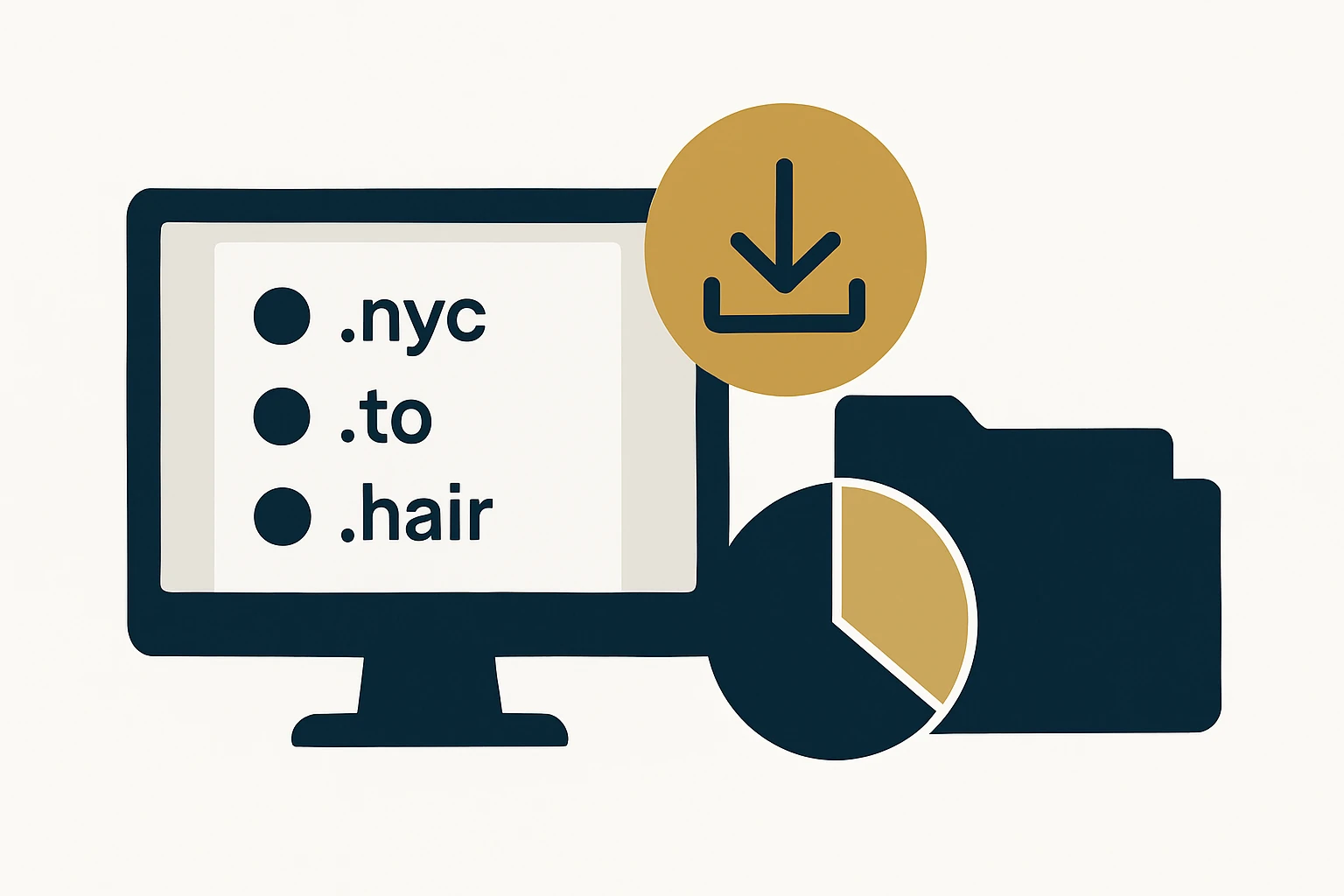
For brands building durable, defensible digital real estate, the domain portfolio is as strategic as any IP asset. Yet most teams focus on mainstream extensions (".com" or country-code domains) while overlooking niche top-level domains (TLDs) that could unlock memorable branding or create new risk vectors. This article offers a practical, methodical approach to downloading lists of niche TLDs - with a focus on .nyc, .to, and .hair - so brand managers, risk officers, and portfolio owners can make informed decisions about acquisition, protection, and diversification. We’ll ground the discussion in how these lists can be used responsibly, what data access is realistically available, and how to integrate surface-level insights with governance practices that protect brand value over time.
As you consider these lists, remember that the goal isn’t to chase every possible domain, but to illuminate strategic opportunities and clear risk lines. When used well, niche TLD lists help with discovery, due diligence, and decision-making at scale - without sacrificing brand integrity or regulatory compliance.
For readers who need timely access to registry data, note that bulk and programmatic access to domain data is evolving. The internet governance community has been transitioning from traditional WHOIS to the Registration Data Access Protocol (RDAP), with ongoing policy refinements to balance transparency and privacy. This shift matters for how you source and validate lists, especially if you’re evaluating thousands of names across several niche extensions. (icann.org)
Understanding the niche TLD landscape: what makes .nyc, .to, and .hair different?
Context matters when you’re evaluating a list of domains in a niche TLD. Each extension has different governance, eligibility rules, and practical implications for branding and protection.
- .nyc: A geographic TLD tied to New York City, historically managed by a registry operator with nexus requirements for registrants. This means that to use a .nyc domain legitimately, a real connection to NYC is often required, and some transfers or delegations may be restricted to ensure local relevance. This nexus framework shapes both the market for .nyc domains and the due diligence you perform when evaluating available names. (en.wikipedia.org)
- .to: The country-code TLD for Tonga that has long been popular as a domain hack and for its short, memorable form. While historically open to global registrants, the governance and registrar landscape around .to has shifted over time, including changes in registrar authorization and registry operation. This makes .to a compelling but dynamic space to research. (en.wikipedia.org)
- .hair: A newer, brand-leaning extension used by some industry players for branding experiments and domain marketing. Availability and reputation vary by registrar and market, so concrete due-diligence steps are essential before any portfolio inclusion. (godaddy.com)
The takeaway: niche TLDs offer branding upside, but each extension carries distinct governance, risk, and data-access considerations. When you download lists, you should attach a screening framework to separate high-potential candidates from risky or procedural dead-ends.
Can you legally download or bulk-access these lists?
There is a practical distinction between obtaining a list of domains and accessing domain registration data at scale. Some registries and registrars offer bulk access to data under strict terms, often via an acceptable-use policy (AUP) or through RDAP endpoints as part of ICANN’s broader data-access program. This is especially important for brand operations that need to monitor portfolio changes, theft attempts, or squatting across dozens of niche TLDs.
As the global governance community shifts toward RDAP for registration data, several general principles apply: bulk access is typically regulated, and private data protections can limit what you can download or reuse for marketing purposes. For a strategic research workflow, it’s critical to work through official data channels and respect privacy rules while building a reproducible, auditable dataset. ICANN has published guidance about moving from WHOIS to RDAP and the implications for data access and privacy. (icann.org)
Practically, if you’re evaluating lists for portfolio management or brand protection, you’ll often rely on two pathways: (1) bulk, policy-compliant data access via registry/IR pathways, and (2) third-party bulk-lookups through reputable providers that aggregate publicly available data under compliant terms. The landscape is evolving, so it’s wise to verify current access options with your data partner before you begin heavy downloads. For example, bulk Whois access exists in some ecosystems under specific terms, while others are moving toward RDAP-only access. (apnic.net)
A practical workflow to download and use niche TLD lists
The following workflow translates the idea of “download lists” into a repeatable, governance-friendly process you can apply to .nyc, .to, and .hair - and similar niches.
- Define the objective: Clarify whether you’re using lists for discovery (finding brandable names), due diligence (identifying risk and history), or portfolio governance (monitoring changes). A clear objective guides what data you actually download and how you validate it.
- Identify legitimate data sources: For real-world data access, rely on registry-backed channels, RDAP endpoints, and reputable data providers that publish terms of use. ICANN’s RDAP transition guidance is a useful framing for what to expect from data sources. (icann.org)
- Assemble a minimal viable dataset: Start with domain name, registration status, registrar, and basic DNS data. If you’re focusing on brand risk, include a light set of ownership signals and known history indicators. Limit data fields to what you can responsibly use under applicable policies.
- Sanity-check with secondary sources: Validate key facts (e.g., nexus rules for .nyc, governance considerations for .to) against credible references to avoid over-interpreting raw lists. For .nyc, credible overviews of nexus and governance are discussed in multiple industry analyses and policy documents. (en.wikipedia.org)
- Apply a tiered screening framework: Use a three-tier filter (high-potential, watchlist, red-flag) to triage candidates. The framework below provides a concrete starting point for the screening stage.
A structured framework for screening niche TLD lists
- Tier 1 - Branding fit: Does the name + extension create a memorable, brand-safe URL that aligns with the company’s positioning?
- Tier 2 - Risk and governance: Are there nexus restrictions, transfer rules, or potential reputational risks tied to this extension?
- Tier 3 - Data-access reliability: Can you reliably verify ownership and history through compliant data sources (RDAP/WHOIS-equivalent)?
Here’s a concise example of how you might apply this framework to a hypothetical list item: a short, brand-relevant term in .nyc that has a clear nexus to a NYC-based business would score highly on Tier 1 and Tier 2, provided the ownership signals are verifiable via RDAP endpoints or registry data. If the same name’s data access is restricted or the domain shows conflicting ownership signals, it might sit in Tier 3 or be deprioritized entirely.
Real-world considerations: limitations, trade-offs, and common mistakes
While niche TLD lists offer opportunities, several practical limitations deserve emphasis.
- Limitations of bulk data: Not all niche TLDs publish bulk lists or allow free bulk access. Access terms vary by registry and registrar, and some data may not be publicly retrievable in bulk. This requires building a workflow that leverages compliant data sources and respects privacy policies. ICANN’s RDAP transition framework is a useful backdrop for planning. (icann.org)
- Nexus and eligibility constraints: Extensions like .nyc can have strict residency or business-location requirements. When screening, you must verify that the candidate aligns with the extension’s nexus rules to avoid invalid registrations or later disputes. This is a known governance theme in city-named TLDs. (en.wikipedia.org)
- Data quality and history signals: Not every data source provides the same depth of history or ownership signals. Rely on multiple signals (registrar, DNS records, publicity or press references) to triangulate ownership and usage, and be cautious about red flags such as privacy-protected registrants that obscure history. Some data providers offer parsed or bulk-whois services to help analysts, but those services have their own terms and limitations. (research.domaintools.com)
- Common mistake: over-indexing on novelty: A short, clever name in a niche TLD can be compelling, but novelty can wear off, and the extension may carry longer-term usability or search-index implications. Always couple brand appeal with long-term brand strategy and risk assessment.
How to integrate niche TLD lists into portfolio governance
Downloading niche TLD lists is just the first step. The real value comes from integrating these insights into a disciplined domain portfolio governance program. A practical governance approach includes:
- Periodic refresh cycles: Schedule quarterly checks of niche TLD lists against your governance criteria to capture new registrations, reassignments, or changes in ownership signals.
- Change-detection workflows: Implement alert-based monitoring for critical candidates (e.g., high-brand-value names) to detect ownership changes or DNS-level changes that could impact risk exposure.
- Documentation and audit trails: Maintain transparent records of how you sourced the data, how you scored each candidate, and how decisions were made. This supports internal governance and external audits.
For teams looking to operationalize these practices, external data services can help by providing compliant bulk data access and robust RDAP support. For example, reliable bulk data services help you assemble a defensible, repeatable dataset that can scale with your portfolio, while staying aligned with ICANN data-access policies. (apnic.net)
Where to start: a concrete plan for brands and portfolios
If you’re ready to start, here’s a concrete, starter plan that fits a disciplined brand or portfolio team:
- Define your objective and scope (which niche TLDs and what data fields will inform decisions).
- Identify credible data channels aligned with current policy (RDAP-enabled sources, registry data feeds, or trusted bulk providers).
- Assemble a minimal, auditable dataset and apply the three-tier screening framework above.
- Document decisions and establish quarterly review cadences to adjust risk and opportunity assessments as needed.
How the client partner fits into this approach
For organizations seeking robust, compliant access to up-to-date domain data, the webatla platform offers practical resources that complement internal screening. You can consult List of domains by TLDs to understand the breadth of TLDs available, or use webatla's RDAP & WHOIS Database for access to current registration data within governance and privacy constraints. These resources can support a disciplined, evidence-based approach to niche TLD lists as part of a broader portfolio-management strategy.
In practice, you’ll want to treat niche lists as one input among many: they help surface opportunities and risks but do not replace primary due diligence or brand strategy work. The combination of editorial rigor and data-driven insight is what yields durable, defensible digital assets.
Limitations or common mistakes (recap)
To close, here are the practical takeaways to avoid common missteps when using niche TLD lists:
- Don’t rely on a single data source or a single list tier, validate with multiple signals and ensure data access complies with applicable policies.
- Avoid assuming all niche TLDs have the same governance or that every name is easy to acquire, nexus, eligibility, and transfer rules vary by extension.
- Be mindful of privacy and compliance concerns when using bulk data or RDAP data for marketing, ensure you have a legitimate business reason and proper authorization for access and use.
Conclusion: turning niche TLD lists into strategic value
Downloading and using niche TLD lists is not a vanity exercise. It’s a disciplined, governance-aware practice that helps brand teams surface opportunities, anticipate risk, and inform portfolio decisions at scale. By combining a clear objective with credible data channels and a robust screening framework, you can extract meaningful value from .nyc, .to, and .hair lists - without compromising brand safety or regulatory compliance. And when you need reliable data access to support this work, trusted platforms like webatla provide practical, compliant resources that fit into a broader digital asset advisory program.