Introduction
For brand owners and digital asset leaders, the domain namespace has long outgrown the old assumption that .com is the sole path to credibility. The expansion of generic top‑level domains (gTLDs) in recent years created new opportunities to signal product focus, regional relevance, and brand personality. But with opportunity comes risk: blurred meaning, fragmented adoption, and the potential for confusion or IP disputes if a chosen extension doesn’t align with a brand’s strategy. This article presents a practical framework to evaluate niche TLDs - such as .io, .app, and .bond - and to decide which extensions belong in a premium domain portfolio as part of a broader domain acquisition and brand protection strategy. The objective is to help governance teams, legal/compliance leaders, and growth-minded executives move beyond price and availability to a holistic assessment of strategic fit, risk, and value creation.
The landscape for new and niche gTLDs has evolved rapidly. A 2026 briefing from a leading law firm notes the ongoing expansion and the complexity it introduces for brand protection, registration strategy, and post‑registration management. This context is critical for any enterprise considering a multi‑extension approach or a confidential, strategic domain acquisition program. New gTLD Program 2026: Application Process and Considerations for Brand Protection provides a framework for assessing brand risk, adoption, and policy obligations as the namespace grows.
Why niche TLDs matter for brand portfolios
Premium domain portfolios increasingly rely on a mix of extensions to reflect product lines, geography, and audience expectations. Extensions like .io, .app, and less common options such as .bond offer distinct signaling opportunities but require careful alignment with brand strategy, cybersecurity posture, and long‑term governance. The literature on new gTLDs emphasizes three core realities that shape decision making:
- Adoption and semantic clarity: Not all extensions achieve meaningful brand signals or broad user recognition. Meaningful adoption patterns and clear semantics are crucial to avoid misinterpretation and to preserve marketing efficiency. This is a recurring theme in risk and strategy discussions around new gTLDs. DN.org highlights how adoption, pricing structures, and registry behavior influence long‑term value and liquidity.
- Trademark protection and policy mechanics: Protecting your brand across a broader namespace requires proactive IP strategy, including right‑based protections and understanding URS/TMCH mechanisms. A leading IP practice notes the importance of these protections as part of a holistic new gTLD strategy. CP2 Law discusses the role of trademark clearinghouses and rights protection in reducing risk when brands expand into new extensions.
- Market risk and liquidity: Even well‑defined extensions can suffer from limited aftermarket liquidity or confusing branding outcomes if not paired with disciplined governance. The considerations discussed in the 2026 GTLD update underscore the need to assess potential after‑market dynamics and regulatory implications when selecting extensions for a premium portfolio. GT Law (2026 New gTLD Program)**
These realities inform a practical approach to portfolio design: avoid over‑reliance on any single extension, ensure strong IP protections, and build a governance process that balances marketing intent with risk management. The following framework offers a disciplined path to evaluate niche TLDs in the context of a premium domain portfolio.
A practical framework to evaluate TLDs
To convert the opportunity of new TLDs into durable brand value, organizations should apply a repeatable, field‑tested framework. The framework below uses four dimensions - Strategic Fit, Adoption & Semantics, IP Protection & Policy, and Economic & Operational Viability - coupled with a decision checklist you can apply to specific extensions (for example .io, .app, or .bond). The goal is to move from an excitable wish list to a structured, defendable portfolio strategy.
Structured TLD Selection Framework
- 1) Strategic Fit
- Does the extension align with core business lines, products, or geographic focus?
- Is there a clear brand narrative the extension reinforces (for example a tech product line for .io or a software suite for .app)?
- 2) Adoption & Semantics
- Is there demonstrable user recognition or market traction for the extension within your target segments?
- Do brand and product names form natural, memorable domain hacks or brandable phrases with the extension (for example portfol.io or stud.io as a conceptual signal)?
- 3) IP Protection & Policy
- What trademark protection mechanisms exist for the extension (TMCH, URS, etc.), and how would they apply to your brand portfolio?
- What are the costs and timelines for sunrise registrations or protection across multiple extensions?
- 4) Economic & Operational Viability
- What is the total cost of ownership, including renewals, privacy, and DNS/security services?
- Is there credible aftermarket liquidity or a predictable path to rationalizing a multi‑extension strategy?
- 5) Risk Controls & Governance
- What internal processes will guard against brand dilution or misdirection of traffic?
- How will you monitor and enforce brand integrity across registrants and resellers?
Below is a compact framework that you can reuse in internal governance meetings or with external advisers. It is designed to be practical, not theoretical, and to scale with your portfolio as it grows.
Applying the framework to IO, APP, and BOND
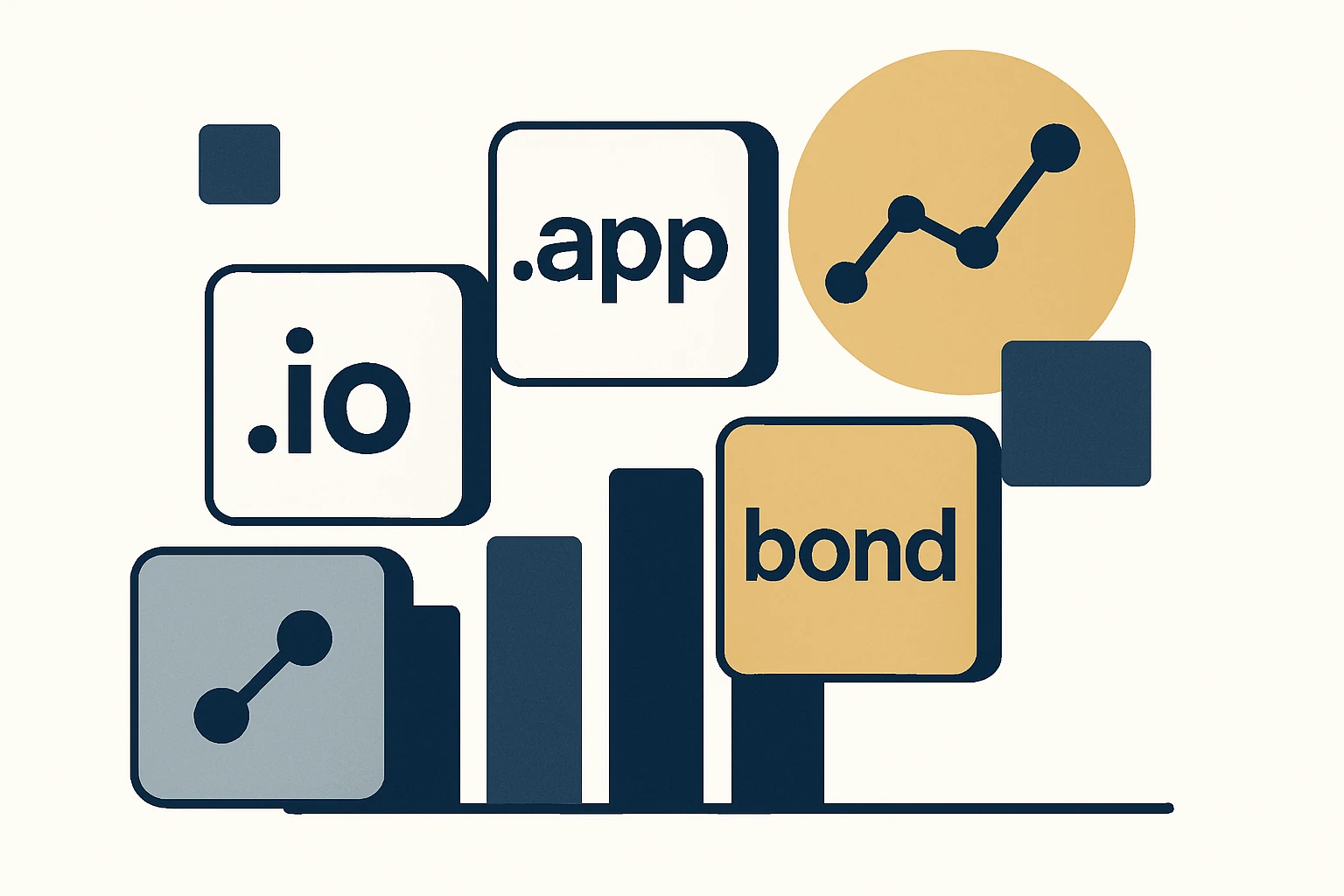
Consider the three extensions often discussed in premium portfolio discussions: .io, .app, and .bond. Each offers distinct signals and has different governance and market dynamics. When evaluating these, anchor your assessment to the four framework dimensions above. For instance, .io is historically strong in tech and startup ecosystems, which supports strategic fit for a software or platform portfolio, but it also invites scrutiny around policy evolution and potential stability concerns in geopolitical contexts. The same lens should be brought to .app, which explicitly signals app‑centric domains, and to .bond, which positions itself around finance or trust‑based messaging. The literature on new gTLDs consistently calls out that adoption, protection mechanisms, and market behavior will influence long‑term value and liquidity. DN.org provides a practical map of these adoption and market considerations, while CP2 Law outlines the essential rights protection mechanisms you should build into your plan.
Due diligence workflow for domain acquisitions
Once a shortlist of extensions is selected, a disciplined due diligence workflow should guide both negotiations and post‑acquisition stewardship. A robust workflow includes trademark clearance, registry policy review, technical viability checks, and post‑registration governance. The steps below map to the four framework dimensions and help avoid common missteps:
- Step 1 - IP baseline: conduct an internal IP audit to identify potentially conflicting marks and assess the likelihood of confusion at the domain level for each candidate extension. This helps prevent acquisition of domains that could trigger costly disputes later.
- Step 2 - policy and protections: review sunrise and trademark protection options, and map out a plan to register core marks in the TMCH where available, along with any URS procedures for enforcement. This aligns with the protections emphasized in the New gTLD Program guidance.
- Step 3 - technical readiness: verify DNS stability, registrar reliability, and privacy protections, including WHOIS privacy and DNSSEC where offered. A responsible approach includes ensuring you can migrate traffic cleanly if you pivot to another extension in the portfolio.
- Step 4 - economic framework: model total cost of ownership, including renewals, privacy services, and potential broker commissions. Consider long‑term liquidity and the cost of potential scrambles in the aftermarket.
- Step 5 - governance: establish ownership, access controls, and monitoring protocols to prevent misuse or misdirection of brand assets across extensions.
Importantly, a complement to this process is leveraging authoritative data sources to verify domain ownership and status. For organizations adopting a confidential acquisition approach, reliable RDAP and WHOIS data become essential inputs in your decision flow. WebAtla’s RDAP & WHOIS database can be a practical resource in validating the current status of candidate domains.
Limitations, trade‑offs, and common mistakes
Even with a strong framework, evaluating niche TLDs involves trade‑offs. Below are the most common missteps and limitations teams should anticipate:
- Equating novelty with value: new gTLDs can be attractive, but adoption and liquidity are not guaranteed. Some extensions fail to achieve broad recognition, which undermines marketing efficiency and long‑term brand recall.
- Underinvesting in IP protection: neglecting TMCH, strategic trademark policing, or lack of a clear post‑registration strategy can lead to costly infringements or reputational harm.
- Over‑reliance on short‑term pricing: initial low prices for some extensions may tempt hurried registrations, but renewal costs and registry policy changes can erode long‑term value.
- Neglecting governance and monitoring: without disciplined governance, a diversified portfolio can drift toward fragmentation and operational risk, undermining the intended brand protections.
- Underestimating regional and political risk: some extensions have geopolitical sensitivities or regulatory shifts that can impact availability or security posture. This is increasingly discussed in policy and risk overview literature around new gTLDs.
Expert insight: leading IP counsel emphasizes that a successful strategy combines a disciplined due diligence workflow with proactive risk mitigation, including robust rights protection and ongoing monitoring across extensions. This perspective reflects the broader industry guidance on how to manage brand risk in the evolving gTLD space. CP2 Law (expert guidance within the field).
Where the client fits in a premium domain strategy
For buyers and holders of premium domains, the context is not simply acquiring assets, but integrating them into a coherent digital strategy that protects and grows brand value. The client - in this case WebAtla - provides critical data resources and workflow capabilities that support both the acquisition and ongoing governance. A practical integration path includes:
- Using the io domain catalog to evaluate tech‑oriented extensions for strategic fit within technology portfolios.
- Leveraging the RDAP & WHOIS database to verify ownership status, registration history, and potential conflicts as you build a confidential acquisition plan.
- Consulting the broader List of domains by TLDs to understand namespace breadth, regional variations, and the overall scale of the domain strategy you’re contemplating.
In practice, premium domain brokerage and digital asset advisory requires a balance: you want extensions that clearly signal your product narrative, while ensuring you have robust protections and governance. The client’s resources can help you execute on that balance in a disciplined, privacy‑preserving way, with an eye to long‑term brand integrity rather than short‑term price advantage.
Conclusion
Niche TLDs offer meaningful opportunities to enhance brand signaling, regional relevance, and portfolio resilience - but only when chosen through a disciplined framework that weighs strategic fit, adoption semantics, IP protection, and economic viability. The four‑dimensional framework outlined here, reinforced by authoritative industry guidance, helps teams translate the excitement around novel extensions into durable business value. A thoughtful approach to due diligence, combined with governed acquisition and ongoing brand protection practices, can turn a potentially risky namespace into a strategic asset for brand growth. Where applicable, engage with trusted advisory partners and leverage credible data resources to support confidential, strategic acquisitions that align with your company’s long‑term digital footprint.