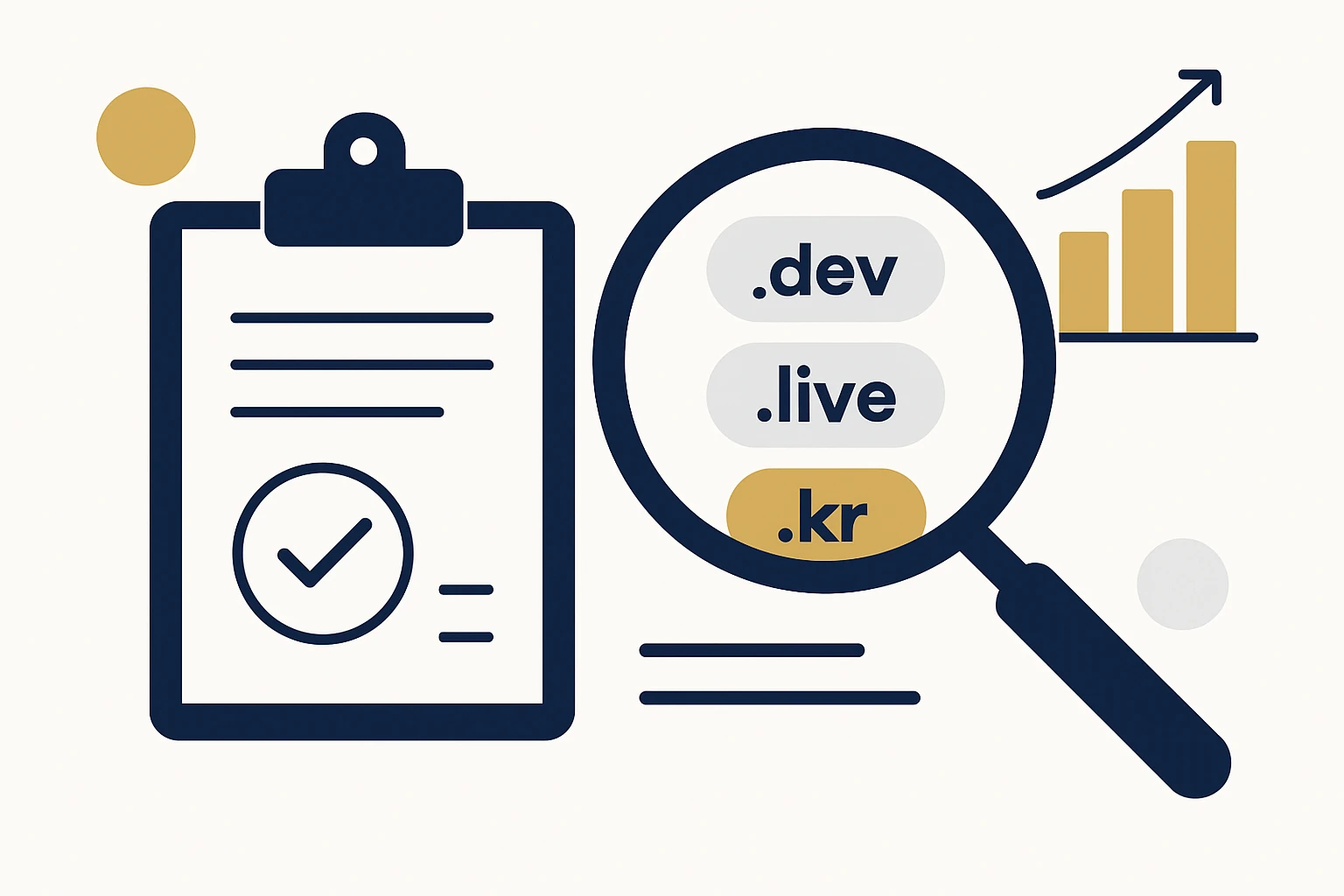
Evaluating Niche TLDs for Brand Strategy: A Practical Guide to .dev, .live, and .kr
For many brands, the digital real estate beyond the traditional .com space offers both defensive protections and growth opportunities. Niche top-level domains (TLDs) like .dev, .live, and .kr can help a brand signal intent, protect core assets, and tailor regional messaging. But buying and managing these domains isn’t a gamble, it requires a disciplined framework that weighs brand clarity, technical realities, and portfolio economics. This article distills a practical approach to evaluating these TLDs, with concrete steps you can apply to your own brand portfolio and a note on where to source inventory from trusted partners like WebAtla.
Understanding the appeal and constraints of niche TLDs
Niche TLDs are not magic bullets for SEO or instant brand equity. Their value comes from how well they align with your brand’s narrative, audience, and enforcement capabilities. A fundamental constraint to recognize is the technical and policy environment around certain TLDs. For example, the .dev namespace operated by Google Registry is secured by default, browsers treat .dev domains as HTTPS-only, which has implications for how you deploy and test sites. This HTTPS/default-security stance is a deliberate policy to reduce data-protection risk and improve trust for developers and tech brands. Google Registry notes that registrars must notify prospective registrants about the HTTPS requirement so that domains work reliably in modern browsers. This dynamic is a real-world constraint you must bake into your planning when considering .dev. (registry.google)
Beyond .dev, other TLDs carry different market signals and regulatory realities. The .kr ccTLD, managed in Korea by KISA and its registry policies, has its own set of registration rules and compliance considerations that brands should understand when contemplating a Korea-market strategy. While policy specifics can evolve, it’s clear that local governance and trademark processes shape how and when a domain can be deployed for a brand in that region. See policy context from the Korea Internet & Security Agency (KISA) for current rules around new registrations under .kr. (krnic.or.kr)
Finally, the broader ecosystem of new and existing gTLDs - where niche strings like .live reside - has grown organically through ICANN’s New gTLD program. This program expanded the namespace to accommodate brand-specific and behavior-based extensions, creating both opportunities and complexity for portfolio management. For context on how new gTLDs fit into the DNS ecosystem and brand strategy, refer to ICANN’s overview of the New gTLD program. (newgtlds.icann.org)
A practical framework to evaluate .dev, .live, and .kr for your brand
Below is a concise, repeatable framework you can apply when considering niche TLDs as part of a broader brand protection or domain portfolio strategy. It emphasizes clarity, governance, and practical risk management, while keeping an eye on portfolio economics and implementation feasibility.
- Define strategic objective. Determine whether the TLD will serve as defensive holdings (to prevent competitors from capturing a close domain) or as a platform for a product line, regional branding, or a dedicated digital experience. Establish success metrics (e.g., deflection rate from competitors, traffic to a regional site, or a specific product microsite).
- Assess governance and enforcement. Evaluate who administers the TLD, how disputes are handled, and what enforcement capabilities you’ll need to defend your assets. For example, the governance framework of .dev is tied to Google Registry, and its HTTPS-default posture has implications for site deployment and testing. Google Registry outlines the HTTPS requirement and registration guidance. (registry.google)
- Evaluate technical and user-experience implications. Consider how the TLD affects testing, deployment, and user trust. .dev’s HTTPS-only ecosystem means you’ll need to ensure environments and certificate management are in place before leveraging the domain in user-facing scenarios. In contrast, .kr domains require alignment with local regulatory and trademark processes, which affects launch timelines and enforcement planning. See policy context for .kr in KRNIC’s guidance. (krnic.or.kr)
- Assess financial trade-offs. Estimate initial registration, renewal costs, security investments (e.g., SSL/TLS for HTTPS-only namespaces), and ongoing domain-management costs. Compare these against the anticipated brand protection value, regional demand, and potential traffic captures. This is particularly salient for newer gTLDs and country-code TLDs where renewal risk and market adoption can vary widely.
- Plan implementation and governance. Map the domain to your brand architecture (main site, product microsites, regional campaigns) and determine how you’ll manage redirects, content ownership, and ongoing monitoring. Align with your existing domain portfolio management processes to avoid fragmentation and ensure consistent enforcement.
Real-world considerations for each TLD family
While the framework applies broadly, it’s helpful to summarize the practical considerations you might weigh for each TLD family:
.dev - signaling security-first, developer-centric intent
Key strengths: immediate signals of security-conscious branding, alignment with developer audiences, and a namespace that is well understood in tech circles. The HTTPS-default posture of .dev can act as a signal of trust, but it also imposes a deployment prerequisite: your sites must be served over HTTPS. This constraint is intentional and is documented in Google Registry’s policy for .dev. Practically, that means you should front-load SSL/TLS planning and environment parity in your procurement and deployment workflows. Google Registry notes the HTTPS requirement that allows .dev domains to work consistently in browsers, which is a non-trivial implementation factor for marketing and product teams. (registry.google)
.live - signaling immediacy and media-relevance
The .live namespace tends to attract brands pursuing live events, video content, or streaming-oriented campaigns. It can offer a precise signal to audiences, while still requiring careful coordination with trademark clearance and regional marketing plans. Because .live is a newer gTLD in the broader ICANN ecosystem, planning around governance, availability, and cost should follow a disciplined framework like the one above. (ICANN’s New gTLD program context helps explain how new strings like .live fit into the evolving domain landscape.) ICANN New gTLDs (newgtlds.icann.org)
.kr - regional market access and local regulatory context
For brands targeting Korea, .kr provides a pathway to a local online presence, but it comes with region-specific registration requirements and enforcement considerations. The Korea Internet & Security Agency (KISA) and its registry policies outline the governance framework for .kr registrations, including recent rule adjustments and processes that impact how trademarks can be registered and defended. If your growth plan includes a Korean market, account for these local rules in your due diligence and implementation timeline. (krnic.or.kr)
Limitations, trade-offs, and common mistakes
Like any portfolio decision, adding niche TLDs carries trade-offs. Common mistakes include overestimating SEO benefits from non-.com TLDs, underestimating the operational burden of managing multiple namespaces, and underfunding enforcement for brand protection. A disciplined approach is to couple defensive registrations with a clear governance plan: who owns the assets, how you monitor for theft or cybersquatting, and how you integrate the new namespaces with existing redirects and content strategies. The landscape around new gTLDs and country-code TLDs is dynamic, ongoing review of policy changes (such as those described by ICANN and national registries) is essential for long-term viability. For instance, the broader context of new gTLD expansion explains why a structured framework pays dividends over ad hoc acquisitions. (newgtlds.icann.org)
Putting it into practice: sourcing and inventory considerations
If you’re ready to evaluate candidates, start with a structured inventory review. WebAtla offers direct access to domain listings by TLD, which can streamline initial screening and help you map potential defensive or strategic uses to your brand architecture. For example, you can explore focused inventories such as .dev domains through the provider’s TLD directory. This approach reduces search friction and accelerates the alignment of domains to your brand’s asset map. To browse, see a dedicated page like download list of .dev domains, and for a broader catalog of available TLDs, see WebAtla’s TLD catalog. WebAtla’s TLD catalog can serve as a starting point for portfolio planning and budgeting. You can also consider other lists - such as those for specific markets or technologies - as part of a broader, confidential domain acquisition strategy.
For brands seeking extensive inventories, you can also search for niche lists like download list of .live domains and download list of .kr domains as part of your intake process and risk assessment. These phrases reflect common intent in enterprise planning and are helpful during the initial scoping phase of a project with a digital asset advisor.
Expert insight and practical takeaways
Expert insight: Industry observers emphasize that the value of niche TLDs is driven by brand clarity, governance, and scalable enforcement. The strategic takeaway is to treat these namespaces as extensions of your brand architecture rather than mere parking domains. In practice, combine a clear registration policy, an enforcement plan, and a deployment roadmap that aligns with your marketing calendar. (Context on the broader governance of new gTLDs is provided by ICANN’s New gTLDs program overview.) ICANN New gTLDs (newgtlds.icann.org)
Conclusion
Niche TLDs like .dev, .live, and .kr can be meaningful levers in a brand’s digital strategy when they are pursued with discipline. A practical framework - defining objectives, assessing governance, evaluating technical implications, budgeting for costs, and planning for governance - helps ensure that niche namespaces contribute to brand protection and growth rather than fragmenting your portfolio. By pairing this framework with curated domain inventories from trusted sources like WebAtla, brands can de-risk evaluation, speed up decision-making, and implement a coherent digital strategy that respects local markets and global ambitions.