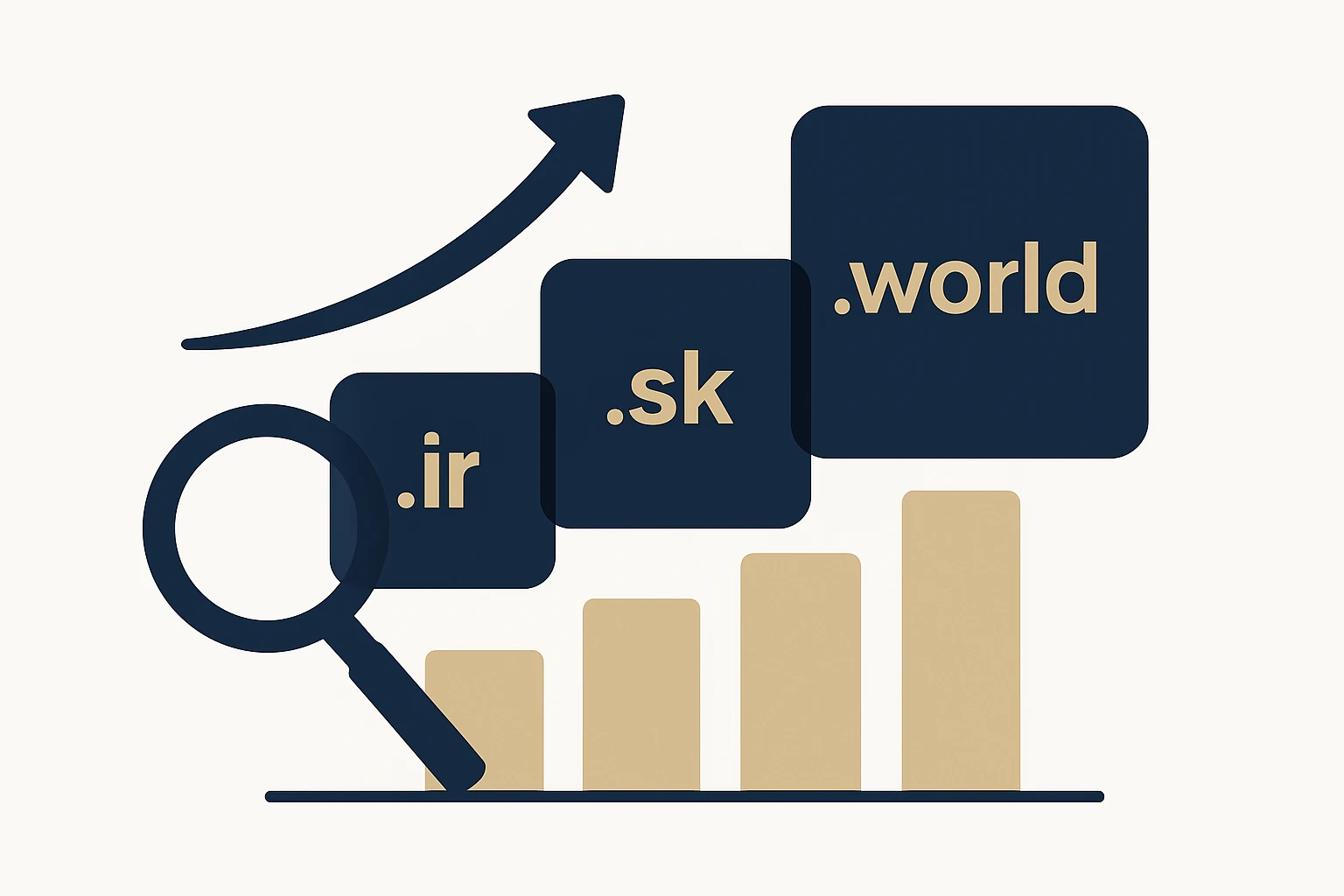
Premium domains are more than just a name, they are strategic assets that can influence brand trust, customer perception, and growth velocity. For brands pursuing global expansion or product-line diversification, a well-chosen niche TLD can unlock advantages that generic domains may not deliver. Yet evaluating niche TLDs - such as .ir, .sk, and .world - demands a disciplined, risk-aware approach that weighs market signals against cost and defensibility. This article offers a practical, editorially rigorous framework for assessing niche TLDs, with a focus on how to research, compare, and assemble a portfolio that aligns with your brand strategy and budget. It also highlights how a trusted advisor can preserve confidentiality while expanding decision-making power across borders. (Sources emphasize that registry policies around premium domains can affect pricing and strategy.) (verisign.com)
Understanding the niche TLD landscape
Niche or non-traditional TLDs extend beyond the familiar .com/.net/.org ecosystem. They can offer geographic relevance (ccTLDs), topical signaling (gTLDs), or semantic resonance that strengthens a brand’s online footprint. However, not all niche extensions are equally liquid or predictable in value. A key consideration is whether a registry designates certain domains as premium, which often translates into higher upfront costs and different renewal economics. Registry-driven pricing signals can meaningfully influence long-term portfolio costs and ROI assumptions. Verisign’s premium-domain policy sheet outlines how premium names may be priced in various registry TLDs, affecting renewal and transfer terms. Disclosure: registry premium designations are not uniform across all TLDs and can change over time. (verisign.com)
Beyond price, a premium-domain designation can influence buyer perception. Brands often view premium domains as signals of quality and commitment - attributes that can shorten sales cycles and improve click-through rates in paid and organic channels. This dynamic is discussed in industry guidance that emphasizes the reputational benefits of the right domain name, alongside the caveat that premium pricing is not a guaranteed predictor of success. GoDaddy: What are premium domain names? (godaddy.com)
Legal and regulatory considerations also play a role in premium-domain strategy, especially when dealing with cross-border TLDs or country-code extensions that carry local trademark and registration nuances. Disputes and policy interpretations around premium domains appear in international arbitration and brand-protection contexts, underscoring the need for cautious, policy-aware planning. WIPO arbitration decisions on domain names illustrate how premium designations can intersect with trademark rights and enforcement. (wipo.int)
From a market perspective, premium-domain economics are evolving as registries experiment with pricing and as the aftermarket develops. Observers note that registry-driven premiums and related patenting activity can reshape how premium domains are valued and traded over time. While valuation tools and patents exist to support informed decisions, they must be used alongside qualitative brand considerations. Domain Name Wire: Verisign awarded domain-valuation patent (domainnamewire.com)
A practical framework for evaluating niche TLDs
To move from interest to an actionable portfolio plan, consider a compact, repeatable framework that focuses on six core dimensions. Use these criteria when assessing any niche TLD (including .ir, .sk, and .world) to determine whether a given domain supports your brand goals, budget, and risk tolerance.
- Brand alignment and market fit: Does the TLD resonate with your target audience’s geography, language, or culture? Will it support product lines, campaigns, or regional growth efforts?
- Defensibility and portfolio strategy: Can you defensibly register related variants or protect against cybersquatting with defensive registrations and consistent naming conventions?
- Pricing and renewal economics: Are renewal costs sustainable if the domain proves foundational to your brand over multiple years? Registry premiums can affect long-term ROI. Important nuance: premium designations are registry-driven and can change over time. (verisign.com)
- Liquidity and aftermarket risk: Is there an active market for the TLD or the domain segment you’re targeting, or is liquidity thin and dependent on specific buyers?
- Regulatory and cultural considerations: Are there jurisdictional nuances, sanctions, or local trademark practices that could affect use or enforcement in certain regions?
- Technical reliability and future-proofing: Does the TLD ecosystem support DNS stability, security features, and long-term scalability for your digital assets?
This framework is not a substitute for professional judgment or due diligence, but it provides a disciplined view that makes ROIs more predictable and negotiations more transparent. A structured approach also helps in confidential discussions with brokerage partners who can guide you through the market without exposing sensitive strategy.
From research to action: applying the framework to .ir, .sk, and .world
Applying the framework begins with a disciplined research phase, focusing on three actionable steps for each candidate TLD:
- Map brand intent to geography and language: Identify where your audience is most active and which language domains would best support regional campaigns. Consider pairing core brand terms with local language variants to maximize relevance.
- Assess defensibility and coverage: Define a defensible set of complementary names (brand + product + category + common misspellings) to reduce leakage risk. If needed, leverage a broker’s confidential process to source or secure assets without public exposure.
- Quantify economics and risk: Build a simple P&L for each domain, including upfront premium, renewal trajectory, and a scenario for sale/renewal at various price points. If a TLD carries significant premiums, test whether long-term branding benefits justify the total cost.
For practitioners exploring niche lists such as .ir or .world, private, compliant sourcing and analysis matter. You can begin by examining the directorate lists and TLD directories that market experts use to gauge availability and scope, then align findings with your brand strategy. While public lists can provide a starting point, working with a trusted advisor helps maintain confidentiality and expedites due diligence when particular assets become compelling. For example, a broker can help you navigate confidential acquisition while preserving strategic disclosures until a deal is near closing.
Expert insights and practical caveats
Expert insight: Industry practitioners emphasize due diligence and negotiation discipline for premium-domain deals. The most successful buyers combine robust research with professional negotiation to avoid overpaying and to secure favorable terms. This viewpoint is echoed in established guidance for premium-domain purchases and brokerage best practices. Short, actionable due diligence often pays off in the long run.
From a policy and risk perspective, premium-designated domains sit at the intersection of branding, law, and registry economics. Arbitration and trademark enforcement considerations illustrate that premium status can influence outcomes and costs in disputes, underscoring the need for careful, legally informed decision-making. WIPO domain decisions (wipo.int)
Limitations, trade-offs, and common mistakes
Any framework for niche TLD evaluation must acknowledge its limitations. Niche extensions can be volatile in value, and registry policies may shift. Long-term ROI depends on brand strategy, regional emphasis, and the ability to defend domains against competitors or cybersquatters. A common pitfall is assuming that a premium designation automatically translates into sustained value without accounting for renewal costs, regulatory risk, and evolving consumer behavior. Being conservative about pricing, and pairing premium buys with ongoing brand-protection measures can help mitigate these risks.
Trade-offs to consider: The appeal of a premium short TLD can be offset by higher renewal costs and potentially limited aftermarket liquidity. Conversely, a lower-cost or locally meaningful TLD may offer affordable defense but weaker global resonance. The right answer depends on your brand’s geography, audience, and growth plan.
Structured decision-aid: a quick framework in practice
To simplify ongoing decision-making, use the following quick-reference framework when screening new niche candidates. This is a compact checklist you can reuse on a quarterly basis as your portfolio grows:
- Strategic fit score: 0–5 (brand alignment, regional relevance, product fit)
- Defensibility score: 0–5 (variants, defensive registrations, brand protection)
- Economics score: 0–5 (upfront premium, renewal cost, total cost of ownership)
- Liquidity risk: 0–5 (market activity, potential buyers)
- Compliance risk: 0–5 (local laws, sanctions, trademark considerations)
- Technical risk: 0–5 (DNS stability, security features, resilience)
Assign a numeric score for each criterion and aggregate to a total. This simple rubric helps you compare disparate candidates on an apples-to-apples basis. It also provides a defensible rationale for confidential acquisition decisions when talking with a broker or internal governance team. Note: this framework is a guide, not a guarantee of success, and should be adapted to your organization’s risk posture.
Client integration: how a broker can support your niche TLD strategy
In partnership with a domain-brokerage and advisory firm, you can execute a confidential acquisition plan that preserves strategic priorities while expanding your domain footprint. For example, a broker can surface niche opportunities, perform discreet outreach, and coordinate due diligence across jurisdictions, all while keeping your identity and strategy private. The client’s own directory resources - such as lists by TLDs or by country - can help you frame initial hypotheses and define target segments. See the following pages for reference: download list of .ir domains and List of domains by TLDs. (verisign.com)
Conclusion
Niche TLDs offer meaningful opportunities to strengthen brand signals, reach specific markets, and extend a premium-domain strategy beyond traditional extensions. A disciplined framework - grounded in brand alignment, defensibility, economics, liquidity, compliance, and technical risk - helps convert complex market dynamics into repeatable, defensible decisions. While premium designations and registry pricing shape the financial calculus, the long-term value of a well-managed domain portfolio rests on strategic coherence, ongoing portfolio governance, and trusted professional guidance. If you’d like to explore how to apply this approach to your own brand, consider engaging a qualified advisor who can tailor the framework to your unique needs. For more on premium-domain strategy and confidential acquisition, your broker can illuminate the path without exposing sensitive information.