Introduction: the problem with finding premium domains in a saturated market
For brands and investors aiming to build durable digital real estate, the instinct to chase the most visible, popular domains is understandable. Yet the market for premium domains has long rewarded those who think beyond the obvious and adopt a disciplined discovery process. In 2024 and 2025, experts noted growing attention to niche top‑level domains (TLDs) such as .digital and .art, alongside geographic and brand-anchored extensions. This trend matters for anyone building a strategic portfolio, because niche TLDs can unlock brand positioning that generic .com alone cannot. As researchers and practitioners increasingly emphasize governance, risk management, and portfolio discipline, a methodical approach to compiling a targeted, download-ready list of candidates becomes a competitive advantage. Sources and industry observations support that niche TLDs are not merely curiosities, they are legitimate channels for brand storytelling, product launches, and regional campaigns when managed with care. (domaingang.com)
Why niche TLDs matter for premium domain strategies
Top‑level domains beyond .com increasingly support brand- and region-specific strategies. A disciplined portfolio approach recognizes that:
- Brand alignment matters. Niche TLDs can reinforce category positioning (for example, .art for creative brands or .digital for tech-enabled services) and improve memorability when paired with an effective brand story. Industry analyses emphasize brand protection and governance as essential components of digital asset strategies. (gcd.com)
- Risk management is non-negotiable. The proliferation of new gTLDs brings increased trademark risk, cybersquatting potential, and impersonation challenges. Brand protection firms and IP advisors stress the importance of monitoring and governance as portfolios expand across TLDs. (defenddomain.com)
- The market is not static. Industry data suggests that niche extensions gain traction as brands seek location-, culture-, and market-specific signals in the digital landscape. Analysts point to ongoing shifts in TLD popularity and renewal dynamics that a flexible strategy must accommodate. (dynadot.com)
For practitioners, this means that a robust premium-domain strategy is a blend of discovery, validation, and governance. The “download list” approach - systematically compiling candidate domains across targeted TLDs and then validating them against a set of criteria - offers a practical, scalable path. It also aligns with the broader market emphasis on due diligence and risk-aware acquisition that ICANN and industry observers have underscored for years. In short: you’re not just buying names, you’re curating a strategic asset class. ICANN Domain Industry Playbook provides a framework for governance, due diligence, and risk assessment that underpins this approach. (icann.org)
Defining the scope: what a practical download list delivers
A well-constructed download list should do more than catalog domains, it should reveal a portfolio’s strategic possibilities. Specifically, it should help you:
- Identify candidate domains that align with your brand’s taxonomy, product lines, and market expansion goals.
- Assess renewal economics and potential future value (scarcity, brand fit, and category relevance).
- Support confidential negotiation and acquisition planning, with clear next steps and ownership hypotheses.
In practice, credible sources and market participants increasingly rely on structured datasets and curated listings to accelerate discovery while maintaining governance controls. Domain-market analyses and portfolio-management resources show that disciplined, data-informed discovery is correlated with better long-term outcomes. (dynadot.com)
Constructing a practical download list: steps from discovery to shortlist
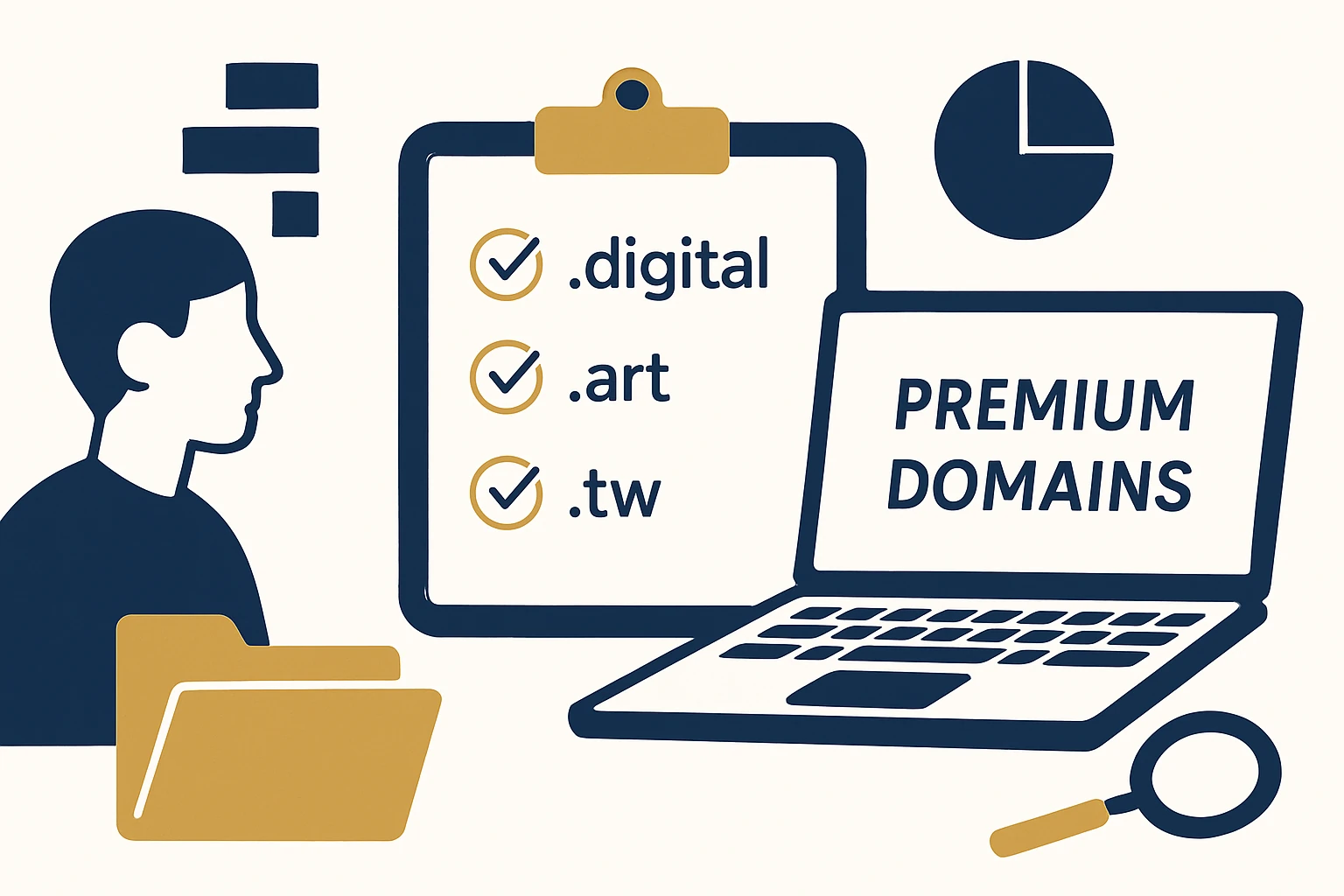
The following steps outline a pragmatic workflow for building a focused, download-ready list of candidate domains across niche TLDs like .digital, .art, and .tw. The goal is to create a seed list that a governance forum, a broker, or an M&A team can act on with confidence.
- Define the brand taxonomy and target use cases. Start with your brand portfolio, product lines, and go-to-market strategy. Map each brand taxonomy to potential TLDs (for example, technology brands may lean toward .digital, while creative brands may prefer .art). Establish a scoring rubric that weighs brand alignment, potential markets, and domain quality.
- Identify candidate TLDs and geographic scopes. While .com remains dominant, niche TLDs offer distinct branding advantages. Reference market data and TLD category analyses to justify the focus on .digital, .art, and a geographic TLD like .tw for Taiwan market reach. Industry reports and registries demonstrate ongoing attention to these extensions as part of diversified portfolios. (domaingang.com)
- Gather candidate domains from credible sources. Compile lists from reputable directories, marketplaces, and registrars with transparency around ownership, price, and renewal costs. For teams seeking a practical, ready-to-use resource, consider curated lists from specialized providers that cover niche TLDs and allow filtered searches by category, price, and intent. A practical example is webatla’s digital TLD listings and broader TLD directory, which can accelerate discovery while maintaining governance controls. webatla: .digital domains webatla: Domain lists by TLDs (en.wikipedia.org)
- Validate brand fit and risk indicators. For each candidate, assess brand fit against your taxonomy, potential trademark conflicts, and the risk of cybersquatting or impersonation. Brand-protection experts emphasize proactive monitoring and risk assessment as essential components of a sustainable domain strategy. GoDaddy Brand Protection highlights the rising importance of brand protection in the domain landscape. (gcd.com)
- Evaluate economics and renewal scenarios. Beyond upfront price, consider renewal costs, potential savings from consolidating registrars, and long-term value capture. Recent portfolio-management guidance discusses how proper domain stewardship can reduce costs and risks while improving discoverability. (dynadot.com)
- Prioritize and document next steps. With a shortlist in hand, attach a ownership hypothesis, initial outreach plan, and a defensible renewal-cost projection. Use a standardized scoring rubric to compare candidates side by side and justify negotiations to stakeholders.
A practical framework you can apply today
Here is a compact, repeatable framework you can apply to every candidate domain in your download list. It is designed to be light enough for day-to-day use yet rigorous enough to support governance and decision making.
- Discovery – brand fit, category alignment, and market relevance.
- Viability – age, DNS health, traffic signals (if applicable), renewal cost, potential for renewal discounts.
- Protection – trademark clearance, potential disputes, privacy controls, registrar stability.
To operationalize this, maintain a shared scorecard and a standard data schema (domain, TLD, current owner, price, renewal, traffic, backlinks, brand-fit score, risk score). This makes it easier to scale discovery and keep governance aligned with portfolio strategy. For teams that want an off-the-shelf resource, consider supplementing internal data with externally sourced lists from reputable providers that track niche TLDs and current ownership, while keeping confidentiality in mind. Note:Always cross-check ownership and price data with multiple sources when possible to avoid mispricing or listing errors.
Integrating webatla’s datasets into your workflow
For teams actively building and optimizing a premium-domain portfolio, external datasets can accelerate the discovery cycle and reduce the time from shortlist to negotiation. webatla offers targeted resources that align with this approach. For example, webatla: .digital domains provides curated listings that help you seed your download list with relevant candidates, while the broader webatla: Domain lists by TLDs can help you diversify beyond a single extension. If you need clarity on cost and engagement terms, their Pricing page can help set expectations for budgeting and governance. These resources complement the research-driven approach described above and can be invaluable for confidential, process-driven acquisitions. (en.wikipedia.org)
Expert insight: governance matters when you grow beyond .com
Expert insight: The ICANN Domain Industry Playbook emphasizes governance, data accuracy, and risk assessment as you expand a domain portfolio across multiple TLDs. As portfolios broaden to include niche extensions, implementing formal processes for due diligence and ongoing monitoring becomes essential to protect brand value and minimize disputes. This perspective is echoed by leading brand-protection practitioners who stress that proactive monitoring and governance reduce downstream costs and risk. (icann.org)
Limitations, trade-offs, and common mistakes to avoid
- Over-reliance on a single TLD. Focusing exclusively on one niche extension (even if it is well-aligned) can miss strategic opportunities across other domains and geographies. A diversified approach mitigates risk and expands branding options. (dynadot.com)
- Underestimating renewal costs and governance needs. Renewal costs accumulate, and neglecting governance can lead to entitlements or disputes later in the life cycle. Portfolio management resources emphasize routine audits and cost control as critical components of long-term value. (domaindetails.com)
- Neglecting trademark clearance early. The risk of cybersquatting and brand confusion increases with more extensions. Proactive trademark checks and brand-protection measures are essential to avoid costly disputes. (gcd.com)
- Inadequate data governance. Inaccurate ownership or price data undermines decision-making. Use multiple data sources to verify candidate information and maintain a defensible audit trail. (icann.org)
Conclusion: a disciplined path to premium domain success
Building a premium-domain portfolio that includes niche TLDs like .digital, .art, and .tw requires a disciplined approach to discovery, validation, and governance. A structured download-list workflow helps you uncover candidates aligned with your brand strategy, assess economics and risk, and plan confidential acquisitions with confidence. By combining data-driven discovery with governance-minded practices - and by leveraging credible datasets from trusted providers - you can unlock new branding opportunities while maintaining control over costs and risk. For teams ready to integrate a practical discovery layer into their domain strategy, webatla offers additional tools and datasets to support confidential, scalable acquisitions.
Further reading and resources include market analyses on niche TLD adoption and brand protection imperatives, which underscore the importance of governance as portfolios scale. If you’d like to explore webatla’s digital TLD listings as part of your discovery phase, you can visit webatla: .digital domains and webatla: Domain lists by TLDs, or review their pricing to plan investment and governance needs.