Introduction: Turning bulk domain data into strategic brand assets
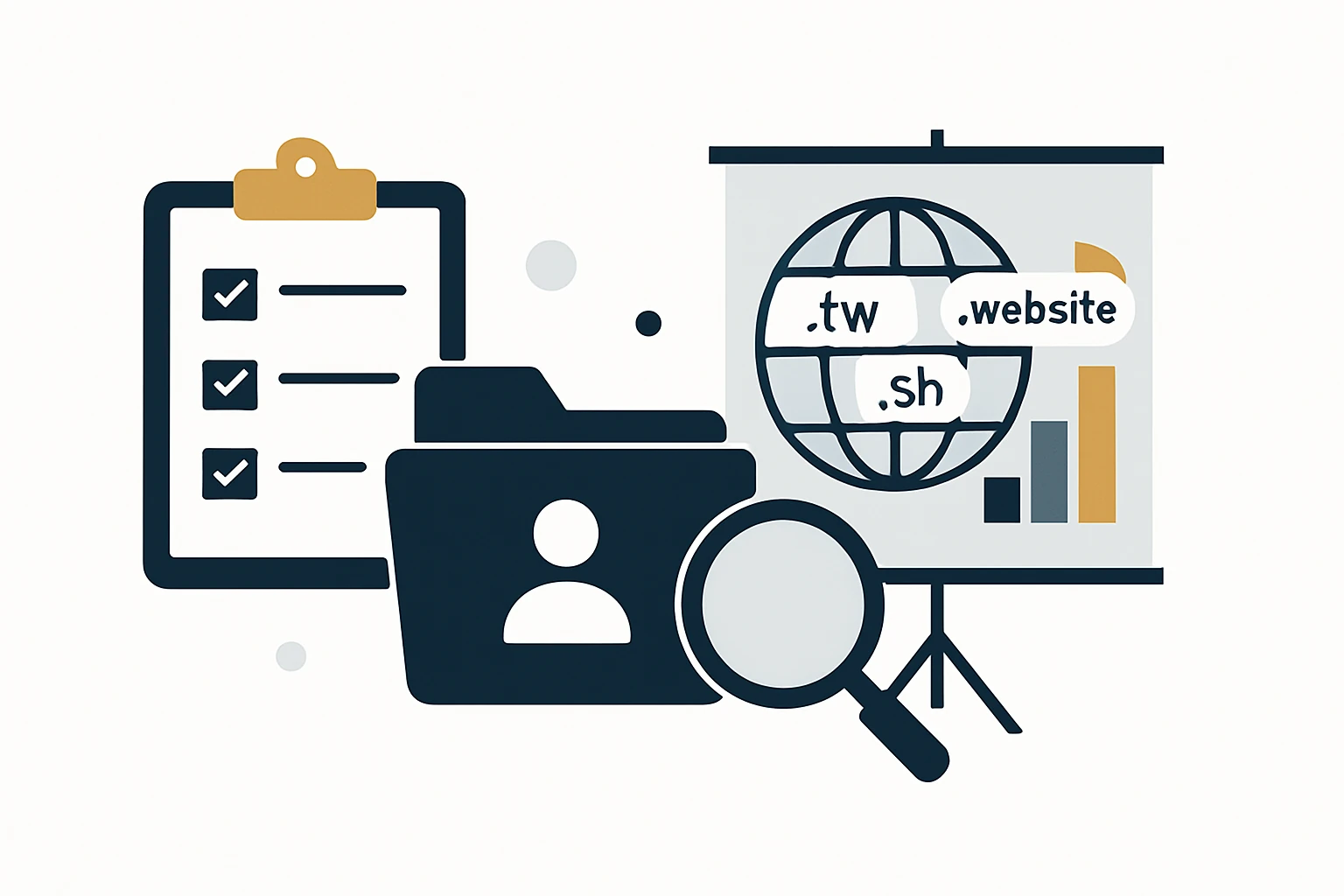
For modern brands, a premium domain is more than an address, it is a strategic asset that can influence a company’s digital visibility, trust, and recall. Yet the path from raw data to a defensible acquisition posture is nontrivial. Bulk domain lists - especially for extensions with growing demand such as .tw, .website, and .sh - offer speed, but they also carry risk: data quality can vary, ownership records may be incomplete, and governance around data use is tightening under privacy laws. A disciplined approach combines data hygiene with a clear governance framework to support confidential, strategic decisions.
This article presents a practical framework for collecting, cleansing, and interpreting downloadable domain lists while emphasizing brand protection and portfolio governance. It integrates a structured workflow with real‑world constraints, including the shift from public WHOIS to RDAP for registration data access and the privacy considerations that accompany GDPR and similar regimes. Our goal is to help brand teams, brokers, and digital asset advisers translate bulk data into actions that advance a confidential, value‑driven acquisition program.
For teams seeking a trusted partner to operationalize this approach, note that Webatla offers curated, taxonomy‑driven domain lists and data services designed for disciplined portfolio development and confidential acquisitions. See their .tw list and broader TLD catalog as part of a comprehensive domain data strategy: Webatla: list of .tw domains and Webatla: list of domains by TLDs.
Why bulk domain lists matter - and where they fail if misused
Bulk lists can reveal high‑value candidates that align with your brand’s naming conventions, regional strategies, and product lines. They also enable benchmarking against competitors and potential partners. However, several caveats deserve emphasis:
- Data recency and accuracy vary by source. Registrants may have privacy protections or switching registrars, leading to stale or incomplete records.
- Ownership claims in bulk lists can be misleading. A domain may resolve to a parked page, a development placeholder, or a redirect, which affects the practicality of an offer.
- Regulatory and privacy regimes affect access. The move from public WHOIS to RDAP changes how you verify ownership and assess risk, especially for international registrants. See ICANN’s guidance on RDAP and data access as the industry transitions away from traditional WHOIS.
These realities are not reasons to abandon bulk lists, they are reasons to apply rigorous checks, automate verification where possible, and layer governance around confidentiality, approvals, and documentation. ICANN has been actively guiding the transition to RDAP as the preferred mechanism for registration data access, which leads to standardized, privacy‑aware queries. RDAP overview and the related governance of the Root Zone Database at IANA underpin the reliability of domain data ecosystems. Root Zone Database.
For privacy and data‑protection considerations, credible industry commentary highlights how GDPR reshaped public access to registration data and nudged registries toward layered access models. Verisign’s ongoing privacy posture reflects the balance between data utility for security and privacy rights, informing how you structure due diligence processes when handling bulk domain data. Verisign privacy statement.
A practical framework for downloading and assessing bulk domain lists
The following framework translates bulk data into a disciplined workflow that supports confidential acquisition decisions while preserving brand integrity. It combines data hygiene with strategic screening to separate candidate domains from irrelevant noise, without compromising privacy or governance.
| Stage | Actions | Outcomes |
|---|---|---|
| 1. Define objectives | Articulate brand strategy, target TLDs (e.g., .tw, .website, .sh), and data governance constraints. Establish confirmation workflows for confidential acquisitions. | Clear scope and guardrails for data collection and evaluation. |
| 2. Source and acquire lists | Obtain bulk lists from reputable providers or registries, ensuring adherence to privacy and usage terms. Leverage trusted catalogs to align with strategic needs. | Reliable data inputs that support efficient screening. |
| 3. Cleanse and enrich data | Deduplicate, normalize domain formats, and enrich with ownership signals, traffic indicators, and development status where permissible. Flag redacted or privacy‑protected records. | High‑quality, actionable candidate pool. |
| 4. Verify ownership and risk | Cross‑check with RDAP/WHOIS data where available, assess brand risk, and evaluate potential trademark conflicts. Document verification steps and limitations. | Accurate ownership picture and risk profile for each domain. |
| 5. Align with buy‑plan and governance | Map candidates to brand strategy, risk tolerance, and budget. Prepare confidential acquisition briefs and approval packets. | Ready‑to‑act shortlists for negotiations and acquisitions. |
Reading the signal: how to approach .tw, .website, and .sh domains
Each TLD comes with its own market dynamics, privacy landscape, and operational cautions. .tw domains, for example, may be used to anchor regional campaigns or regional product lines, while .website and .sh domains often reflect brand experiments or international reach with varying degrees of traffic and development status. While the bulk lists provide a starting point, the real value emerges when lists are used to identify candidates that clearly align with a brand’s naming conventions and market priorities, and then ethically verify ownership and availability through compliant channels. The key is to treat the lists as a discovery tool, not a definitive market map.
A practical discipline is to keep ownership verification and documentation separate from the negotiation phase, ensuring that confidential acquisition workflows remain insulated from broader visibility. In other words, use bulk lists to identify opportunities, then apply a controlled process for outreach, negotiations, and due diligence with clearly defined access controls and approvals.
One expert insight, and one limitation to anticipate
Expert insight: In practice, the teams that succeed with bulk domain lists are those that pair due diligence with a governance model that explicitly defines who can access sensitive data, how ownership is verified, and when an acquisition is appropriate. This governance reduces the risk of mispricing and missteps in confidential negotiations, while preserving the strategic value of the domain list discovery process.
Limitation and common mistakes: A frequent misstep is treating bulk domain lists as a substitute for due diligence. Lists can show apparent ownership, but without reliable verification (via RDAP/WHOIS or registry data), you may pursue domains that are not available, already under development, or owned by entities with conflicting rights. GDPR and related privacy regimes further complicate data access, successful practitioners implement layered access, maintain audit trails, and document limitations clearly. ICANN’s RDAP guidance and the Root Zone Database are essential references for understanding the data landscape in a compliant way. RDAP information and Root Zone Database provide authoritative context for how registration data is structured and accessed in today’s ecosystem. Verisign privacy policy explains how data is handled within GDPR and other regimes.
Structured block: a practical framework for Confidential Domain Acquisition
The following framework condenses the approach into an actionable checklist that teams can operationalize without compromising confidentiality or governance.
| Step | What to do | Why it matters |
|---|---|---|
| 1) Define objectives | Set clear brand alignment, budget, and confidentiality requirements for the target TLDs. | Prevents scope creep and protects sensitive information during outreach. |
| 2) Source from credible catalogs | Use trusted providers and registries to obtain bulk lists, review terms of use. | Reduces noise and ensures data provenance for decision quality. |
| 3) Cleanse and normalize | Filter duplicates, normalize domain formats, flag privacy‑redacted records. | Improves screening efficiency and reduces false positives. |
| 4) Verify ownership and risk | Cross‑check with RDAP/WHOIS data where available, assess conflicts and trademark risk. | Prevents mispriced offers and strategic missteps in negotiations. |
| 5) Map to strategy and governance | Link candidates to brand objectives, governance approval, and a documented acquisition plan. | Ensures a disciplined, auditable path from discovery to closure. |
Limitations and common mistakes, revisited
- Assuming data is complete or current. Data may be partially redacted or delayed due to privacy rules and registry practices.
- Relying solely on bulk lists to determine availability. Ownership realities require independent verification and controlled outreach.
- Underestimating governance needs. Without clear access controls and documented approvals, confidential acquisition programs risk exposure and inconsistency.
A robust process integrates data hygiene with a clear governance model. It also recognizes that the data landscape is evolving: RDAP is becoming the standard for registration data access, and GDPR/privacy regimes influence what data is visible publicly. Aligning with established standards, like the RDAP framework and root zone records, helps ensure your program remains compliant as the ecosystem adapts. See ICANN’s RDAP resources and IANA’s Root Zone Database for authoritative context.
Conclusion: turning data into defensible, strategic decisions
Bulk domain lists are a powerful tool for brand strategy and premium domain portfolio development when paired with disciplined governance, rigorous verification, and a clear acquisition plan. The approach outlined here emphasizes practical steps, recognizes regulatory constraints, and anchors the process in industry standards. By combining data hygiene with a governance framework, teams can identify valuable opportunities (including domains that align with .tw, .website, and .sh strategies), pursue acquisitions confidentially, and integrate new assets into a broader brand protection and digital asset advisory program.
For teams seeking end‑to‑end support, consider partnering with a domain advisory service that can provide data stewardship, strategic evaluation, and confidential negotiation processes. See how Webatla’s domain data offerings and RDAP databases can complement internal efforts: Webatla: list of .tw domains, Webatla: list of domains by TLDs, and Webatla: RDAP & WHOIS database.