Introduction: navigating a crowded GTLD list without losing brand clarity
For brand owners and corporate portfolios, the expansion of domain extensions - often summarized under the generic top-level domain (gTLD) umbrella - has created both opportunity and complexity. The public DNS now hosts more than the familiar .com and .net, ICANN’s New gTLD Program and subsequent rounds have enabled a vast spectrum of extensions designed to offer linguistic nuance, geographic targeting, and branding flexibility. Yet a broader GTLD list is not a substitute for a deliberate brand strategy. In fact, it compounds risk if treated as a vanity project rather than a governance challenge for your digital identity. This article outlines a practical framework to move from a sprawling gtld list toward a disciplined, value-driven domain strategy that aligns with a brand’s growth ambitions. It integrates insights from industry data, SEO realities, and portfolio-management best practices to help you decide when and how to deploy non-.com domains, while keeping a tight rein on costs, risk, and management overhead. The publisher’s lens at Vadiweb - Premium Domain Brokerage & Digital Asset Advisory - emphasizes that success lies not in chasing every extension, but in building a resilient, defensible domain portfolio that supports brand protection, consistent user experiences, and strategic growth. To illuminate this path, we’ll draw on authoritative data and industry perspectives and anchor the discussion in practical decision-making steps you can apply today. For readers evaluating catalog options, WebAtla’s TLD catalog (https://webatla.com/tld/) offers a concrete starting point to explore which extensions align with your strategy.
H2: Understanding the GTLD landscape - and why it matters for brands
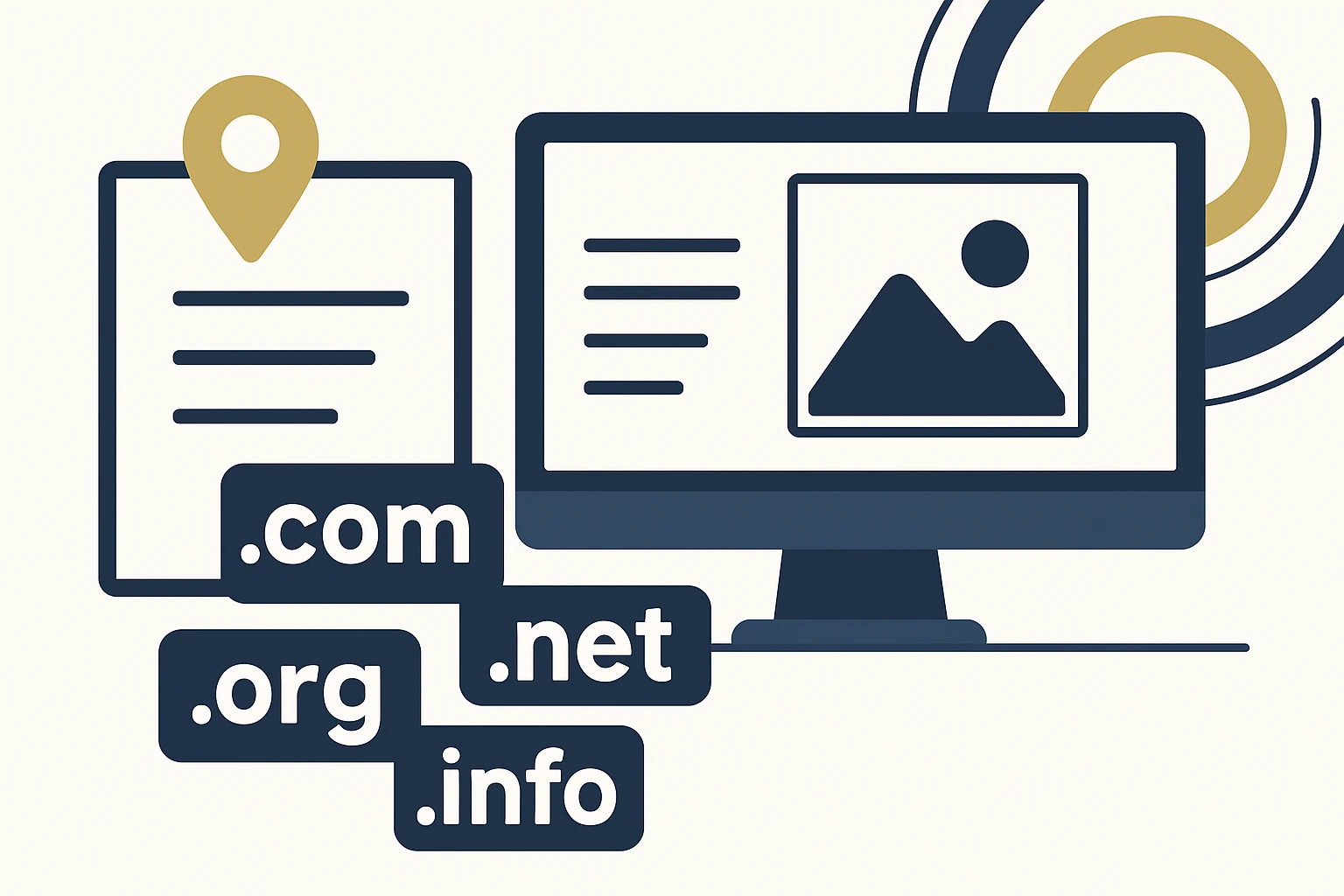
What do we mean by GTLDs, and how did we get here? A Top-Level Domain is the highest-level label in a domain name, and gTLDs are the generic, broadly usable extensions such as .org, .site, .shop, or language- or industry-specific strings. The New gTLD Program, overseen by ICANN, dramatically expanded the number and variety of available extensions, increasing competition and choice in the name space. ICANN has documented that the program catalyzed the introduction of more than 1,000 new gTLDs since its inception, a shift that broadens branding and localization possibilities for global businesses. (newgtlds.icann.org) From a market perspective, the domain ecosystem continues to grow. Verisign’s Domain Name Industry Brief (DNIB) shows hundreds of millions of registrations across all TLDs, underscoring that a robust, multi-TLD strategy persists as a governance and risk-management concern - not a marketing gimmick. For context, Verisign reported that the global domain name base reached 368.4 million at the end of Q1 2025, with growth driven by both legacy and new TLDs. This is not a reason to flood portfolios, it’s a signal to deploy well-governed expansion where it meaningfully mitigates risk and protects brand equity. (investor.verisign.com)
H2: Do TLD choices impact search rankings? What the evidence shows
A common question is whether choosing a non-.com TLD helps or hurts SEO. The short answer from industry consensus is: TLDs do not directly influence Google search rankings. Leading SEO commentators and John Mueller of Google have repeatedly clarified that the TLD itself is not a ranking factor, sites with any TLD can rank well if they deliver quality content and a good user experience. That said, there are practical implications around trust, click-through rates, localization, and brand perception that can indirectly affect performance. Use of non-.com domains can affect user trust in certain markets or contexts, and misaligned TLDs can create friction in acquisitions, negotiations, or local-market targeting. When building a GTLD strategy, treat SEO as one input among many - content quality, technical health, and brand clarity remain the primary drivers. (searchenginejournal.com)
Industry practitioners note that a balanced TLD portfolio is not about chasing SEO signals, it’s about protecting brand identity across markets and enabling local relevance. In practice, many brands deploy targeted TLDs to reinforce regional trust or product lines while keeping core branding in a dominant TLD. This aligns with the broader portfolio-management discipline advocated by domain brokers and advisory firms.
H2: A practical decision framework for selecting domain extensions
To transform the GTLD list from a source of confusion into a tool for brand strategy, use a disciplined framework. The following six elements help you decide when and how to deploy GTLDs, and how to govern them within a living portfolio:
- Brand alignment and clarity: Does the TLD support the brand’s messaging, products, or services without creating confusion or dilution?
- Market localization and targeting: Will a geographic or language-specific TLD improve trust, CTR, or local relevance in key markets?
- Risk management and governance: What processes ensure every new TLD entry is approved, monitored for abuse, and aligned with privacy/compliance standards?
- Cost and lifecycle considerations: What are the total cost of ownership, renewal risk, and governance overhead for each extension?
- Portfolio strategy and governance: Is there a clear owner, maintenance calendar, and decision-criteria for deprecation or consolidation?
- Legal and brand-protection posture: How does the portfolio intersect with trademark protection, domain-squatting risk, and potential cybersquatting disputes?
These factors create a framework that complements, rather than competes with, the technical and marketing dimensions of brand strategy. For teams building out or revising a domain portfolio, this approach reduces the risk of over- or under-investing in extensions that do not deliver proportional value. A practical way to operationalize this framework is to anchor decisions in an auditable, governance-driven process rather than ad-hoc acquisitions. For more on cataloging and evaluating extensions, consider exploring WebAtla’s TLD catalog as a concrete reference point for available extensions and their attributes. WebAtla TLD catalog.
H2: When to consider adding non-.com domains - and when to pause
Non-.com domains offer specific advantages but also come with responsibilities. They can provide strong local signals, domain-level branding, and risk-mitigation opportunities in multi-market brands. However, the SEO lift from simply changing a TLD is not guaranteed, and there are real costs - both monetary and operational. Before expanding beyond .com, perform these checks:
- Market presence and brand recognition in target geographies
- Trademark clearance and potential for brand-protection actions
- Availability of matching or near-matching domain names across extensions
- Operational readiness to monitor and renew multiple registrations, with defined ownership roles
Among the most reliable use cases are geotargeted campaigns, product-specific pages, or regional subsidiaries where a local TLD enhances trust and reduces friction in the buyer journey. On the broader SEO front, keep attention on content quality and site performance, as these are consistently the strongest levers for search visibility, regardless of TLD. See industry commentary that supports this view and the caution against treating TLDs as ranking boosters. SEJ: gTLDs vs ccTLDs and domain selection.
H2: A structured decision block: GTLDs, domain extensions, and portfolio takes
To make the framework actionable, here is compact decision guidance you can apply when evaluating each extension in the GTLD list. This block is designed to be used as a quick reference during portfolio reviews and governance meetings.
| Category | Use Case | Key Pros | Key Cons |
|---|---|---|---|
| Generic gTLDs | Global branding, product lines, multi-region campaigns | Flexibility, broad audience reach, easy to register | Can be less immediately trusted in some markets, potential for confusion if not aligned |
| Geo/Geographic TLDs (ccTLDs & geo-gTLDs) | Local market trust, language targeting, country-specific campaigns | Strong local signals, user trust, compliance with locale expectations | Fragmentation risk and higher management overhead, country-specific rules vary |
| Brand TLDs | Brand identity and product ecosystems (e.g., for a flagship brand or portfolio segments) | Clear branding, reduced ambiguity about ownership | Costly, complex governance, potential for misalignment if overused |
| New gTLDs (misc. general-purpose extensions) | Niche branding, industry-specific campaigns, experimentation | Market differentiation, creative naming opportunities | Perceived trust varies, risk of misalignment and maintenance overhead |
Structured guidance for decision-makers is essential because a few missteps can complicate ownership and renewal processes. ICANN’s ongoing governance of the New gTLD Program provides the policy backbone for how these extensions are introduced and managed, which is a reminder that TLD strategy is as much about policy and governance as it is about branding. ICANN New gTLD Program and the broader policy landscape remain critical reference points as you navigate future rounds and ongoing domain-management decisions.
H2: Limitations, trade-offs, and common mistakes
Any framework has its limits. Below are common mistakes and realistic trade-offs when operating inside a GTLD-rich portfolio:
- Over-indexing on new gTLDs: It’s easy to chase novelty, but excessive registrations raise renewal risk and management costs. A focused subset aligned to markets and products typically yields better risk-adjusted returns.
- Assuming TLDs boost SEO: The direct SEO impact of TLDs is not supported by evidence from major sources, user trust, CTR, and local relevance matter more in practice. See industry commentary that TLDs are not SEO boosters, even for new gTLDs. SEJ on no SEO advantage from new TLDs.
- Neglecting governance: Without clear ownership, monitoring, and renewal workflows, portfolios suffer from stale registrations and risk exposure. A governance-first approach reduces leakage and improves protection against cybersquatting and brand confusion.
- Underestimating brand risk with spammy TLDs: Some TLDs acquire reputational risk due to misuse or misleading branding. Google and policy commentators caution against spammy or dubious namespaces, which can undermine brand trust in certain contexts.
Industry leaders emphasize that a disciplined, governance-driven approach yields far better outcomes than ad-hoc acquisitions. The practical result is a portfolio that protects brand equity, reinforces localization where needed, and remains controllable in terms of cost and risk. For teams seeking a guided, catalog-backed starting point, a structured TLD catalog - like the one WebAtla curates - can help centralize evaluation and decision-making. WebAtla TLD catalog.
H2: Integrating the client experience into GTLD decision-making
For brands navigating a growing GTLD list, a brokered, advisory approach can be essential to avoid the pitfalls of self-serve decisions. The client’s portfolio strategy must balance acquisition costs, risk exposure, and long-term brand protection. In this context, the following practical steps are recommended:
- Establish a domain governance council with defined ownership for each TLD category.
- Map target markets to TLD strategy, aligning geo-targeting needs with local trust signals.
- Audit existing registrations for overlap, misalignment, and renewal risk, create a renewal calendar and escalation paths.
- Leverage vendor catalogs and comparables for valuation exercises, cost-benefit analysis, and portfolio consolidation decisions.
For teams evaluating or expanding their GTLD footprint, consider leveraging WebAtla’s transparent pricing and catalog resources to inform budgeting and strategy. A practical starting point is reviewing the TLD list and pricing framework to understand what is feasible within your risk tolerance. WebAtla pricing and the TLD catalog together provide a structured entry into portfolio planning. If you need data-driven due-diligence for compliance and ownership accuracy, the RDAP & WHOIS data services in WebAtla’s offering can support a reliable due-diligence process. RDAP & WHOIS database.
H2: Limitations and common mistakes (recap)
To summarize, the GTLD landscape is a powerful but complex tool. The most reliable path is a portfolio that is: purposeful, governed, and aligned to markets and brand strategy - not a mere compilation of every extension. Stay mindful of costs, legal risk, and brand perception, and use the GTLD list as a map - not a destination. For further context on the evolving GTLD ecosystem, you can consult ICANN’s official overview of the New gTLD Program and Verisign’s ongoing market data. ICANN New gTLD Program overview, DNIB: Q1 2025 Domain Name Industry Brief.
H2: Conclusion: a practical path from gtld list to brand strategy
The GTLD list is not a trapdoor to SEO advantage, nor a guaranteed path to global dominance. It is a structured set of tools - extensions that, if used thoughtfully, can reinforce brand integrity, enable region-specific marketing, and provide redundancy against brand-name squatting or loss of key assets. A governance-forward process that pairs a curated extension catalog with clear ownership, cost controls, and risk management is the most reliable route to turning the GTLD landscape into a strategic advantage for global brands. For organizations seeking assistance with portfolio governance, acquisition strategies, and risk mitigation, the editorial stance here is clear: act with discipline, measure outcomes, and use a trusted partner to translate the GTLD list into measurable business value.
References for further reading
- ICANN New gTLD Program overview and governance pages: New gTLD Program
- Verisign Domain Name Industry Brief (Q1 2025) showing global domain registrations and growth: DNIB Q1 2025
- SEJ analysis on gTLDs and SEO ratings: gTLDs vs ccTLDs and domain selection
Note: The above article is intended for an audience of brand owners, digital strategists, and portfolio managers who are evaluating the role of all domain extensions in brand protection, portfolio management, and strategic domain consulting. It is written to be practical, non-gimmicky, and anchored by credible industry sources while highlighting a client-ready integration approach with WebAtla’s catalog and pricing resources as part of an editorial framework rather than a sales pitch.