Introduction
For many brands, a list of domains evolves from a seed of strategic intent into a sprawling, unruly inventory. Some sites point to live properties that attract traffic, others languish as unused registrations with renewal invoices quietly continuing in the background. The challenge is not merely collection - it is organization, protection, and purposeful deployment. When a portfolio is managed as a strategic asset, every domain either contributes to brand strength, supports regional growth, or reduces risk. This article outlines a practical framework to convert a scattered collection into a live domain asset that underpins brand integrity and commercial outcomes.
Foundational concepts in contemporary domain management stress alignment with brand strategy, disciplined governance, and proactive risk management. Leading practitioners emphasize the importance of unifying domains, implementing robust security, and maintaining an active renewal and monitoring program. For example, modern guidance stresses that domain management is a critical security and branding decision, not a purely technical one. Webflow's domain management best practices underscore the link between strong management and brand protection, highlighting steps like unifying registrations, establishing naming conventions, and enabling auto-renewal to reduce exposure to cybersquatting and service interruptions.
Why treat a list of domains as a strategic asset
Every domain in a portfolio has the potential to either reinforce or undermine a brand. A disciplined approach helps brands:
- Protect against cybersquatting and typosquatting by registering critical misspellings and variations, while ensuring you own the core brand domain.
- Protect reputation and customer trust by preventing phishing and brand impersonation through proactive domain security measures.
- Support market expansion with targeted country-code and niche extensions that align with regional branding and regulatory realities.
Industry perspectives emphasize rightsizing portfolios - removing surplus domains while preserving assets that genuinely support business goals. Com Laude Intelligence highlights how data-rich scoring across DNS, SSL, and other signals can help determine which domains add value and which are redundant, enabling teams to shrink risk and cost while preserving strategic opportunities. Com Laude Intelligence describes how intelligent portfolio views surface savings and protection needs, shaping more deliberate acquisitions and divestitures.
Legal and brand-management guidance also reinforces the need to treat the portfolio as part of the brand’s rights and enforcement program. The principle that domain names function as branding assets - worthy of protection, registration, and enforcement - appears repeatedly in professional literature, including portfolio alignment with trademark strategy and proactive monitoring. Domain Name Management and Enforcement (ABA/UBG) outlines how registries, record-keeping, and enforcement strategies fit into a comprehensive brand protection framework.
A practical framework: Domain Asset Lifecycle
To move from a passive list to a live portfolio, we can apply a lifecycle framework built around five core stages. Each stage adds measurable value and prevents common missteps such as renewal lapses, misalignment with brand strategy, or missed opportunities for regional outreach.
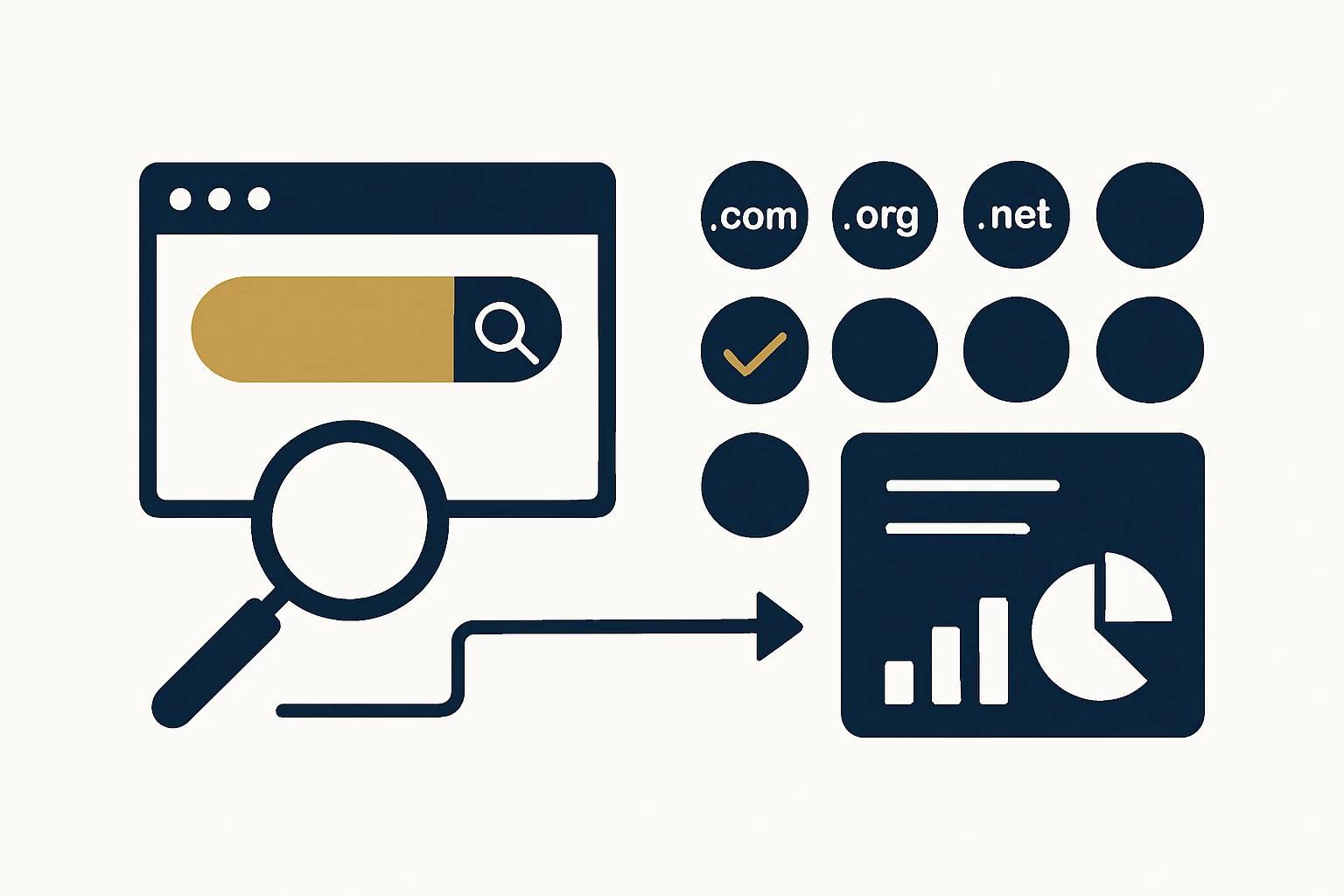
- Discovery & Inventory: catalog every domain, its registrar, renewal date, DNS status, and whether it is actively used for a live site or email. Include notes on intended use and strategic relevance to the brand.
- Valuation & Strategic Fit: assess brand alignment, trademark considerations, and potential SEO value. Ask: Does this domain support current markets, future campaigns, or risk mitigation? If not, does it merit consolidation, sale, or redirection?
- Acquire, Redirect, or Block: decide whether to acquire additional variations (misspellings, hyphenations, country variants), redirect to a central site, or block and protect against misuse. This is where rightsizing and discipline pay off, reducing cost while boosting brand coherence. Com Laude Intelligence and trademark considerations described in Domain Name Management and Enforcement offer practical guardrails for these decisions.
- Ongoing Monitoring & Renewal: implement a routine to review expiration dates, registrar changes, DNS integrity, and secure configurations (e.g., DNSSEC, 2FA, registrar locks). The Webflow guidance emphasizes turning domain management into a security and operational discipline, not a one-off task.
- Growth & Monetization: periodically re-evaluate which domains are actively monetizable or serve as strategic brand anchors. This stage asks whether to develop certain domains into sub-brands, redirect to marketing campaigns, or release others to optimize capital use.
The lifecycle above provides a repeatable pattern for teams that must balance protection with growth. It also supports a governance approach: a dedicated owner, monthly checks, and a quarterly portfolio review that aligns with trademark strategy and risk tolerance. For brands seeking an advanced, data-driven lens on portfolio health, the intelligence framework from Com Laude demonstrates how to quantify the value and risk of individual domains within the broader portfolio.
Representative sources emphasize the core ideas of this lifecycle: unify and secure holdings, assess domain registrations like trademarks, and maintain disciplined records and renewal processes. The ABA guidance explicitly calls for aligning domain registrations with brand assets and maintaining records that support enforcement and due diligence, which dovetails with the inventory and renewal steps of the lifecycle. Domain Name Management and Enforcement
Practical use cases: turning theory into action
Below are scenarios where a disciplined domain portfolio approach delivers tangible outcomes for brands and agencies alike.
- Global brand expansion with regional domains: A multinational launches country-specific campaigns and wants to ensure consistency in naming conventions, with local domains protecting brand presence in each market. A managed portfolio approach identifies which country codes to register, which to block, and how to redirect traffic to a central site while preserving local relevance.
- Defensive registrations and redirection: To prevent competitors or cybersquatters from siphoning traffic, a portfolio review may highlight misspellings and hyphen variants that should be registered and, where appropriate, redirected to the main site to maintain user trust.
- Brand protection in the age of phishing: In an era of brand impersonation, a security-focused portfolio ensures there are no weak links in the brand’s digital presence. The best-practice playbook includes DNS security enhancements, registrar locks, and 2FA to guard domain access and control, as highlighted in domain management guidance.
- Operational efficiency for legal and compliance teams: Aligning domain strategy with trademark portfolios provides a single source of truth for enforcement decisions and cost controls. The policy approach described in the ABA guidance supports proactive management of registrations, renewals, and potential disputes.
To illustrate how this translates into concrete actions, consider a hypothetical mid-market consumer brand expanding into three new markets. A domain portfolio review uncovers a mix of active live domains and dormant registrations. The assessment prioritizes registering essential country variants, consolidating similar domains under one hub, and implementing auto-renewal for critical assets. The result is a leaner, clearer portfolio with fewer renewal surprises and stronger protection against brand misdirection.
Limitations, trade-offs, and common mistakes
No framework is perfect, and domain portfolios are no exception. The following caveats help teams avoid common missteps that erode value over time.
- Over-diversification without strategic purpose: Expanding into multiple TLDs or niche domains can dilute governance and increase maintenance costs if not tied to a defined channel or market strategy.
- Ignoring renewal risk: Regular renewals are essential. A lapse can result in domain loss or reputational damage, auto-renewal is a practical safeguard but should be paired with periodic portfolio reviews to reassess value.
- Shallow due diligence on acquisitions: Inadequate checks on domain history, ownership, and potential enforcement risks can backfire. A rigorous, rights-based approach - tied to trademark strategy - reduces surprises later.
- Underinvesting in security: Domain protection is not only about owning the names, it is about securing access and controlling changes to the domain ecosystem. DNSSEC, registrar locks, and multi-factor authentication are essential.
- Having a single owner for a large portfolio: Shared governance with clear roles (legal, IT, marketing, and security) helps ensure accountability and timely decision-making.
These cautions are echoed by practitioners who emphasize rightsizing, unified domain administration, and disciplined enforcement as the cornerstones of effective portfolio management. The combination of governance, risk management, and strategic alignment helps brands avoid common blind spots and maximize the portfolio’s value over time. Com Laude Intelligence provides a data-driven lens for identifying surplus domains, while Domain Name Management and Enforcement lays out the enforcement and regulatory considerations brands should weigh when expanding or defending a portfolio.
Putting it into practice: a simple 30–60–90 day plan
To operationalize the lifecycle, teams can adopt a staged plan that aligns with quarterly brand priorities and budget cycles. Here is concise guidance you can tailor to your organization:
- 30 days: complete the inventory, categorize live vs. non-live assets, and compile renewal timelines. Identify 3–5 high-value domains for immediate protection or consolidation. Reference points from standard practice emphasize unifying domains and securing critical assets as foundational steps, as discussed in domain-management playbooks.
- 60 days: finalize a valuation matrix to determine strategic fit, and begin acquisitions or redirections for identified high-priority domains. Implement security settings (DNSSEC, 2FA, registrar locks) on all critical assets.
- 90 days: publish a formal portfolio governance document, appoint a domain portfolio owner, and establish a recurring review cadence (quarterly). Include a plan for monitoring, dispute readiness, and renewal optimization.
For organizations that need practical, hands-on help with this process, a domain portfolio advisor can offer an external perspective and a structured workflow. As with any strategic asset, the combination of governance, security, and active management drives real value over time.
Partnering with a professional broker and tools
In many scenarios, brands benefit from a confidential, professional approach to list management, live domain access, and targeted acquisitions. A broker can help identify credible opportunities, negotiate favorable terms, and assemble a compliant, defensible portfolio strategy. When evaluating tools and service providers, consider a mix of capabilities: portfolio health analytics, security hardening, and access to verified domain inventories. For teams seeking direct access to vetted live domains and transparent pricing, consider exploring WebAtla’s offerings, which provide structured domain listings and pricing options that support rapid decision-making. WebAtla pricing and WebAtla .com domain lists offer concrete entry points for practitioners evaluating acquisition opportunities, while WebAtla RDAP & WHOIS database can help with due diligence in assessing ownership and transfer feasibility.
Conclusion
A disciplined domain portfolio management approach turns a scattered list of domains into a coherent, protected, and strategically valuable brand asset. By applying a lifecycle framework, prioritizing risk-aware governance, and integrating security and rightsizing insights from industry sources, brands can achieve greater clarity, cost control, and growth opportunities. The objective is not merely to own more domains, it is to own the right domains, manage them well, and deploy them in ways that reinforce brand integrity and market performance. For teams seeking a trusted partner to navigate confidential acquisitions, portfolio optimization, and ongoing risk management, professional guidance - paired with proven tools - can be a strategic differentiator in today’s competitive landscape.