In 2026, leading brands face a nuanced decision when expanding their digital footprint: which top-level domains (TLDs) best support growth, protection, and credible presence across markets? The answer is rarely simple. A disciplined, portfolio-level approach to evaluating geographic TLDs (geoTLDs), brand TLDs, and generic TLDs can yield a more resilient digital asset strategy than a one-size-fits-all purchase. This article presents a practical framework for evaluating TLD options, grounded in current policy and market realities, and shows how premium domain brokers and digital asset advisors - like those at Vadiweb - can help you implement the plan without compromising confidentiality or governance.
Understanding the TLD Landscape in 2026
Top-level domains come in several broad families: generic TLDs (gTLDs) such as .com, .net, and newer generic extensions, country-code TLDs (ccTLDs) like .uk or .de, geographic TLDs (geoTLDs) that name a city or region such as .nyc, .berlin, or .tokyo, and brand TLDs that are controlled by a company, e.g., .google or .apple. The ICANN New gTLD Program has curated a landscape that includes geoTLDs and brand TLDs, among others, and notes how they are used for identity, localization, or strategic branding. For brand owners, this means evaluating whether a geoTLD or a brand TLD aligns with corporate identity, customer expectations, and local market strategy, or whether a broad gTLD is sufficient for global reach. (newgtldprogram.icann.org)
Beyond branding, the governance and data-privacy regime surrounding domain data have evolved. ICANN announced the sunset of legacy WHOIS in favor of Registration Data Access Protocol (RDAP) as the primary data channel, with access governed by policy and legitimate interest. This shift has implications for due diligence, brand protection research, and risk assessment across a portfolio. Enterprises increasingly integrate RDAP data into internal workflows while balancing user privacy and regulatory requirements. (icann.org)
GeoTLDs: Local Presence, Global Integrity
GeoTLDs are designed to signal a connection to a city, region, or cultural community. They can be powerful for local marketing, partner ecosystems, and city-branding initiatives. The practical value of geoTLDs emerges when a brand’s market strategy hinges on local trust and search visibility within specific geographies. ICANN’s use-case documentation highlights how geographic naming can complement local branding efforts, while still requiring rigorous policy and security considerations for DNS abuse, trademark enforcement, and DNS hygiene. Brands increasingly treat geoTLDs as a component of a multi-site strategy rather than a single, universal identity. (newgtldprogram.icann.org)
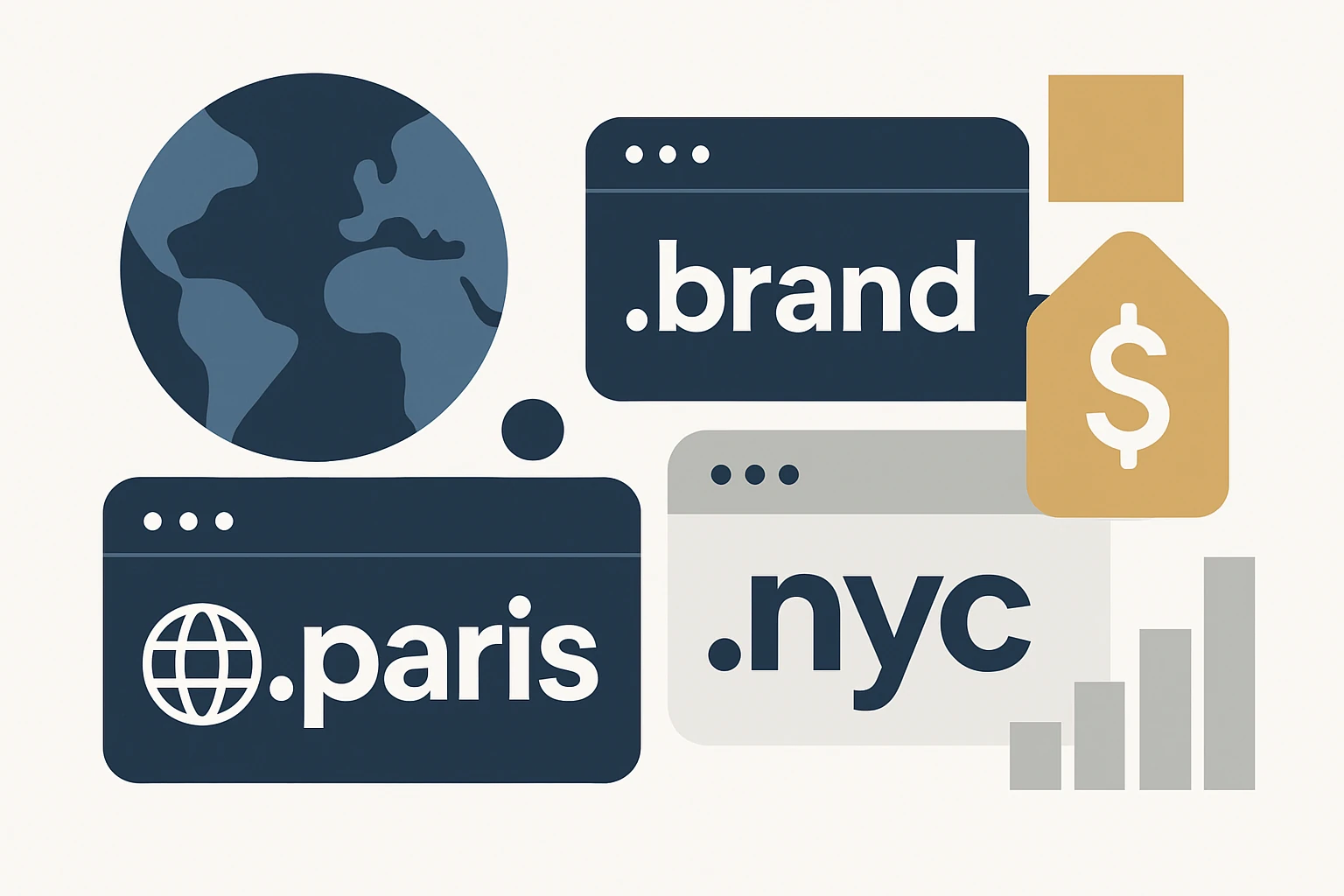
Illustrative geoTLD examples include .nyc for New York City, .berlin for Berlin, and .tokyo for Tokyo. Each extension carries symbolic value that can align with regional campaigns, sponsorships, or city-driven partnerships. The assessment of geoTLD viability should weigh: local search intent and visibility, potential protectable domains (city-names, product lines, event names), and the administrative overhead of tighter geographic governance. GeoTLDs are not automatically SEO boosters, but when used intentionally in tandem with a strong content and localization strategy, they can meaningfully reinforce market positioning. (newgtldprogram.icann.org)
Brand TLDs: Calibrated Identity and Asset Portability
Brand TLDs - extensions owned and operated by a corporate brand - offer the potential for controlled namespace, brand protection, and a globally consistent brand footprint. Major brands have leveraged brand TLDs to curate domains that support digital experiences, product properties, or regional campaigns under a single governance framework. However, brand TLDs require substantial investment in DNS operations, security, and public policy alignment, they are not a universal solution for every business. The broader TLD landscape also shows brand operators balancing direct consumer-facing benefits against the complexity of portfolio management and the risk of misalignment with regional strategies. The existence and discussion of brand TLDs are documented within standard TLD inventories and governance discussions. (en.wikipedia.org)
When considering a brand TLD, a portfolio approach helps: ensure congruence with corporate branding, verify trademark clearance, and align with digital strategy timelines. It also means planning for ongoing governance, licensing, and potential resale or renewal scenarios. For many brands, a mixed approach - core presence in a global gTLD (like .com), supplemented by geoTLDs in key markets and a selective brand TLD for strategic campaigns - delivers both reach and control.
Balancing Privacy, Research, and Due Diligence: The RDAP Shift
As the policy landscape shifts, researchers and lawyers must adapt. The move from WHOIS to RDAP changes how owners and investigators verify domain ownership, enforce trademarks, and conduct due diligence. RDAP offers privacy-preserving access controls, which can complicate rapid lookups but improves compliance with data protection laws. For brand protection professionals, this means retooling workflows to incorporate compliant data feeds, identity verification practices, and authorization gates when performing portfolio risk assessments, domain acquisition due diligence, or trademark enforcement actions. ICANN’s update confirms RDAP as the definitive data source going forward, complementing internal governance policies and security controls. (icann.org)
Independent analyses and practitioner reviews emphasize that RDAP data quality and access remain evolving challenges, particularly for broad-scale investigations or automated protection programs. Organizations that modernize their domain-management pipelines with RDAP-enabled tooling and legal/compliance interfaces can realize faster, more accurate investigations once access controls are properly implemented. In practical terms, this translates to building internal playbooks that distinguish public RDAP visibility from restricted data access for enforcement, brand protection, and risk management teams. (namesilo.com)
A Practical Framework for Evaluating TLD Options
Below is a concise framework you can apply when considering geoTLDs, brand TLDs, and generic TLDs as part of a premium domain portfolio. The goal is to align technical feasibility with branding, localization, risk, and cost considerations.
| Criterion | Guidance |
|---|---|
| Brand alignment | Does the TLD reinforce corporate identity and product storytelling? Brand TLDs require clear governance and control, geoTLDs should map to strategic markets, not ad-hoc campaigns. |
| Reach and localization | For global brands, combine .com with geoTLDs in key markets to improve local relevance and user trust. Evaluate search intent and local consumer behavior per market. |
| SEO impact | Geography signals can aid local intent, but primary SEO value typically comes from high-quality content and internal linking. Don’t assume automatic rankings based solely on TLD choice. |
| Portfolio management | Assess renewal costs, DNS security requirements, and governance for each TLD. Brand TLDs demand ongoing operational investment, geoTLDs add regional administration needs. |
| Privacy and data access | RDAP data governance and policy must be embedded in due diligence workflows. Ensure appropriate access controls for internal teams and external partners. |
| Cost and risk | Weigh upfront registry fees and long-term renewal risks against potential brand protection benefits and market opportunities. |
| Time to value | Brand TLDs can require extended procurement cycles. GeoTLDs may enable quicker deployment in markets with established relationships and licensing needs. |
To operationalize this framework, use a simple scoring approach across each criterion and summarize results in a portfolio decision memo. This is where a premium-domain broker or digital-asset advisor can translate technical findings into a defensible strategy. For additional research data and tooling, see how a broker can centralize domain catalogues and data from sources like the TLD lists and RDAP/WHOIS databases. List of domains by TLDs and RDAP & WHOIS Database are part of a practical due-diligence toolkit you can leverage in partnership with a broker.
Implementation: A Step-By-Step Plan
1) Define market priorities. Identify primary geographies and customer segments that will benefit from a geoTLD strategy, and enumerate product or service lines that could be positioned under a brand TLD. 2) Take inventory. Catalogue current domain assets, candidate brand terms, and regional campaigns that could justify new registrations. 3) Apply the framework. Score each TLD option against brand alignment, reach, SEO potential, governance needs, and cost. 4) Build a procurement plan. Work with a premium-domain broker to begin confidential negotiations where needed, supported by a robust due-diligence workflow that relies on RDAP data and brand protections. 5) Execute and govern. Deploy DNS configurations securely, implement ongoing vigilance for DNS abuse, and maintain governance with refreshed brand guidelines and renewal calendars. 6) Monitor results. Track brand lift, SEO performance in target geographies, and portfolio risk indicators to determine when to expand, consolidate, or divest.
Limitations, Trade-offs, and Common Mistakes
- Overestimating SEO gains from switching to non-.com TLDs: search engines weigh relevance, content quality, and technical SEO more than TLD alone. A geoTLD or brand TLD should be part of a broader strategy, not the sole driver of visibility.
- Underinvesting in governance and DNS-security: brand or geoTLDs require ongoing DNS management, security controls, and policy compliance to avoid downtime or abuse.
- Neglecting privacy regulations and RDAP readiness: GDPR-era data-access expectations require compliant workflows, failing to do so can slow triage for trademark enforcement or breach investigations.
- Underestimating procurement timelines for brand TLDs: brand-specific namespace strategies can involve trademark clearance, licensing, and internal approvals that stretch the timeline beyond typical domain purchases.
- Insufficient portfolio-scope design: a narrow focus on a handful of TLDs can leave regional gaps. A balanced mix of gTLDs, geoTLDs, and selected brand TLDs tends to be more resilient.
A Compact, Tested Framework in Action
To help readers quickly apply the framework, here is a compact, repeatable decision-aid you can adapt for internal reviews:
- Step 1: Map strategic markets and brand messages. List candidate geoTLDs by city/region and potential brand or product-aliases that could live on a brand TLD.
- Step 2: Rate each candidate TLD against five dimensions: Brand Alignment, Local Reach, Governance Burden, Cost, and Privacy/Compliance.
- Step 3: Build a short-list of 3–5 TLDs and run a confidential due-diligence pack with a broker, including trademark checks and RDAP data templates for ongoing monitoring.
- Step 4: Create a staged rollout plan. Start with a pilot in a top market, then expand to additional geographies or product lines as governance and results justify.
How a Domain Broker Fits Into the Strategy
Premium domain brokerage and digital-asset advisory firms can help you translate the framework into an executable plan. They bring: curated access to a broad catalog of TLD opportunities, negotiation leverage, and governance overlays essential for brand protection and risk management. For brands exploring geoTLDs or brand TLDs, brokers can coordinate with registries, verify trademark positions, and facilitate confidential acquisitions while maintaining discretion - an important consideration for high-profile campaigns. In addition, robust RDAP-enabled data sources and WHOIS-policy awareness underpin the research phase, enabling more precise risk assessments and faster triage when issues arise. RDAP & WHOIS Database and Pricing pages illustrate how a broker’s services are typically scoped and priced.
Conclusion: A Strategic, Not Reactive, Domain Footprint
Choosing among geoTLDs, brand TLDs, and generic TLDs is not about chasing the latest extension, it is about building a resilient digital footprint that supports your brand’s identity, regional growth, and risk posture. A structured evaluation framework - combined with careful governance, privacy-aware research practices, and a trusted broker’s facilitation - helps ensure every new domain asset strengthens rather than complicates your premium domain portfolio. For organizations seeking a confidential, strategic approach to domain acquisitions and portfolio management, a partner with a robust catalog and data-access capability can be a decisive differentiator.
To begin assembling your geoTLD and brand-TLD options, you can explore catalogues and data resources such as List of domains by TLDs or RDAP & WHOIS Database as part of a due-diligence workflow designed for premium clients.