Introduction
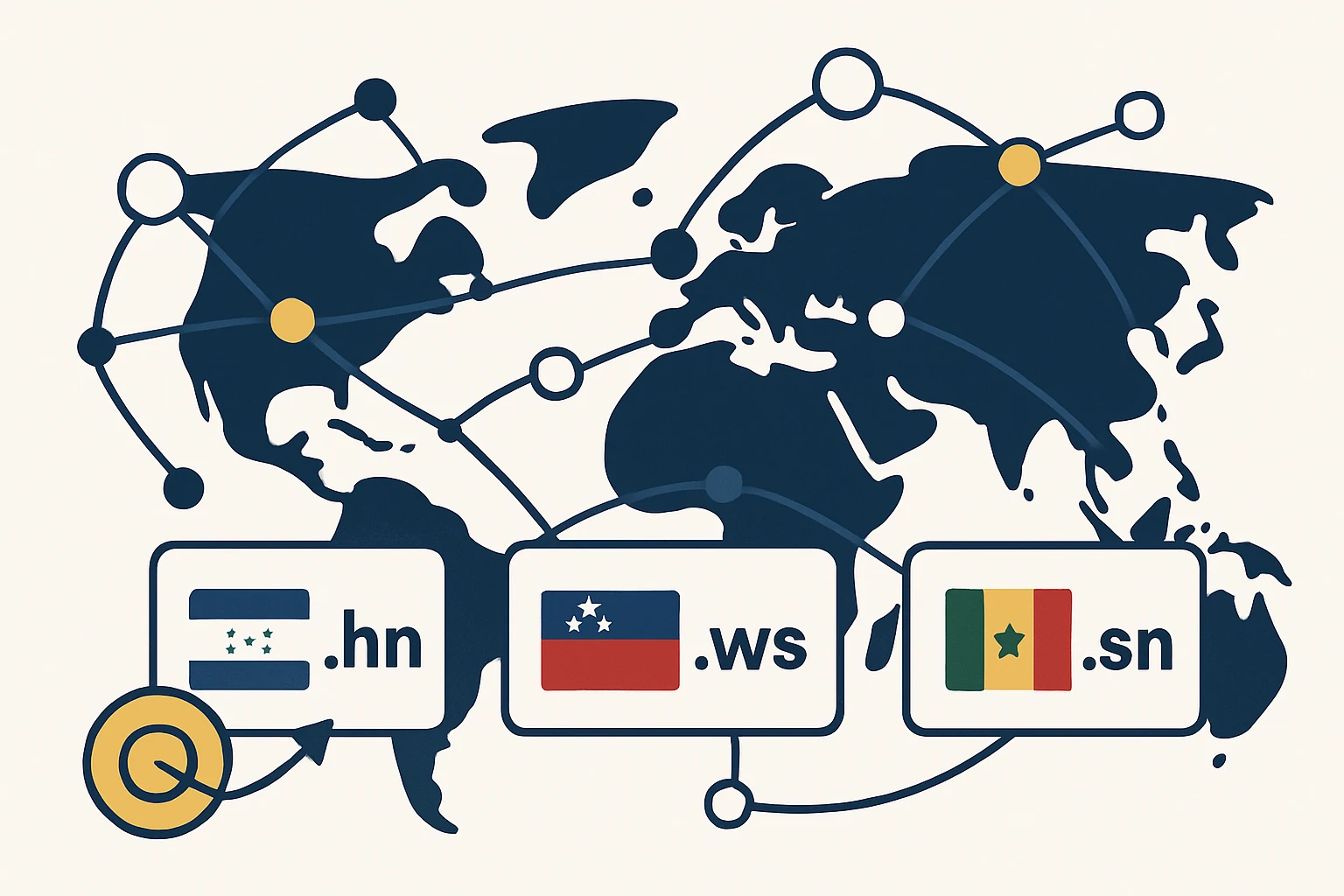
For global brands, expanding into emerging markets presents a dual challenge: securing the right digital address in a country-code top-level domain (ccTLD) and ensuring that this asset harmonizes with the broader brand strategy. In markets like Honduras, Samoa, and Senegal, the landscape is dynamic. Registry practices, local regulatory nuances, and the pace of digital adoption vary widely, influencing both the availability and value of domain assets. This guide offers a practical, non-gimmicky framework to research, vet, and acquire country-code domains in these markets while balancing brand protection, portfolio management, and efficient execution.
The process begins with trusted data sources, moves through disciplined due diligence, and culminates in a thoughtful integration of the domain into a coherent strategy. While list-based starting points - such as country-specific website directories and registries - can seed this work, the real value comes from translating those lists into a disciplined acquisition plan, backed by registry data and a defensible risk assessment.
Expert insight: in emerging markets, understanding local semantics, language nuances, and regulatory realities often matters more than chasing high-volume, high-profile assets. A well-structured process that respects local context tends to yield more durable brand outcomes than a shotgun approach to domain hunting.
To support a rigorous due-diligence process, organizations should leverage credible country-code registry data, Whois/RDAP intelligence, and scalable research tools. For practitioners working with a broad set of markets, a structured framework helps translate country lists into actionable opportunities without sacrificing governance or risk controls.
Why ccTLDs matter for brand strategy in emerging markets
- local credibility and trust: Businesses in Honduras (hn), Samoa (ws), and Senegal (sn) often expect local domains to reflect regional relevance, language, and trust signals. A well-chosen ccTLD can boost local search visibility and user confidence, signaling long-term market commitment.
- brand protection across geographies: Owning a defensible set of country domains helps mitigate brand-lookup confusion, typosquatting risks, and unauthorized use by counterfeiters who might exploit local phrasing or language variants.
- portfolio diversification and risk management: A deliberate ccTLD strategy supports multi-market resilience, enabling a brand to tailor its digital footprint to local consumer behavior, regulatory regimes, and digital payment ecosystems.
Registry governance for ccTLDs varies by country, but several registries provide transparency into data access and policy. For example, Honduras’ registry has implemented RDAP in its domain data services, aligning with global best practices for secure, machine-readable registration data. The Senegal registry emphasizes governance and dispute-resolution processes for local domains, underscoring the importance of due diligence in cross-border brand portfolios. (nic.hn)
To ground this discussion in concrete sources, note that ccTLDs are cataloged in the IANA Root Zone Database, which is the authoritative registry reference used to verify current delegations and classifications. This is a critical first step when mapping a country-code strategy to a global brand plan. (iana.org)
A practical workflow: turning lists into due diligence
Step 1 - Build a localized shortlist from credible sources
Start with official registries and locally authoritative sources to seed a shortlist of candidate domains. For Honduras, review the NIC Honduras registry (hn) to understand registration rules, dispute processes, and data access. Similarly, for Senegal, NIC Senegal (sn) provides essential registry information and contact channels, consulting these sources reduces the risk of pursuing domains that are difficult to transfer or defend. For Samoa, the .ws ecosystem has a distinct governance structure and market dynamics that require specific attention to regional use cases and regulatory considerations. Academic and industry overviews corroborate that ccTLDs are managed by national registries, with varied procedures for registrars and dispute resolution. (nic.hn)
As a practical starting point, practitioners often download or export lists of country-specific domains to perform initial triage. While the exact sources may vary by market and vendor, aligning data with registry-provided data (RDAP/Whois) is a recommended best practice. For ongoing research, consider using trusted databases and registries, then validate findings through automated checks before reaching out to potential registrants or owners.
Note: organizations may also cross-check lists against a global directory of TLDs and ccTLD policy literature to understand broader patterns, such as renewal schedules, premium-name programs, or geographic restrictions. For guidance on the global structure of TLDs, the IANA Root Zone Database remains the canonical reference. (iana.org)
Step 2 - Validate status, ownership, and data quality
Once you have a short list, validate each domain’s current registration status and ownership. Registry-provided data and trusted RDAP/WHOIS services help confirm whether the domain is active, who currently controls it, and whether there are pending disputes. In Honduras, NIC-HN explicitly notes that RDAP has been implemented to modernize data access, which supports faster, more reliable due-diligence during acquisition discussions. In Senegal, NIC Senegal’s governance framework likewise emphasizes data accuracy and dispute resolution. These governance features matter when negotiating acquisitions, since reliable data lowers the risk of last-minute ownership surprises. (nic.hn)
For teams that manage large portfolios, a centralized data provider or a registry-centric workflow can dramatically improve efficiency. The client options landscape includes RDAP/WHOIS databases and country-level registries that expose critical signals such as registration or transfer status, registrar associations, and contact channels, enabling a more disciplined approach to outreach and negotiation. For researchers who operate across multiple markets, a combination of official registry data and third-party research can deliver a robust signal set without over-reliance on any single source.
Step 3 - Assess brand risk and market fit during due diligence
Beyond ownership, assess how each candidate domain aligns with brand strategy and risk tolerance. Important considerations include linguistic and cultural resonance, potential for confusion with existing marks, and the regulatory environment for dispute resolution. In smaller or developing markets, local awareness and language may drive the perceived value of a domain far more than its generic traffic metrics. As part of the due-diligence rubric, document potential conflicts, such as near-duplicates or typographical variants that could misdirect users or dilute brand equity.
In this step, it’s useful to benchmark candidate domains against a broader brand-portfolio framework. A disciplined approach asks: does this domain fill a gap in the current portfolio? does it protect a critical brand namespace in a given market? is there a credible plan to integrate the domain with localized landing experiences, payment ecosystems, and regional SEO signals? These questions shape the negotiation strategy and post-acquisition integration plan.
Step 4 - evaluate the acquisition plan and governance controls
With a short list and a clear risk profile, craft a defensible acquisition plan that covers ownership transfer, registrar credentials, and post-acquisition governance. A well-structured plan includes privacy and confidentiality provisions, a timeline for domain transfer, and a post-acquisition monitoring program to detect unexpected changes in ownership or status. The approach should also align with the organization’s broader digital-asset policy, including brand-portfolio reviews, risk assessments, and ongoing protection measures. For teams seeking to standardize this process, a structured framework can be a valuable tool to ensure consistent decision-making across markets.
Case studies: Honduras, Samoa, and Senegal in context
Honduras (.hn) operates under a registry that emphasizes RDAP-enabled data access, which improves transparency and simplifies due diligence during acquisition discussions. The Spanish-language services page indicates a structured, policy-driven environment aimed at clear lifecycle management for domains. For a brand considering a Honduras namespace, aligning with local policy and ensuring clean ownership records can reduce friction in post-acquisition operations. NIC Honduras - Servicios. (nic.hn)
Senegal (.sn) presents a different governance dynamic, with NIC Senegal facilitating a robust local registry and advisory ecosystem. The registry notes and public materials emphasize formal processes for domain assignment, maintenance, and dispute handling, making due diligence essential for any cross-border acquisition strategy. This is particularly relevant for brands seeking to protect regional presence and avoid conflicts in the francophone West African market. Point SN - NicSénégal. (nicsenegal.sn)
Samoa (.ws) sits in a distinct geographic and regulatory space within the ccTLD landscape. While .ws is geographically tied to Samoa, its market behavior, registrar ecosystem, and regional use cases require careful mapping to local consumer behavior. For teams evaluating a Samoa-focused domain, understanding the local regulatory context and potential brand resonance is key to determining whether a .ws asset meaningfully extends the portfolio. .ws Registry - SamoaNIC. (en.wikipedia.org)
Structured evaluation framework (a practical block you can apply)
The following framework is designed to translate country-specific research into a disciplined decision about whether a candidate domain belongs in a premium portfolio. Use it as a quick-reference rubric during due diligence and negotiations.
- Relevance to brand: Does the domain reflect the market, language, and segment of interest? Is it a plausible extension of existing product lines or services?
- Trademark and conflicts risk: Are there similar marks or typosquatting risks in the same namespace or adjacent domains? What is the likelihood of confusion with local brands or entities?
- Ownership and transfer risk: Can you verify current ownership, registrar access, and smooth transfer rights? Are there pending disputes or escrow options?
- Market and SEO potential: Is there local search demand or strategic relevance for the domain in the target market? Can the domain support localized landing pages and translations?
- Portfolio fit and governance: Does the domain complement existing assets? Does it align with internal digital-asset policies and renewal budgeting?
- Acquisition cost versus value: What is the price range, potential renewal costs, and long-term value? Is there a defensible plan for monetization or brand protection?
Structured in this way, decisions can be traced from data to strategy, with clear ownership of each criterion. For teams dealing with multiple markets, consider standardizing these criteria into a scoring sheet to enable apples-to-apples comparisons across candidates.
Limitations, trade-offs, and common mistakes
- Limitations of publicly available lists: Public lists and registries provide essential signals, but data completeness varies by country. RDAP and WHOIS data are invaluable, yet ownership records can still lag in fast-moving markets. Rely on multiple data sources and implement a periodic refresh cycle.
- Overreliance on price signals: A low asking price can be attractive, but it may reflect broader risk factors (local regulatory risk, transfer friction, or limited market demand). Balance price with a robust risk assessment and governance plan.
- Underestimating local context: Brand impact often hinges on local language and cultural relevance. A domain that seems peripheral internationally can be highly strategic locally if it aligns with consumer behavior and digital habits in that market.
- Under-protecting against disputes: Skipping formal dispute-resolution readiness or failing to secure proper registrar access can derail a domain post-acquisition. Ensure governance and escalation paths are codified before closing.
- Inconsistent data quality across markets: Data quality is not uniform across registries. Create a standardized data-collection protocol and maintain documentation to support future audits.
One practical takeaway: build a cross-functional diligence team (brand, legal, and digital-product) to review country-specific risks, rather than handing this to a single-market specialist. This helps surface blind spots and aligns domain decisions with broader business objectives.
How webatla supports disciplined research and acquisition
To operationalize the process described above, practitioners can leverage specialized research tools and data services. The client offers robust capabilities to support due diligence and governance, including a RDAP & WHOIS database, country- and TLD-specific domain lists, and a structured approach to data quality and risk management. These tools can be used to corroborate registry data, accelerate outreach, and maintain ongoing domain governance across a global portfolio. RDAP & WHOIS Database and List of domains by TLDs and List of domains by Countries are designed to complement registry data with a scalable, auditable workflow.
In practice, a balanced approach combines registry insights with a disciplined negotiation posture. When you identify a high-potential domain in Honduras, Samoa, or Senegal, consider framing offers strategically - targeting ownership or transfer conditions that preserve confidentiality and reduce downside risk. This aligns with best-practice processes recommended by domain professionals and reflected in governance-oriented registry documents.
Conclusion
Building a global premium domain portfolio that includes country-code assets requires more than a quick list of available domains. It demands a disciplined workflow that translates registry data, local market realities, and brand strategy into a coherent acquisition plan. By starting with credible country-specific sources, validating status through registry data, and applying a structured evaluation framework, brands can expand their digital footprint in Honduras, Samoa, and Senegal with confidence. The right data, governance, and partner tools turn a potentially risky asset into a durable strategic asset that protects brand equity and supports growth across markets.
If you’d like to integrate these practices into your organization’s digital-asset program, consider pairing your internal governance with specialized data services and consulting to maintain disciplined decision-making as you expand into new geographies.