Introduction
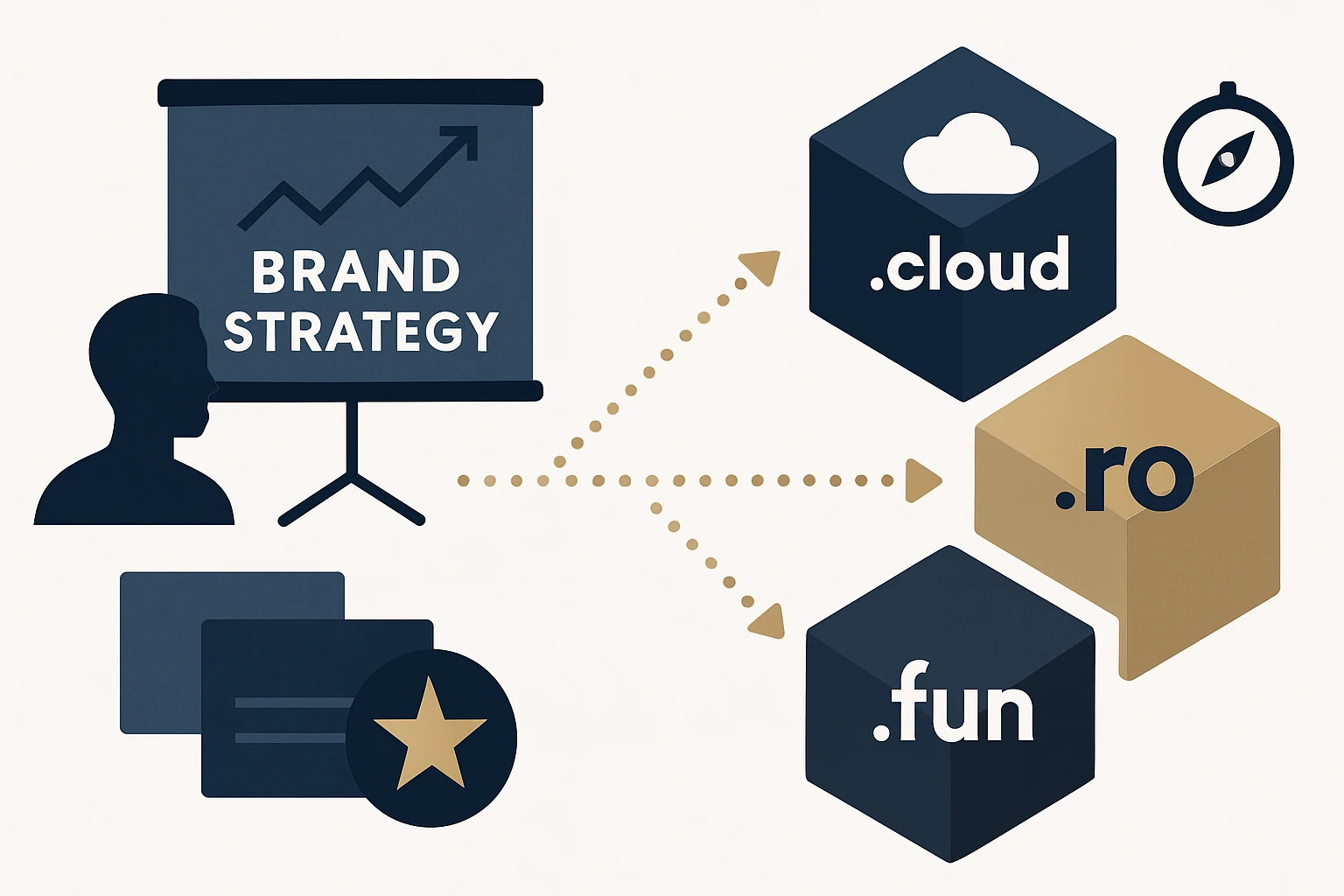
Brand owners increasingly view the choice of top-level domain (TLD) not as a mere address on the web but as a strategic signal about focus, geography, and audience. For a premium, risk-managed approach to digital assets, combining premium domain brokerage with disciplined domain portfolio management and confidential acquisition capabilities can unlock opportunities across niche extensions such as .cloud, .ro, and .fun. The challenge is to balance brand signaling, potential SEO implications, and the real-world costs of acquiring and maintaining these domains. This article offers a practical, non-generic framework for evaluating these three TLDs in the context of a brand-driven domain strategy.
To ground the discussion in market realities, we draw on established valuation concepts for premium domains, registry operating models, and the evolving landscape of gTLDs and ccTLDs. In practice, a well-structured approach blends strategic intent with due diligence, legal clarity, and a clear view of total cost of ownership.
Expert insight: Industry practitioners emphasize that brandability and signaling often trump raw keyword density when evaluating premium domains, a principle that underpins modern domain valuation metrics and portfolio strategy. (domainadvisor.com)
Why niche TLDs matter for brand strategy
Niche TLDs offer a distinct branding proposition: they can reinforce domain relevance to a specific market (geography or sector) or convey a distinctive product or service narrative. For tech-forward brands, a .cloud domain can signal cloud-native offerings, for Romanian-market ambitions, a .ro domain can anchor local relevance, and for consumer brands seeking a playful or memorable presence, a .fun domain can drive memorability and shareability. However, niche TLDs also introduce cost, risk, and management considerations that differ from traditional .coms.
From a market perspective, cloud-related ecosystems and services continue to grow, underscoring the appeal of a strong .cloud footprint for cloud-first brands. Market analyses suggest cloud services remain a dominant, expanding spend category, informing the strategic value of a distinctive .cloud presence for enterprise-facing brands. (grandviewresearch.com)
The .ro ccTLD has a well-defined regulatory and operational framework managed by ROTLD, with policies that influence eligibility, renewal, and pricing. These factors matter when assessing a potential .ro investment as part of a regional brand strategy. (rotld.ro)
Meanwhile, the .fun extension sits in the broad category of generic TLDs designed to capture playful or entertainment-related brand expressions. As with any new gTLD, the perceived value hinges on brand alignment, audience perception, and the balance of long‑term branding goals against acquisition and renewal costs. (en.wikipedia.org)
Understanding the players: registry structure, policy, and cost considerations
To make informed decisions, buyers should understand who operates these TLDs and how governance affects ownership and risk. For .cloud, Aruba S.p.A. operates the registry, with back-end registry services provided by ARI Registry Services, this registry model shapes pricing, renewal terms, and the overall reliability of ownership records. These dynamics influence both negotiation posture and long‑term portfolio planning. Get.Cloud offers a window into how the registry markets and presents .cloud domains to potential buyers and existing registrants.
For .ro, ROTLD (the official registry for Romania’s ccTLD) governs registration, renewal, and dispute policies. The registry’s procedures, including maintenance fees and renewal terms, directly impact ownership costs and renewal risk for brands looking to establish a Romanian footprint. See ROTLD’s official materials and policy documentation for details. ROTLD provides the authoritative baseline for .ro domain rules and governance.
In the case of .fun, a broad, generic TLD category, the registry environment reflects the attributes common to many new gTLDs: a focus on brandability, a potentially wider pool of buyers, and variable renewal economics depending on the registrar and the registry. The .fun extension is documented in general TLD references and keyword discussions about branding and investment dynamics in premium domain markets.
From a governance perspective, ICANN outlines the role of registry operators as custodians of the master zone file and ownership records, this central role underpins the security and reliability of any TLD investment. (icann.org)
Valuation and cost considerations: what drives value in these niche TLDs
Premium domain valuation is a function of several interdependent factors: brandability, memorability, alignment with a market or product, expected traffic, and the cost of acquisition and renewals. Industry resources emphasize that the most valuable domains tend to offer strong brand signals and memorable constructs, sometimes independent of traditional keyword considerations. This is a core premise behind premium-domain pricing frameworks and valuation methodologies. (domainadvisor.com)
Acquisition costs for niche TLDs can vary dramatically based on registry pricing, registrar margins, and the specifics of a given domain name (length, pronounceability, and potential trademark considerations). For instance, cloud-related domains typically command premium price tiers when the name clearly signals a cloud-first service or solution. Publicly available guides and market analyses provide frameworks for estimating fair value and evaluating ROI over time. (dn.org)
Cost considerations also include ongoing maintenance, renewal fees, and potential policy changes. In the .ro market, for example, maintenance policies and renewal terms have evolved over the years, influencing long‑term budgeting and risk management for a brand portfolio that targets Romanian audiences. ROTLD’s policy updates, including any maintenance or renewal changes, should factor into any acquisition plan. (petosevic.com)
To complement strategy, buyers often consult valuation frameworks and case studies that illustrate how brandability and market signals translate into premium pricing. A practical takeaway is that a well-structured portfolio blends high‑signal domains (for branding) with cost-conscious acquisitions and a plan for IP protection. Expert perspectives from premium-domain valuation authorities highlight that brandability and strategic fit are critical levers in determining value. (domainadvisor.com)
A practical framework: evaluating .cloud, .ro, and .fun for your brand
Below is a concise, repeatable framework you can apply to any brand considering niche TLDs, with a focus on .cloud, .ro, and .fun as relevant examples. The framework is designed to surface trade-offs early and guide a disciplined acquisition process.
- Step 1 - Clarify objectives and risk appetite. Define which markets you’re targeting (global cloud users, Romanian market, youth/entertainment audiences, etc.), what signal you want the TLD to send, and what risk you’re willing to tolerate in terms of renewal cost and policy changes. Align this with your overall brand strategy and portfolio governance.
- Step 2 - Conduct due diligence on governance and cost. Review registry policies, renewal terms, and any maintenance fees. For .ro, consult ROTLD’s policies and maintenance updates, for .cloud, understand registry pricing and renewal structures via the registry’s official materials, for .fun, assess renewal economics and long-term viability within your brand strategy. ROTLD and Get.Cloud provide representative perspectives on registry governance for ccTLDs and gTLDs respectively.
- Step 3 - Assess brandability and market signals. Evaluate how each TLD signals your brand story, the ease of recall, and alignment with target audiences. Consider whether the TLD’s associations (cloud services, local Romanian market, or playful branding) amplify or dilute your core value proposition. Industry guidance emphasizes that signal quality and memorability often drive value more than keyword stuffing. Expert insight: See the emphasis on brandability in premium-domain valuation literature. (domainadvisor.com)
- Step 4 - Model total cost of ownership (TCO) and ROI. Build a TCO model that includes upfront acquisition, annual renewal, privacy protections, and potential regulatory or policy changes. Compare projected ROI against alternative strategies (e.g., expanding your .com portfolio, or acquiring a stronger translational asset in another extension). Industry sources provide practical methods to estimate premium domain value and costs. (dn.org)
- Step 5 - Plan integration and risk mitigation. Develop a plan to integrate the selected TLD into your brand architecture, including IP protection, monitoring for cybersquatting, and a clear renewal governance process. Consider using a trusted advisor or broker to manage confidential acquisition, ensuring alignment with your brand protections portfolio.
Structured takeaway: The decision to pursue .cloud, .ro, or .fun should be anchored in your target audience, geographic strategy, and the strength of brand signals the domain name conveys. Use the 5-step framework above to move from vague intuition to a repeatable due‑diligence discipline.
To illustrate practical application, imagine a cloud services firm evaluating a short, pronounceable .cloud name versus a Romania-focused .ro name for regional expansion, or a memorable .fun domain to support a marketing campaign around a digital service that leans into consumer engagement. The relative value will hinge on audience reach, brand cohesion, and the ability to sustain ownership over time.
Case study flavor: applying the framework to three niche TLDs
Case studies are most informative when they’re anchored in specific brand goals. Here is a fictional, yet practical illustration of how the framework might be applied to three distinct objectives:
- .cloud for a global SaaS provider: Objective - signal cloud-native capabilities and simplify domain strategy across regions. Risks - renewal cost volatility and potential overreliance on a single TLD for branding. Action - evaluate a short, memorable .cloud name with a robust renewal plan, pair with a broader portfolio spanning .com/.io as a hedge. Registry insights from Aruba-backed .cloud resources inform pricing and governance expectations.
- .ro for regional market penetration: Objective - build local trust and SEO signals within Romania. Risks - policy updates and annual maintenance fees. Action - assess ROTLD policy documentation, choose a registrant with ROTLD accreditation, and integrate with local content strategy.
- .fun for consumer-facing campaigns: Objective - enhance brand recall and shareability for a marketing burst. Risks - short-term ROI and potential brand mismatch. Action - pilot with a campaign-specific domain, measure brand lift, and plan a short-term renewal strategy alongside a longer-term brand domain plan.
These vignettes illustrate the central thesis: niche TLDs can be powerful signals when the brand strategy, audience, and portfolio governance align.
Limitations and common mistakes (stop‑gaps to avoid)
Any framework has limits. Here are the most common missteps when pursuing niche TLDs, with practical remedies:
- Overreliance on signal without supporting strategy. A flashy new TLD can misfire if the underlying brand strategy, content, and product-market fit aren’t cohesive. Remedy: pair TLD decisions with a defined content and demand-gen plan that complements the domain.
- Ignoring total cost of ownership. Acquisition price is only part of the cost, renewal fees, privacy protections, and potential policy changes add up. Remedy: build a TCO model early in the process. (dn.org)
- Underestimating regulatory and dispute risk. ccTLDs such as .ro have policy nuances and dispute procedures that can affect ownership and transfer. Remedy: consult registry documents and reputable advisories before committing. ROTLD publishes official policy materials that impact ownership.
- Assuming higher price always equals higher value. Premium pricing does not guarantee superior brand performance. Remedy: quantify branding benefits, expected traffic, and conversion implications before investing.
- Neglecting due diligence on cybersquatting and IP risk. A domain that looks perfect can be vulnerable to trademark and cybersquatting issues. Remedy: conduct trademark clearance and monitor for conflicting marks, in addition to RDAP/WHOIS data checks.
Note: A disciplined due-diligence practice, including registry governance awareness and trademark screening, is essential when considering any premium or niche TLD investment. For a practical entry point into registry data and ownership records, consult industry resources and registry documentation.
Structured block: a quick reference framework you can reuse
The following framework encapsulates the core decision steps in a compact, repeatable form. Use it as a checklist during internal reviews or broker discussions.
- Define target outcomes - market focus, brand signaling, geography, and campaign timing.
- Assess governance and costs - registry rules, maintenance fees, renewal terms, and dispute resolution policies.
- Evaluate brandability - memorability, pronunciation, and alignment with product narratives.
- Model TCO and ROI - upfront costs, annual renewals, privacy protections, and potential regulatory changes.
- Plan integration and monitoring - domain portfolio governance, cybersquatting risk, and IP protection measures.
Editorial note on client integration: how Vadiweb supports confidential domain acquisitions
For brands seeking private, discreet domain acquisition and strategic advisory, Vadiweb offers a structured, consultative approach that complements internal governance. The firm’s services align with a disciplined portfolio strategy, including confidential acquisition, risk management, and strategic domain consulting. If you are exploring niche TLDs as part of a broader digital asset strategy, consider engaging a domain brokerage and advisory partner to help with initial scoping, vendor negotiations, and post-close governance. For more on available niche TLD opportunities and related services, you can explore the client’s cloud-focused domain listings and related resources: cloud TLD portfolio and pricing and cost references. Additional research resources include RDAP & WHOIS database for ownership transparency and risk assessment.
Conclusion
Niche TLDs such as .cloud, .ro, and .fun can be powerful tools for brand signaling and portfolio differentiation when used thoughtfully and managed rigorously. The key is to pair clear brand objectives with a disciplined evaluation framework, anchored by registry governance realities, cost considerations, and a robust due-diligence process. A balanced approach - combining editorial brand thinking with commercial discipline - helps ensure that your domain strategy enhances brand value over time, rather than merely acquiring assets on impulse. For brands seeking confidential, expert guidance through this process, partnering with a domain brokerage and advisory firm can provide the structure and discretion needed to optimize ROI across a diversified domain portfolio.