Introduction: The challenge of building a resilient digital asset portfolio
In today’s competitive digital environment, brands can no longer rely on a single .com strategy. A thoughtful mix of premium domains and carefully chosen TLDs can bolster geographic relevance, protect brand assets, and unlock new digital real estate opportunities. Yet not every niche TLD delivers meaningful value. The key is to couple aspiration with disciplined due diligence, clear governance, and execution that scales with your brand. This article outlines a practical approach to evaluating niche TLDs such as .tokyo, .wiki, and .company, with concrete steps, a decision framework, and guidance on data sources.
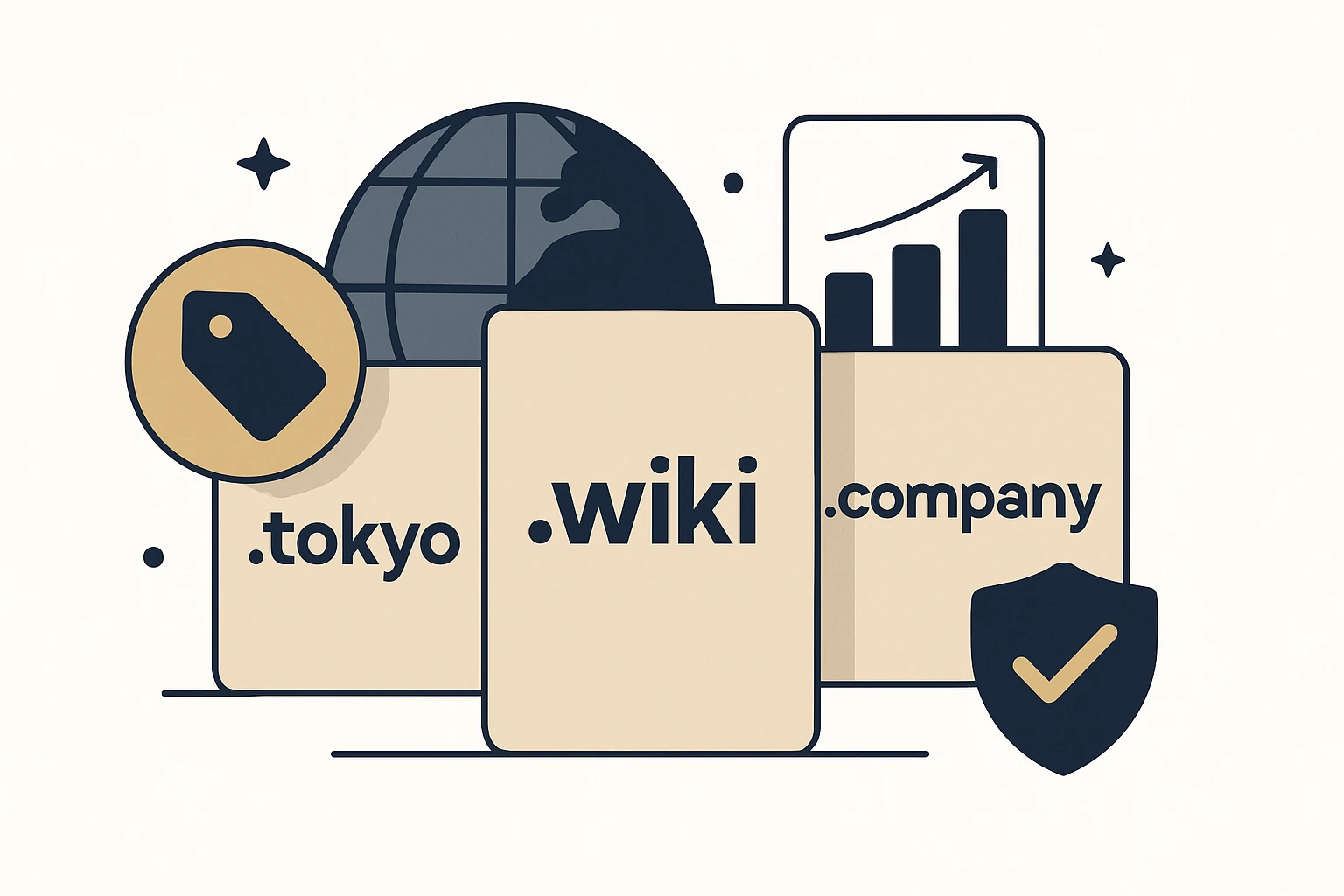
Niche TLDs in Brand Strategy: Why .tokyo, .wiki, and .company matter
Niche or geographic TLDs offer signaling power: they can communicate market intent, regional focus, or a specific use case that complements your core brand. The .tokyo namespace, managed by GMO Registry, is open to global applicants and is positioned to help brands connect with Tokyo’s large and influential market. Registry operators publicly describe the openness of registration and the potential branding benefits of city-led domains, underscoring how a well-chosen .tokyo name can reinforce regional relevance without requiring local residency. For reference, the operator’s pages explain the registration approach and policy framework for .tokyo. GMO Registry: Let use .tokyo GMO Tokyo Domain Name Registration Policies.
Beyond .tokyo, other niche extensions such as .wiki or brand TLDs like .company can play distinct roles in a broader portfolio. While each TLD has its own registration rules, a common thread is the opportunity to create a precise, memorable brand touchpoint that aligns with product lines, regional campaigns, or content strategies. For organizations evaluating these opportunities, it is essential to corroborate the registry policies, renewal terms, and the availability of premium names through official operator resources.
From a data perspective, modern registry ecosystems provide structured access to domain data through standards like RDAP, which enables programmatic querying of domain records. ICANN maintains a gTLD RDAP profile that serves as a reference for registries and registrars implementing RDAP services, helping practitioners understand what kinds of data may be accessible and under what terms. ICANN gTLD RDAP Profile.
How to evaluate TLD opportunities: A practical framework
Evaluating niche TLD opportunities requires a balanced framework that captures strategic intent, data visibility, and governance risk. The framework below provides a structured approach you can apply across any candidate TLD, including .tokyo, .wiki, and .company:
- Strategic fit
- Brand alignment with target markets, campaigns, or product lines
- Clarity of audience intent and how the TLD reinforces the brand story
- Data availability
- Access to registration data (RDAP/WHOIS) and the registry’s data-sharing policies
- Transparency around renewal terms, premium-name allocation, and reserved names
- Risk & governance
- Trademark exposure, potential cybersquatting concerns, and brand-protection controls
- Defensive registration strategy and cost management for long-term ownership
- Execution plan
- Procurement pathway (in-house search vs. broker-assisted), negotiation posture, and post-acquisition governance
- Contingency planning for premium domains and potential disputes
- Regulatory and policy considerations
- Understanding registry policies, sunrise/landrush periods, and any regional restrictions
- Compliance with data privacy and allocation rules where applicable
Expert insight: An industry observer notes that for brands pursuing geo-targeted or purpose-built TLDs, the strongest value often comes from a clear marketable use case and a governance plan that scales with the brand. That means prioritizing names with regional or functional relevance, aligned with a long-term ownership strategy rather than chasing short-term novelty.
Accessing TLD domain data: Where to find downloadable lists
Buyers and brand managers frequently seek bulk domain lists by TLD to support planning, diligence, and portfolio mapping. In modern registry ecosystems, direct bulk dumps are less common than machine-readable access through registries and RDAP/WHOIS services. RDAP provides a standardized, up-to-date way to query registration data, and ICANN publishes profiles that describe how gTLD registries implement these services. This framework helps you build tooling to surface candidate domains, assess ownership, and gauge renewal risk without relying on outdated spreadsheets. ICANN RDAP Profile.
For specific country- or city-based namespaces such as .tokyo, consult the official registry for registration policies and data access options. GMO Registry’s Tokyo domain policies outline term lengths, reserved names, and other governance rules that influence how you source and hold names in this space. GMO Tokyo Domain Name Registration Policies GMO Hello Tokyo.
Where practical, professionals combine registry data with broker-assisted due diligence to build a robust view of candidate domains. For those exploring broader TLD catalogs, WebATLA maintains a TLD catalog that can help practitioners size opportunities and plan acquisition paths. .tokyo domain catalog, TLD catalog, and RDAP & WHOIS Database provide a practical starting point to frame your diligence workflow.
Case study: A practical path to acquiring a Tokyo-focused domain
Imagine a brand preparing to launch a regional campaign in Tokyo. A disciplined path might include (1) defining a concise, brand-aligned name, (2) scanning availability across .tokyo and related geoTLDs, (3) weighing a mix of owned names and premium opportunities through a broker, and (4) establishing a governance and renewal framework that scales with the portfolio. A broker can help surface premium opportunities, negotiate terms confidentially, and guide you through registry policies and renewal budgeting. For concrete opportunities, explore the WebATLA catalog: .tokyo domain catalog, and for data-driven diligence, consult RDAP & WHOIS Database.
Limitations and common mistakes
- Overvaluing ultra-short or trendy names without a clear strategy, long-term brand value often comes from relevance and consistency rather than novelty.
- Assuming broad global intent for every TLD, geoTLDs can be highly regional and language-specific, requiring local market insight.
- Underestimating renewal costs and the potential friction of premium-name allocations that complicate future scaling.
- Relying on a single data source, combine registry policies, RDAP data, and expert due diligence to avoid blind spots.
Conclusion: Aligning TLD strategy with brand objectives
Strategic domain acquisition in niche TLDs should be grounded in your brand’s geography, product strategy, and governance capabilities. A disciplined approach - anchored by registry policies, reliable data access, and careful negotiation - helps protect brand integrity while unlocking new digital real estate. If you’re exploring opportunities in .tokyo, .wiki, or .company, consider engaging a broker who can bring registry insights, data-driven diligence, and confidential negotiation to the table. See the Tokyo catalog for concrete opportunities: .tokyo domain catalog. For a broader view of available TLDs, visit TLD catalog, and for data-driven domain intelligence, access RDAP & WHOIS Database.