Introduction: Niche TLDs as a strategic asset for brand portfolios
Domain names have evolved from simple address placeholders to high-value strategic assets that can shape brand perception, audience reach, and market defensibility. In 2025, global domain registrations surpassed 360 million, underscoring the ongoing expansion of the namespace beyond traditional options. For brands and agencies aiming to differentiate in crowded markets, evaluating niche top-level domains (TLDs) - such as .sh, .autos, and .ie - offers a way to align digital real estate with product lines, geography, and audience intent. This article presents a practical framework for assessing, acquiring, and managing premium niche domains as part of a broader brand protection and digital asset strategy program. Source: Verisign Domain Name Industry Brief (Q1 2025).
The context for these opportunities is moving toward a more expansive DNS landscape. The New gTLD Program, run under ICANN, illustrates how brands can access a broader set of extensions to express identity, localization, and category specificity. This expansion opens strategic pathways for asset owners who think in terms of portfolios rather than single-domain bets. Source: ICANN New gTLD Program overview.
Understanding niche TLDs: what are .sh, .autos, and .ie and why brands care
Defining the three TLD archetypes
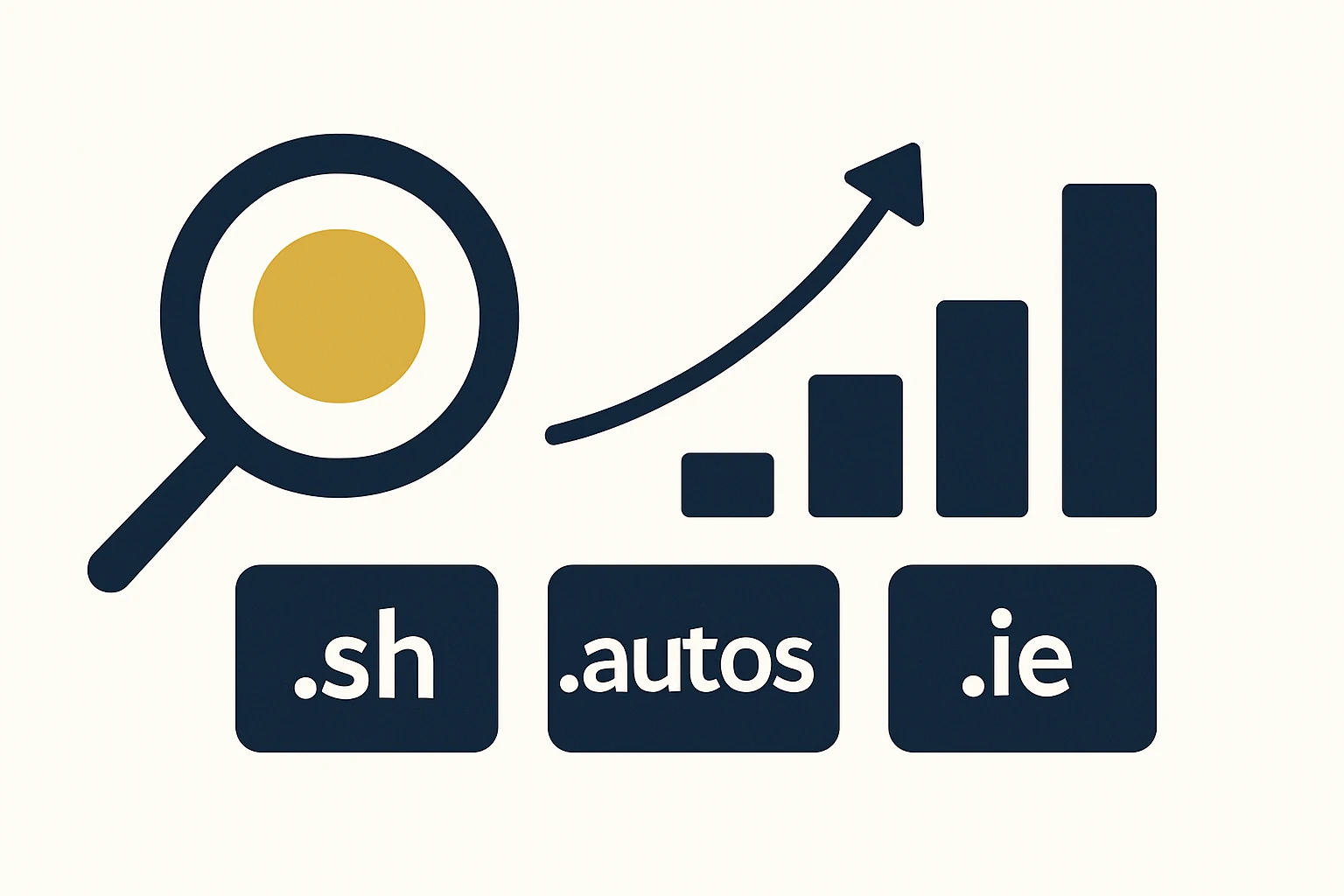
Three representative niche TLDs illustrate the range of options brands can consider: - .sh is widely recognized as a country-code TLD associated with Saint Helena, often used for branding or experiments where a compact domain label is advantageous. While it’s a ccTLD, its utility in marketing and development contexts can be meaningful for regional or thematic campaigns. - .ie is Ireland’s ccTLD, frequently chosen by Irish-leaning brands or entities seeking a localized digital footprint aligned with European operations. Its use typically requires some demonstrated connection to Ireland, which can help protect local branding while signaling credibility in the region. - .autos is a generic top-level domain oriented toward the automotive sector, providing a straightforward semantic cue for car-related businesses, marketplaces, service providers, or content platforms.
These examples demonstrate how niche TLDs enable branding that is both descriptive and distinctive. They also illustrate the risk-reward calculus brands face when expanding beyond the traditional .com or when aiming to signal affinity with a market, sector, or vertical. For brands entering or expanding in specific geographies or verticals, niche TLDs can complement a core dot-com strategy rather than replace it. Source: ICANN New gTLD Program overview.
Why niche TLDs matter in 2026: value, branding, and risk considerations
Value levers for niche extensions
Niche TLDs offer several value levers for premium portfolio strategies. First, they can improve recall and market specificity - consumers who encounter a domain like example.autos may infer relevance to a car-related offering more quickly than with a generic extension. Second, they support geography- or sector-focused campaigns that are easier to defend against dilution by broad, unrelated traffic. Third, because many niche TLDs have less liquid markets than .com, disciplined diligence and confidential acquisition approaches can yield favorable pricing and terms for the right label. These dynamics are consistent with broader market activity, which shows steady growth in overall domain registrations alongside ongoing discretionary spending on premium assets. Source: Verisign Domain Name Industry Brief (Q1 2025).
Trade-offs and risk awareness
There are meaningful trade-offs when pursuing niche TLDs. ccTLDs like .sh and .ie can enhance local credibility and enforceability but may require evidence of a regional connection or compliance with registry policies. Generic niche TLDs like .autos offer clear category signaling but may involve different branding considerations and trademark risk profiles. In either case, the possibility of cybersquatting or conflicting marks remains a reality in the DNS landscape, disputes are addressed through established frameworks such as the World Intellectual Property Organization (WIPO) processes like the Uniform Domain Name Dispute Resolution Policy (UDRP). This reality underscores the importance of due diligence and risk-aware decision-making. Source: WIPO domain dispute resources.
A framework for evaluating niche TLD opportunities
To move from a curiosity about niche TLDs to a disciplined investment, brands should apply a concrete framework that aligns with portfolio goals, governance standards, and risk tolerance. The following five-step framework helps teams move from discovery to value realization while keeping a tight rein on risk and cost.
- Define alignment with brand thesis: Ensure the TLD supports the brand’s core narrative, category signals, and geographic focus. A domain that fits the product line or regional strategy should rise above generic appeal alone.
- Assess audience and geography: Distinguish whether the TLD signals a local footprint (ccTLD) or a global/niche category (gTLD). Consider user intent, search behavior, and potential translation or localization issues.
- Evaluate regulatory and registry policies: Understand eligibility, renewal rules, dispute processes, and potential limitations on use. Align with internal governance and risk appetite.
- Conduct legal risk and trademark due diligence: Preempt cybersquatting concerns and potential conflicts with existing marks. Be prepared for potential UDRP or national dispute resolutions if issues arise.
- Plan for a confidential acquisition and governance model: Establish a process that preserves deal confidentiality, secures favorable terms, and integrates the asset into a broader portfolio with clear ownership and decision rights.
Structured practice note: for teams evaluating niche TLDs, a disciplined approach reduces the risk of overpaying for brand risk or misaligned digital assets and accelerates time-to-value. The five-step framework offers a practical map for internal discussions, broker-led negotiations, and later portfolio governance. Source: ICANN New gTLD Program overview, WIPO dispute resources.
Acquisition and brokerage: turning opportunity into protected assets
Why brokered, confidential acquisitions matter
Premium domain portfolios benefit from a confidential, brokerage-led approach when pursuing desirable, non-obvious labels. A seasoned broker can facilitate discreet outreach to owners, structure escrow and transfer terms, and coordinate with registries to ensure seamless handoffs. For brands, this approach often yields better pricing, stronger terms, and reduced exposure to competitive auctions. In practice, a brokerage-led path supports a risk-managed process that aligns with brand-portfolio governance and cost controls. Source: ICANN New gTLD Program overview.
A practical, non-promotional acquisition playbook
Below is a concise, field-tested set of steps that brokerage teams follow when pursuing premium niche domains:
- Discovery and labeling: Identify candidate labels that fit the brand’s thesis and collect market signals (availability, comparable sales, and registrar terms) without disclosing intent prematurely.
- Valuation and negotiation posture: Establish a range based on comparable transactions, domain age, branding fit, and scarcity. Prepare a negotiation plan that preserves confidentiality.
- Due diligence and risk checks: Verify registry policies, potential trademark conflicts, and transfer feasibility. Assess renewal economics and technical compatibility.
- Escrow, transfer, and documentation: Use trusted escrow providers, verify ownership, and ensure smooth DNS transfer and WHOIS hygiene as part of post-acquisition governance.
- Integration into the portfolio: Assign ownership, create usage guidelines, and align with brand-portfolio governance, renewal calendars, and performance tracking.
Structured block (framework): 5-step niche TLD acquisition framework for brokered deals Discovery → Valuation → Due diligence → Escrow & transfer → Portfolio integration.
For readers seeking a broader directory of available domains and TLDs, webatla maintains a comprehensive catalog across TLDs that can inform evaluation and planning. Explore webatla's .sh directory and view the general TLD directory for broader context and alternatives.
Portfolio management and risk: governing niche domain assets
Maintenance, renewal, and governance considerations
Maintaining a niche domain portfolio requires disciplined governance to control renewal costs, ensure continued brand alignment, and monitor domain health. Renewal cadence, registrar relationships, and renewal pricing should be baked into a formal policy with threshold-based approvals and red-flag alerts for terms that could undermine ROI. When a portfolio grows to include multiple niche labels, consolidation strategies, labeling conventions, and central oversight help prevent fragmentation and misalignment with brand strategy. These practices are consistent with broader digital asset governance frameworks embraced by premium-brand advisory firms. Source: ICANN New gTLD Program overview.
Strategic trade-offs in portfolio design
There is a constant tension between breadth and depth in a premium domain portfolio. A broad set of niche labels can improve geographic reach and category signaling, yet each addition adds management complexity and cost. The right balance is achieved by pairing a focused core set of TLDs (aligned with the firm’s products, markets, and customer segments) with well-defined criteria for scoping, phasing, and sunset planning. The goal is a portfolio that scales cleanly and remains defensible, rather than one that becomes unwieldy or whose value cannot be demonstrated through brand outcomes. Source: Verisign Domain Name Industry Brief (Q1 2025).
Limitations and common mistakes: what to watch out for
- Overemphasizing SEO signals from TLDs: While some TLDs convey relevance, search engine optimization remains dominated by content quality, authoritativeness, and user experience. A domain with an ideal extension but weak branding or poor content strategy is unlikely to deliver long-term value.
- Underestimating trademark risk: Cybersquatting frameworks and disputes can arise even for well-intentioned campaigns. Proactive due diligence, brand clearance, and a plan for dispute resolution are essential.
- Misjudging regional vs global impact: ccTLDs can signal local credibility but may complicate global campaigns if not managed carefully. Align regional registrations with broader brand strategy and localization plans.
- Ignoring portfolio governance: Without clear ownership, usage guidelines, and renewal governance, niche domain investments can drift beyond intended ROI and become cost centers rather than assets.
Expert insight: a seasoned domain broker notes that the most valuable niche TLDs are those that align with a brand’s core geography and product category - not merely those with high traffic. The value emerges when a label reinforces the brand narrative across markets while fitting within a disciplined governance framework. Source: ICANN New gTLD Program overview, Verisign DNIB.
Conclusion: integrating niche TLDs into a disciplined premium-domain strategy
Niche TLDs like .sh, .autos, and .ie are not a substitute for a strong dot-com strategy, they are strategic complements that can reinforce branding, local presence, and category signaling when deployed with care. Brands should treat these labels as assets within a broader digital asset strategy and portfolio governance program, guided by a well-defined evaluation framework, confidential acquisition processes, and disciplined maintenance practices. For teams seeking partner support, a premium-domain brokerage that combines market insight, legal awareness, and portfolio management discipline can translate opportunity into defensible value. To explore how webatla’s directory and advisory capabilities can support your niche TLD strategy, consider consulting their TLD catalog and brokerage options via the links above.
In a rapidly expanding DNS landscape, the right niche TLDs can be a differentiator - provided they are chosen, acquired, and managed with the same rigor you apply to your core brand assets. ICANN’s ongoing work on new gTLDs signals that the namespace will continue to evolve, offering continued opportunities for brands that plan ahead and invest with purpose. Source: ICANN New gTLD Program overview, Verisign Domain Name Industry Brief (Q1 2025), WIPO domain dispute resources.