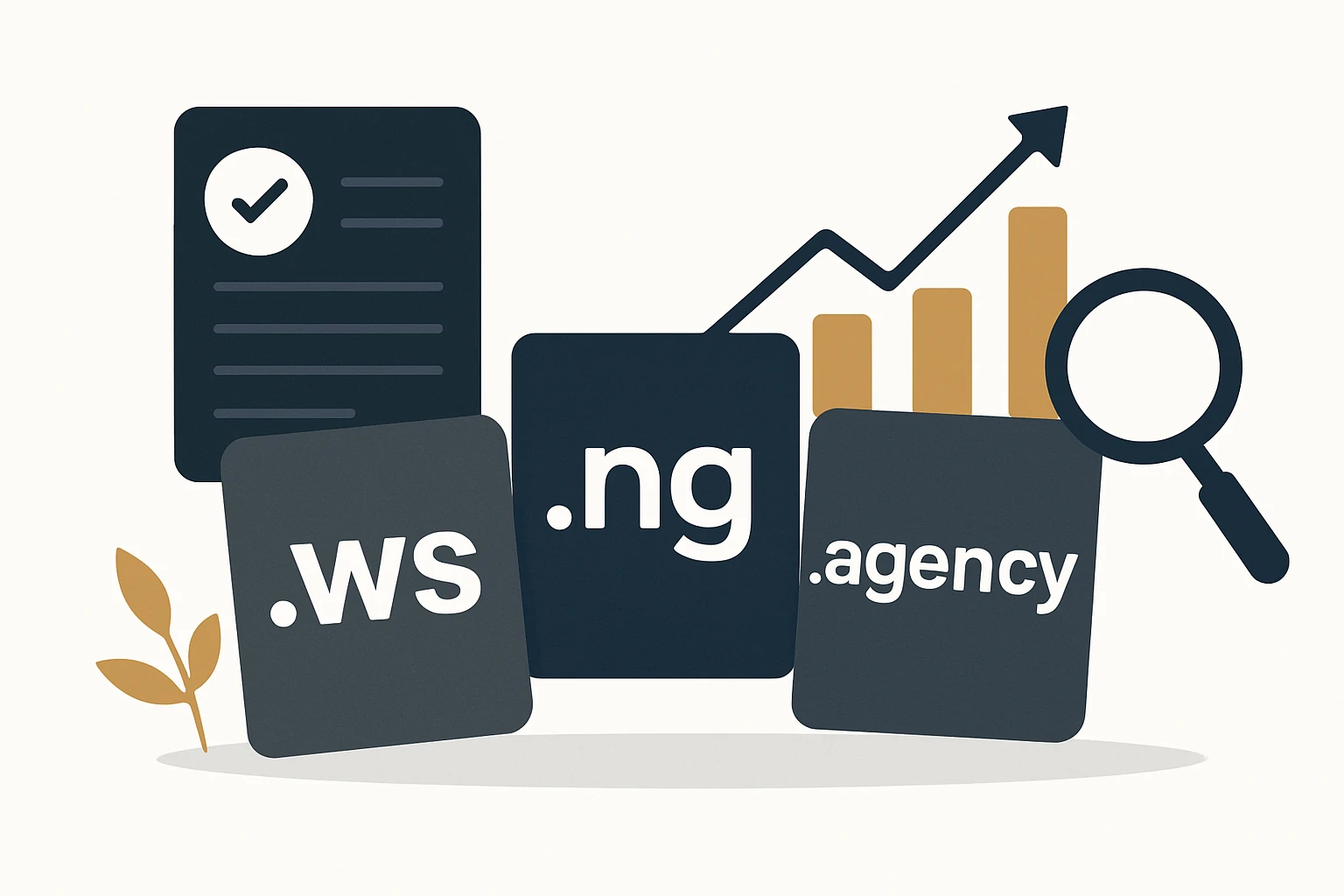
Introduction: redefining brand identity in a crowded domain landscape
For modern brands, owning a single domain is no longer enough. The rise of niche top‑level domains (TLDs) offers opportunities to reinforce regional relevance, protect brand identity across markets, and run targeted campaigns. But niche TLDs also bring complexity: evaluating value, negotiating acquisitions, and integrating them into a coherent digital asset strategy requires disciplined analysis, not guesswork. This article unpacks a practical approach to leveraging niche TLDs - focusing on .ws, .ng, and .agency - as part of a broader premium-domain portfolio and brand-protection program. The goal is to help brands and their advisers decide when a niche TLD makes sense, and how to pursue it without overextending resources.
As a backdrop, consider that the governance and economics of new gTLDs have evolved since their introduction. Industry observers emphasize that a refreshed rights‑protection posture is essential for brand owners navigating hundreds of new gTLDs, including defensive strategies like TMCH registrations and DPML blocks. This context matters when you’re deciding whether a niche TLD fits your scale and risk tolerance. Editorial note: this piece treats niche TLDs as one tool among many for strategic branding and risk management, not a silver bullet for SEO or growth. (iam-media.com)
Niche TLDs in practice: what .ws, .ng, and .agency actually represent
WS: the world site concept and the domain‑hack dynamic
WS is the country code top‑level domain (ccTLD) for Samoa, but it has long been marketed in international circles as a potential “world site” or “web service” hack, enabling registrations that spell words or brand names across the second level. Domain historians describe it as a classic example of a domain hack, where the choice of TLD helps form a memorable, concise URL. This dynamic is part of a broader conversation about how short, descriptive domains can function as marketing assets when deployed thoughtfully. However, using a ccTLD in this way requires careful alignment with brand strategy and legal risk, since such hacks can introduce perception and governance considerations for multinational brands. (en.wikipedia.org)
For portfolio strategists, WS represents a case study in balancing creative naming with regulatory and trademark realities. When evaluating WS opportunities, firms typically weigh branding payoff against the cost and complexity of defending a domain that sits just outside traditional global strings. Note: up-to-date listings and availability can be found on credible catalogs such as WS domain listings, which illustrate how sellers package premium name inventory in this space.
External perspective on the broader governance of domain hacks and new gTLDs reinforces the need for a disciplined approach to defensive registrations and risk mitigation as part of an overall digital-asset strategy. (en.wikipedia.org)
NG: Nigeria’s ccTLD as a regional digital footprint
.ng is Nigeria’s ccTLD, a space with growing adoption as internet penetration and digital services expand across Africa. While Nigerias’ market dynamics differ from Western markets, .ng offers a way to signal local presence, build regionally targeted campaigns, and protect local brand identifiers in a fast‑growing market. Industry reporting shows rising registrations and active campaigns to promote adoption, driven by NiRA (the Nigeria Internet Registration Association) and national digitisation efforts. As with any ccTLD, success depends on local relevance, content strategy, and regulatory compliance. (nigeriacommunicationsweek.com.ng)
For brands considering .ng, the key questions are: Does the local audience respond to a Nigerian‑specific domain? Is there a credible plan to maintain a local presence, including hosting, language, and local partnerships? And how will you defend the namespace against look‑alike or opportunistic registrations? The market data suggests meaningful adoption, but it remains essential to couple .ng registrations with a clear regional strategy and governance plan. See NiRA’s ongoing efforts to drive adoption and usage for context. (developingtelecoms.com)
Agency: a generic‑oriented space for service brands
.agency is a popular generic‑style TLD aimed at agencies and service brands. It is operated by a registry behind many new gTLDs and is used by marketing, consulting, recruitment, and other agencies to signal professional focus. The registry ecosystem behind .agency illustrates how new gTLDs have matured into credible branding assets, with registries emphasizing descriptive value and market positioning. When considering .agency, brands typically evaluate whether this extension reinforces perception of specialization, rather than merely adding another option to the URL stack. For reference, multiple registries and registrars now support .agency, and examples of active registrations can be explored through registries and marketplaces. (icannwiki.org)
Importantly, the existence of the .agency namespace is part of a broader trend toward descriptive, industry‑specific domains. This trend is driven by the registry ecosystem that Donuts helped scale, which continues to play a major role in opening up new generic spaces for business identities. For brand teams, this implies a measured approach: test market resonance, ensure clarity of messaging, and confirm that the TLD aligns with your brand architecture and policy controls. (prnewswire.com)
A practical framework: evaluating niche TLD opportunities before you buy
To translate the potential of WS, NG, and agency domains into tangible value, use a structured due diligence framework. The goal is to separate marketing vanity from defensible, revenue‑supporting value, while keeping risk in check. Below is a pragmatic five‑step framework you can apply to any niche TLD opportunity.
Niche TLD due diligence framework
- Relevance to brand and geography: Assess whether the TLD meaningfully maps to your core markets, product lines, or regional campaigns. A domain that reinforces a key geographic or service identity can be worth more than a generic string with tenuous connection.
- Market signals and audience alignment: Examine evidence of audience recognition, pointer traffic, or partner interest in the target TLD. This includes how the TLD would be perceived by customers and whether it enables efficient campaigns or content localization.
- Availability vs. risk profile: Compare the inventory against potential squatting, trademark conflicts, and confusing brand signals. Consider TMCH protections and the possibility of domain squatting or cybersquatting issues around the namespace.
- Regulatory and policy considerations: Check registrar policies, registry rules, and any regulatory constraints in target markets (for example, DPML or other blocking mechanisms that could affect your ability to secure related variants).
- Cost, renewal stability, and portfolio fit: Weigh registration and renewal costs, potential premium pricing for desirable names, and how the TLD integrates with your overall domain portfolio management strategy and budget.
This framework is designed to be revisited as you scale. The landscape of new gTLDs continues to evolve, and a disciplined approach helps prevent misallocation of resources. For more on the broader policy context surrounding new gTLDs and brand protection, see industry perspectives on TMCH, UDRP, and defensive strategies. (iam-media.com)
Acquisition, negotiation, and integration: practical considerations
Negotiating with registries and sellers
Acquisition of niche domains often involves negotiating with registries, marketplaces, or current owners. It is essential to assess whether a domain is a premium name with renewal‑level pricing, and to understand the registry’s pricing framework for premium domains. Independent observers highlight that registry pricing and renewal terms can vary significantly from standard registrations, so a clear view of total cost of ownership is critical. In parallel, a careful negotiation strategy should consider potential for multi‑domain blocks or portfolio deals that align with your long‑term brand strategy.
As part of a structured negotiation plan, it is prudent to map out a portfolio‑wide acquisition plan, including a process for confidential domain acquisition when needed. This helps ensure you stay aligned with internal stakeholders and maintain market discipline. For context on rights protection and defensive strategies that accompany new gTLDs, refer to expert analyses on TMCH and UDRP implications. (domaindisputes.net)
Integration into a broader premium-domain portfolio
Acquiring WS, NG, or agency domains should fit into a holistic plan that includes core brand domains, geotargeted sites, marketing campaigns, and protective measures. A well‑structured portfolio supports brand protection by reducing the risk of impersonation and confusion, while enabling targeted campaigns in key markets. This approach is aligned with industry observations that brands must adopt a refreshed protection strategy as the namespace expands. For practical guidance, see how brand‑protection providers emphasize continuous monitoring, risk assessment, and aligned policy controls as part of a comprehensive digital asset strategy. (gcd.com)
To view a curated set of niche‑domain examples within webatla’s ecosystem, you can explore the WS list and the broader TLD catalog at the client’s site: WS domain listings and List of domains by TLDs. These resources illustrate how a disciplined catalog can support defensive registrations and opportunistic acquisitions without overwhelming the budget or governance framework.
Limitations and common mistakes: what to avoid in niche TLD programs
Common mistakes to watch for
- Assuming niche TLDs automatically boost search rankings or brand equity. In practice, SEO signals come from content, quality signals, and user experience, the TLD alone rarely drives rankings. A measured strategy that pairs content quality with solid portfolio governance yields better returns. (iam-media.com)
- Underestimating the defensibility challenge across hundreds of new gTLDs. Defensive registrations and a scalable protection program are essential to avoid opportunistic registrations harming your brand. (dchost.com)
- Overinvesting in a niche TLD without a regional or product‑line rationale. The most successful niche domains have a clear, measurable role in marketing, local presence, or service positioning. (managingip.com)
Expert insights and practical cautions
Industry analysts emphasize that brand owners should adapt their protection strategies as new gTLDs proliferate. IAM notes that the era of rapid gTLD expansion requires a revised approach to rights protection, including TMCH considerations and UDRP remedies, to avoid blind spots across dozens of new namespaces. In parallel, brand‑protection specialists advocate for continuous monitoring and portfolio governance to maintain brand integrity in a dynamic DNS environment. These perspectives inform a cautious, data‑driven stance toward niche TLDs like .ws, .ng, and .agency. (iam-media.com)
Conclusion: a disciplined path to niche TLD value
Niche TLDs can be a valuable component of a premium-domain strategy when pursued with intention, governance, and a clear link to brand objectives. For global brands, WS, NG, and agency domains offer routes to regional relevance, local trust signals, and service‑oriented branding. The key is to pair thoughtful due diligence with a portfolio‑level framework that integrates legal protections, budget discipline, and operational readiness. If you’re considering a targeted niche‑TLD program, start with a defined use case, a map of risks, and a plan for ongoing management - then layer in a managed approach to negotiations and acquisitions. For brands seeking a credible partner to navigate this space, understanding the client’s WS and broader TLD catalogs can be a productive first step in aligning domain strategy with business goals.