Introduction
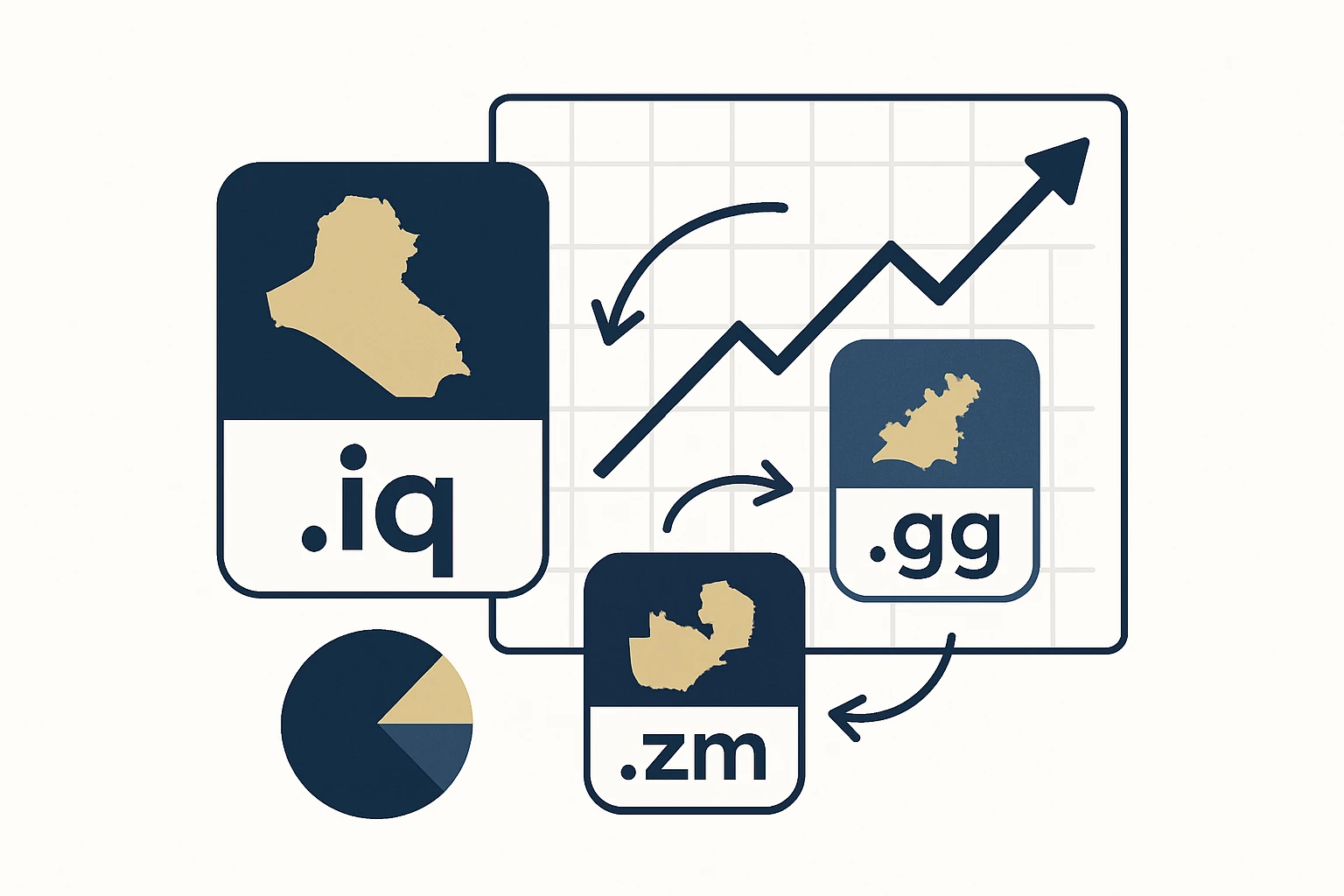
Most brands chase global reach with a single .com, but savvy players know that regional resonance can unlock meaningful growth. Country-code top-level domains (ccTLDs) offer localized signals for search engines and users, enabling brands to tailor experiences, comply with local norms, and hedge against cross-border risks. The challenge is not simply registering a set of local domains, it is building a disciplined portfolio strategy that aligns with brand objectives, regulatory realities, and budgetary constraints. This article outlines a practical approach to crafting a ccTLD-led acquisition strategy around IQ (Iraq), GG (Guernsey), and ZM (Zambia) as representative case studies, while staying true to a premium-domain, brand-protection mindset. It also highlights actionable steps, common missteps, and a framework you can adapt to any country-domain landscape.
Understanding ccTLD governance and its implications for premium portfolios
ccTLDs are not generic marketing tricks, they are governed by country-specific registries and often come with distinct registration rules, dispute mechanisms, and market dynamics. Understanding who administers a ccTLD, how registrations are granted, and how disputes are resolved matters for both risk management and long-term value. Organizations like WIPO provide guidance on ccTLD operations and their dispute-resolution frameworks, underscoring the IP and branding considerations that accompany ccTLD strategies. In parallel, ICANN’s ccTLD reporting shows the monetary and governance dimensions that influence registry behavior and market development. These governance layers shape not only availability but also reassurance for buyers and investors in premium domains. (wipo.int)
From a portfolio perspective, the governance context translates into practical constraints and opportunities: some ccTLDs are more accessible to international buyers than others, while others demand local presence, residency, or business registration. This is a core reason to pair market insight with a formal acquisition framework rather than chasing volume alone. For brand-owners seeking a confidential, strategic path, it’s essential to align portfolio design with both market realities and the brand’s risk appetite. (support.marcaria.com)
Country profiles: IQ (.iq), GG (.gg), and ZM (.zm)
Iraq - .iq
The .iq ccTLD is the Internet domain identifier for Iraq. Registry and management considerations include known registrar arrangements and potential redelegation topics, which can affect both availability and risk budgeting for an international brand strategy. Notably, public documentation recognizes .iq as the Iraq ccTLD and highlights registration considerations that affect enterprise buyers and registries alike. For due diligence, sources discuss redelegation discussions and the broader governance context. IANA – IQ ccTLD overview. ALSCO – IQ domain management and registry notes. (iana.org)
Guernsey - .gg
The .gg domain is the ccTLD for Guernsey, a Crown dependency with its own registry and governance considerations. While widely used in branding and marketing, .gg is also notable in the domain community for creative usage tied to content and technology domains. Registry information and registrars highlight its status as a Guernsey ccTLD with particular market dynamics and potential branding implications for international portfolios. For practical context, industry sources outline its governance and registration landscape. GG domain registration – EuroDNS, Channel Isles – registry context. (eurodns.com)
Zambia - .zm
The .zm ccTLD is tied to Zambia, with registration policies often linking to local registrars and regulatory requirements. ICANN and local ccTLD observers document the operational status of .zm, including management by ZAMNET and associated entities. For buyers and brand portfolios, .zm entries carry implications related to local presence, eligibility rules, and market positioning within Southern Africa. Helpful governance references include ICANN and ccTLD registries. ICANNWiki – .zm overview, ICANN – ccTLD contributions, ZAMNET – Zambia domain registration policy. (icannwiki.org)
Framework: a three-step ccTLD portfolio approach
To translate governance context into a practical plan, apply a three-step framework that balances market dynamics, brand protection, and acquisition discipline. This framework is designed for a premium-domain buyer who operates with confidentiality and strategic precision, rather than a broad, low-cost acquisition spree.
- Step 1 - Discovery and data collection: map the ccTLD landscape for IQ, GG, and ZM, including registrar options, local-residency rules, registration fees, and renewal economics. Use reputable sources and, where applicable, direct registry materials to validate availability and constraints. This step anchors your decisions in verifiable data rather than assumptions. ICANN ccTLD landscape.
- Step 2 - Evaluation criteria: assess brand alignment, local market signals, SEO implications, and risk exposure from political or regulatory changes. Prioritize domains with clear branding advantages, regional relevance, and defensible ownership. For broader governance context, reference WIPO guidance on ccTLD operations and dispute resolution. WIPO ccTLD framework.
- Step 3 - Action plan and governance: define ownership targets, set a confidential acquisition timeline, and establish ongoing governance (renewals, cross-border usage, and domain portfolio reviews). Include contingency plans for regulatory shifts or changes in registry policies. See ICANN and registry studies for governance implications. ICANN ccTLD governance data.
Practical steps for a realistic, confidential ccTLD strategy
Putting theory into practice requires disciplined execution. Below are concrete steps to build a ccTLD-driven portfolio around IQ, GG, and ZM, with an eye toward premium domain quality and brand protection.
- Prioritize brand-anchored domains: select ccTLDs that either extend existing brand naming or clearly signal regional intent. In markets like Iraq (IQ), Guernsey (GG), and Zambia (ZM), localized domains can complement global assets and support region-specific campaigns without diluting brand equity. This aligns with best practices discussed in broader ccTLD strategy articles. Forbes – The Hidden Power of ccTLDs.
- Assess residency and regulatory hurdles: some ccTLDs require local presence or residency, which can impact due diligence timelines and structuring. For example, registration requirements for certain domains may necessitate local affiliation. Plan accordingly to avoid stalled acquisitions. Marcaria – .ZM registration requirements.
- Integrate with a robust brand-protection program: ccTLDs should be part of an overall brand-protection strategy to prevent hyphenation, typosquatting, and misuse. References to WIPO’s ccTLD guidance highlight dispute-resolution and governance implications that are critical to long-term value. WIPO – ccTLD program.
- Plan for data-driven diligence: leverage available data lists and zonefiles where appropriate to understand the landscape of IQ, GG, and ZM sites. Use credible datasets to inform decision-making, while avoiding overreliance on any single source. ZoneFiles.io – IQ zone file.
Limitations and common mistakes to avoid
Effective ccTLD portfolio design requires acknowledging limitations and avoiding common missteps that erode value.
- Local presence requirements: not all ccTLDs permit unrestricted international ownership, some require regional eligibility. Failing to honor residency or registration rules can jeopardize ownership or renewal. See practical notes on .ZM registration requirements. Marcaria.
- Overreliance on a single geography: a ccTLD portfolio should complement, not replace, a global strategy. Even strong local signals may not translate into the same SEO impact as a well-structured global footprint. See broader ccTLD strategy discussions for context. Forbes.
- Inadequate governance and renewal discipline: premium portfolios require ongoing governance to manage expirations, legal changes, and registry policy updates. Regular portfolio audits are essential. See ICANN/ccTLD governance data for context. ICANN.
- Underestimating brand-protection needs across ccTLDs: ccTLDs should be evaluated for defensibility and consistency with overall brand protection programs, not merely as vanity assets. WIPO’s framework emphasizes the role of dispute resolution and brand protection in ccTLD ecosystems. WIPO.
Practical research and data sources for due diligence
To execute a disciplined ccTLD strategy, you’ll rely on data rather than hunches. Credible sources help validate registration rules, governance, and market dynamics for IQ, GG, and ZM. For example, IANA documents provide confirmation of the IQ ccTLD identity, while registry and registrar materials reveal practical registration paths. ZoneFiles and zone-data can offer a look at active domains within a ccTLD, aiding competitive landscape assessments. Use these sources to anchor your decisions and to support confidential conversations with stakeholders. IANA – IQ ccTLD, EuroDNS – GG, ZoneFiles.io – IQ domain data.
Structured approach to client engagement: how a premium broker adds value
For brand-owners and enterprises seeking a refined, confidential approach to domain acquisitions, a premium broker provides several essential services: market intelligence, negotiation leverage, risk mitigation, and ongoing portfolio management. The client’s core objective - acquiring and protecting premium domains with discretion - aligns with a disciplined process that integrates governance, due diligence, and strategic advising. In practice, the broker will coordinate with registries, conduct targeted outreach, and manage non-disruptive integration with the brand’s broader digital asset strategy. For organizations exploring cross-border domain opportunities, partner with a brokerage that can balance editorial quality and fiduciary care, while delivering tangible portfolio improvements. webatla – pricing and services overview, webatla – countries and market scope, webatla – RDAP & WHOIS database.
In this context, webatla operates as a strategic advisor for confidential domain acquisitions and digital-asset portfolio development, offering disciplined frameworks and market insight to help brands grow responsibly. While we present a structured approach, we emphasize collaboration with the publisher’s editorial standards and a non-promotional tone that positions the client as one of several informed solutions.
Conclusion: turning ccTLD insights into a durable premium portfolio
ccTLD landscapes for IQ, GG, and ZM illustrate how country-specific domains can reinforce brand strategy, regional relevance, and risk management when integrated into a broader premium-domain program. A disciplined three-step framework - discovery, evaluation, and governance - transforms local-market nuance into a measurable business asset. By combining governance insight from credible sources with data-driven diligence, brands can avoid common pitfalls and realize the strategic value of a well-constructed ccTLD portfolio. For organizations seeking confidential, expert guidance, a premium domain advisory partner can help translate these principles into actionable outcomes while preserving discretion and strategic alignment with core business objectives.