Premium domains are not only about global brands and high-traffic generic names. For forward-looking companies pursuing regional legitimacy or niche markets, country-code top-level domains (ccTLDs) can be a decisive asset. A well-constructed ccTLD portfolio helps signal local relevance, protect brand assets in specific jurisdictions, and unlock localized acquisition opportunities that aren’t visible in the broader .com marketplace. While some teams gravitate toward downloading lists like “Download list of San Marino (SM) websites” or similar country-specific datasets, the most durable value comes from a deliberate strategy that combines market insight, disciplined negotiation, and careful risk management.
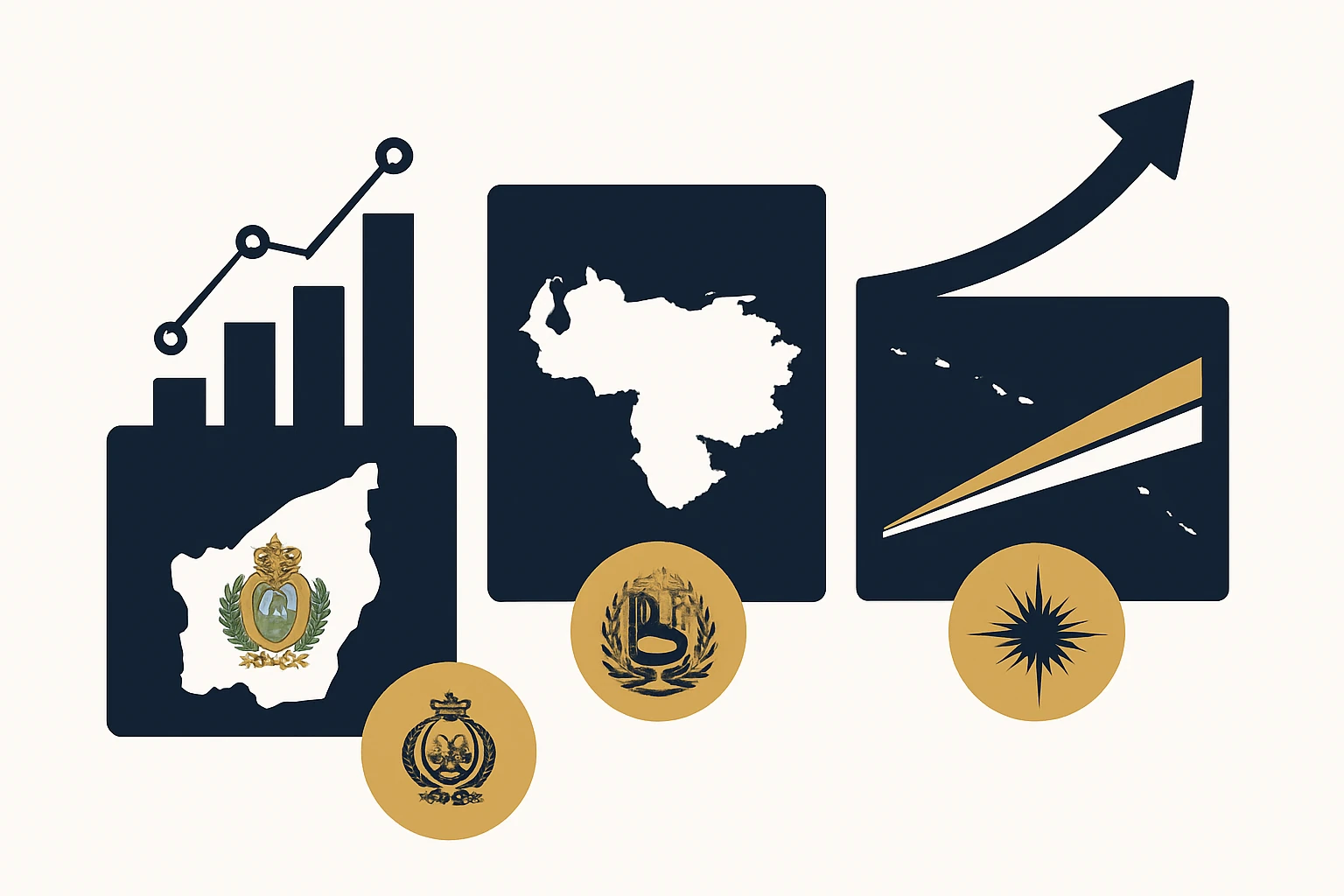
To ground this discussion, consider three micro-markets with distinct profiles: San Marino (.sm), Venezuela (.ve), and the Marshall Islands (.mh). Each ccTLD presents a different mix of market size, regulatory complexity, and liquidity. IANA’s delegation records provide a snapshot of who operates these zones today, underscoring why a professional approach to acquisition and management matters more than ever. For example, the .sm ccTLD is managed by Telecom Italia San Marino S.p.A., which has delegated registry responsibilities to a dedicated operator. The delegation details are publicly listed in IANA’s Root Zone Database. (iana.org) Similarly, .ve is delegated to Venezuela’s Comisión Nacional de Telecomunicaciones (CONATEL), with NIC.VE as the technical and administrative contact, reflecting the country’s regulatory structure. (iana.org) The .mh domain is categorized as a Marshall Islands ccTLD with registry details maintained by the Office of the Cabinet, according to the IANA root-zone records. (iana.org)
Why ccTLDs matter for niche markets
In markets that are small in population but large in growth opportunity, a ccTLD can serve as a trusted local signal. Consumers often respond more positively to local domains that feel native to their geography, and search engines sometimes adapt to country-focused signals, improving visibility for regionally relevant content. A ccTLD strategy is also a powerful risk-management tool: it provides a legal and branding moat against cybersquatters and opportunistic new entrants that might try to leverage similar brand names in adjacent jurisdictions. These dynamics matter even when the target market is geographically compact or economically concentrated in a handful of sectors.
Structured approach to evaluating San Marino, Venezuela, and Marshall Islands opportunities
To translate local dynamics into a concrete plan, use a disciplined framework. The following five criteria help prioritize which ccTLD opportunities to pursue, which to seed for later, and which to avoid due to regulatory or liquidity constraints.
- Market viability and digital presence
- Assess population size, digital adoption, and local consumer behavior to gauge potential search demand and brand protection needs in the jurisdiction.
- Consider whether the ccTLD would meaningfully support regional marketing, e-commerce localization, or partner ecosystems.
- Brand alignment and naming opportunities
- Identify names that map naturally to the jurisdiction (for example, local business lines, iconic city names, or culturally resonant phrases) and evaluate their availability or likelihood of acquisition.
- Evaluate the risk of name collisions with existing brands or trademarks in the territory and plan for protective registrations where appropriate.
- Domain liquidity and acquisition feasibility
- Check whether the target names are held by strategic buyers or sit in the open market. Liquidity matters more in smaller markets where a handful of assets can move the needle.
- Factor the typical lead times, negotiation complexity, and the possibility of needing a premium broker to negotiate confidentially.
- Compliance and risk management
- Understand local regulatory requirements that could affect ownership, transferability, and long-term renewal costs. Some ccTLDs have country-specific rules that influence who can register certain names and under what conditions.
- Plan for potential future policy shifts and how they could impact portfolio resilience and brand protection.
- Economics and portfolio integration
- Model total cost of ownership, including renewal fees, transfer costs, and any registry-imposed premiums. Compare this to projected value in branding, regional SEO, and potential partner channels.
- Define a governance approach for ongoing maintenance, renewal cadence, and a decision tree for de-risking or expanding the portfolio over time.
In practice, this framework translates into concrete action steps for SM, VE, and MH assets. For example, in San Marino, a small but prestigious market, a premium-asset strategy might focus on domain names that align with local business niches (tourism, luxury services, and financial services) where a local registry and consumer base can add credibility. For Venezuela, the regulatory backdrop and market demand for localized presence can justify acquiring a broader set of short, globally legible names that translate well into Spanish-language markets. In the Marshall Islands, the strategic value of a few critical domain names could hinge on cross-border partnerships and regional logistics content, where a .mh presence supports credible communications and public-facing information. The IANA delegation data for these TLDs underscores how governance and registry structure shape acquisition approaches across jurisdictions. (iana.org)
Acquisition playbook: turning frameworks into results
Once the opportunity is validated, execution matters. A disciplined playbook combines market research, selective outreach, and discreet negotiation. The following steps are designed to be practical, not theoretical, and can be executed with or without a formal brokerage arrangement depending on the asset in question.
- Define the target name set
- Develop a short list of brand-aligned names that would benefit from a local identity in SM, VE, or MH, including local terms, product names, or service categories where the ccTLD could deliver advantage.
- Assess availability and ownership
- Use a combination of WHOIS/RDAP checks and registry insights to confirm ownership status and potential transfer paths. In some cases, pre-market opportunities exist that a broker can surface confidentially.
- Engage discreetly with a broker or directly with the registry
- A confidential approach helps preserve value during negotiations and protects sensitive brand strategy. If a broker is engaged, ensure they have a track record in premium ccTLDs and a documented process for non-public deals.
- Conduct due diligence
- Verify transfer mechanics, registrar compatibility, and any local residency or corporate requirements. Assess potential legal risk and ensure clear, defensible ownership records for long-term branding investments.
- Close and secure the asset
- Execute a clean transfer with evidence trail, then implement a portfolio-management plan that includes renewal alerts and risk-mitigated wraps (such as privacy controls or brand-name protectors where appropriate).
Within this context, webatla offers structured support for confidential domain acquisitions and ongoing portfolio management. For readers exploring San Marino specifically, webatla’s San Marino country page is a useful reference point that highlights regional inventory and negotiation considerations. For broader context on domain extensions and country-code TLD coverage, webatla’s directory of top-level domains can be helpful: webatla: TLD directory.
Limitations, trade-offs, and common mistakes
Every ccTLD investment carries caveats. The most common missteps include assuming that availability equals value, underestimating local regulatory constraints, or chasing liquidity in markets where the registry operates with limited aftermarket activity. A practical takeaway: prioritize quality over volume. A handful of strategic .sm, .ve, and .mh assets that align with your brand architecture and regional strategy will typically outperform a broad, generic tranche of low-signal domains.
Another frequent mistake is misallocating budget to assets whose value is primarily speculative. Premiumity often arises from brand-liability protection rather than mere short names. In small markets, the cost of owning and renewing a handful of key ccTLDs may exceed initial expectations if you do not pair them with a disciplined governance framework. Building a robust, long-horizon plan for renewal, transfer readiness, and brand enforcement is essential to avoid value erosion over time.
A practical framework in action: five steps, no fluff
To make the five criteria tangible, here is a condensed checklist you can apply to any candidate ccTLD portfolio. This is a real-world, non-theoretical view designed to help brand teams and executives quickly decide which assets to pursue, deepen, or deprioritize.
- Market signals: local digital behavior and demand indicators
- Brand alignment: naming opportunities and protection needs
- Liquidity: ownership status and transfer feasibility
- Compliance: regulatory and registry rules relevant to ownership
- Econ viability: ongoing cost vs. prospective branding value
In short, a thoughtful ccTLD strategy is inherently about balance - between local relevance and cross-border scalability, between immediate cost and long-term asset value, and between confidential negotiation and transparent governance. When done right, a micro-market ccTLD portfolio can become a highly defensible component of a broader digital asset strategy tailored for brand protection and strategic growth.
Conclusion: turning country-code domains into strategic assets
ccTLDs like .sm, .ve, and .mh offer distinctive opportunities for brands seeking regional legitimacy and protection in niche markets. The right approach combines market insight, disciplined evaluation, and professional execution. The three TLD cases above illustrate how registry structure and governance shape your acquisition approach and long-term portfolio planning. While lists of websites may surface quick wins or research leads, sustainable value comes from owning carefully chosen, strategically aligned assets and managing them through a formal framework that integrates brand protection with portfolio optimization. For teams seeking guidance or hands-on support, partnering with a premium domain brokerage and advisory service can translate this framework into concrete, confidential deals that reinforce your brand position across geographies.
For readers looking to explore the client’s offerings in more depth, the main URL and related services can be consulted as part of a broader due-diligence process: webatla’s San Marino country page and webatla: TLD directory.