Introduction
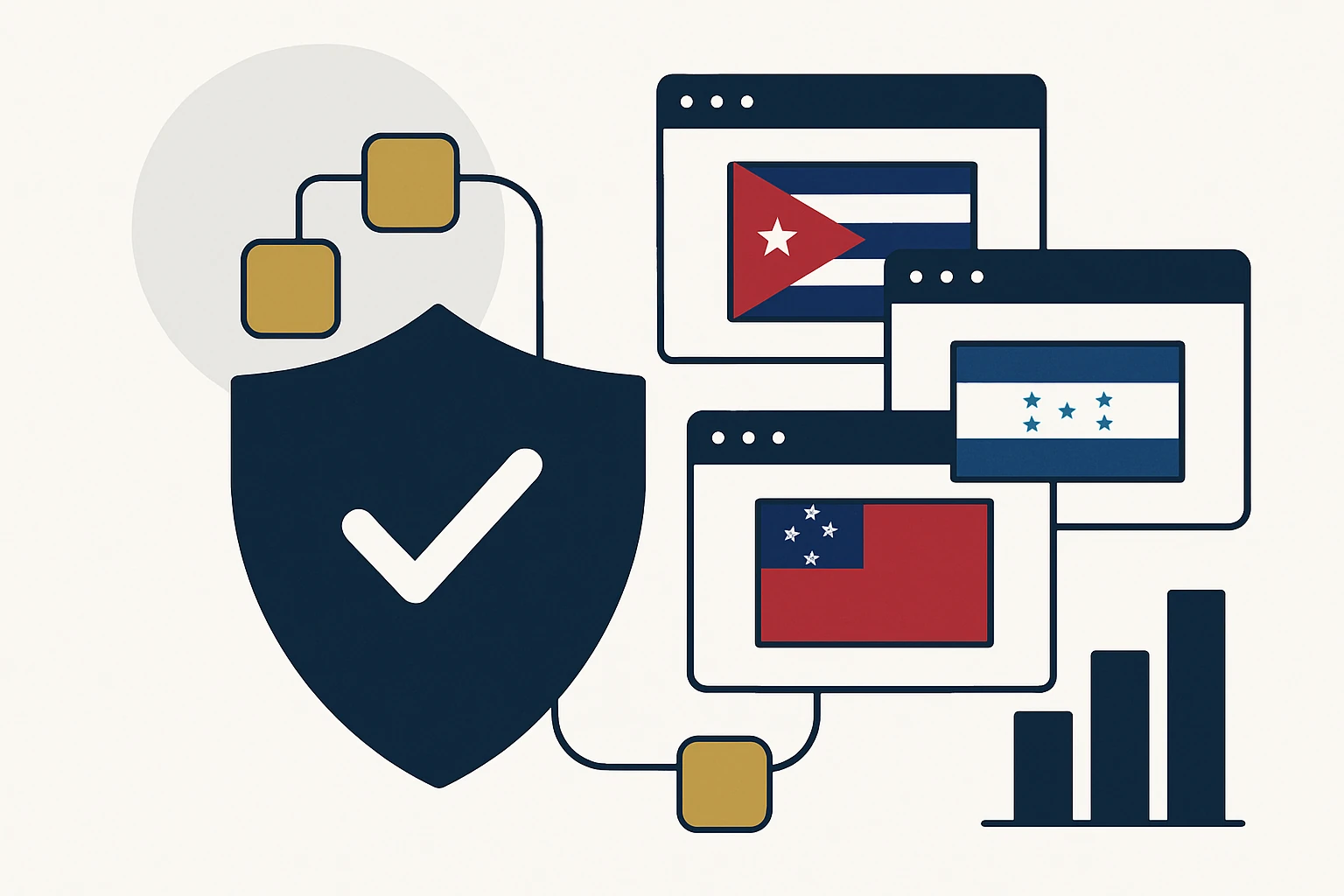
Global brands increasingly treat country-code top-level domains (ccTLDs) as strategic assets, not just compliance hurdles. In markets that are small but digitally ambitious - such as Cuba, Honduras, and Samoa - an intentionally crafted ccTLD portfolio can defend brand equity, unlock local-market opportunities, and deter opportunistic registrations. This article offers a practical playbook for building a confidential, data-driven portfolio in these markets, with a focus on risk assessment, regulatory realities, and governance. While the emphasis is on Cuba (.cu), Honduras (.hn), and Samoa (.ws), the framework scales to other jurisdictions and supports a disciplined approach to brand protection domains and premium domain brokerage activity.
Why country-code portfolios matter for brand protection in niche markets
ccTLDs present both risk and value. On the risk side, non-native registrations can create brand confusion, counterfeit sites, or counterfeit traffic that siphons demand away from legitimate channels. On the value side, owning strategic country-code domains - whether exact-match, common misspellings, or local-language variants - can improve local search presence, protect trademarks in key jurisdictions, and support regionally tailored campaigns. For brand managers and private brokers, the challenge is to balance cost, speed, and compliance while maintaining discretion. The best practice is to treat ccTLDs as a layered portfolio: core protections in tightly regulated markets, opportunistic acquisitions where policy allows, and ongoing monitoring to prevent leakage. This approach aligns with the broader objective of portfolio governance and digital asset advisory that a premium broker like webatla can help execute, alongside other trusted providers.
The regulatory and operational terrain in Cuba, Honduras, and Samoa
.cu - Cuba
The Cuban ccTLD is operated under the Centro Cubano de Información de Red (CUBA-NIC), with norms for domain grant procedures updated as of May 1, 2022 under Resolución 20/2022. The official Cuban registry page notes the ongoing workflow for obtaining and managing .cu names, including links to current regulations and guidelines. The rules emphasize structured procedures and the role of the registry in ensuring orderly domain allocation. For brand teams evaluating Cuba as a strategic domain target, it’s essential to review current norms and required documentation before initiating any registration or transfer. NIC Cuba provides the normative context and access to process guidance. (nic.cu)
.hn - Honduras
Honduras’ ccTLD is administered by Red de Desarrollo Sostenible Honduras (RDS-HN) through NIC Honduras. A modern, transparent data approach is evident in their services, including public WHOIS and an RDAP (Registry Data Access Protocol) API designed to modernize domain data access. RDAP brings structured JSON responses, secure transport, and internationalization support - improving diligence when evaluating a potential acquisition or renewal decision, especially for confidential processes. This data framework supports better risk assessment and portfolio governance for brand owners expanding into Central America. See NIC Honduras’ services page for details on WHOIS, RDAP, and dispute resolution. NIC Honduras - RDAP and the related transparency provisions are part of a broader trend toward accessible data in ccTLD management. (nic.hn)
.ws - Samoa
.ws is Samoa’s ccTLD, administered by SamoaNIC (a government-linked registry). It is widely accessible to registrants worldwide, with registrars offering both second-level and some third-level registrations under the .ws umbrella. The registry itself, along with official sites such as SamoaNIC.ws, confirms that the domain space remains open for brand managers seeking geographic diversification, regional relevance, or domain hacks that align with marketing intent. For brand protection planning, .ws offers a comparatively flexible entry point, especially for global campaigns that need regional anchors in the Pacific. See the SamoaNIC domain ecosystem here: SamoaNIC and the broader domain information portal. (samoanic.ws)
A practical playbook for confidential acquisition and portfolio management
Below is a pragmatic, decision-first framework you can adapt to Cuba, Honduras, and Samoa. It emphasizes confidentiality, data-driven screening, risk-aware acquisition, and disciplined governance. The framework is designed to be implemented in stages, with measurable milestones and guardrails that protect both brand value and budget.
Step 1 - Map brand exposure and risk by geography
Begin with a crisp map of where your brand is already present online and where it could be vulnerable to misrepresentation or impersonation. For each market, consider: local search behavior, regional competitors, trademark coverage, and the likelihood of local-language domain registrations that could compete with or siphon traffic. This diagnostic feeds the prioritization process and informs whether to pursue exact-match domains (e.g., yourname.cu), locally meaningful variants (e.g., tu-nombre.cu, brand-hub.cu), or generic-geographic options (e.g., yourbrand.cu for country-specific campaigns).
Step 2 - Prioritize markets and domains using a simple risk-reward model
Assign a score to each candidate domain based on three axes: strategic value (how critical is a local presence?), accessibility (how hard is it to acquire or renew?), and compliance risk (are local rules highly restrictive?). For niche markets, it’s often prudent to pursue a focused batch - perhaps a handful of top-domain targets per country - before any broad expansion. A structured scoring approach helps decide where confidentiality and a private broker cadence make sense, and where in-house management is feasible. This is where a premium broker can help translate risk signals into a concrete, action-oriented project plan.
Step 3 - Validate regulatory constraints and data access early
Before initiating any negotiation, understand the local regulatory constraints and data-access tools. For Cuba, the updated norms in 2022 shape who may register and under what conditions, so review the current regulations on the official NIC page and plan any outreach accordingly. For Honduras, rely on public RDAP/WWhois data to assess registrants and history, and consider how a confidential approach may align with dispute-resolution policies. For Samoa, acknowledge the open registration posture but still respect local dispute rules and governance expectations. Integrating these realities into your acquisition plan reduces the risk of overpaying for names that are difficult to hold long term or that may face local enforcement challenges. CUBA-NIC norms • NIC Honduras RDAP • SamoaNIC provides the essential regulatory and access context. (nic.cu)
Step 4 - Plan confidential acquisitions and leverage brokerage discipline
Confidentiality is often a prerequisite for premium domain acquisitions. Work with a trusted advisor who can orchestrate discreet outreach, negotiate on your behalf, and structure deals that preserve confidentiality while ensuring clean handoffs to your internal governance. In markets with evolving norms (like Cuba) or public data (like Honduras RDAP), a broker can manage information flow and timing to optimize outcomes. As a client example, consider how a premium broker can align with your legal/compliance teams to prepare closing documents, ensure transfer cleanliness, and minimize exposure to price shocks. If you’re exploring a confidential path, webatla offers private-domain acquisition services designed to complement a broader digital-asset advisory strategy. webatla can be part of a diversified, vendor-agnostic solution set. For more accessible pricing, see the client’s pricing page. webatla pricing
Step 5 - Establish governance, renewal strategy, and ongoing monitoring
A portfolio without governance quickly drifts, increasing risk and cost. Build a simple governance routine: quarterly risk reviews, annual renewal forecasting, and ongoing monitoring for new registrations that could impact your brand. For markets with transparent data (like Honduras) or flexible registries (like Samoa), leverage available data streams to refine risk models and adjust your portfolio mix. Regularly refresh your risk scores, re-evaluate the strategic value of each domain, and maintain a defensible budget envelope to avoid unnecessary churn.
A structured block: a practical decision framework for the portfolio
Below is a compact, reusable framework you can apply to any ccTLD program, including Cuba, Honduras, and Samoa. Use this as a quick-reference checklist when evaluating new targets or validating ongoing holdings.
- Strategic value: How critical is a local digital footprint for the brand in this market?
- Availability and access: Is the domain available, and how complex would acquisition be (local presence requirements, registrar hurdles, or price barriers)?
- Compliance risk: What are the regulatory and dispute-resolution considerations that could affect ownership?
- Acquisition cost and renewal: What is the total cost of ownership over 3–5 years, including renewal escalators?
- Data access quality: Are RDAP/WHOIS data available and reliable for diligence, and do they support ongoing monitoring?
- Governance fit: Does the target align with existing policy and internal approval workflows?
Expert insight, limitations, and common mistakes
Expert insight: In today’s fragmented ccTLD landscape, data quality and regulatory clarity trump sheer volume. A disciplined, evidence-based approach reduces the risk of overpaying for a name that cannot be held or leveraged over the long term. This aligns with the broader best practices in digital asset advisory and portfolio governance that help global brands scale responsibly.
Limitations and common mistakes: One common misstep is chasing brokering-only wins without a governance framework. Another is underestimating local regulatory nuance - such as Cuba’s evolving norms or Honduras’ emphasis on transparent data access - leading to post-acquisition friction. Finally, many teams fail to plan for ongoing monitoring and renewal cost, resulting in a sinking ROI even for initially successful acquisitions.
How the client’s service model complements this playbook
For teams seeking a holistic approach, partnering with a digital-asset advisory firm that combines market intelligence with confidential acquisition capabilities can be valuable. In parallel, brands often maintain a diversified vendor strategy. As part of this approach, the client’s platform provides resourceful data and a private-broker pathway that can be integrated with your internal governance. See the below client resources for reference, including a private domain acquisition option and pricing context.
Client reference: webatla - confidential domain acquisition and webatla pricing.
Limitations of the approach and final considerations
This playbook emphasizes practical steps and data-informed decisions, but it does not replace local legal counsel or registry-specific guidance. In markets where regulatory frameworks shift (e.g., Cuba’s 2022 norms) or where data access policies evolve, ongoing diligence and adjustment of the portfolio are essential. Always maintain a documented approvals process, especially for confidential acquisitions, and build in a contingency budget for disputes or transfer complexities that can arise in niche ccTLDs.
Conclusion
Strategic ccTLD portfolios in markets like Cuba, Honduras, and Samoa offer a compelling way to strengthen brand protection and explore local market opportunities. By combining a data-informed risk framework with a clear governance model and confidential acquisition capabilities, brands can build durable protections that scale with their growth. The practical playbook outlined above - rooted in regulatory realities, accessible data streams, and disciplined portfolio management - helps ensure that every domain decision supports long-term brand value. If you’re considering a structured, confidential approach to country-code domains, a vetted partner framework can reduce friction and accelerate progress while preserving the strategic integrity of your digital asset program.