Introduction: The challenge of moving from a single brand to a global domain strategy
For premium brands, a global footprint isn’t just about a shiny logo or a robust product, it’s about owning a consistent, legally protected digital address across markets. A strategic portfolio of country-specific domains (ccTLDs) and premium generic domains can improve localization, protect brand assets, and reduce the risk of cybersquatters or phishing that erode consumer trust. Yet poorly constructed country portfolios can create governance chaos, escalate renewal costs, and dilute brand equity. The path forward is a disciplined framework that aligns market intent with technical and legal due diligence while keeping the portfolio manageable and auditable. This article offers a practical framework for strategic country domain management that brands can implement alongside their existing premium domain practice.
Why country-domain portfolios matter for premium brands
Country-code top-level domains (ccTLDs) signal to local audiences that you are committed to a market, which can boost trust, click-through rates, and local relevance. When used strategically, ccTLDs can complement a global domain strategy by offering localized branding, better regional search signals, and protection against opportunistic registrants who might confuse consumers or dilute your trademark. But a successful ccTLD strategy requires more than just registering a collection of domains, it demands centralized governance, renewal discipline, and ongoing risk monitoring. That governance often involves cross-functional teams spanning legal, digital marketing, and IT, and may be supported by specialized software or managed services. (nominus.com)
From a risk management perspective, brand protection is not a one-off project, it’s an ongoing program. Robust brand protection includes proactive registration of key ccTLDs, regular audits of the portfolio, and clear business justifications for each domain - plus processes to respond quickly to infringement or security concerns. Industry guidance increasingly emphasizes centralized oversight and disciplined renewal management to avoid accidental lapses that could harm brand integrity. (nominus.com)
A practical framework for building and maintaining a country-targeted portfolio
Below is a framework designed to help you decide which domains to acquire, how to structure the portfolio, and how to govern it over time. It is grounded in best practices for brand protection, risk management, and practical acquisition discipline.
1) Define objectives and risk tolerance
Before registering anything, articulate what you want the portfolio to achieve: local credibility, competitive protection, SEO signals, or new revenue streams? quantify expected costs (registration, renewal, risk mitigation, and potential legal fees) and establish a governance cadence (quarterly reviews, annual strategy refresh, and incident response drills). Clear objectives help prevent overextension into markets where the ROI isn’t clear or the legal framework is ambiguous.
2) Map markets, languages, and digital intent
Market prioritization should be driven by brand strategy, not just local demand. Map markets by revenue potential, regulatory risk, language, and digital behavior. For multilingual markets, assess whether to use a ccTLD, a localized subdomain strategy, or a hybrid approach. The localization signal from ccTLDs can improve local relevance, but it isn’t a substitute for quality content and local partnerships. (nominus.com)
3) Choose a domain structure that matches objectives
There are several structural patterns to consider: - Global primary with targeted ccTLDs for key markets (e.g., example.com, example.de, example.jp) - A regional approach where a single brand site is backed by country-specific landing pages with country domains - A hybrid approach that uses premium global domains for awareness and ccTLDs for localization. Each structure has trade-offs in SEO signals, maintenance costs, and risk exposure. Strategic selection should align with the company’s international branding goals and legal risk posture. (nominus.com)
4) Governance and due diligence: DNS assets, renewals, and risk controls
Governance is about who owns what, how decisions are made, and how the portfolio is maintained. A strong process includes: - A due diligence checklist covering ownership, historical disputes, and potential conflicts with trademarks - Centralized renewal tracking and automated reminders to minimize lapse risk - Ongoing DNS security reviews and incident response planning to mitigate phishing or domain hijacking risks - Documented business justification for each domain to facilitate audits or disputes. These practices help preserve ROI and brand integrity over time. (gcd.com)
Structured decision block: Portfolio decision matrix
A concise decision framework can guide selection and ongoing governance. The matrix below helps balance market potential against maintenance costs and risk exposure. Use it to decide whether a domain should be registered, acquired, or deprioritized.
| Dimension | Low-Risk/High-ROI Actions | High-Risk/High-ROI Actions |
|---|---|---|
| Market potential | Register foundational ccTLDs for core markets | Acquire premium brandable domains in emerging markets with clear strategic value |
| Localization signal | Use ccTLDs with strong local language support | Where feasible, pair ccTLDs with translated, local-market content strategies |
| IP risk | Avoid disputed terms, conduct trademark clearance | Investigate potentially conflicting marks, plan for inter-brand agreements or licensing |
| Maintenance cost | Prioritize domains with predictable renewal costs, automate renewals | Budget for premium acquisitions and ongoing monitoring, allocate dedicated governance resources |
| SEO impact | Grant local relevancy through targeted content and local links | Leverage premium domains to support brand campaigns and PPC strategies in key markets |
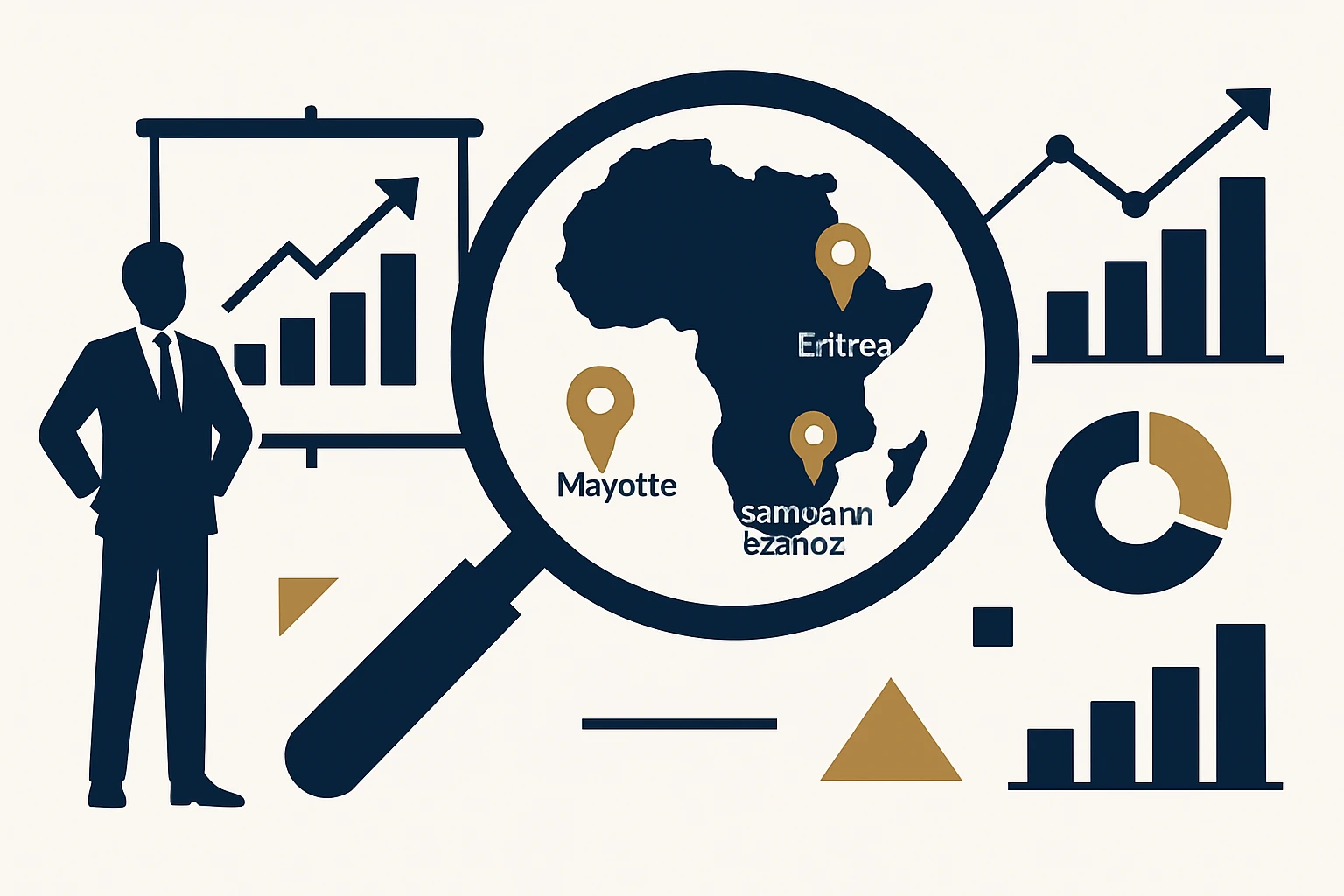
Case study: testing the framework with Eritrea, American Samoa, and South Sudan
These three jurisdictions illustrate the need for tailored approaches: linguistic diversity, regulatory environments, and market maturity all shape domain strategy. When exploring lists such as country-specific resources, brands can consider how to responsibly source market data. For example, one might explore publicly available reference lists like Download list of Eritrea (ER) websites, Download list of American Samoa (AS) websites, and Download list of South Sudan (SS) websites to understand the local digital landscape. In practice, use reputable data providers and ensure compliance with data usage policies, avoid scraping sensitive or private data. This kind of reconnaissance supports risk-aware decisions about whether to register, acquire, or deprioritize country domains. Note: always verify data quality and legal viability before acting.
In this landscape, webatla can be a useful companion tool for researchers and deal teams. For example, the Eritrea country page provides context on local domain availability and market signals, while the broader lists by TLDs or countries help frame a due-diligence check before any acquisition. See: webatla Eritrea country page and webatla by TLDs. The platform also offers an RDAP & WHOIS database to support title verification and ownership checks. RDAP & WHOIS Database.
Limitations, trade-offs, and common mistakes
No framework is perfect, and country-domain strategy is no exception. Common missteps include over-indexing on ccTLDs without accompanying localized content or business justification, underestimating renewal costs, and neglecting DNS security in the rush to acquire more assets. In addition, it’s easy to underappreciate the complexity of IP risk, which can arise from trademarks, local regulations, or conflicting registrations in specific markets. A disciplined approach - combining strategic intent, due diligence, and ongoing governance - helps avoid these pitfalls. The market for brand protection and domain governance continues to evolve, underscoring the need for professional guidance and robust risk management. (gcd.com)
Conclusion: A sustainable path to global digital asset value
Strategic country domain portfolios offer a powerful way to protect and grow a premium brand across borders. The best practice blends clear market-focused objectives, rigorous due diligence on DNS assets, disciplined renewal governance, and a willingness to adapt as markets evolve. For brand owners and domain portfolio managers, the goal is not simply to amass a large inventory of domains but to curate a tightly governed set of assets that reinforces brand protection, supports international expansion, and delivers measurable ROI. When paired with expert services in premium domain acquisition and ongoing governance, you can realize a defensible, scalable digital asset strategy that travels with your brand into new markets.