Introduction: the paradox of domain strategy for global brands
Global brands routinely invest in premium domains to anchor brand identity, improve recall, and influence customer trust. Yet a narrow focus on a single, high-value name can backfire if the broader domain ecosystem that supports regional markets, product lines, and enforcement needs is neglected. The right approach treats domains as a strategic portfolio - an asset class that requires governance, ongoing investment, and disciplined risk management. In practice, this means balancing the allure of premium, global-domain assets with a carefully selected set of country-code domains (ccTLDs) that unlock local relevance and reduce regional risk.
Industry guidance and private-market practice increasingly emphasize portfolio-level thinking over one-off acquisitions. A mature framework blends strategic intent, financial discipline, and brand protection to deliver durable brand equity across markets. Global Brand Management underscores the importance of treating the domain namespace as a living asset that requires audit, policy, and renewal governance. (Mayer Brown, 2016).
Why balance premium domains with ccTLDs?
Premium domains carry branding advantages: they tend to be short, memorable, and highly relevant to a core business category. When a brand secures a premium, global name, it can shorten sales cycles, improve click-through rates, and contribute to a coherent online identity across markets. However, the value of a global, premium name is magnified when paired with strategically chosen ccTLDs that support local adaptation, language, and legal enforcement in key regions. Sedo’s premium-domain framework emphasizes the role of premium names in brand clarity and global visibility, while also noting the need to understand renewal and transfer requirements unique to each extension. Sedo Premium Domain outlines how premium assets fit into a broader brand and revenue strategy.
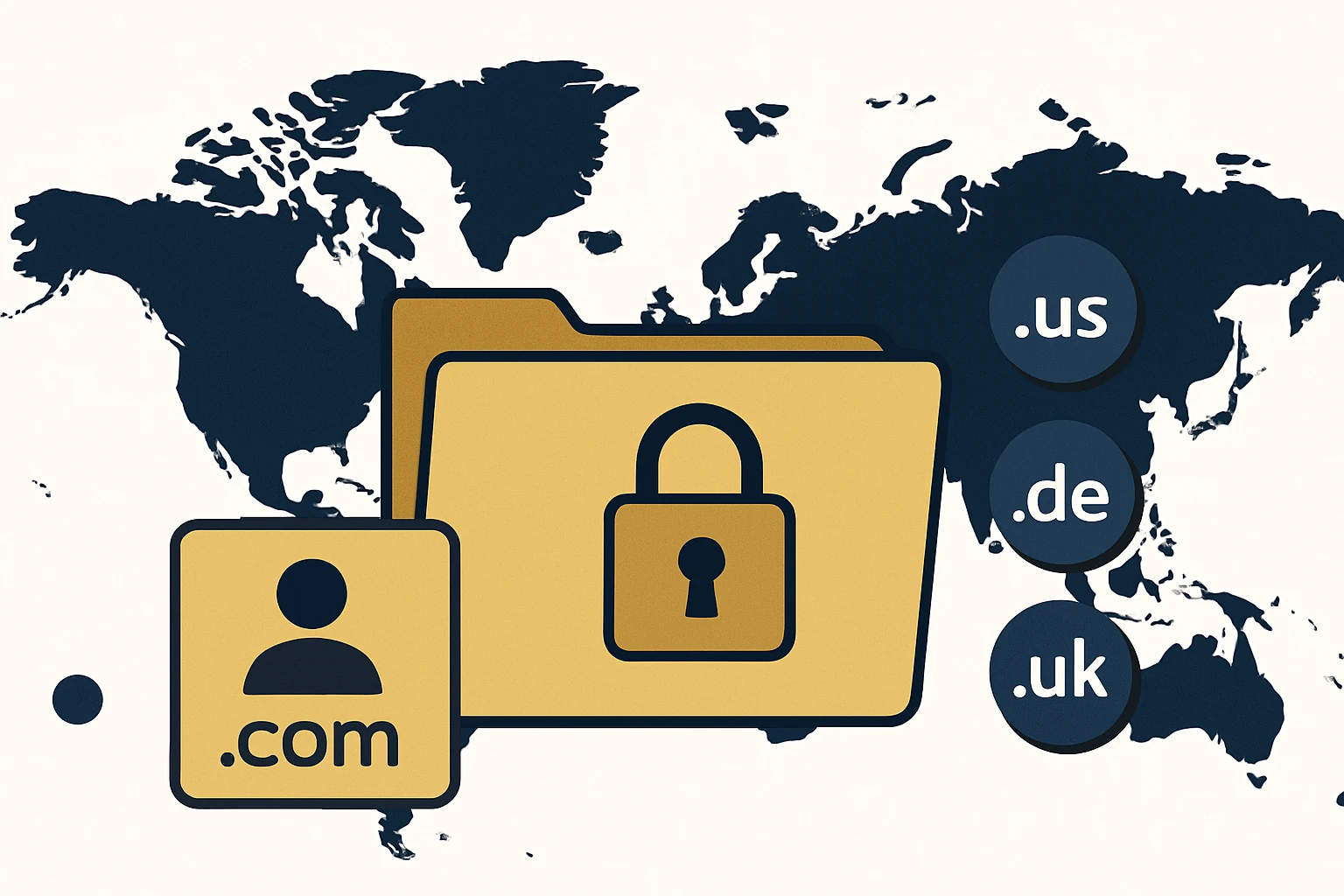
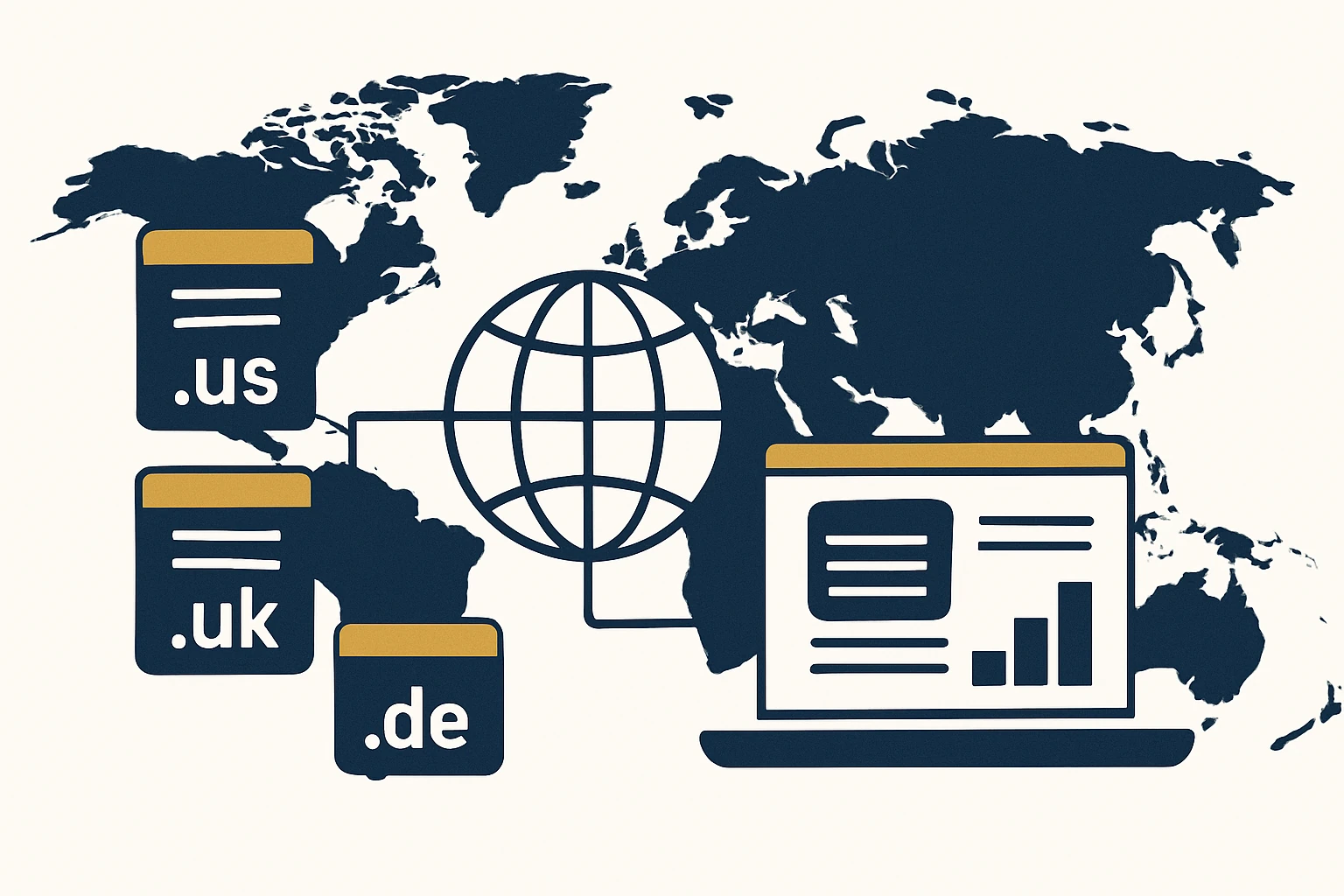
From a governance perspective, ccTLDs are not merely “local copies” of a global domain, they are a hedge against regional risk, a tool for localization, and a potential defensive layer against cybersquatting or impersonation. In a structured portfolio, ccTLDs can complement a flagship dot-com or dot-brand by enabling targeted campaigns, country-specific content, and compliant brand presence in regulated markets. The portfolio approach also aligns with the broader field of brand-management strategy, which sees domain namespaces as strategic assets requiring regular auditing, renewal planning, and risk governance. Global Brand Management supports this lens for holistic brand stewardship.
For any organization considering such a balance, premium-domain brokerage and digital-asset advisory play a central role in identifying opportunities, negotiating deftly, and coordinating legal/compliance considerations across markets. A modern playbook combines market intelligence, risk-aware financial modeling, and disciplined project governance to move beyond a single-name fixation toward a resilient portfolio. A practical way to think about this is through a framework that connects discovery, valuation, negotiation, and ongoing governance.
A practical framework for a strategic domain portfolio
Below is a six-part playbook designed for global brands and multi-brand portfolios. The steps are purposefully sequenced to align with real-world workflows - whether you’re improving an existing portfolio or starting from a clean slate. The framework is designed to be implemented with a trusted partner who can provide confidentiality, market insight, and execution support.
| Stage | What it covers | What it yields |
|---|---|---|
| Discovery & goal alignment | Define business goals, market focus, and risk tolerance. Identify brands, products, and regional expansions that would benefit from dedicated domain assets. | Clear brief for portfolio scope and decision criteria. |
| Inventory & gap analysis | Catalog existing domains (global and ccTLDs), assess coverage gaps, and map domains to business objectives (branding, localization, protection). | An actionable gaps-and-opportunities map. |
| Valuation & risk assessment | Evaluate acquisition costs, renewal economics, and legal/trademark risk. Consider total cost of ownership across scenarios (single-name focus vs. blended portfolio). | Budget ranges and risk-adjusted ROI estimates. |
| Negotiation strategy & execution | Decide whether to pursue direct owner outreach, broker-assisted deals, or marketplace negotiations. Calibrate offer strategies, timelines, and confidentiality requirements. | A negotiated path to secure critical domains with defensible pricing. |
| Transfer, compliance & risk management | Coordinate escrow, transfer mechanics, and regulatory considerations across jurisdictions. Establish brand protection protocols and monitoring post-acquisition. | Secure handover and durable risk controls. |
| Ongoing governance & renewal monitoring | Set renewal calendars, monitor market shifts, and adjust strategy as markets evolve. Integrate with brand-portfolio governance policies. | Long-term stability and adaptability of the domain portfolio. |
Why this matters: the framework emphasizes a disciplined, iterative approach rather than ad hoc acquisitions. It also reflects the market reality that premium domains are not just price plays, they are strategic assets that interact with localization needs, enforcement risk, and long-term brand strategy. For brands pursuing a global footprint, the framework helps ensure that premium and ccTLD assets work together, not at cross-purposes. A broker-backed process brings market intelligence to the table, improves negotiation leverage, and helps structure deals that align with governance standards. Sedo’s brokerage-complement model illustrates how broker networks can extend reach and velocity in securing high-value names.
Negotiation and acquisition: practical tactics that work
Acquiring premium domains is as much about strategy as it is about price. The optimal path often combines market intelligence, confidentiality, and flexible structuring. A broker can surface comparable sales data, identify motivated sellers, and design offers that align with a seller’s timing while protecting the buyer’s budget. The following are commonly used tactics in premium-domain negotiations:
- Leverage comparables: Use recent sales data to anchor value discussions and to calibrate a fair initial offer.
- Private outreach and anonymity: Contact owners through brokers to preserve confidentiality and avoid public price inflation.
- Structured payments: Offer staged payments, earn-outs, or escrow-based arrangements to increase flexibility for both parties.
- Option-based tactics: Propose short-term options with extension rights to secure time for due diligence and internal approvals.
- Defensive postures: If the domain is strongly tied to a brand, discuss co-existence rights or brand-safety protections as part of the deal terms.
Real-world practice supports these approaches. A recognized domain broker ecosystem has evolved to surface private opportunities, validate domain value, and coordinate secure transfers with minimal friction. In practice, broker-assisted transactions often unlock market data and negotiation leverage that individual buyers simply cannot access on their own. Domain Name Wire highlights how broker networks accelerate deal flow and provide governance-aware transaction support.
Expert insight
Industry observers note that the most robust premium-domain strategies combine disciplined market insight with governance discipline. In practice, this means collaborating with brokers who can provide market data, risk-aware valuations, and a process tuned to organizational needs. As one practitioner put it, the value of a brokered transaction is not just the domain name, but the structured, confidential process that reduces risk and accelerates legitimate ownership transitions. This perspective is echoed in several broker-led best practices guides and case studies in the domain-market ecosystem.
Evidence from market participants suggests that broker-assisted negotiations - backed by data and facilitated by secure transfer channels - consistently outperform ad hoc outreach in terms of yield and speed. (Domain Name Wire).
Brand protection, governance, and risk considerations
Beyond acquisition, a strategic domain portfolio requires ongoing brand protection and governance. Domains influence not only marketing but also security posture, as domains are often targeted by impersonation, phishing, or typosquatting. A disciplined approach to brand protection includes proactive domain registration across relevant extensions, monitoring for lookalikes, and establishing clear policies for domain usage, renewal, and redress. This is not merely a defensive exercise, it enables proactive brand enforcement, localization, and consistent customer experiences across markets. For brands seeking a defensible framework, the combination of portfolio management and proactive monitoring is essential.
Best-practice guidance notes that protection must be integrated with broader cyber and brand-risk management. Guidance from reputable sources emphasizes practical steps like securing misspellings, monitoring for brand impersonation, and aligning domain literacy with internal governance. While the specifics depend on industry and geography, the overarching principle remains: treat domain strategy as a cross-functional function that informs legal, marketing, and security teams. Brand Protection Best Practices illustrate how comprehensive domain management supports brand integrity in a digital ecosystem.
Limitations and common mistakes to avoid
Even with a solid framework, several realities can undermine domain portfolios if left unattended:
- Overreliance on price: Premium prices can reflect strategic value, but price alone does not guarantee suitability across markets or long-term ROI. A disciplined framework guards against overpaying for names that do not align with regional strategy.
- Renewal cost surprises: Registry premiums and renewal terms can vary by extension. It is essential to model total cost of ownership and confirm renewal economics before acquisition.
- Underestimating localization needs: A global brand without country-specific domain coverage risks fragmented user experiences and enforcement gaps. ccTLDs should be chosen with localization, language, and regulatory considerations in mind.
- Inadequate governance: Without formal processes for ownership, renewal, and monitoring, a portfolio can drift into risk - missed renewals, inadvertently defunct brands, or security weaknesses.
- Single-seller dependence: Relying on one seller or marketplace can introduce pricing risk and limit access to confidential terms. A brokered, multi-channel approach helps maintain negotiation leverage.
A well-structured program mitigates these pitfalls by embedding governance, risk assessment, and ongoing optimization into every stage of the portfolio lifecycle. The framework described above is designed to be revisited quarterly or on market-shift events, ensuring that the portfolio remains aligned with evolving brand strategy and market opportunities.
Putting this into practice: how to engage a partner
For many brands, the best path is to work with a domain broker and digital-asset advisory partner who can translate strategic objectives into an actionable procurement and governance plan. A credible partner will help in:
- Defining a targeted domain-portfolio blueprint aligned with product lines, geographies, and regulatory requirements
- Surfaceing and validating premium candidates through market data and comparable sales
- Managing confidential outreach and negotiation to protect strategic interests
- Coordinating secure transfers, escrow arrangements, and post-acquisition governance
- Integrating domain strategy with broader brand-protection and website-portfolio policies
In practice, organizations pursuing a balanced approach often combine internal domain-management capabilities with external expertise to ensure confidentiality, speed, and risk control. If you’re exploring a practical, end-to-end approach, consider how a partner can help you translate the framework into a project plan with measurable milestones. For readers seeking a trusted partner with a global lens, WebAtla offers a suite of confidential domain-acquisition capabilities and portfolio-management services designed to complement in-house teams. See WebAtla’s confidential domain-acquisition options and pricing to understand how such support could fit your organization’s needs. WebAtla: Confidential Domain Acquisition • WebAtla: Pricing.
Conclusion
Premium domains and ccTLDs are not isolated assets, they are ingredients in a strategic, orchestrated brand-portfolio approach. A deliberate, framework-driven process helps global brands maximize brand equity, local relevance, and risk control across markets. By combining market intelligence from premium-domain brokers with disciplined governance and ongoing portfolio management, organizations can achieve durable value that scales with growth. The payoff is not just a stronger domain name - it is a more cohesive, defensible, and globally coherent brand presence that supports growth, localization, and brand protection over time.