Introduction: a problem that demands disciplined, territory-aware thinking
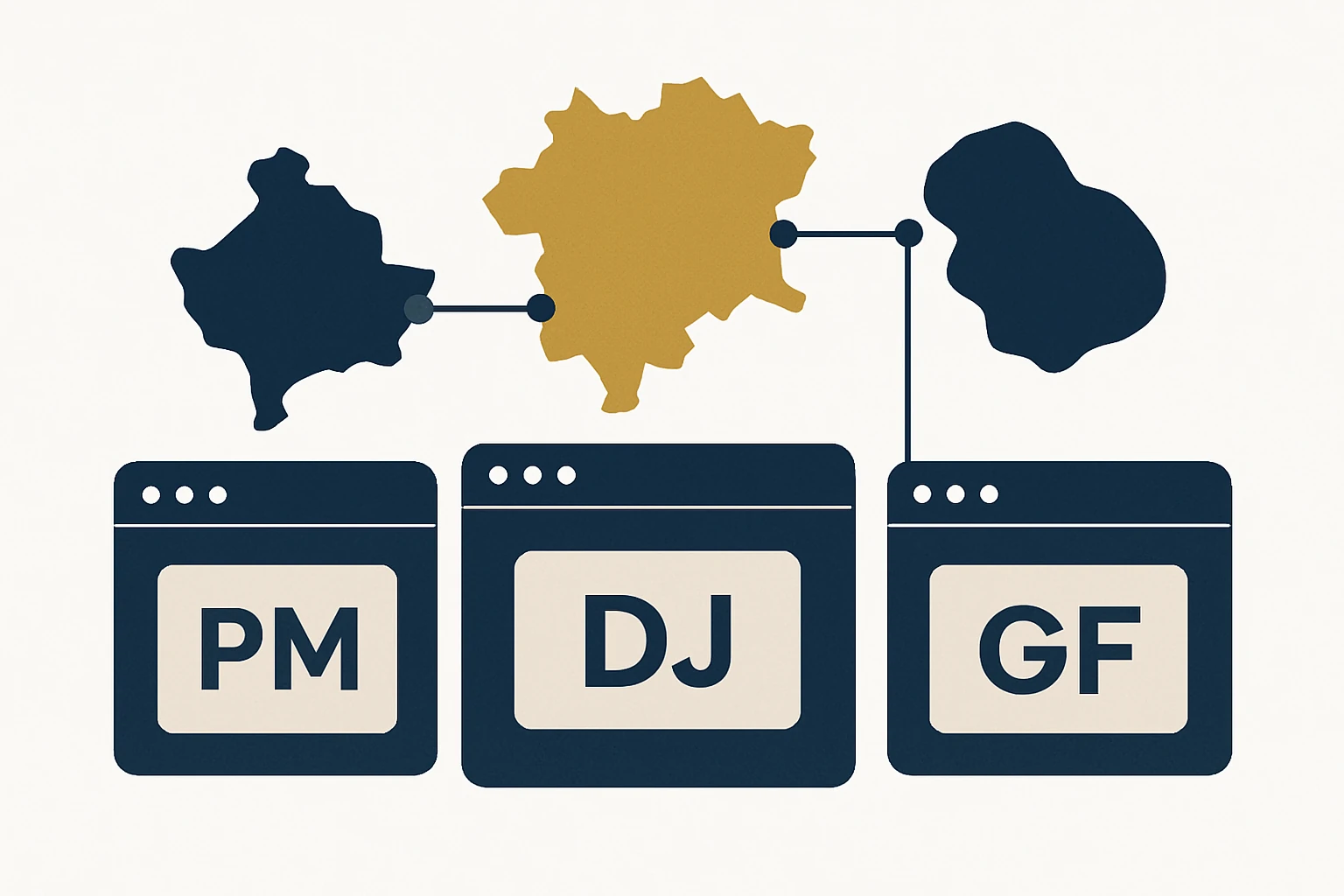
Global brands increasingly wrestle with a paradox: the more expansive their ambitions, the more important it becomes to understand the digital neighborhoods that sit just off the continental map. Micro-territories such as Saint Pierre and Miquelon (PM), Djibouti (DJ), and French Guiana (GF) each carry distinct regulatory, governance, and market signals that influence how a brand should think about domain ownership, naming strategy, and ongoing management. A well-constructed micro-territory portfolio does not rely on a single global web address, it combines defensible local assets with a coherent global strategy. Done right, it signals local legitimacy, reduces brand risk, and creates a lean path to regional digital experiences that feel native to the audience. Done poorly, it yields misaligned registrations, costly renewals, and governance gaps that undermine brand protection.
This article proposes a practical, editorially grounded framework for building and maintaining a disciplined micro-territory domain portfolio around PM, DJ, and GF. It leverages governance realities (who runs the TLDs, and under what rules), market considerations (availability and pricing), and operational guardrails (compliance, lifecycle management, and risk monitoring). The aim is not to chase every new registration, but to align a portfolio with a brand’s regional ambitions, risk tolerance, and operational capabilities. The discussion also highlights how a brokered approach - bolstered by digital asset advisory - can unlock value while preserving confidentiality and strategic control.
A quick primer on PM, DJ, and GF: governance, eligibility, and what it means for your strategy
What these ccTLDs are and who runs them
Saint Pierre and Miquelon uses the .pm country-code top-level domain, part of a family of French overseas TLDs overseen by AFNIC. Djibouti uses .dj, while French Guiana uses .gf as its own ccTLD. In the DNS governance framework, these territorial domains are delegated to specific registries or operators, and their management sits outside the broader .fr ecosystem. For practitioners, that means distinct registration rules, renewal cycles, and technical requirements that must be understood before procurement. A high-level view of how ccTLDs are organized and delegated is provided by the Internet Assigned Numbers Authority (IANA) and the World Intellectual Property Organization (WIPO), which document the root zone and country-code delegations that underpin these domains. (iana.org)
In practice, .pm, .dj, and .gf are part of registries that frequently publish their own eligibility and policy nuances. For example, AFNIC - a central registry for several French overseas TLDs including .pm - has updated its naming policy to reflect evolving commitments with the French state, and it lays out who may register and under what conditions. Understanding these governance details is a prerequisite to any disciplined portfolio plan. (afnic.fr)
Registration rules and eligibility you must know
Registration for these territories is not a free-for-all. Each TLD has its own eligibility criteria and registry policies that registrars must observe. For .pm, AFNIC manages the registry while registrars handle the registration process, and there are often implications for entities based in France or the European Union regarding documentation and eligibility. The registry also imposes control rules on certain character combinations and other eligibility constraints that affect how and who can register. Practical guidance for navigating these requirements is available through AFNIC’s policy documents and registrars that publish the applicable rules. (nic.fr)
Beyond PM, the broader ecosystem of French overseas TLDs - relevant to GF and others such as .yt or .wf - follows parallel governance patterns managed by AFNIC, with policy updates that can affect registration flows and data handling. For teams evaluating whether to pursue PM, DJ, or GF domains, a careful review of these policies is essential to avoid friction in procurement and in ongoing administration. (afnic.fr)
Why micro-territories matter for brand strategy
Micro-territories offer a distinctive signaling device for brands: a localized digital address can reinforce regional relevance, support local SEO signals, and reduce the risk of brand confusion in smaller markets. The governance and policy environment around each TLD matter because they shape not only the initial purchase, but the ownership lifecycle, data privacy considerations, and potential future changes to rules. While this is a nuanced topic, the core takeaway is that a disciplined approach to PM, DJ, and GF can unlock regionally sensitive branding opportunities while avoiding common governance and compliance pitfalls. For a broader governance lens, the root-zone and ccTLD governance ecosystems provide a framework for understanding how registries, registrars, and registrants interact in these spaces. (iana.org)
Framework in practice: a three-part approach to micro-territory domain portfolios
Below is a structured, action-oriented framework designed to help a brand build a defensible, efficient micro-territory portfolio around PM, DJ, and GF. It is intentionally compact, focusing on decision points that matter for both brand protection and operational efficiency.
- Step 1 - Territory fit and strategic relevance: Assess how PM, DJ, and GF align with your brand’s regional ambitions. Consider market relevance, language, cultural resonance, and regulatory environments. Map which product lines or campaigns would most benefit from a local digital asset, and identify any markets where a local presence would lower friction with customers or partners. This step is about strategy, not just registration, it informs where to invest and where to deprioritize.
- Step 2 - Compliance, eligibility, and procurement plan: Build a plan that accounts for registry rules, evidence of eligibility, and the set of registrars you will use to acquire PM, DJ, and GF domains. AFNIC’s policy updates and registry documents provide the guardrails for PM and the other French overseas domains, align procurement with those requirements to minimize back-and-forth with registrars and to avoid registration delays. This step also includes setting up DNS hygiene and security measures (DNSSEC where available) to protect newly acquired assets. (afnic.fr)
- Step 3 - Lifecycle management and ongoing risk monitoring: Create a lifecycle plan that includes renewal timing, brand-monitoring alerts for similar names, and a governance cadence (who holds the keys, who approves renewals, who handles transfers). Use data-driven signals for renewal risk, name-squatting alerts, and potential regulatory changes. Registry-facing documentation and RDAP/Whois availability (where provided by registries) should feed into your monitoring processes to keep ownership clean and auditable. (nic.fr)
To operationalize this framework, consider pairing internal discipline with external expertise. A specialist broker or advisory partner can help navigate eligibility rules, assess portfolio risk, and coordinate across multiple registries and registrars. In practice, this means balancing the efficiency of bulk registrations with the precision of targeted, policy-aware acquisitions.
As you plan, you may find value in data-driven services that compile territory-specific domain inventories and enable informed decisions about what to acquire and when. For example, webatla provides country-focused and TLD-specific directories that can support due diligence and analysis when evaluating PM, DJ, and GF options. webatla: Saint Pierre and Miquelon page and webatla: download list by TLDs illustrate how practitioners gather localized domain intelligence to inform acquisitions and portfolio-building.
Best practices and expert insights: what to do (and what not to do)
Expert insight: Local registry governance and policy updates matter because they shape what is possible, controllable, and auditable in a portfolio. AFNIC’s recent naming policy updates for overseas TLDs, including PM, reflect a broader trend toward clearer eligibility criteria and more explicit governance commitments. Incorporating these policies into your due diligence and procurement playbooks reduces the chance of misalignment and backlog when expanding into PM and related domains. This perspective is echoed in registry policy documents and industry coverage that stress governance as a first-order risk control for micro-territory domains. (afnic.fr)
In practice, a disciplined approach means focusing on a few high-signal registrations, ensuring they comply with registry rules, and maintaining robust lifecycle management across all assets. It also means designing the portfolio to accommodate both current regional needs and future expansion, rather than chasing every possible registration that exists in the registry. For teams that operate across borders, it is vital to understand that the same brand can live in multiple geographies with different domain personas, and that the corresponding governance should be proportionate to the risk and opportunity in each market. For foundational governance checks, consult the IANA root zone and registry policy resources to confirm where these TLDs sit in the global namespace and how they are administered. (iana.org)
Limitations, trade-offs, and common mistakes to avoid
- Overestimating global punch with micro-territory domains: A PM, DJ, or GF address can improve perceived regional relevance, but it does not automatically confer global SEO authority. A balanced strategy uses ccTLDs as signals of local legitimacy while keeping core global reach with a primary gTLD (often .com) and strong on-page localization. Registry governance and eligibility rules can further complicate migrations or consolidations later, plan for flexibility and future-proofing. See registry governance context for PM through AFNIC policy updates. (afnic.fr)
- Compliance and eligibility pitfalls: PM domains follow stricter eligibility and registration flow controls than many generic domains. Ensure your internal records and registrar choices align with AFNIC policies, including any documentation requirements and DS/DNSSEC considerations where applicable. Registry policy documents provide concrete guardrails to avoid delays or registration denials. (afnic.fr)
- Lifecycle risk if you neglect renewal discipline: Micro-territory portfolios can become financially and legally risky if renewals lapse or if ownership becomes fragmented across multiple entities. A robust governance cadence, including renewal calendars and ownership audits, reduces risk and maintains a clean chain of title. RDAP/Whois availability, where provided by the registry, can support ongoing visibility and audits. (nic.fr)
Case study: applying the framework to PM, DJ, and GF in a hypothetical brand scenario
Consider a multinational consumer brand planning for a targeted rollout in select territories with multilingual marketing assets. The brand team begins with a territory-fit assessment to decide where PM, DJ, and GF make sense as digital assets. They then engage a broker-assisted procurement plan, aligned with AFNIC’s policy for PM and with the registries governing DJ and GF domains. The broker coordinates with a curated list of registrars to ensure a smooth application and compliance check, while the brand team defines a lifecycle plan that includes automatic renewals for high-priority domains and quarterly risk monitors for brand protection signals.
To inform due diligence, the team leverages territory-specific domain inventories. For PM, DJ, and GF, that may include a mix of 2- to 3-letter domain candidates, targeted keywords in French, and neutral brand-appropriate names that do not infringe existing marks. A practical resource to assemble such inventories is webatla: for instance, the Saint Pierre and Miquelon page offers country-specific context, while the TLD directory provides a sense of available registrations and market dynamics - useful when evaluating whether to proceed with a PM-based strategy or to search for complementary domains in GF or DJ. webatla: Saint Pierre and Miquelon page • webatla: download list by TLDs.
Operationally, the project team would maintain a 3-column decision matrix combining (1) strategic importance, (2) compliance feasibility, and (3) lifecycle cost. The framework helps determine which PM, DJ, or GF registrations deserve priority and which should be deprioritized in favor of other micro-territories or broader markets. The outcome is a defensible portfolio built on governance-informed choices rather than speculative acquisitions. It also positions the brand to negotiate effectively with a premium domain broker when needed, while maintaining tight control over confidential acquisition processes and data privacy. The end result is a portfolio that serves both regional campaigns and global brand integrity - an outcome modern brands increasingly demand from their digital asset strategy.
Conclusion: a disciplined path to micro-territory digital assets
Micro-territory domain strategies require more than a checklist, they demand a disciplined framework that respects registry governance, eligibility rules, and the realities of lifecycle management. PM, DJ, and GF domains can be valuable components of a broader digital asset strategy when paired with robust policy-awareness, careful procurement, and ongoing governance. By aligning the portfolio with clear strategic aims, implementing a rigorous lifecycle plan, and leveraging specialized data resources and expert guidance, brands can realize localized digital presence while preserving global brand coherence. For teams seeking an edge in micro-territory domains, combining editorial rigor with access to curated domain inventories and advisory services remains a prudent path forward. If you’re exploring PM, DJ, or GF domains as part of a broader strategic plan, consider how a brokered, advisory-led approach could complement your internal processes - while keeping the process confidential and tightly governed. For further exploration of territory-focused domain data, webatla’s country and TLD lists can be a practical starting point to inform decisions and map opportunities within the PM, DJ, and GF spaces.
In short, the right micro-territory domain portfolio is not just about ownership, it’s about governance, strategy, and disciplined asset life-cycle management. That’s the core value of a premium domain brokerage and digital asset advisory approach - balancing editorial integrity with practical market intelligence to protect and grow a brand’s digital footprint across the globe, one small but strategically important TLD at a time.