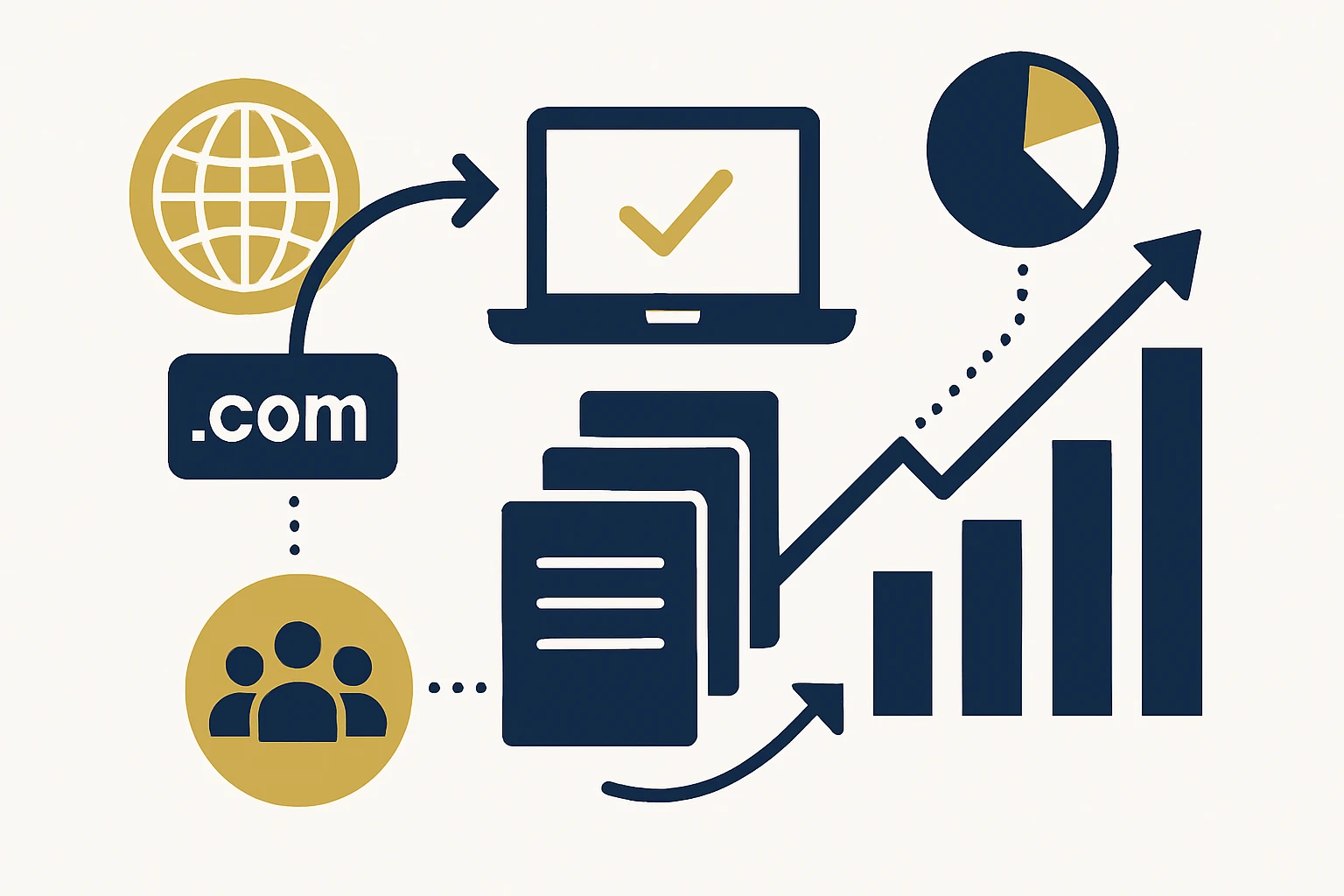
Introduction: the growing complexity of protecting and monetizing brand assets online
Brand owners today operate in a digital real estate market that is both richer and more crowded than ever. The expansion of new generic top-level domains (gTLDs) has broadened the possibilities for identity and regional reach, but it has also increased the risk of brand confusion, cybersquatting, and unwanted renewal costs. In 2026, a strategic domain portfolio is less about chasing novelty and more about disciplined risk management, selective acquisition, and ongoing governance of digital assets. This article offers a practical, non-promotional framework for building a resilient domain portfolio, navigating the new TLD landscape, and pursuing confidential acquisitions with credibility and care. For teams that require a trusted partner in this journey, a professional broker and advisory firm can help harmonize business goals with domain strategy.
Key to this approach is recognizing that the DNS namespace is not static. ICANN’s ongoing conversations about new gTLDs underscore how the landscape can shift as regulators balance opportunity, risk, and consumer safety. Brands must plan for both the opportunities created by new extensions and the potential challenges they bring to brand protection and dispute risk.
As you consider your next moves, this guide grounds strategy in credible market dynamics and industry best practices, while weaving in a practical process you can apply across internal teams, from legal to marketing to IT. For confidentiality and precision in engagements, see how a trusted advisor can help orchestrate these activities without compromising sensitive information. Group TLD catalog and webatla’s TLD listings offer concrete starting points for disciplined exploration, while pricing and engagement terms outline how to work with a domain advisory partner.
Why a portfolio approach matters in the new gTLD era
The domain space has become more nuanced since the original, short-lived wave of new extensions. The goal is not to own every plausible extension, but to construct a portfolio that protects core brands, enables regional or product-line campaigns, and supports performance objectives such as branding, trust, and SEO. The new gTLD era introduces both breadth and governance considerations that affect risk management, renewal economics, and dispute exposure. ICANN’s ongoing programs and policy discussions emphasize the strategic importance of understanding the opportunities and safeguards that come with new gTLDs, including brand protection and operational controls for large organizations. ICANN New gTLDs
From a risk-management perspective, the World Intellectual Property Organization (WIPO) continues to be the primary venue for disputes under the Uniform Domain-Name Dispute-Resolution Policy (UDRP), a reminder that a robust governance framework is essential for any sizable domain portfolio. WIPO Domain Name Disputes.
A practical framework for confidential domain acquisitions
Confidential acquisitions require more than price negotiation, they require process discipline, cross-functional alignment, and a clear view of how each domain fits the brand, portfolio, and growth strategy. The following framework is designed to help corporate teams and brand builders evaluate opportunities in a way that preserves confidentiality while delivering long-term value.
- 1) Discovery and strategic fit - Start with a guardrail that links every potential domain to a concrete business objective: a new product line, a geographic expansion, or a brand protection trigger. Map candidate domains to your brand architecture and search intent signals (keywords, phrases, and customer journeys) to determine alignment with your core strategy.
- 2) Valuation and total cost of ownership - Beyond the headline price, assess renewal costs, potential premium adjustments at renewal, and any country-specific or registry-imposed fees. The market increasingly reflects premium pricing for extensions that align with cutting-edge technology or regional demand, H1 2025 data from Radix indicates a growing premium segment across select extensions, underscoring the importance of total-cost thinking. Domain Name Wire
- 3) Due diligence and risk assessment - Examine domain history, previous uses, content, and any trademark conflicts. Dispute exposure can be a material risk if the domain has a contentious history or uses disputed terms. The WIPO overview and related materials are a useful reference point for understanding dispute pathways and risk considerations. Domain Name Wire
- 4) Confidential approach and negotiation - In confidential acquisitions, timing and discreet outreach are critical. Engage with a trusted advisor who can preserve confidentiality, structure offers, and coordinate multi-party negotiations while safeguarding sensitive brand information.
- 5) Acquisition and closing - Use secure escrow, ensure transfer readiness, and document the exact scope of use (e.g., defensive registration, product launches, or regional campaigns). Consider placing the asset into a defined portfolio governance process that assigns ownership, renewal discipline, and risk controls.
- 6) Post-acquisition integration and governance - Integrate the domain into your brand library, map DNS and hosting, align with SEO and content strategy, and set renewal cadences and risk monitoring. The objective is to turn a single domain into a disciplined asset that contributes to overall brand protection and growth.
Structured decision framework for quick reference
- Strategic alignment - Does the domain support a defined business objective?
- Brand-fit score - How clearly does it map to the brand or product?
- Cost of ownership - What are the first-year costs and ongoing renewal risks?
- Dispute risk - What is the likelihood of trademark conflict or cybersquatting concerns?
- Integration plan - How will the asset be governed within the portfolio?
Narrowing the field: opportunistic and regional TLDs without overreaching
Digital asset strategy does not require owning every domain under the sun. It requires a well-structured lens for prioritization. When evaluating niche or regional extensions, the goal is to identify domains that act as strategic signals for your brand and its markets, rather than chasing every shiny object. For brands with global ambitions, the ability to operate across TLDs - while maintaining consistency in brand identity and messaging - depends on clear governance and disciplined renewal practices. ICANN’s ongoing work on new gTLDs reinforces that the opportunities go hand in hand with governance safeguards, brands that plan for these safeguards can navigate the space more confidently. ICANN New gTLDs, ICANN Blog on new gTLDs.
In practice, you’ll often consider regional or industry-specific extensions to support campaigns or product lines. For example, a European expansion might benefit from localized identifiers, while a global launch may leverage a globally recognizable TLD to protect the core brand. For regional risk assessment and strategy refinement, firms increasingly rely on a governance framework that includes brand protection, risk monitoring, and cross-functional oversight. The core idea is to treat TLDs as strategic levers, not purely as inventory.
Research and market signals indicate that premium and non-.com extensions are gaining traction, particularly in segments tied to technology, AI, and regional branding. Namecheap’s 2025 Domain Insights and Trends report underscores the ongoing relevance of non-.com TLDs, even as .com remains a dominant choice for many buyers. While the landscape continues to evolve, the trend solidifies the case for a deliberate, risk-managed portfolio approach. Namecheap’s 2025 insights via TechRadar.
Expert insight and practical cautions
Industry analyses emphasize that a disciplined portfolio approach tends to outperform ad hoc acquisitions. A practical takeaway from governance-focused literature and market reporting is to embed best practices that balance opportunity with risk: maintain central oversight, implement clear ownership and renewal protocols, and use professional intermediaries to preserve confidentiality and negotiate on terms that align with business outcomes. A notable reference in this space is a whitepaper on corporate domain portfolio management that underscores seven best practices for governance, security, and alignment with business objectives. Authentic Web: Corporate Domain Portfolio Best Practices.
For market realities, data from Domain Name Wire show that premium domain activity remains active across multiple extensions, with registries reporting robust sales and renewed interest in premium names. This reinforces the business case for a portfolio approach that includes careful screening, negotiation discipline, and ongoing governance to ensure assets contribute to revenue, brand trust, and protection. Domain Name Wire: Radix premium domain sales surge in H1 2025.
Limitations, trade-offs, and common mistakes to avoid
- Overextending into too many extensions - A larger portfolio can dilute focus and escalate renewal risk. A measured approach prioritizes extensions with clear brand or market value and a governance plan to monitor renewals.
- Underestimating renewal costs and premium adjustments - Premium pricing can persist in renewal cycles, raising total cost of ownership beyond initial estimates. This is a key reason to analyze long-term budgets and negotiate favorable terms where possible.
- Under-investing in brand protection and dispute readiness - As brand exposure grows across new gTLDs, so does potential dispute risk. A formal dispute-preparedness plan - including clear escalation paths - helps reduce friction and costs when issues arise. See WIPO dispute frameworks for reference. WIPO Domain Name Disputes.
- Inadequate governance and ownership clarity - Without centralized oversight, ownership, renewal rules, and pre-approval workflows may become inconsistent across business units. This leads to governance gaps and unauthorized registrations.
A practical, reusable framework you can apply today
To make the above concepts actionable, here is compact, repeatable guidance you can use within your organization. This short framework encapsulates the core decisions and the governance you’ll want to embed in your domain strategy.
- Define objectives - articulate concrete goals for each domain (defensive, product launch, regional market, etc.).
- Create a screening rubric - establish a scoring rubric that weighs brand fit, potential traffic, SEO implications, and risk exposure.
- Establish governance - appoint a portfolio owner, implement renewal reminders, and enforce a registry-lock policy where appropriate.
- Plan for confidentiality - use non-disclosure agreements and select partners who specialize in confidential acquisitions to minimize leakage.
- Monitor and adjust - conduct quarterly portfolio audits to re-evaluate the value and risk of assets as markets evolve.
Conclusion: turning complexity into competitive advantage
The new gTLD era offers brands the chance to fine-tune identity, regional reach, and defensive posture. But without a disciplined framework, opportunities can become cost centers or dispute triggers. A strategic domain portfolio blends premium domain brokerage, domain portfolio management, and brand protection domains into a cohesive, governance-led program. By combining proactive discovery, careful valuation, confidential acquisition practices, and ongoing portfolio governance, companies can convert digital assets into durable strategic advantages. The result is not merely ownership of a set of domains, but a disciplined system that protects brand equity, supports growth, and minimizes risk across the DNS landscape.
For teams seeking a trusted partner to navigate confidentiality, portfolio strategy, and cross-border opportunities, webatla provides a range of TLD and premium-domain advisory capabilities. Explore the Group TLD catalog and broader listings to begin shaping a strategic domain portfolio aligned with your business goals. Group TLD catalog and webatla’s TLD listings offer a concrete starting point, while pricing outlines how to engage with a dedicated advisor.