For brand owners, investors, and brokers, building a targeted list of premium domain assets can be a powerful lever for growth. But there is a meaningful difference between a generic search for ideas and a disciplined process for acquiring assets that truly fit a brand strategy. This article outlines a practical approach to safely identifying, validating, and acting on downloadable lists of domains in high-potential TLDs - specifically .kz (Kazakhstan), .rs (Serbia), and .ltd (a corporate-themed gTLD recently integrated into Identity Digital’s registry portfolio). The goal is to help you think through data quality, governance, and risk as you translate a list into a defensible domain portfolio. The registries behind these zones operate under distinct models and rules that affect how data can be accessed and used. Knowing the landscape helps prevent costly mistakes and hidden risk.
In Kazakhstan, the .kz zone is managed by the Kazakh Network Information Center (KazNIC) with a Shared Registry System (SRS) that centralizes domain registration and support services. This structure aims to increase competition and improve service levels for registrants, but it also means you should source data through official channels and respect registry terms. The SRS framework is described by KazNIC and reinforced in regulatory context, including IANA’s root-zone delegation for kz. KazNIC and IANA kz provide foundational information on how kz data is organized and governed. (kaznix.kz)
For the .rs domain, the register of Serbia, RNIDS (Serbian National Internet Domain Registry Foundation) administers the .rs namespace and related infrastructure. RNIDS’ sites outline the registry’s scope, the accreditation of registrars, and how to perform legitimate name searches and registrations. This governance context matters when considering bulk data or lists: use approved data sources and respect local rules on data usage. (rnids.rs)
The .ltd TLD is part of a broad new-gTLD portfolio that is currently operated within Identity Digital’s registry framework (the Donuts lineage was rebranded to Identity Digital). This registry family includes corporate-themed strings like .ltd, and Identity Digital provides registry services and governance for its portfolio, alongside a wide ecosystem of registrars. Understanding which organization operates a given TLD helps you navigate data access, pricing, and renewal dynamics. (identity.digital)
Understanding the registries: what that means for downloadable domain lists
When you consider downloading lists of domains by TLD, the registry model behind each string matters. Here is a concise view of the three TLDs in focus and how their governance shapes data access and utilization:
.kz – KazNIC and the Shared Registry System
The kz zone is operated by the Kazakh Network Information Center (KazNIC), with the Kazakhstan Association of IT Companies as sponsor and a Shared Registry System that centralizes registration and policy. This structure aims to broaden competition and improve service levels, but it also implies that bulk data access policies are governed by official channels. For researchers and practitioners, leveraging KazNIC’s official resources and registrars is essential to avoid misinterpretation of ownership data or non-compliant use of data. KazNIC and the IANA kz delegation information are authoritative anchors for understanding kz data governance. (kaznix.kz)
.rs – RNIDS and Serbia’s registry framework
RNIDS oversees the .rs (and .срб) namespaces and the infrastructure critical to Serbia’s internet. If you’re evaluating bulk lists or data extracts, RNIDS’ documentation and registrar accreditation processes are a helpful reference to ensure your data sourcing aligns with local regulatory expectations and registry terms. Access to accurate registration data often requires using RNIDS registrars and official WHOIS/RDAP services. (rnids.rs)
.ltd – Identity Digital and the Donuts lineage
The .ltd TLD sits within Identity Digital’s registry portfolio (Donuts’ former lines now under Identity Digital). Identity Digital provides registry services for its TLDs and supports the broader ecosystem of registrars and provisioning. For practitioners, this means engaging through approved registrar channels and leveraging registry-level data products where offered, rather than attempting informal or bulk scrapes. See Identity Digital’s registry positioning for clarity on governance and service expectations. (identity.digital)
Why bulk lists are tricky: governance, privacy, and accuracy
Downloading lists that appear to be a simple catalog of domain names can create a web of complications. Registry terms, privacy considerations, and data accuracy all influence whether a list is usable for legitimate portfolio development. For kz, the Shared Registry System model means that registries control data access through approved channels, and bulk data usage is typically governed by registry terms and applicable law. For rs, RNIDS governs ownership data, registrar relationships, and Whois/RDAP access, which may restrict bulk dissemination of registrant information. For ltd, Identity Digital regulates registry data via its service ecosystem, with an emphasis on governance, security, and compliance. These realities argue for a disciplined sourcing approach anchored in official data feeds and consent-compliant processes rather than ad-hoc list purchases. Market reports on the evolving gTLD landscape also underscore that a thoughtful, risk-aware strategy outperforms brute-force listing when building durable domain portfolios. (nic.kz)
Expert perspectives from the registry community emphasize governance and data integrity as central to sustainable domain strategies. Identity Digital’s leadership highlights the value of secure, scalable registry platforms and responsible data practices for growing a TLD portfolio in a multi-registry environment. This reinforces the point that data discipline and policy awareness are as important as the size of a domain list. (identity.digital)
A practical framework: build and validate a downloadable domain list in three steps
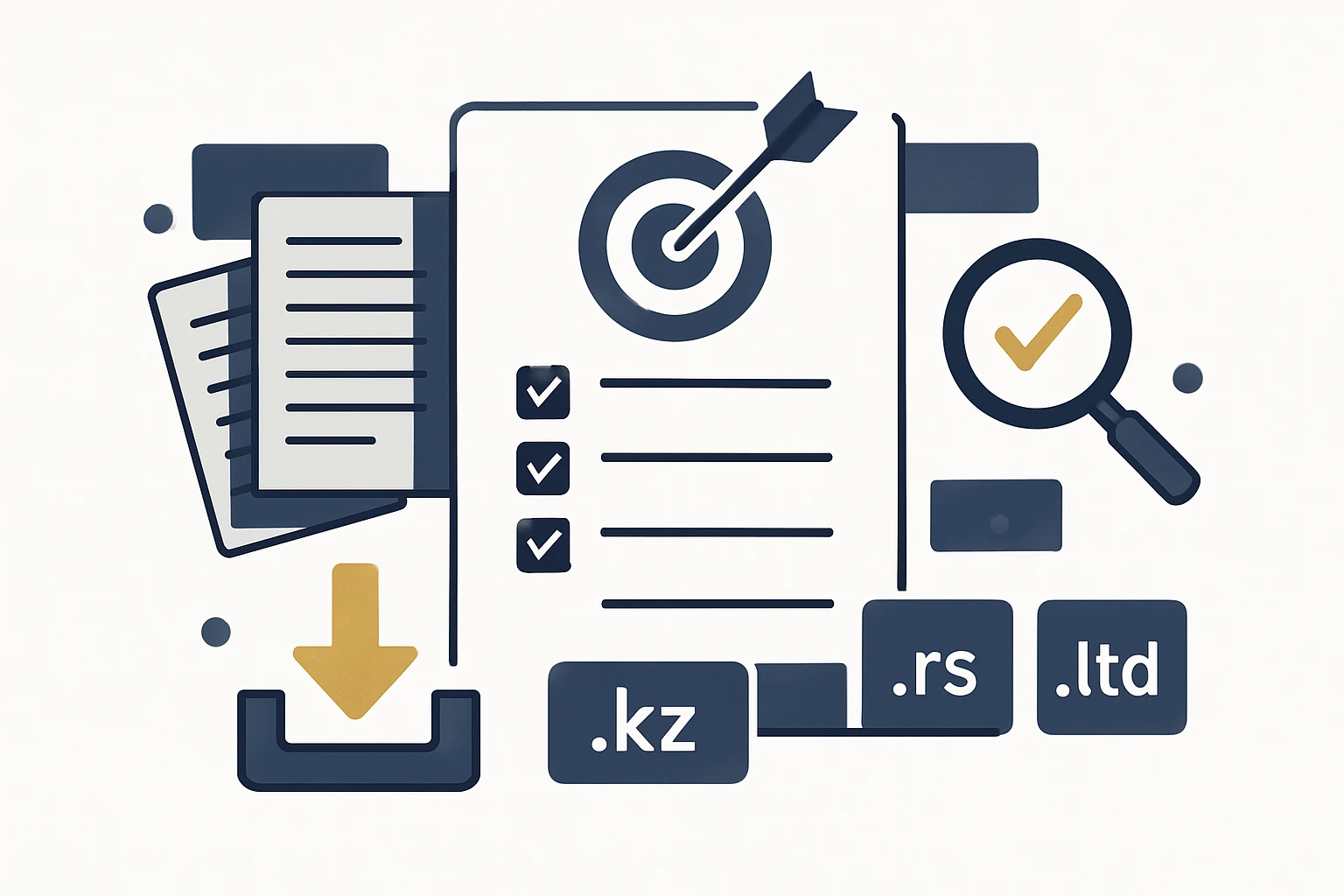
Below is a compact framework you can apply to move from a raw data dump to a defensible, action-ready domain list. It is designed to be practical for in-house teams and boutique brokerages alike, while remaining compliant with registry policies and privacy expectations.
- Step 1 - Define target criteria and scope
Clarify brand fit, campaign objectives, and risk tolerance. For example, prioritize short, memorable domains that align with your core product names or product lines and identify which zones (kz, rs, ltd) are relevant to your strategy. Establish screening attributes: defensibility, current ownership status, and renewal economics. This step converts a vague impulse into a measurable, fundable plan. - Step 2 - Source data responsibly from official channels
Favor data feeds and search tools provided or sanctioned by the registry ecosystem or reputable registrars. This reduces the risk of outdated or erroneous records. For kz, use KazNIC-approved channels and registrar tools, for rs, rely on RNIDS-approved Whois/RDAP services, for ltd, engage through Identity Digital’s registry ecosystem via authorized registrars. Where possible, corroborate with IANA/delegation data to confirm zone status and governance. (kaznix.kz) - Step 3 - filter, verify, and assess acquisition viability
Apply filters (e.g., business relevance, domain length, keyword relevance) and verify ownership and availability through official registrars or registry portals. Validate that contact data (if any) complies with privacy laws and registry terms. Perform a risk check for sanctions, geolocation restrictions, and potential trademark conflicts. This step turns a raw list into a prioritized pipeline of assets with a clear path to outreach or negotiation.
The framework is designed to be iterative. As you progress, you’ll refine your screening criteria, incorporate new data feeds from trusted registries, and adjust the list according to changes in ownership, price, or policy. An executive takeaway: the most durable domain strategies are built on disciplined data governance, not on a single, large download.
Structured decision aid: applying the framework in practice
To operationalize the three-step framework, consider the following practical decision aids that you can weave into your workflow. Each aid supports editorial, analytical, and negotiation activities for a small-to-mid-sized portfolio.
- Asset quality checklist
Short, brandable, and aligned with your product family, avoid confusingly similar marks, verify renewal economics and potential renewals. - Data provenance log
Record the registry source, data feed date, and data quality notes for every asset (e.g., kz data from KazNIC official feeds, rs data from RNIDS services). - Ownership verification protocol
Cross-check registry Whois/RDAP results with registrar information and NDA-compliant outreach plans. - Negotiation playbook fragment
Outline acceptable price bands, escalation steps, and a back-up plan if primary targets are not negotiable.
For practitioners, this structured approach integrates well with a broader domain-portfolio program and aligns with essential services in a digital asset advisory context. If you’d like to see how this framework fits into a formal portfolio strategy, you can explore WebAtLa’s kz-focused content and pricing pages to coordinate on next steps. KZ domain strategy · Pricing and engagement models.
Limitations and common mistakes to avoid
Even a well-structured framework has limitations. Some of the most common missteps include assuming bulk data is freely usable without registry authorization, misinterpreting ownership data in jurisdictions with privacy protections, or pursuing lists that are outdated as soon as they’re downloaded. The rapidly evolving gTLD landscape adds another layer of complexity: ongoing governance changes, price adjustments, and regulatory updates can rapidly alter the value and availability of assets. Industry analyses emphasize cautious, governance-aware portfolio development rather than aggressive, data-hreshing strategies. (markmonitor.com)
Expert insight and practical takeaway
Industry guidance from registry and advisory leaders underscores that robust domain strategies depend on governance, data integrity, and coordinated actions across registries, registrars, and brand teams. Identity Digital, a leading registry services provider, emphasizes scalable, secure registry platforms and responsible data practices as foundations for growing a multi-TLD portfolio. This perspective reinforces the article’s core message: protect data quality, respect registry rules, and align lists with a clear strategic objective. (identity.digital)
Conclusion: turning a list into a strategy
Downloading lists of domains by TLD can be a valuable starting point for a strategic acquisition program - provided you do so with discipline, governance, and a clear plan for validation and negotiation. By understanding the registry models behind .kz, .rs, and .ltd, applying a three-step framework to source data responsibly, and keeping a tight focus on brand fit and risk, you can build a durable domain portfolio that supports broader brand protection and growth goals. For publishers and clients alike, this approach translates into tangible value: a repeatable process, fewer misfires, and a portfolio that truly complements a brand’s strategic narrative. If you’re exploring how to translate this framework into your business, consider pairing data-driven diligence with a trusted partner in digital asset advisory and premium-domain brokerage.