For brand owners, digital asset managers, and domain investors, the question isn’t merely \"Does this domain exist?\" but rather \"Which TLD best serves our strategic goals today and far into tomorrow?\" The global domain name system now spans thousands of top-level domains (TLDs), each with its own trade-offs in geography, branding, user trust, and cost. A disciplined approach to TLD search helps you protect your brand, expand your geographic reach, and optimize asset portfolios without chasing novelty at the expense of core value. This article provides a practical, framework-driven method to evaluate all TLDs - from legacy gTLDs to country-code TLDs (ccTLDs) and emerging brand TLDs - with real-world considerations your governance and procurement teams can deploy.
(icann.org)Understanding the TLD Landscape: What You’re Choosing Between
Top-level domains fall into several broad categories, each serving different strategic purposes: generic TLDs (gTLDs) such as .com, .net, and newer options, country-code TLDs (ccTLDs) like .uk, .de, and .ca, and brand TLDs such as .google or .apple that registries reserve for corporate branding or unique product lines. The IANA Root Zone Database and ICANN’s New gTLD program pages provide authoritative framing for how these domains are governed and deployed. In practice, a mature TLD strategy recognizes that a brand typically requires more than a single primary domain and considers how a portfolio spans multiple TLDs to mitigate risk and protect identity. (iana.org)
As of the mid-2020s, ICANN notes ongoing expansion plans for the gTLD space, signaling continued opportunities (and complexities) in the TLD landscape. The Next Round of the New gTLD Program is positioned to open in the mid/late 2020s, with documentation outlining process, eligibility, and governance. While dates can shift, the trajectory is clear: more TLD options, more registries, and more policy considerations for brand owners and portfolio managers. (icann.org)
Why the Right TLD Choice Matters for Brands and Portfolios
The choice of TLD influences brand perception, user trust, and the ease with which customers reach digital assets. A consistent brand experience across geographies often benefits from country or regional TLDs when paired with appropriate redirects and localization. Conversely, a strong, globally recognized TLD such as .com remains a premium anchor for many brands, and a thoughtful mix of TLDs can support diversification, protection against cybersquatting, and geographic expansion. In practice, brands pursue a portfolio strategy that includes monitoring, consolidation, and deliberate allocation of assets across TLDs to minimize risk and maximize control over digital identity. (authenticweb.com)
Domain portfolio management - protecting the core brand while exploring strategic opportunities - emerges as a discipline in itself. Best practices emphasize ongoing monitoring, clear governance, and disciplined renewal policies to reduce leakage and unauthorized use. For practitioners, this translates into structured asset reviews, risk scoring, and a plan for legacy domains and redirects that preserves SEO equity and prevents misuse. (authenticweb.com)
A Practical TLD Search Framework (Step by Step)
Below is a concise, repeatable framework that teams can apply when evaluating TLDs for a brand portfolio. It is designed to be actionable for both legal/procurement teams and digital asset managers, with an emphasis on risk, branding, and long-term viability. The framework also accommodates confidential acquisition strategies, a core capability for premium domain buyers.
- Step 1: Define goals and scope - Clarify whether your objective is global brand protection, regional expansion, product-line specificity, or a combination. Establish success metrics (risk reduction, reach, revenue proxy, or SEO intent) and a governance model for decision rights.
- Step 2: Map TLD categories to use cases - Create a quick matrix that aligns gTLDs, ccTLDs, and brand TLDs with your intended markets, product lines, and partners. This helps avoid over-indexing on novelty rather than value.
- Step 3: Assess availability, costs, and renewal burden - For each candidate TLD, inventory availability (registration status, potential mandatory restrictions), annual fees, and renewal cadence. Consider long-term cost of ownership beyond initial registration.
- Step 4: Evaluate brand fit and user trust - Analyze how each TLD communicates brand positioning to customers and channel partners. In many cases, traditional TLDs (like .com) offer baseline trust, while regional or niche TLDs signal local relevance or innovation. Consider usability implications for your audience and the consistency of redirects from alternative domains.
- Step 5: Analyze risk exposure and governance - Screen for potential misuse, policy restrictions, and domain security considerations (DNS security, SSL, redundancy). Establish who will monitor, who can renew, and how violations or expirations will be mitigated in a crisis scenario.
- Step 6: Plan redirection, SEO equity, and technical readiness - Develop a technical plan for redirects, canonicalization, and cross-domain links to preserve SEO equity. Ensure Whois and RDAP visibility, or appropriate privacy configurations, align with your governance policies. (iana.org)
- Step 7: Prototype and test - Before large-scale rollout, test user behavior, brand recognition, and conversion flows with selected TLDs in controlled markets or pilots. Gather data to refine the portfolio before broader deployment.
Structured as a framework rather than a single recommendation, this approach enables a disciplined evaluation that can be repeated across campaigns, partnerships, or product launches. It also supports confidential acquisition strategies where speed and discretion matter, ensuring you have a well-documented process even when negotiating with registries or brokers.
Use Cases: Real World Scenarios for TLD Selection
Consider the following practical scenarios where a thoughtfully chosen TLD mix adds measurable value:
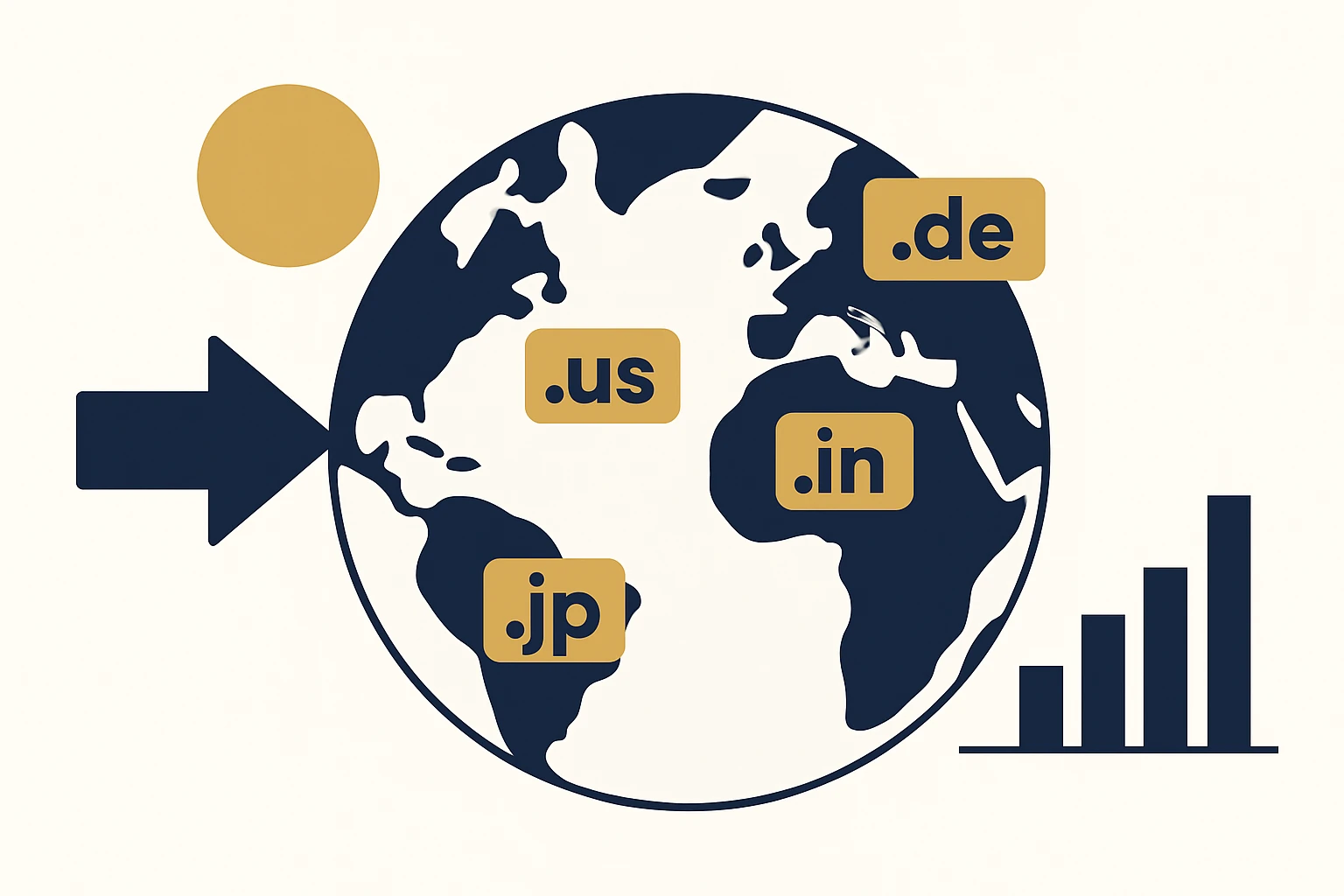
- Global brand protection and regional campaigns - A multinational company may reserve .com as the global anchor while acquiring ccTLDs like .uk, .de, or .fr to support regional campaigns and local customer trust. Redirect strategies and local content playbooks ensure seamless user experiences across markets.
- Product-line branding - For a new product family, a brand might pursue a brand TLD (for example, a dedicated extension that mirrors the product name) to create a distinct line of digital assets while preserving the core brand’s equity.
- Non-traditional or emerging markets - Regions with strong growth in tech adoption may benefit from localized ccTLDs or new gTLDs that align with local language or business norms, expanding reach in parallel with global channels.
- Portfolio risk management - Maintaining a diverse set of TLDs can reduce risk from domain squatting, cybersquatting, or changes in a single registry’s policies. A diversified portfolio helps ensure continuity even if a single TLD becomes less desirable or more expensive.
For reference, governance and policy considerations around TLDs are centralized in organizations like ICANN and IANA, which oversee the rules, delegation, and ongoing operations of the global DNS namespace. This underpins the reliability and predictability brands expect from long-term digital assets. (iana.org)
Practical Resource: Where to Look for Available TLDs and Pricing
When you begin your TLD search, you’ll want a reliable catalog of available extensions, current pricing, and renewal terms. The client’s own TLD catalog and pricing pages are helpful anchors for practical evaluations. For example, you can explore the WebAtla catalog to browse list-by-TLD options and related pricing, which can inform your internal scoring and negotiation strategy. See the WebAtla TLD catalog for reference and price context: WebAtla TLD catalog. If you are evaluating broader scope, WebAtla’s pricing page can also provide a baseline for cost comparisons: WebAtla pricing.
For a broader, authoritative frame, consult the IANA Root Zone Database for the authoritative list of currently delegated TLDs and their operators, which underpins all downstream searches and acquisitions: IANA Root Zone Database. This resource is complemented by ICANN’s public-facing glossaries and program pages that describe how new gTLDs are introduced and governed. (iana.org)
Limitations, Trade-offs, and Common Mistakes
Even with a robust framework, decision-making around TLDs involves trade-offs. The most common mistakes include over-indexing on novelty (choosing a flashy new gTLD without solid strategic rationale) or underinvesting in core assets like the primary brand domain and its renewals. A prudent approach balances expansion with governance, ensuring you have clear ownership policies, documented risk assessments, and a plan for legacy assets. Additionally, some legal and regulatory considerations may constrain certain TLDs in specific jurisdictions, so cross-functional alignment (legal, security, IT, marketing) is essential. For large organizations, adopting a formal domain portfolio management discipline helps mitigate these risks and aligns asset acquisition with business objectives. (authenticweb.com)
Closing Thoughts: How to Operationalize a TLD Search in Your Organization
Effective TLD search is less about chasing the latest extensions and more about building a resilient digital identity. By combining a clear framework, governance, and practical resources - such as an informed mix of TLD categories and a ready-to-use evaluation checklist - you can reduce risk, accelerate decision-making, and position your brand for future growth. The landscape continues to evolve, with ongoing policy work shaping when and how new TLDs enter the market. Keeping governance tight, maintaining visibility across your portfolio, and leveraging trusted partner resources will help you stay ahead without sacrificing quality or control. (icann.org)
Appendix: A Quick, Reusable Framework in One Page
The following structured block outlines a compact, repeatable decision aid you can apply in any TLD review meeting. Use this as a quick reference to keep discussions focused on value, not novelty.
- Purpose: Brand protection, expansion, or product-specific branding
- Categories: gTLD, ccTLD, brand TLD
- Availability & Cost: Registration status, upfront fees, renewal cost
- Brand Fit: Perceived trust, local relevance, user expectations
- Risk & Policy: Registry policies, abuse risk, privacy implications
- Technical Readiness: Redirects, canonicalization, SSL deployment
- Governance: Owning roles, renewal governance, monitoring cadence
- Decision: Go/No-Go with clear milestones and owners
What This Means for Your Domain Strategy Today
In practice, a modern domain strategy blends a core, trusted anchor with a disciplined, expandable TLD portfolio. The goal is not to own every possible extension but to own the right mix that protects identity, enables growth in key markets, and supports product innovation. A strategic framework like the one described here helps teams move from impulse purchases to deliberate, measurable asset management. For organizations seeking a trusted partner in navigating premium domains and digital assets, a structured approach - backed by governance, risk-aware evaluation, and credible sources - becomes a decisive competitive advantage.
To start a practical TLD search today, consider mapping your goals against this framework and tapping into trusted catalogs to gauge availability and pricing. If you are exploring brand protection and portfolio optimization, confidential domain acquisition remains a core capability of premium brokerage and advisory services. For more context on how organizations manage digital assets at scale, explore the broader best-practice resources and case studies from reputable industry sources referenced above.
Notes on sources: Definitions and governance of TLDs are overseen by ICANN and IANA, which provide the canonical framing for gTLDs, ccTLDs, and new gTLD processes. ICANN’s New gTLD Program is ongoing, with updates and FAQs reflecting current policy trajectories. These sources underpin the practical guidance in this article. (newgtldprogram.icann.org)