Executive summary - For enterprise brands, a domain is not merely a URL, it is a strategic asset that can influence trust, protection, and growth. The process to acquire premium domains must be confidential, methodical, and aligned with the broader brand strategy. This article offers a practical framework for evaluating, negotiating, and managing premium domains in 2026 - and how a digital asset advisor can help navigate the complexity. Namecheap: Why investing in a premium domain name matters.
Why premium domains matter for enterprise brands
Premium domain names do more than host a website. They can boost credibility, simplify recall, and signal stability to customers, partners, and investors. In a crowded digital market, a premium domain acts like prime retail real estate: it reduces friction in discovery and supports branding and marketing. Several credible voices have highlighted these advantages, underscoring that strategic ownership of top-tier domains can contribute meaningfully to a brand’s long-term value.
Forbes Tech Council describes how, when acquired strategically, premium domains can yield branding and marketing advantages, helping a brand stand out in competitive spaces. Forbes Tech Council highlights how a premium domain can influence trust and recognition.
Beyond branding, valuation and governance are central to responsible ownership. DomainAdvisor notes that domain valuation is both an art and a science, and professional guidance can illuminate price, renewal risk, and strategic fit. DomainAdvisor: Valuation guide.
In practice, the combination of brand alignment, defensible pricing, and governance creates a framework that can scale with a company’s growth. The core takeaway: premium domains are assets that deserve disciplined management, not impulsive acquisitions.
A practical framework for evaluating and acquiring premium domains
The following framework is designed for enterprise teams seeking a disciplined path from discovery to deal closure, with confidentiality and governance baked in. It draws on industry perspectives about branding value, market dynamics, and disciplined valuation.
Step 1 - Discovery: define criteria that align with brand strategy
Begin with the brand’s core identity, audience expectations, and geographic focus. Identify candidates that are easy to remember, short, unambiguous, and legally defensible. Avoid hyphens, confusing spellings, or names that might infringe on existing trademarks. Establish a governance baseline: who approves candidates, what budgets are permissible, and what constitutes brand-protective alignment. At this stage, it helps to assemble an internal inventory of target domains and a process for rapid escalation when a strong candidate appears.
Step 2 - Valuation: balancing price, risk, and long-term value
Valuation is both an art and a science. Consider not just a one-time price, but the total cost of ownership, including renewal fees, potential future value, and the cost of risk mitigation (trademark clearance, enforcement, and potential disputes). A disciplined valuation framework weighs current market prices against projected branding impact, SEO synergy, and the domain’s capacity to support future product lines or markets. If you’re unsure how to price a premium name, consult broker-led guidance to triangulate comparables, traffic signals, and brand fit. DomainAdvisor: Valuation guide.
Step 3 - Negotiation and confidentiality: privacy-first approach
Premium domain negotiations benefit from an intermediary who can preserve confidentiality and manage communications discreetly. A broker can shield the process from internal stakeholders who do not need to be privy to every offer, while maintaining a clear audit trail and secure escrow arrangements. This approach reduces the risk of price leakage, negotiation fatigue, and strategic exposure to competitors. In many cases, formal NDAs, staged offers, and structured escrow protections help ensure a fair, private process from initial inquiry to closing.
Step 4 - Due diligence and risk management: brand protection and security checks
Due diligence goes beyond ownership verification. It includes confirming registrant information, domain history, DNS health, and any past security incidents. Because a premium domain can anchor a brand for years, verify that the asset aligns with your trademark clearance, does not conflict with existing rights, and has a clean reputation profile. Use reliable RDAP & WHOIS databases to confirm registrant data and update ownership records as part of risk management. RDAP & WHOIS database can be a critical first stop in this process.
Step 5 - Portfolio integration and governance: mapping to brand strategy
Acquired assets should be mapped into a broader domain portfolio strategy. This includes cataloging ownership, renewal timelines, namespace strategy (primary brand domain vs. brand-adjacent domains), and governance processes for ongoing stewardship. A well-integrated portfolio supports brand protection, risk mitigation, and long-term planning for growth areas or M&A scenarios. Regular portfolio reviews help ensure alignment with evolving brand strategy and market conditions.
Step 6 - Execution and vendor selection: when to use brokers vs. internal teams
Execution often benefits from external expertise, especially for confidential acquisitions or highly strategic names. A domain brokerage or digital asset advisory partner can bring market intelligence, a disciplined process, and escrow-ready transaction capabilities that internal teams may not maintain at scale. While brokers can add cost, they can also reduce cycle times, protect strategic interests, and provide a structured path to closure. As you consider options, compare governance, confidentiality standards, and the quality of post-close support. For teams seeking transparent options and structured engagement, review pricing and service levels with a trusted advisor. Pricing and RDAP & WHOIS database are good starting points to understand how a structured, privacy-minded approach can scale. You can also browse our broader domain extensions and TLDs index to gauge extension strategy as part of a broader portfolio plan.
TLD considerations in 2026: beyond .com
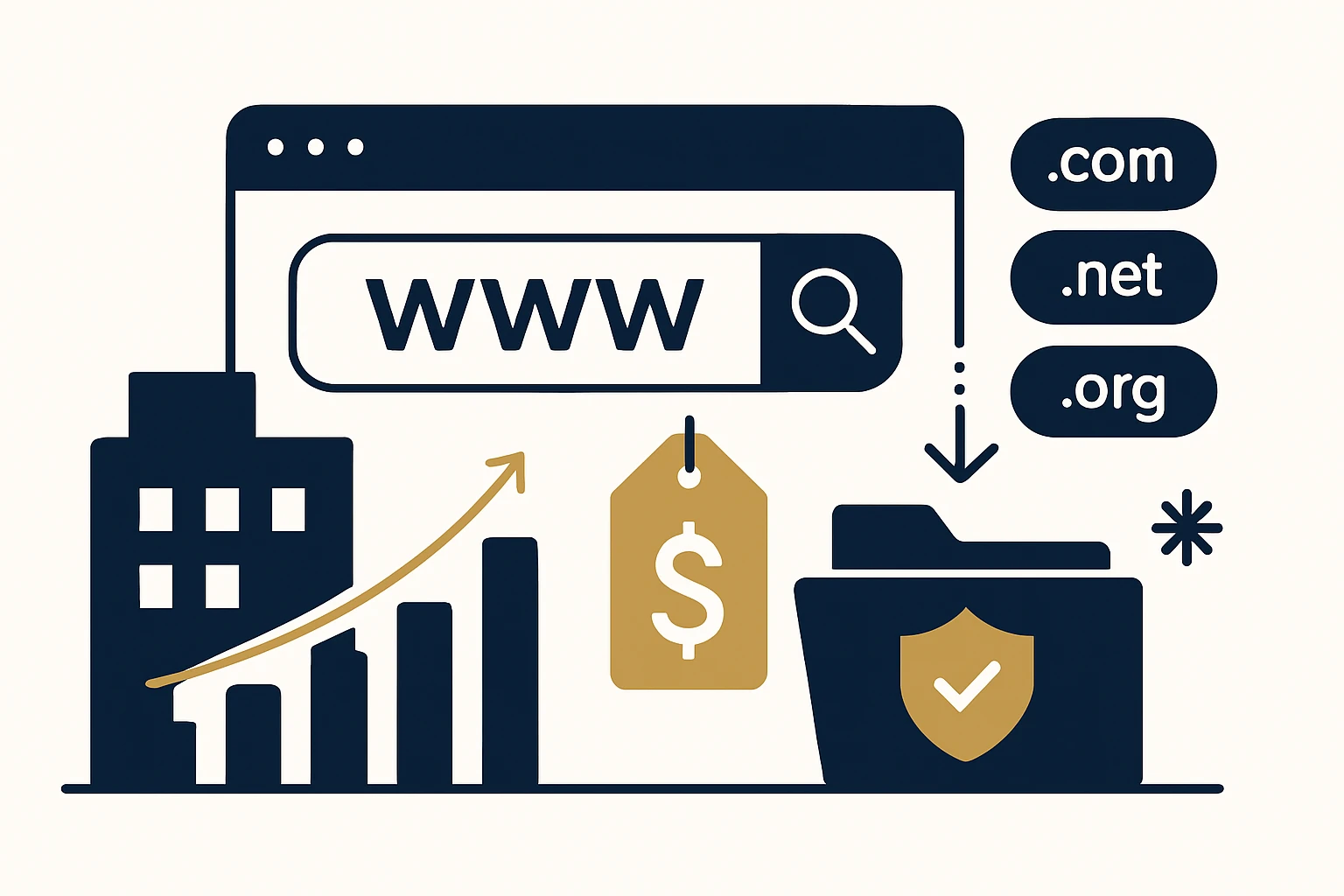
In 2026, many brands continue to anchor their identity on a .com domain, recognizing its long-standing credibility and broad recognition. That said, domain strategy increasingly contemplates alternative TLDs for geographic campaigns, product lines, or sector-specific positioning. Premium value often hinges on brand alignment, user intent, and marketing strategy. While niche TLDs like .blog, .mobi, or country-code domains such as .ua may offer tactical advantages, they require careful evaluation and governance to avoid diluting brand equity. If you’re exploring these niches, take a staged approach: verify availability, assess branding fit, and consider SEO implications. To explore the current landscape of domain extensions as part of your portfolio planning, see our domain index at domain extensions and TLDs.
Structured overview: a quick framework at a glance
- Discovery criteria: Brand alignment, memorability, length, trademark clearance
- Valuation lens: Price, renewal risk, future value, strategic fit
- Confidential negotiation: NDA, discreet offers, escrow
- Due diligence: Ownership verification, history, DNS health
- Governance: Asset inventory, renewal schedules, policy
- Execution: Broker selection, closing process, post-close support
Limitations and common mistakes to avoid
- Overpaying for prestige without clear strategic fit or a pathway to ROI
- Ignoring renewal costs, expiration risk, or domain portfolio decay concerns
- Underestimating brand- and trademark-clearance requirements, leading to disputes
- Relying solely on price guidance from brokers without a formal governance framework
How webatla can help: a practical, editorially grounded partnership
webatla offers confidential, strategic guidance for premium domain acquisitions, portfolio management, and digital asset advisory. The aim is to integrate domain strategy with brand strategy, risk management, and governance. For teams seeking structured options, consider exploring the pricing and governance-oriented capabilities demonstrated through the company’s broader suite of services. You can also leverage the TLD index to gauge extension options as part of a holistic portfolio plan: domain extensions and TLDs, and verify domain ownership frameworks via RDAP & WHOIS database.
Conclusion
In an era where digital identities are inseparable from brand equity, premium domains deserve a disciplined, confidential, and governance-minded approach. By following a clear discovery, valuation, negotiation, due diligence, and portfolio-management process - and by engaging trusted advisory partners when appropriate - enterprises can secure domain assets that compound brand value over time. The goal is not a single “great domain” purchase, but a sustainable domain strategy that aligns with your brand’s long-term trajectory. For organizations seeking a pragmatic, enterprise-grade path, the combination of a robust framework and expert advisory offers a repeatable mechanism to build, protect, and leverage digital assets while maintaining privacy and governance at every step.