Introduction: the problem with a one-size-fits-all domain strategy
Global brands increasingly expand into diverse markets, but too many arrive with a one-size-fits-all domain strategy. A credible local presence requires more than a single .com, it demands a deliberate portfolio that reflects local consumer behavior, regulatory environments, and regional search patterns. Without a country-focused approach, brands risk brand confusion, ineffective SEO, and missed opportunities to defend against lookalike domains. The challenge is not merely to buy domains, but to design a coherent, defensible, and scalable portfolio that protects the brand at every touchpoint while enabling local-market growth. This is the core problem we address: how to build a country-focused domain portfolio that aligns with brand strategy, operational reality, and budget realities, while remaining flexible as markets evolve.
To ground the discussion, consider the Africa and global domain-market context: industry studies emphasize the importance of a defensible, strategically diversified asset base, including premium domains and defensive registrations, to protect brands in dynamic digital ecosystems. A recent ICANN Africa report highlights ongoing shifts in premium-domain values and the importance of a nuanced, market-aware portfolio, a thoughtful framework helps translate those insights into concrete actions. (icann.org) In parallel, governance-minded readers will recognize that brand protection is a moving target - defensive registrations, monitoring, and rapid response are essential components of any modern domain strategy. “Defense is the best offense” is not a slogan here, it’s a practical imperative for brand integrity in today’s online landscape. (forbes.com)
The country-domain landscape: why Uganda, Congo, and Dominica matter for modern brands
Country code top-level domains (ccTLDs) like .ug (Uganda), .cd (Democratic Republic of the Congo), and .dm (Dominica) can serve as powerful local anchors for brand credibility, search relevance, and consumer trust. When brands register the right country-specific domains, they signal localized intent, improve local SEO signals, and create hedges against impersonation or typosquatting in regional markets. While the global appeal of a .com is undeniable, ccTLDs often offer distinct advantages for regional campaigns, including better alignment with local search behavior and regulatory expectations. Industry observers have repeatedly stressed that a balanced portfolio - combining global assets with defensible country domains - delivers stronger brand protection and more predictable growth. (icann.org)
For brands considering East Africa and the broader Caribbean region, it’s prudent to map country-level digital assets against local consumer journeys and regulatory constraints. The Uganda ccTLD, .ug, is widely used by local businesses and increasingly adopted by regional players seeking legitimacy in East and Central Africa. Understanding the local domain landscape - who operates the registry, what names are popular, and how local search engines treat ccTLDs - helps shape a portfolio that supports both brand protection and growth. A holistic approach also includes monitoring for new registrations that could resemble the brand, and establishing a governance process to address these threats quickly. See webatla’s country-focused domain pages for a regional lens, including Uganda. Uganda country page. For broader domain data, refer to List of domains by Countries, and for asset-tracking capabilities, explore RDAP & WHOIS Database.
A practical framework for structuring a country-focused domain portfolio
Below is a compact, actionable framework designed for brand teams and their advisors. It integrates core domain-management disciplines - portfolio governance, defensive coverage, and strategic acquisitions - into a structured workflow that can scale from three markets to dozens. The framework is purposely agnostic about vendor or brokerage relationship, its value comes from the disciplined sequence and the metrics you track at each step.
- Inventory and valuation of current assets - Start with a written inventory of owned domains, including related brand terms, product names, and regional variants. Assess value not just by price, but by potential revenue impact, SEO lift, and risk exposure (e.g., potential confusion or misuse). A well-maintained asset register reduces waste, improves renewal governance, and supports defensible negotiation when expansions occur.
- Defensive coverage and risk mapping - Identify gaps where lookalike or spoof domains could threaten brand integrity in target markets (including typos, transliterations, or local language variants). Define a defensible baseline - domain registrations and monitoring rules that trigger rapid response workflows. Industry analyses emphasize that a defensive posture is a practical, value-preserving approach to brand protection. (forbes.com)
- Strategic country acquisitions - Prioritize country-specific assets that unlock local presence and competitive differentiation. This often means securing not only the primary ccTLDs but also common misspellings, local-language variants, and product-line domains that tie to local campaigns. Note that acquisition strategy should balance speed with confidentiality and risk, confidential domain acquisition is a well-established practice used by many premium-brokerage engagements. (forbes.com)
- Defensive monitoring and rapid-response playbooks - Implement ongoing monitoring for new registrations that resemble the brand and establish a playbook for takedowns or negotiations. Brand-protection strategies increasingly rely on automated alerts and fast-action workflows to minimize potential damage from impersonation or cybersquatting. GoDaddy’s brand-protection resources offer a practical view of this discipline for enterprises at scale. GoDaddy Brand Protection.
- Governance, renewal discipline, and portfolio budgeting - Create a governance model that assigns ownership, sets renewal cadences, defines budget thresholds for premium assets, and aligns domain decisions with broader brand strategy. A disciplined approach to renewals and lifecycle management reduces total cost of ownership and keeps the portfolio aligned with business priorities.
Structured block: Five-step Domain Portfolio Readiness
- Inventory and valuation
- Defensive coverage
- Strategic country acquisitions
- Defensive monitoring and response
- Governance and renewal discipline
Across these steps, the goal is to convert abstract brand-protection concepts into concrete, measurable actions. A practical advantage of this approach is that it translates into a repeatable process - one that can be deployed as a regional playbook for multiple markets, including Uganda, Congo, and Dominica - without sacrificing depth in any single market. For brands with sensitive negotiation requirements, a confidential domain-acquisition approach can preserve deal momentum while reducing exposure to competitive bidding. This is a standard operating principle in premium-domain brokerage, where discretion and timing influence outcomes as much as price. (forbes.com)
Applying the framework to Uganda, Congo, and Dominica: a concrete path forward
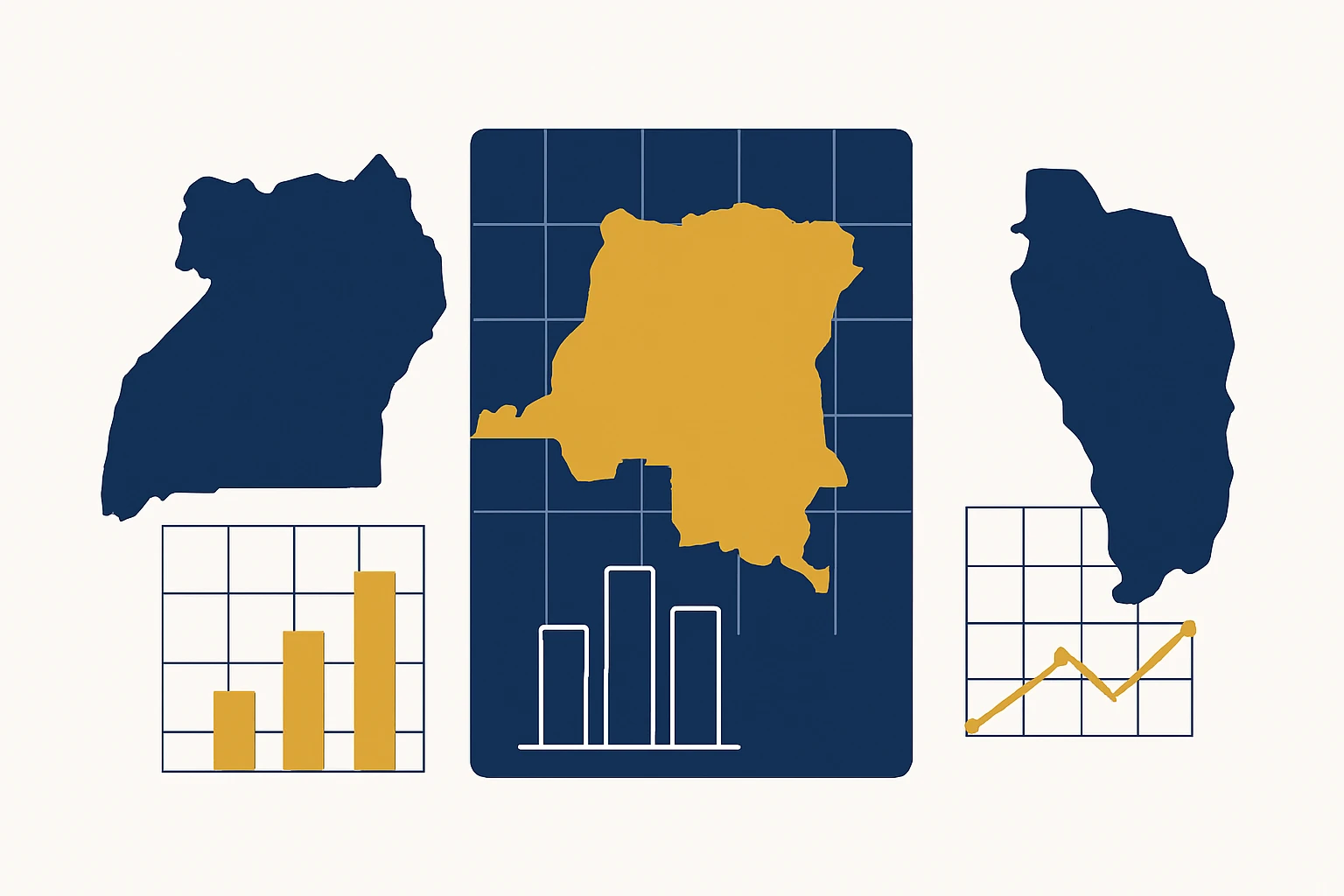
Let’s translate the framework into a practical action plan for three representative markets: Uganda (.ug), the Democratic Republic of the Congo (.cd), and Dominica (.dm). While each market has its unique logistical and regulatory context, the framework helps you structure a coherent portfolio that balances local credibility with global reach.
1) Uganda: anchoring a local-branded presence
In Uganda, a country-code domain strategy can reinforce local trust and search relevance, particularly for consumer and SME segments. Start with the primary .ug domain and map it to key regional product lines or services. Add defensively targeted domains that capture common typos or locale-specific spellings. An essential dimension is governance: assign a domain owner responsible for local law compliance, privacy considerations, and renewal budgeting. Leveraging Uganda-specific data and market signals can also inform broader regional strategy in East Africa. For reference on Uganda’s ccTLD landscape and local-digital trends, see the broader country-domain data ecosystem and regional market studies.
2) Congo and the DRC: balancing risk with opportunity
The Congo region presents a distinct regulatory and linguistic environment. A robust framework would combine defensive registrations around core brand terms with strategic acquisitions that capture regional variations in spelling and language use. The portfolio should also consider local-language domains or product lines that resonate with central and southern African audiences, while ensuring alignment with data-privacy and local advertising laws. A disciplined approach - rooted in the same five-step readiness framework - helps maintain clarity as the market evolves and as new opportunities or risks emerge.
3) Dominica: Caribbean reach with regional considerations
Dominica represents a Caribbean market where regional branding and travel/tourism initiatives often benefit from ccTLD-anchored strategies. A Dominica-focused component of the portfolio can be designed to support tourism brands, local service providers, and regional campaigns that require rapid local resonance. As with Uganda and Congo, the Dominica angle benefits from continuous monitoring for impersonation and ambiguity risks, coupled with a governance process that can scale across the Caribbean region as needed.
In practice, this three-market buildout is about building a modular portfolio: one that scales across markets, remains defensible against brand impersonation, and supports local marketing initiatives with regionally meaningful domain assets. A credible, data-informed approach to country-domain selection helps ensure the portfolio remains relevant as regulatory and consumer landscapes shift.
Insights from the field: what experts say about domain strategy and brand protection
Industry observers consistently emphasize the strategic value of a deliberate domain portfolio. A well-constructed framework helps brands align domain holdings with product launches, regional campaigns, and overall governance. Expert perspectives highlight that defensive registrations, combined with regular portfolio audits, yield clearer risk-mitigated growth rather than reactive, ad-hoc registrations. In practice, this means investing in defensive assets before broad campaigns go live and maintaining vigilance against lookalike domains that could confuse customers or erode trust. As one leading industry discussion notes, defense is an essential part of effective brand protection. Forbes: Defense Is The Best Offense. Additionally, regional market studies underscore that premium-domain investments and country-domain strategies must be evaluated within a broader market context to avoid over-concentration in any single TLD. ICANN Africa Domain Name Industry Study.
Limitations and common mistakes: what to watch out for
Any framework has limitations, and domain portfolios are no exception. Here are common missteps that can undermine a country-focused strategy - and how to avoid them:
- Over-reliance on a single TLD. A .com-first mindset can undermine local credibility and SEO performance. A balanced approach that combines global and country-specific domains tends to yield better local-market signal strength and protection against typosquatters.
- Underestimating governance needs. Without clear ownership, renewal schedules, and budget controls, even strong acquisitions can drift, inflating costs and fragmenting accountability.
- Neglecting monitoring and incident response. Defensive coverage without a fast, repeatable response process invites reputational risk when lookalikes are discovered. A structured playbook helps reduce damage and preserve deal momentum in acquisitions.
- Ignoring privacy and regulatory requirements. Different markets have different privacy expectations and regulatory environments, a portfolio that fails to account for this can encounter compliance issues and operational friction.
These limitations are not insurmountable. They primarily demand disciplined governance, explicit decision rights, and ongoing portfolio audits. External perspectives - from brand-protection practitioners to large registries - consistently reinforce that a structured, proactive approach delivers the best long-term outcomes.
A practical, reusable structure you can apply today
To help teams operationalize the ideas above, here is compact guidance you can copy into your own internal playbooks. This structured block is designed to be used repeatedly as you enter new markets or refresh existing country portfolios.
- Inventory and assess: map assets, value, and risk across markets
- Defensive baseline: register core terms, typos, and local variants
- Local-market acquisitions: prioritize strategic country-domain purchases
- Monitoring and response: automate alerts and document playbooks
- Governance: assign owners, set renewal cadences, and align budgets
For teams that require centralized data assets to support these activities, webatla offers practical data services, including access to the RDAP & WHOIS database and country-domain listings. RDAP & WHOIS Database provides critical visibility into registered assets, while the country-domain catalog supports targeted market analyses. You can start from the Uganda lens here: Uganda country page, and broader country lists here: List of domains by Countries.
Conclusion: a disciplined, market-aware approach to country-domain portfolios
Global brands increasingly need to balance universal reach with local credibility. A country-focused domain portfolio does more than protect a brand, it enables precise regional positioning, faster local customer acquisition, and a prudent risk profile as markets evolve. By inventorying assets, hardening defensive coverage, executing strategic country-domain acquisitions, and enforcing governance, teams can establish a scalable playbook that serves both current and future markets. The approach outlined here is designed to be editorially credible, practically actionable, and adaptable to changing market conditions. It also aligns with the broader professional practice of premium-domain brokerage and digital-asset advisory - where careful planning, transparent negotiation, and disciplined portfolio management drive durable brand value. If you’re starting or refreshing a country portfolio, consider partnering with a structured, expert-driven process that brings together strategy, governance, and execution in a unified framework.