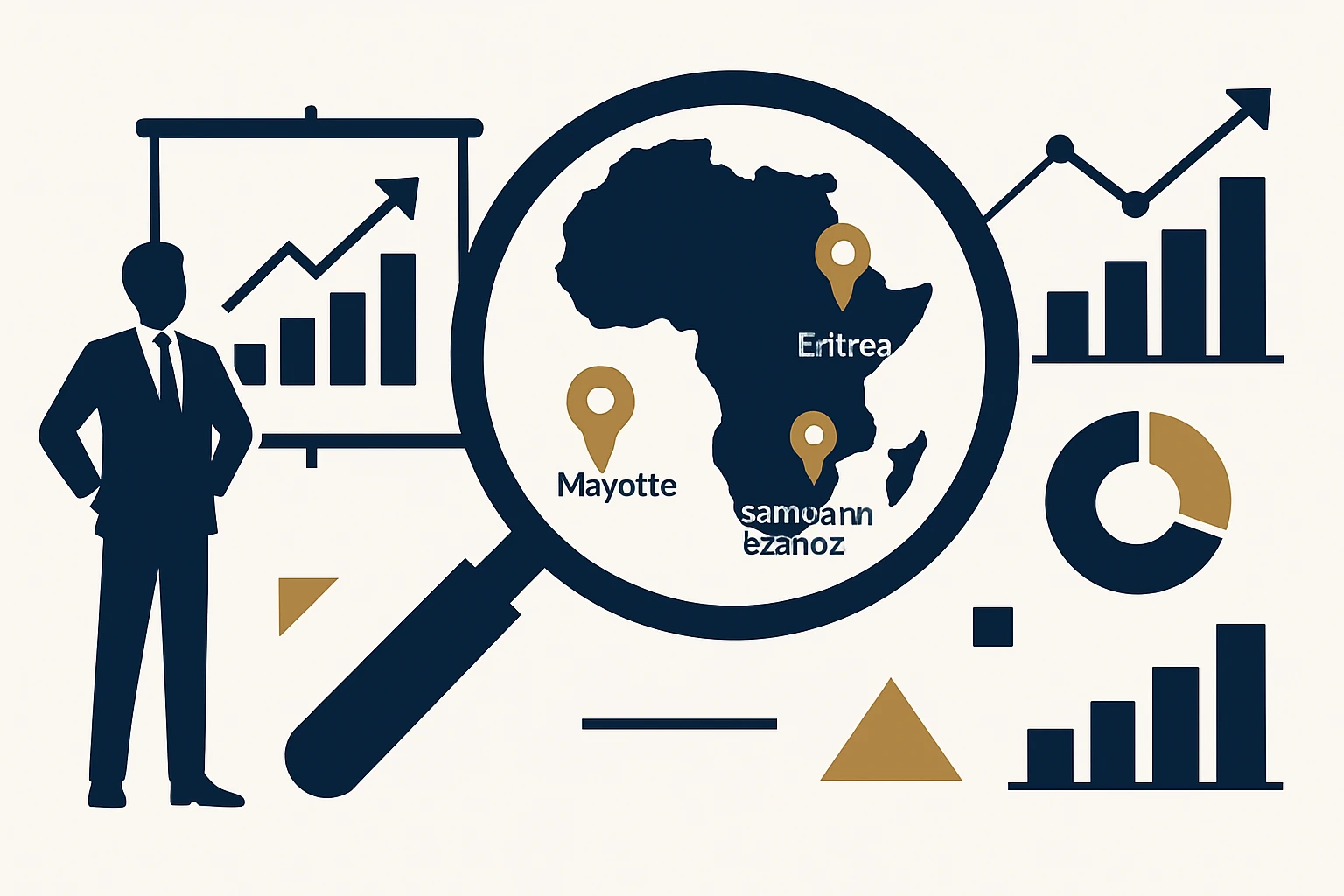
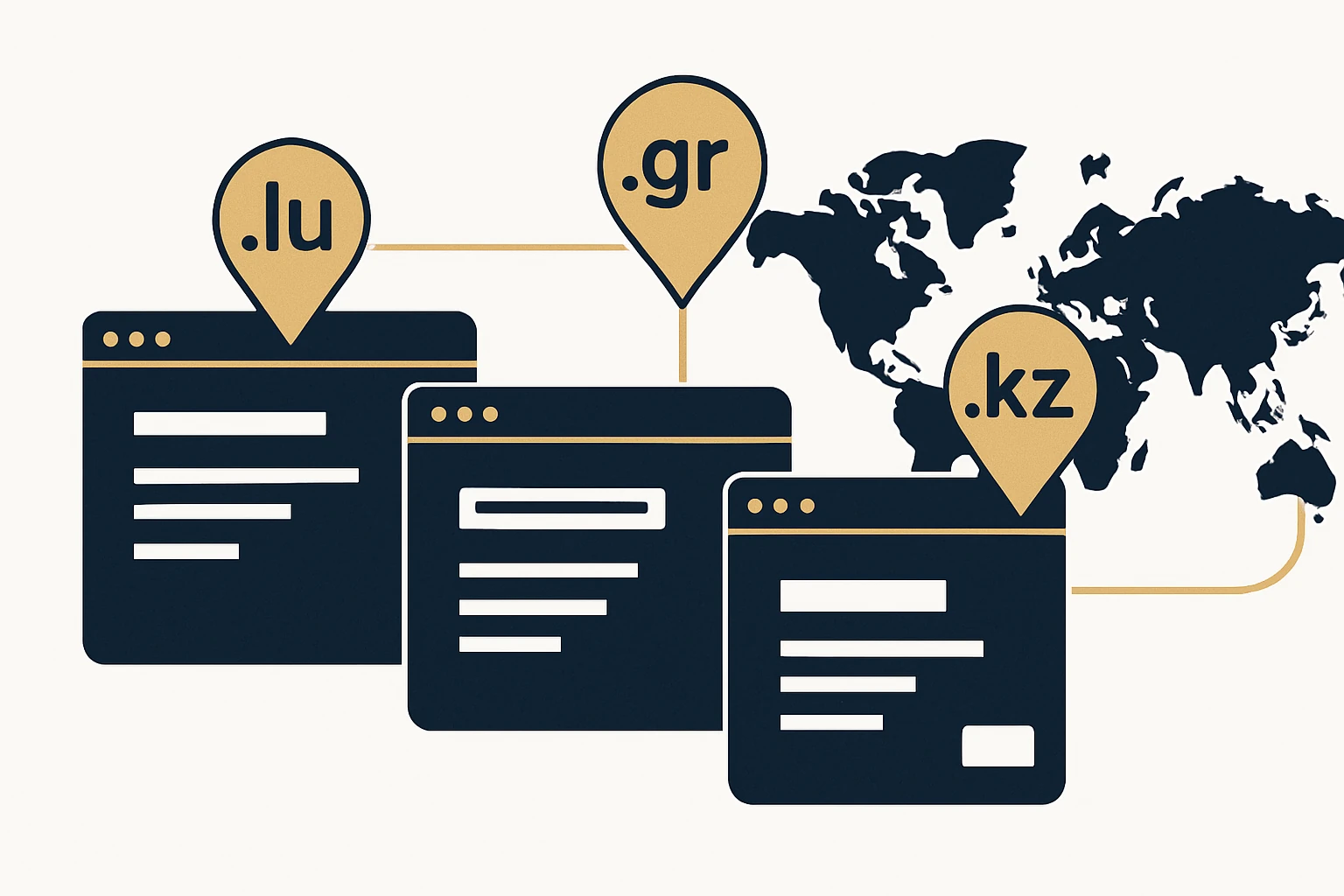
Introduction: Building a Global Brand with a Thoughtful Domain Strategy
For global brands, the digital real estate footprint is as strategic as real-world assets. The choice between country-code top-level domains (ccTLDs) and a single global domain shapes local credibility, search visibility, and risk management. In practice, a well‑reasoned country‑targeted portfolio isn’t just about owning a handful of domains, it’s about aligning market entry, protection, and customer experience with a clear governance model. This article presents a practical framework for constructing country-targeted portfolios in LU (Luxembourg), GR (Greece), and KZ (Kazakhstan) - three markets with distinct regulatory, linguistic, and competitive dynamics that illustrate the benefits and trade‑offs of ccTLD strategy for global brands.
Why ccTLDs Matter for International Brands
Country-code domains offer local signaling that can translate into trust, relevance, and, in many cases, improved click-through and engagement in target markets. Registries and registrars report continued growth in ccTLD registrations, underscoring ongoing investor interest in local digital real estate as part of a broader international strategy. This trend is corroborated by the latest quarterly domain metrics, which show ccTLD growth alongside a resilient overall domain market. Verisign’s Domain Name Industry Brief (Q1 2025) documents the sustained expansion of ccTLD registrations, highlighting their role in the global domain ecosystem. DNIB Q1-2025: Domain registrations by ccTLDs.
Beyond raw numbers, ccTLDs carry strategic value in terms of brand protection and localization. Local domains make it harder for competitors or opportunists to register variants that could confuse customers or siphon traffic. They also enable locale-specific marketing, regulatory alignment, and user experience optimizations that go beyond language translation alone. In practice, brand owners increasingly combine ccTLDs with robust localization tactics, including hreflang implementations and region‑specific content strategies, to maximize international reach while preserving a coherent brand narrative. Which Domain Strategy Is Best For International Expansion? and other sector analyses emphasize that local domains are most effective when paired with a clear international SEO and governance plan. International domain strategy guidance.
Navigating ccTLDs vs. Subdirectories: The Trade-offs in Practice
One central decision in international branding is whether to deploy ccTLDs (for example, .lu, .gr, .kz) or to consolidate multilingual content under a single domain using subdirectories. The right answer depends on market priorities, internal capabilities, and risk tolerance. Key trade-offs include:
- Local trust vs. management complexity. ccTLDs deliver trust and relevance in local markets but require more domain registrations, renewals, and policy compliance. This aligns with a locally resonant user experience but increases operational overhead.
- SEO signals and geographic targeting. Local domains can help signal country intent to search engines, potentially improving country-specific rankings, while subdirectories centralize authority but may require more sophisticated hreflang and content strategies to avoid cannibalization. See the broader discussion of international domain strategy in industry literature. Best domain strategies for international expansion.
- Governance and risk management. A diversified portfolio spreads risk - brand impersonation, cybersquatting, and policy changes can impact a single global domain much less when multiple geographies are in play. For governance considerations, organizations increasingly formalize domain-name life-cycle management as part of brand protection programs. Accredited trademark lifecycle guidance.
In short, ccTLDs are not a universal solution, they are a tool within a broader strategy. The emerging consensus favors a deliberate mix of local presence and scalable global governance to balance reach, control, and cost. This perspective is echoed in international strategy literature and industry reports alike. ICANN board briefing materials provide context on governance and policy considerations affecting domain naming ecosystems as new opportunities and rules evolve.
A Practical Framework for a LU, GR, and KZ Country-Targeted Portfolio
Below is a pragmatic, four‑pillar framework designed to guide brand owners, portfolio managers, and brokers through the process of building a defensible, opportunistic LU, GR, and KZ country-targeted portfolio. The framework is intentionally concrete, with steps you can translate into a working playbook. It also accommodates the realities of confidential domain acquisition and portfolio governance that are hallmarks of premium domain advisory services.
- Discover and curate target markets
- Map each country’s digital landscape, including local domain registrations, business registries, and notable players in your sector.
- For Luxembourg (LU), Greece (GR), and Kazakhstan (KZ), consider public and private signals of market readiness, regulatory environments, and linguistic preferences. A practical starting point is to download a list of LU websites to identify potential targets for defensive registrations and partner discovery. See how local lists can inform strategy through the Luxembourg page and related country resources. Luxembourg country domain landscape.
- Decide on the architecture: ccTLDs vs. subdirectories
- Evaluate local trust, SEO impact, and maintenance burden. In many cases, a hybrid approach - defensive LU/.lu registrations complemented by a central global domain with language-aware subdirectories - offers a practical balance. See international-domain strategy guidance for a broader set of considerations. Best domain strategies for international expansion.
- In parallel, align with hreflang implementation practices to ensure users land on appropriately localized content. Practical international SEO guidance discusses how to structure this for scale. International domain strategy guidance.
- Defend and monitor: brand protection as ongoing discipline
- Establish clear registrant ownership, renewal calendars, and monitoring for new registrations in LU, GR, and KZ that could cause confusion or impersonation.
- Integrate RDAP & WHOIS visibility into your governance workflow to support due diligence and risk assessment. RDAP & WHOIS Database provides a practical view into ownership and history for target domains.
- Diversify and govern: balance risk with opportunity
- Create a tiered portfolio that allocates resources to core strategic domains while experimenting with opportunistic registrations in adjacent markets. Governance should ensure scalable administration, with action plans for renewals, risk controls, and performance reviews. Industry frameworks on domain-name governance and lifecycle management offer useful guardrails. Trademark lifecycle governance.
- Document business justifications for each domain to maintain budget discipline and alignment with brand strategy. This is a practical step recommended by industry practitioners and policy writers alike. ICANN governance context.
A Structured, Actionable Block: The Four‑Step Portfolio Block
- Discover: Define LU, GR, KZ targets, gather market intelligence, compile basic lists of candidate domains and local partners. This is where a Luxembourg-focused view provides a practical anchor for local context, while broader country lists inform cross-border strategy. Also consider the availability and potential privatized data sources for due diligence.
- Decide: Choose between ccTLDs and centralized domains, guided by risk tolerance, local competition, and resource constraints. Use a decision rubric that weighs local trust, SEO implications, and maintenance costs. A validated perspective on international domain strategy can help refine this rubric. International expansion domain strategy.
- Defend: Build defenses against cybersquatting, impersonation, and policy shifts. Establish monitoring programs and renewal governance to keep the portfolio resilient. Integrate technical and legal controls to protect brand integrity across LU, GR, and KZ. For a governance lens, see the broader industry guidance. Trademark lifecycle.
- Diversify: Balance core, defensible domains with opportunistic registrations in adjacent markets or new TLDs. Maintain a cost- and risk-aware growth curve, with periodic portfolio reviews to adjust priorities as markets shift. ICANN policy and governance context helps frame the boundaries of expansion. ICANN governance context.
Limitations, Pitfalls, and Common Mistakes to Avoid
No framework is perfect, and country-targeted domain portfolios introduce trade-offs that require disciplined execution. The most common missteps include over‑allocating to ccTLDs without sufficient local-market justification, underinvesting in governance and renewal discipline, and assuming that a single global strategy will automatically perform in every locale. A measured approach - grounded in market insight, clear ownership, and ongoing risk management - helps prevent these missteps and keeps the portfolio aligned with brand objectives. In addition, policy and governance considerations continue to evolve as the domain ecosystem grows, underscoring the value of staying informed through credible sources and ongoing governance discussions. ICANN governance context.
Expert Insight and Practical Takeaways
Expert insight: In practice, the most effective country-targeted portfolios balance defensible local presence with scalable global governance. The outcome is stronger brand protection, clearer market signals to search engines, and a structure that supports both quick wins in LU, GR and KZ and long-term growth in adjacent markets.
Putting the Framework into Action: A Quick-reference Path
To help teams operationalize the framework, here is a concise, four-step path that can be initiated this quarter:
- Audit: Conduct an internal domain inventory to identify gaps in LU, GR, and KZ coverage and gather local market signals.
- Decide: Pick a hybrid architecture that aligns with your risk appetite - core ccTLDs for LU and GR, with selective KZ registrations as market signals emerge.
- Defend: Establish renewal calendars and monitoring workflows, set thresholds for action on suspicious registrations.
- Govern: Create a lightweight governance charter with clear ownership, escalation paths, and quarterly portfolio reviews. Integrate RDAP & WHOIS data as a standard due-diligence practice. Access to the RDAP/WHistoric data is available via RDAP & WHOIS Database.
Conclusion: A Practical, Editorial Path to International Domain Success
Country-targeted domain portfolios are not a one-size-fits-all solution, but when approached with a disciplined framework, they can significantly strengthen brand protection, local relevance, and global reach. By starting with LU, GR, and KZ as a focused test case, brand owners can learn how to balance local trust with centralized governance, while maintaining the flexibility to adapt as markets evolve. For teams seeking guidance on premium domain strategy, consider how a structured approach to domain portfolio management and digital asset advisory can help you translate intent into measurable outcomes. For further exploration and practical resources, you can explore the Luxembourg country domain landscape and related offerings at Luxembourg country domain landscape, and review practical pricing and data tools via Pricing and RDAP & WHOIS Database.