Introduction
For global brands, the landscape of content delivery, regional marketing, and asset protection hinges on more than a single domain. A well-constructed country website list - paired with a deliberate country-domain portfolio - can signal local presence, boost region-specific performance, and blunt competitive encroachment. Yet the task is not simply counting domains, it requires disciplined discovery, due diligence, and ongoing governance. This article offers a practical framework to build a country website list that aligns with brand strategy, legal risk considerations, and the economics of domain ownership. It draws on industry trends that treat country-code domains (ccTLDs) not just as local identifiers but as strategic brand signals in a connected, multi-market world.
Expert insight: industry observers increasingly view ccTLDs as branding assets that can anchor regional campaigns, maintain brand integrity, and support localized SEO - when managed with clear governance and market alignment. This perspective underpins a methodical approach to assembling a country website list that serves growth while protecting the brand across markets. (dn.org)
To ground this in reliable sources, note that ccTLDs are part of the IANA Root Zone Database, the authoritative registry for top-level domains, including country-code domains such as .uk, .de, and their internationalized variants. Understanding this registry is essential when you consider expanding a brand’s presence by country. (iana.org)
The role of ccTLDs in global branding
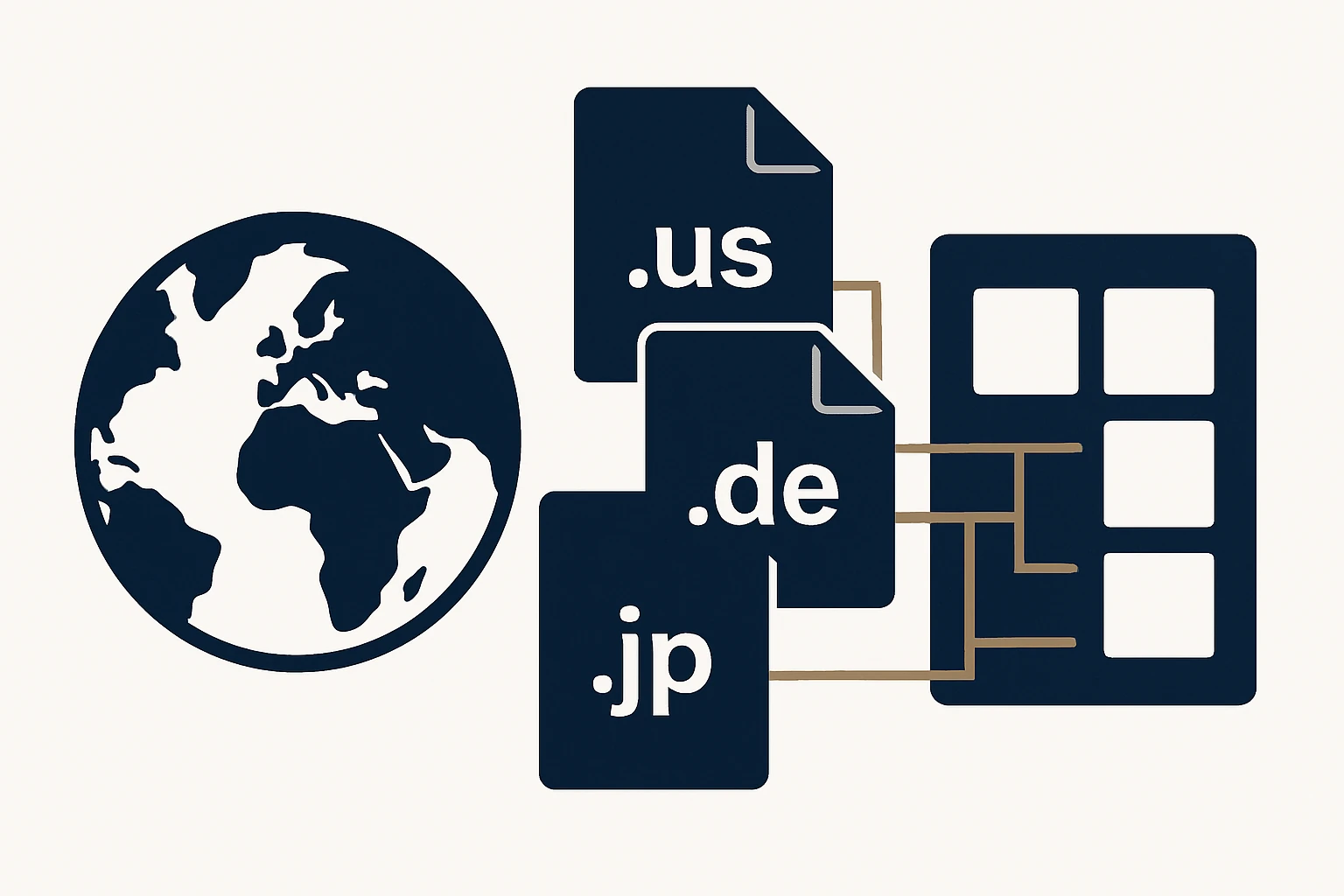
Country-code top-level domains (ccTLDs) are two-letter domains that correspond to ISO country codes. They are delegated by IANA to national registries and are integral to how brands think about localization, local trust, and regulatory compliance. While global marketing often starts with a single brand domain, many brands extend their footprint with country-specific domains to cater to local audiences and search ecosystems. The IANA Root Zone Database remains the definitive inventory for these domains, ensuring that portfolios reflect actual registrations and delegations. (iana.org)
Beyond local signals, ccTLDs are increasingly viewed through a branding lens. Analysts note a shift from purely geographic signaling to strategic branding assets that can harmonize multinational campaigns without sacrificing regional relevance. This reframing has real consequences for how companies plan, acquire, and manage country domains as part of a cohesive brand architecture. (dn.org)
Brand protection considerations matter too. The temptation to register every possible country variant is tempered by risk and cost. Industry guidance emphasizes a balanced approach: protect key markets, monitor risk of cybersquatting, and align domain investments with the brand’s risk tolerance and budget. This is where a structured country website list becomes indispensable, enabling disciplined decision-making rather than ad hoc acquisitions. (nominus.com)
A practical framework to assemble a country website list
The framework below provides a concrete, repeatable path to assemble and maintain a country website list that supports brand strategy, market opportunities, and risk controls. It is designed to be actionable for in-house teams and credible for external partners such as premium domain brokerages and digital asset advisory firms. The steps emphasize discovery, evaluation, prioritization, execution, and governance - each with concrete deliverables and decision criteria.
Framework overview (discovery, evaluation, execution, governance)
- Discovery: Compile an initial universe of country-targeted domains based on market strategy, potential alignment, and regulatory feasibility. Gather data from IANA/registry sources to confirm delegation status and country alignment.
- Evaluation: Assess market size, competitive presence, and brand risk. Include registries’ policies, renewal costs, and potential trademark conflicts in each jurisdiction.
- Prioritization: Rank markets by strategic importance (revenue potential, brand risk, SEO value) and resource readiness (budget, internal governance, and local content capacity).
- Acquisition & Setup: For prioritized markets, perform due diligence, secure ownership, and establish hosting/redirects/content localization as appropriate. Ensure privacy controls and registry compliance are in place.
- Governance: Implement ongoing review, renewal, expiration alerts, and performance tracking. Maintain a living country website list that feeds into brand risk assessments and portfolio management decisions.
A structured block: the Country Website List framework (table)
| Stage | Actions | Deliverables |
|---|---|---|
| Discovery | Identify target markets, verify ccTLD availability and delegation using IANA records, map to brand goals. | Initial country website list, registry status snapshot |
| Evaluation | Assess market size, competition, regulatory risk, review local trademark landscape, estimate maintenance costs. | Risk & cost matrix, market prioritization rationale |
| Prioritization | Score markets by potential impact and feasibility, align with budget and governance capacity. | Prioritized country list with scoring |
| Acquisition & Setup | Execute registrations or transfers, configure DNS, hosting, and localization, ensure privacy and regulatory compliance. | Owned domains, configured infrastructure, localization plan |
| Governance | Renewal management, monitor performance, update the country website list, adjust strategy as markets evolve. | Ongoing governance plan, renewal calendar, performance report |
Why use a table? It crystallizes responsibilities, costs, and milestones. It also creates an auditable trail for internal governance and external audits, which is particularly valuable in defensive brand strategies and confidential domain acquisitions. The country website list becomes a living document, not a one-off registry pull, and it should be revisited at least quarterly in rapidly changing markets.
Prioritizing markets: criteria you can apply today
Not all ccTLDs deserve equal attention. Prioritization should reflect both market opportunity and brand risk. Here are practical criteria that many global brands use to decide where to focus their country website list investments:
- Market size and growth trajectory: GDP-adjusted potential, digital adoption rates, and e-commerce penetration.
- Brand relevance in local markets: presence of local competitors and the strategic importance of regional campaigns.
- SEO and localization value: search engine behavior and ease of local content optimization.
- Regulatory and trademark risk: local IP laws, cybersquatting prevalence, and registry restrictions.
- Cost and governance burden: domain renewal costs, privacy requirements, and multilingual content needs.
As you begin scoring markets, you can operationalize a simple rubric that weighs revenue potential against regulatory risk and maintenance overhead. This dual lens helps avoid over-extending a portfolio in markets where the return on investment may be limited or the risk exposure high. The broader literature on ccTLD strategy supports this balanced approach: use country domains to signal local relevance while maintaining brand coherence across national boundaries. (dn.org)
The practical realities: trade-offs and limitations
While country website lists and ccTLD portfolios offer clear advantages, they also introduce complexity. Here are several common trade-offs to consider when building a country website list:
- Maintenance versus scale: More domains require more stewardship - renewals, security, privacy controls, and content governance. Budgeting must reflect ongoing costs, not just upfront acquisition.
- Regulatory variance: Each country has distinct registries, consumer privacy expectations, and data localization rules. A domain that seems straightforward may trigger unexpected compliance needs in another jurisdiction.
- Brand coherence: A broad country portfolio can risk diluting brand messaging if content and user experience aren’t harmonized across markets.
- SEO versus brand signaling: Some markets benefit more from ccTLD presence than others, blindly acquiring domains in every country might offer diminishing returns. (dn.org)
Experts in the domain space stress that country-domain strategy is most effective when aligned with a global branding framework and a clear governance model. This reduces risk, such as misaligned messages or regulatory missteps, while enabling the brand to respond quickly to market shifts. (nominus.com)
Limitations and common mistakes to avoid
No framework is perfect, and a country website list is no exception. Here are common pitfalls and how to mitigate them:
- Over-allocating domains: Registering every ccTLD imaginable drains budgets and creates maintenance creep. Focus on high-priority markets with clear ROI paths.
- Neglecting local legal checks: Trademark clearance, domain-name disputes, and registry policies differ by country. Integrate legal due diligence early in the discovery phase.
- Forgetting translation and localization: A country domain without localized content undercuts the purpose of the investment. Build a localized content plan as part of the Setup phase.
- Disjoint governance: Without a formal governance cadence, domains can drift - expiring, losing contact, or misconfiguring privacy settings. Establish renewal calendars and performance dashboards.
A practical takeaway is that country website lists work best when integrated into a broader digital asset strategy, including portfolio management and confidential domain acquisition guidance. This aligns with how leading firms view ccTLDs as assets that require disciplined stewardship rather than ad hoc purchases. (dn.org)
Integrating with a premium domain brokerage and digital asset advisory approach
The country website list framework dovetails with services offered by premium domain brokerages and digital asset advisory firms. A disciplined process for country domains complements strategies around confidential acquisitions, risk assessment, and long-term asset protection. When you engage with a broker or advisory partner, expect alignment around governance, cost controls, and measurable outcomes rather than single-shot acquisitions. For organizations seeking clear, defensible paths to market-specific domains, this approach provides a credible bridge between strategy and execution.
For organizations already relying on a country-focused directory as part of their branding toolkit, World-class providers will typically offer a combination of access to market intelligence, ownership verification (including RDAP/W einders), and a governance framework that scales with the portfolio. If you are building this in-house, you can leverage external data sources to validate your country targets and then apply the framework above to drive disciplined decisions. For reference, webatla offers country-focused domain listings and related services that can be integrated into this framework as a practical resource for market prioritization and acquisition evaluation. You can explore their country listings at webatla country pages and pricing considerations at webatla pricing, as you refine your country website list.
In addition, a general cataloging approach - such as the “List of domains by Countries” and similar inventories - helps teams compare markets, align with brand standards, and track changes over time. A credible database of ccTLDs, supported by IANA, ensures that your country-target list reflects the actual registry status, reducing risk when you place bids or negotiate acquisitions. (iana.org)
Limitations of the data and ongoing considerations
Although registries and IANA provide authoritative baselines, there are practical limits to what a country website list can guarantee. Registry policies evolve, geopolitical situations shift, and some markets may have evolving regulatory expectations that influence how a domain is used or maintained. This is why governance, ongoing market intelligence, and regular reviews are essential components of any robust country-domain strategy. DN.org and other industry analyses repeatedly emphasize that country-code domains are dynamic assets, whose value is best realized when managed as part of a coherent international branding and risk framework. (dn.org)
Conclusion
A well-constructed country website list is a practical, high-leverage component of global brand strategy. By combining a structured discovery-to-governance framework with careful market prioritization and disciplined acquisition, brands can extend their relevance across markets while controlling costs and risk. The ccTLD universe, authenticated by IANA’s Root Zone Database, is not just a registry of local identifiers but a curated portfolio of signals - trust, localization, and protection - when used with a clear governance model. If you are building or refining a country-domain strategy, consider how a formal country website list can become a foundational asset. For organizations seeking an integrated approach that blends editorial rigor with asset protection and strategic growth, working with a partner who understands both premium domains and digital asset advisory can be a valuable differentiator.
Explore webatla’s country-focused domain listings to inform your decision process: webatla country pages and pricing can be useful references as you assemble your country website list and align it with your broader brand portfolio strategy.