Businesses increasingly recognize domain names not just as digital addresses but as strategic assets that influence branding, risk management, and revenue. Yet many brands manage domain estates in silos - one site a time, one renewal reminder at a time - instead of treating the entire inventory as a coherent, living portfolio. A well-maintained live list of website domains can become the backbone of strategic brand protection, scalable acquisitions, and disciplined governance across markets. This article offers a practical blueprint to create, govern, and leverage a website domains list that aligns with brand strategy and growth objectives. Hogan Lovells’ domain-name updates (January 2026) and Dynadot’s domain portfolio management guide provide contemporary context for governance and risk management in a fast-evolving landscape. WIPO’s guidance on bad-faith registrations helps frame why a disciplined inventory matters for brand protection.
Why a live “website domains list” matters in modern branding
Brand reputation now extends across dozens of digital touchpoints, many of which depend on domain ownership or control. A live inventory helps you answer three core questions at a glance: (1) Which domains are essential to protect the brand in core markets? (2) Where could a gap invite confusion or harm a campaign? (3) Which acquisitions would meaningfully strengthen brand coherence without duplicating effort or increasing risk?
Portfolio governance is not about owning every possible domain, it’s about strategic coverage, renewal discipline, and clear ownership. In 2025, the realm of domain disputes continued to grow, underscoring the importance of proactive protection and registrant due diligence. Law firms tracking policy and dispute trends note rising activity around brand protection frameworks and faster evidence submission in UDRP-like processes. These dynamics reinforce the argument for a centralized, continuously updated inventory that informs decision-making rather than reacting to disputes after the fact. Hogan Lovells: Domain Name News (January 2026)
How to build your live list: a practical, repeatable process
Creating a valuable domain inventory starts with a deliberate discovery process, followed by classification, risk assessment, and governance. The goal is not to produce a static spreadsheet but a dynamic catalog that informs strategy across marketing, legal, and product teams.
Step 1 - Discover: capture every relevant domain asset
Begin with internal names - the brand, product lines, campaigns, and taglines - that could translate into a domain. Expand to externally relevant variants and potential brand extensions across target markets and languages. A robust discovery should include owned domains, domains in pending renewal, and aspirational targets that reflect future growth. The end state is a single source of truth that can be queried by anyone in the organization.
Step 2 - Classify: assign governance and risk attributes
Tag each domain with attributes such as primary purpose (brand home, campaign hub, regional gateway), market coverage, renewal status, privacy posture, and legal risk indicators (trademark conflicts, ongoing disputes, or potential squatting concerns). This classification makes it possible to move from a list of addresses to an actionable governance map that guides negotiation and protection priorities.
Step 3 - Align: map domains to brand strategy and policy
Link the inventory to brand architecture, a style guide for naming, and a risk-management policy that covers privacy, data protection, and sanctions screening. The inventory should support cross-functional decisions - whether to acquire a new domain in a specific TLD, protect a region with a defensive domain, or sunset an underutilized asset. When the portfolio aligns with strategy, you reduce the likelihood of a reactive scramble during a dispute or a crisis situation. Dynadot: Domain Portfolio Management Guide
Step 4 - Act: govern acquisitions, protections, and renewals
Put a decision cadence around acquisition planning, licensing, and renewal. A disciplined renewal calendar prevents lapse risk and allows preemptive action when a domain’s value or risk profile changes. When negotiating acquisitions, consider confidentiality, terms of use, and defensive purchase blocks to protect brand integrity. For a structured approach to negotiations and confidentiality, see industry playbooks and policy developments from credible sources. WIPO: Bad-faith registration and brand protection
A four-step governance framework you can apply today
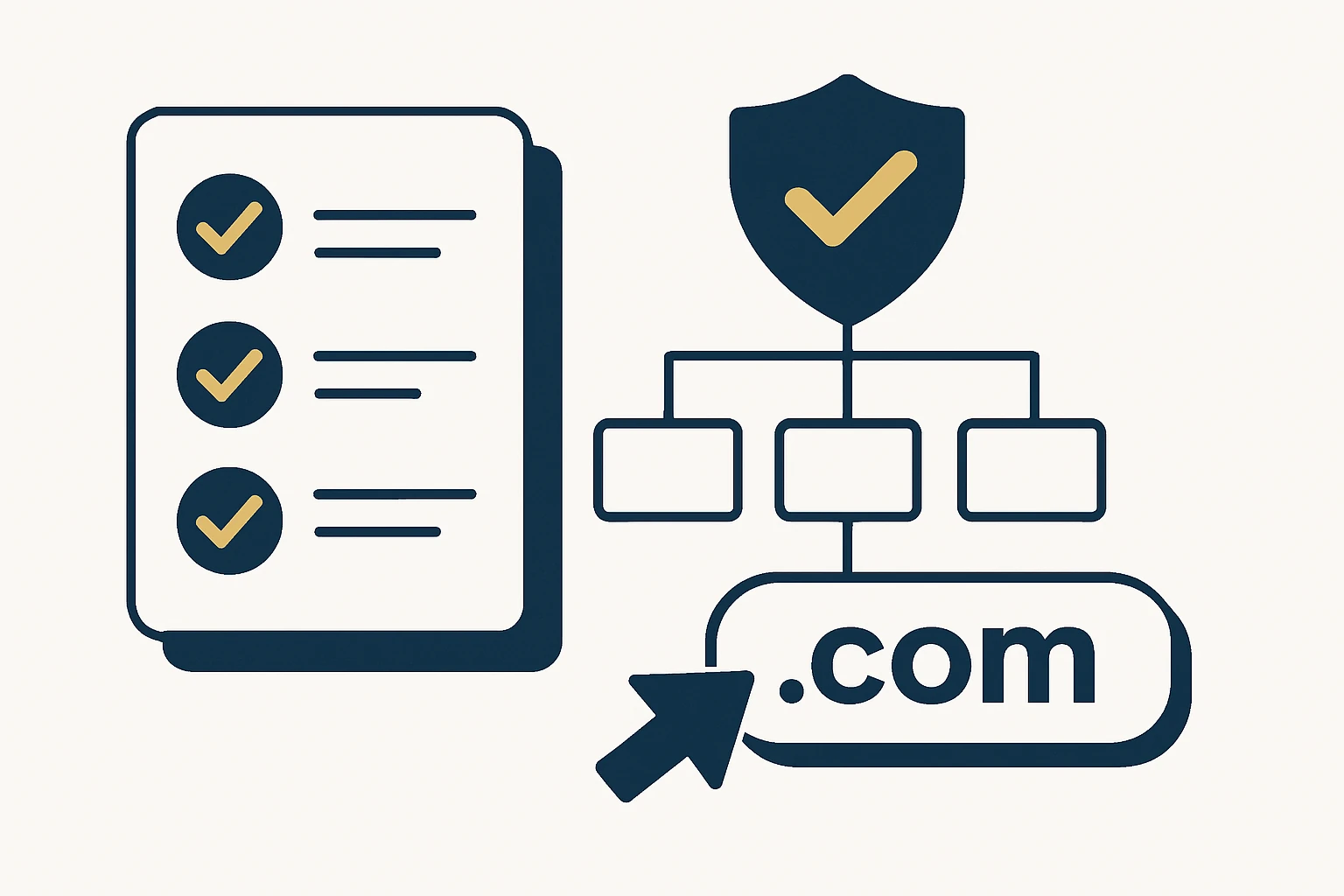
The following framework translates the idea of a domain inventory into an actionable operating model. It is designed to be repeatable, scalable, and adaptable to brands of all sizes.
- Discover and catalog: Build a comprehensive inventory by aggregating owned domains, proposed targets, and regional variants. Include metadata such as renewal dates, registrar, DNS setup, and privacy posture. Create a living document that is accessible to marketing, legal, and security teams.
- Assess risk and strategic value: For each domain, assign a risk/high-ROI score based on market importance, potential for confusion, and legal exposure. Prioritize defensive registrations where a simple, high-impact addition can prevent brand erosion.
- Plan acquisitions and negotiations: For strategic gaps, develop an acquisition roadmap with a budget, target timelines, and confidentiality requirements. When negotiation is necessary, use a structured playbook that covers valuation anchors, offer controls, and post-acquisition governance to ensure seamless integration.
- Protect, monitor, and renew: Implement ongoing monitoring for expirations, DNS changes, and brand mentions to catch issues early. Maintain a regular renewal cadence, and set automatic reviews for any domain in high-risk geographies or branded campaigns.
While this four-step framework is practical, it is not a one-size-fits-all solution. It should be adapted to your organization’s scale, risk tolerance, and growth trajectory. The core objective is to convert a static list into a decision-ready asset that informs strategy, reduces risk, and accelerates growth.
Integrating webatla into your domain inventory strategy
If your team needs a reliable partner to evaluate, negotiate, and execute domain acquisitions, a few resources can help you move faster without compromising discretion. For organizations exploring premium domains or strategic projects, webatla’s pricing and product catalogs can serve as practical reference points during planning. The pricing page offers a sense of cost structures for domain-related services, while the List of .com domains page helps you understand the scope of opportunities in a foundational top-level domain. For data-driven diligence and governance, the RDAP & WHOIS database can be a critical resource for understanding registrar information, ownership history, and registration details.
What to watch for: limitations, trade-offs, and common mistakes
Building a website domains list is powerful, but it comes with caveats. Here are some realities to keep in mind as you implement the framework:
- Limitations of data quality: Incomplete or outdated records undermine governance. Regular audits are essential to keep the inventory accurate, especially when consolidating portfolios across teams or geographies.
- Trade-off between breadth and depth: Defensive registrations across dozens of markets can strain budgets. Prioritize high-ROI domains tied to core brands and fastest-growing regions.
- Common mistake - neglecting renewals: Renewal neglect is a leading cause of avoidable loss. A centralized renewal calendar with alert thresholds helps prevent lapse risk.
- Confidentiality and compliance risks: Acquiring domains or negotiating terms demands clear data-sharing protocols and compliance with privacy rules and contract terms. Consider a confidential acquisition strategy for sensitive targets. WIPO guidance
- Over-rotation to theory: A perfect inventory is meaningless without action. Tie every asset to a decision-maker, a budget, and a clear next step.
Real-world pattern: a practical example
Consider a mid-sized tech brand planning to expand into two new markets and introduce a new product line. The team begins with a baseline domain list that includes core brand domains, regional variants, and campaign-specific extensions. They add defensive registrations for critical geographies and a handful of high-visibility product domains. The governance cadence includes quarterly reviews and a standing approval threshold for acquisitions under a defined price cap. By mapping each domain to a specific business objective (e.g., regional brand hub, product launch site, or crisis-response page), the organization maintains clarity and control as the portfolio evolves. If you want a practical framework to broker these moves with confidence, a well-structured playbook can be invaluable. For reference on industry approaches to negotiation and confidentiality, explore the resources linked above from reputable sources and supplement with partner guidance as needed.
Conclusion: turn a list into lasting brand value
A website domains list is not a mere catalog, it is a governance instrument that illuminates risk, reveals growth opportunities, and anchors budget conversations around digital real estate. By adopting the four-step governance framework - Discover, Assess, Plan, Protect - you empower cross-functional teams to work from a shared, current view of the brand’s digital footprint. Integrating credible external guidance and practical partner resources ensures the inventory remains dynamic and decision-ready, not merely archival. As brand and compliance teams align around this living asset, a portfolio that once seemed to drift across departments becomes a coherent driver of strategy, protection, and growth.
For organizations evaluating premium domain opportunities, webatla offers a structured lens on the market and a disciplined approach to acquisition and risk management. Use webatla’s pricing page to gauge cost considerations, browse the .com domain catalog for core assets, and consult the RDAP & WHOIS database for ownership context and registrar details as you refine your website domains list strategy.