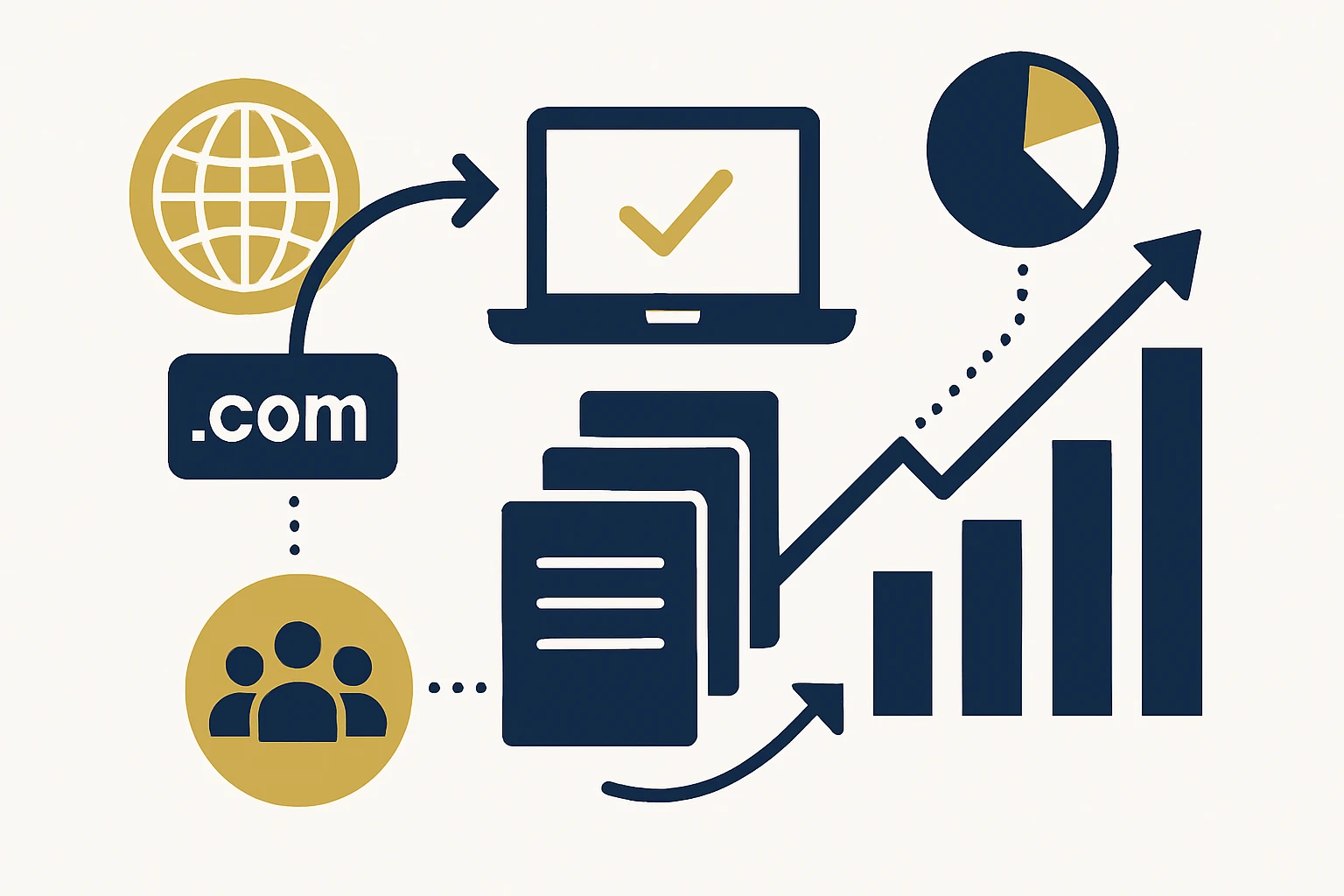
Introduction: Territory-Driven Domain Portfolios for Global Brand Strategy
Global brands expanding into new markets face a core question: which online assets should accompany market entry? Territory-driven domain portfolios align brand protection, regional SEO, and disciplined acquisition into a repeatable practice that scales with growth. When done well, a country-code and other targeted domains signal legitimacy to local users, improve relevance in search results, and deter impersonation. This approach is increasingly supported by global policy bodies that coordinate ccTLD strategy through multi-stakeholder processes, in particular, ICANN's ccNSO governs ccTLD policy and collaboration across jurisdictions. ICANN notes that ccTLD policy development is performed by the ccNSO, a stakeholder-driven body that represents ccTLD operators worldwide. (icann.org)
Why territory matters: ccTLDs, local presence, and risk management
Having the right mix of ccTLDs helps brands win local trust and deliver locally tailored experiences. Local domains support content and user experiences that reflect language, culture, and regulatory expectations, while enabling search engines to serve appropriate results. The ccNSO's work within ICANN formalizes the governance and policy-development process around ccTLDs, IDN ccTLDs, retirement, and related issues, ensuring global coordination with respect to country-specific domains. (icann.org)
- Local credibility: Country-specific domains enhance user confidence and reduce confusion with global sites.
- SEO relevance: Local domains support region-specific indexing and localized content aligned with hreflang signals.
- Defensive posture: A targeted ccTLD portfolio can deter cybersquatters and impersonators in high-priority markets.
- Regulatory alignment: Local domains can help demonstrate compliance with data localization or consumer-protection norms in some markets.
Beyond ownership, enforcement is a key element of brand protection. The World Intellectual Property Organization (WIPO) administers the Uniform Domain Name Dispute Resolution Policy (UDRP) and related processes to address cybersquatting and bad-faith registrations across top-level domains, including ccTLDs. This enforcement landscape underscores the value of proactive portfolio design to minimize disputes and protect brand equity. (wipo.int)
Portfolio Decision Framework: a practical, repeatable approach
To translate business strategy into a practical map of domains, apply a repeatable framework that can be revisited as markets evolve. The following five steps form a lightweight framework you can adapt for any brand.
- Step 1 - Priority markets: Identify 3–6 markets with clear demand and brand relevance. Use a mix of revenue data, consumer behavior insights, and partner inputs to determine which ccTLDs and regionals deserve emphasis.
- Step 2 - Risk & intent mapping: For each market, assess trademark exposure, impersonation risk, and the need for local content. Assign a recommended ownership approach (own, defensives, or watchlist).
- Step 3 - Ownership & enforcement model: Decide whether to own core domains outright, register defensives for protection, or collaborate with local operators to extend presence. Establish a governance approach for renewals, privacy, and security across jurisdictions.
- Step 4 - Operational governance & budgets: Create a lightweight governance cadence (quarterly portfolio reviews, annual budget alignment, and risk monitoring). This keeps the portfolio aligned with business goals and avoids wasteful expansions.
- Step 5 - Measurement & learning: Define metrics for success (brand protection incidents prevented, regional traffic lift, renewal cost efficiency) and refine the portfolio based on data.
When applied consistently, this framework helps teams scale responsibly and avoid ad hoc purchases that fail to deliver strategic value. The combination of policy-aware ccTLD planning, practical ownership decisions, and disciplined governance forms the backbone of a durable, territory-driven strategy. (icann.org)
Acquisition, negotiation, and confidentiality
Premium-domain deals are typically negotiated behind closed doors and often rely on brokers to protect strategic intent and confidentiality. A disciplined approach to confidential acquisition helps preserve leverage and reduces price inflation, it also supports smoother negotiations with sellers who appreciate professional governance. Industry practitioners emphasize the importance of NDAs, controlled disclosures, and structured due diligence when pursuing premium assets. (brannans.com)
- Broker-assisted negotiations can reveal true market value and provide access to pre-vetted buyers or sellers, increasing confidence in the transaction.
- Apply NDAs and staged disclosures to protect strategic intent while enabling due diligence.
- Base valuations on defensible data: comparable sales, brand fit, and ongoing renewal costs rather than isolated asking prices.
Brand-protection considerations go beyond acquisition. WIPO notes that brand enforcement and dispute resolution are ongoing concerns as markets expand, highlighting the strategic value of a well-structured portfolio that reduces exposure to cybersquatting. (wipo.int)
Practical resource: webatla offers country- and TLD-based domain lists that can help inform defensive registrations and expansion planning. For example, see the country-based lists and TLD inventories: ccTLD strategy and defensive domains, plus the pricing page to model costs: portfolio governance.
As a tangible example of how these resources map to practice, a hypothetical launch in a territory might begin with securing the local ccTLD and pairing it with a defensible alternative extension. This approach protects against misrepresentation while enabling localized customer experiences, and it scales with the business as new markets are added.
Limitations and common mistakes
- Over-indexing in low-impact markets: Owning every ccTLD in every market is fiscally impractical and often yields modest gains without a clear ROI.
- Neglecting localization and hreflang: ccTLD ownership must be paired with local content and language targeting to realize SEO and user-experience benefits.
- Lack of governance and renewal discipline: Without renewal discipline and governance, even strong assets can become liabilities due to rising costs or missed renewals.
- Underestimating legal risk: Trademark conflicts and cybersquatting are ongoing concerns, proactive portfolio design minimizes disputes, but disputes can still arise and require enforcement, including UDRP mechanisms. (wipo.int)
Conclusion: a path to strategic, defensible growth
Territory-driven domain portfolios are living assets that require disciplined strategy, governance, and risk management. A practical framework supports scalable international growth while preserving brand integrity. By combining policy-aware ccTLD planning with rigorous acquisition discipline and structured governance, brands can build a resilient digital asset portfolio that not only supports local-market performance but also reduces the risk of brand misrepresentation. For teams seeking a partner to translate strategy into a tangible domain map, a premium domain brokerage and digital asset advisory can play a critical role in turning ambitions into a defensible, measurable program.
Key resources to explore include webatla's country-domain lists and pricing pages to model portfolio costs and opportunities. ccTLD strategy, defensive domains, and portfolio governance offer practical anchors for planning and budgeting.