Introduction
In today’s global economy, a brand’s digital footprint extends far beyond a single web address. A strategic domain architecture turns a portfolio of domains into a living asset that amplifies reach, accelerates customer journeys, and protects the brand against impersonation and cybersquatting. Too often, companies treat domain decisions as one-off purchases rather than part of an integrated architecture that aligns with product lines, regional markets, and long-term brand objectives.
For context, the internet hosts hundreds of millions of domain registrations across all top-level domains, underscoring both the opportunity and the risk of a fragmented approach. Recent data from Verisign’s Domain Name Industry Brief highlights the scale of registrations and the ongoing dynamics of the market, which makes disciplined architecture essential for growth and risk management. Verisign Domain Name Industry Brief (Q2 2024).
1) What is domain architecture - and why it matters for brands
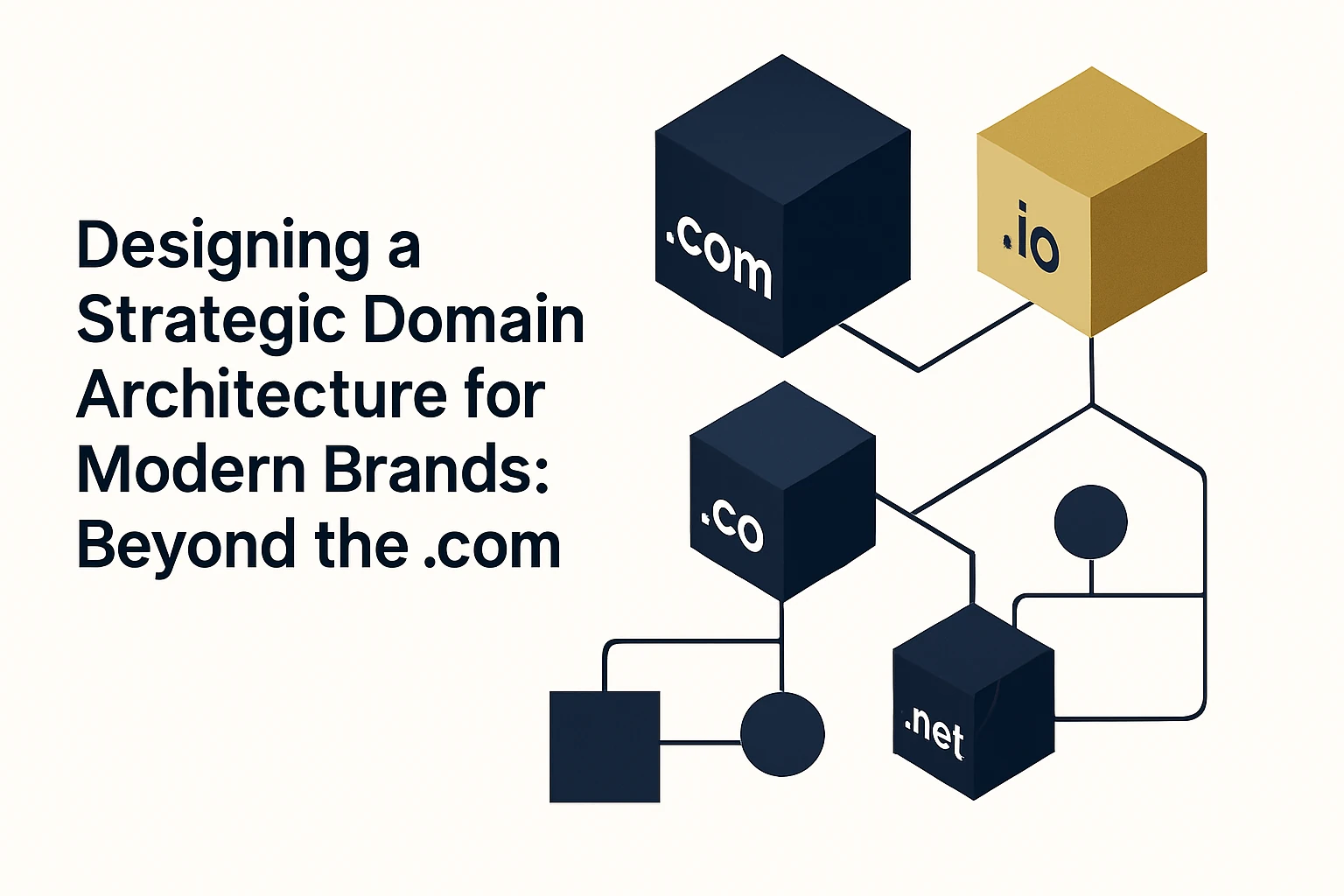
Domain architecture is the deliberate design of a brand’s digital identity across domains, subdomains, and redirects. It involves assigning clear roles to different domains (global anchors, regional assets, product-line sites, campaign hubs) and ensuring governance, security, and renewal processes support those roles. When done well, architecture reduces confusion for customers, improves search visibility, and lowers the risk of brand damage from misregistered or defaced domains. Industry best practices emphasize treating the portfolio as a strategic asset rather than a miscellaneous list of registrations. Webflow’s domain management guidance stresses that a disciplined portfolio - not just a handful of acquisitions - drives coherent brand presence and security across the web.
2) Key components of a robust domain architecture
Global Core and major gTLDs
The backbone of most modern brand architectures remains the central, globally recognized domain, typically anchored by the .com ecosystem. Yet growth and protection often require intentional expansion into select generic top-level domains (gTLDs) and brand-specific extensions. A thoughtful mix supports international SEO, regional branding, and product-line clarity while reducing the risk of competitor confusion. A practical approach is to map core consumer journeys to a small, curated set of anchors, then defend adjacent paths with targeted domains. New gTLD Strategies: 5 Key Considerations outlines how to evaluate and deploy gTLDs strategically, including budget, risk, and branding trade-offs.
Defensive holdings and rights protection
Defensive registrations guard against brand misuse and cybersquatting across categories of TLDs that matter to your business. Rights protection mechanisms - such as Trademark Clearinghouse processes and, in some registries, protective registration bundles - help brands defend marks at scale and across hundreds of TLDs for a fixed cost. While not all brands need every mechanism, a disciplined plan identifies which protections align with risk exposure, regulatory needs, and the cost of inaction. New gTLD Strategies discusses these protections and their strategic value for brand owners.
Regional, geo, and product-domain tiers
As brands expand beyond the core, regional domains (for example, sector- or country-specific domains) offer localized trust, regulatory alignment, and more precise SEO signals. Product-line domains map to specific offerings or campaigns, enabling micro-targeting without diluting the core brand. The right balance between global anchors and regional assets relies on governance processes that prevent portfolio sprawl while enabling timely experimentation. Industry best practices compiled in contemporary domain-management resources highlight the importance of deliberate tiering and lifecycle governance. Webflow domain management emphasizes disciplined governance to avoid the operational headwinds of uncontrolled expansion.
Governance, risk, and lifecycle management
Architecture is not a one-time setup, it’s an ongoing program. Effective governance includes naming policies, renewal reminders, security hardening, and periodic portfolio reviews. A mature program uses objective criteria to assess which domains advance brand goals and which should be decommissioned or re-purposed. This is a core facet of brand protection and portfolio management, ensuring the architecture evolves with the business.
3) A practical framework: Domain Architecture Decision Matrix
To operationalize domain architecture, consider the following decision matrix. It helps brands prioritize domains by role, reach, risk, and return, while keeping a tight leash on cost and governance. The matrix is designed to be used as a living artifact within a digital asset strategy, not a static spreadsheet.
| Domain Role | Recommended TLDs | Strategic Purpose | Key Risks & Mitigations |
|---|---|---|---|
| Core Global | .com, .net, major brand-centric gTLDs | Anchors the brand and global user trust, central SEO signal | Risk of over-concentration and renewal cost, mitigate with staged expansion and quarterly reviews |
| Regional /Geo | .uk, .de, country-code domains and regionally relevant gTLDs | Local search visibility, regulatory alignment, regional campaigns | Cost and governance complexity, mitigate with clear ownership and renewal cadence |
| Product / Service Lines | Domain names aligned to products (eg, yourbrand.product), niche gTLDs | Directs users to specific offerings, protects product identity | Fragmentation risk, mitigate with a defined lifecycle and deprecation plan |
| Campaigns & Events | Temporary or campaign-focused domains, limited-duration registrations | Rapid marketing experimentation, secure campaign assets | Short-term assets may outlive campaigns, mitigations include revocation policies and data retention rules |
This matrix is a practical way to map decisions to budget and governance workflows. It also keeps the portfolio defendable and aligned with business goals, rather than reactive domain acquisitions. For brands navigating global and regional growth, a disciplined matrix reduces blind spots and creates a repeatable process for expansion. Verisign DNIB context provides context on the scale and dynamics of the domain market that informs these decisions.
4) Limitations and common mistakes to avoid
- Over-expansion without governance. A sprawling portfolio increases renewal costs and operational complexity. Establishing a tiered architecture with clear ownership helps prevent runaway growth. See general governance guidance in contemporary domain-management resources. Webflow domain management.
- Under-defensive coverage. Skipping essential protections for key brands or regions can invite infringement or cybersquatting. A calculated approach to rights protection mechanisms, evaluated against risk, is essential. New gTLD Strategies discusses these trade-offs.
- Short-term thinking on long-term assets. Domains are long-lived assets, renewal discipline, security hardening, and renewal cost forecasting matter as much as initial acquisition. Best practices in domain management emphasize sustainable governance and lifecycle planning. Webflow domain management.
5) Implementation: a practical, step-by-step path
- Map the brand universe. Catalog current domains, affiliated product lines, regional markets, and upcoming campaigns. Engage stakeholders across marketing, legal, and IT to define roles and success metrics.
- Define a defensible, scalable scope. Use the Domain Architecture Decision Matrix to prioritize core assets and regional anchors. Establish a governance model with ownership, renewal cadence, and security controls.
- Choose TLDs based on strategic value, not impulse. Evaluate TLDs for brand fit, search impact, and risk exposure. Prioritize core global anchors, followed by regional and product-domain expansions as justified by data. For a structured view of gTLD considerations, see New gTLD Strategies.
- Establish protections and policy-based registrations. Decide where TMCH-style protection, if any, makes sense for your brand. This is especially important when expanding into new gTLDs or brand-specific extensions, where rights protection mechanisms can reduce downstream disputes.
- Institute lifecycle management and renewal discipline. Implement alerts, quarterly portfolio reviews, and a deprecation or consolidation plan for underperforming domains. A well-run program reduces wasted spend while preserving strategic flexibility.
- Integrate with a trusted domain advisory partner. For brands seeking confidential acquisition and portfolio optimization, a specialized broker and digital asset advisor can help translate architecture into actionable deals and risk controls. See the broader domain directory and services to explore related options: webatla’s .beauty directory and webatla pricing as starting points for discussions about strategic acquisitions and portfolio management.
Putting it into practice: a concise, editor-friendly approach
Think of your domain architecture as a hierarchy of digital assets that mirror your brand’s market presence and product strategy. Start with a solid global anchor, add regional and product-specific domains to fill identified gaps, and layer in campaigns as needed. Governance and economics - renewal cycles, security, and cost controls - should be part of every decision, not afterthoughts. The end goal is a portfolio that supports trust, clarity, and conversion by making the right domains easy to discover and difficult to misuse.
Conclusion
Modern brands succeed when their online identity is both expansive and disciplined. A strategic domain architecture aligns with growth ambitions, protects the brand across geographies and product lines, and keeps renewal costs predictable. By combining a robust framework, disciplined governance, and expert guidance, you can turn your domain portfolio into a resilient asset - one that supports deliberate expansion while guarding against brand risk. If you’re seeking a partnership to translate this architecture into concrete acquisitions, portfolio optimization, and ongoing advisory, consider engaging a domain brokerage and digital asset advisory team to help navigate the complexities of today’s multi-TLD landscape.