Introduction: why micro-territory domain strategy matters
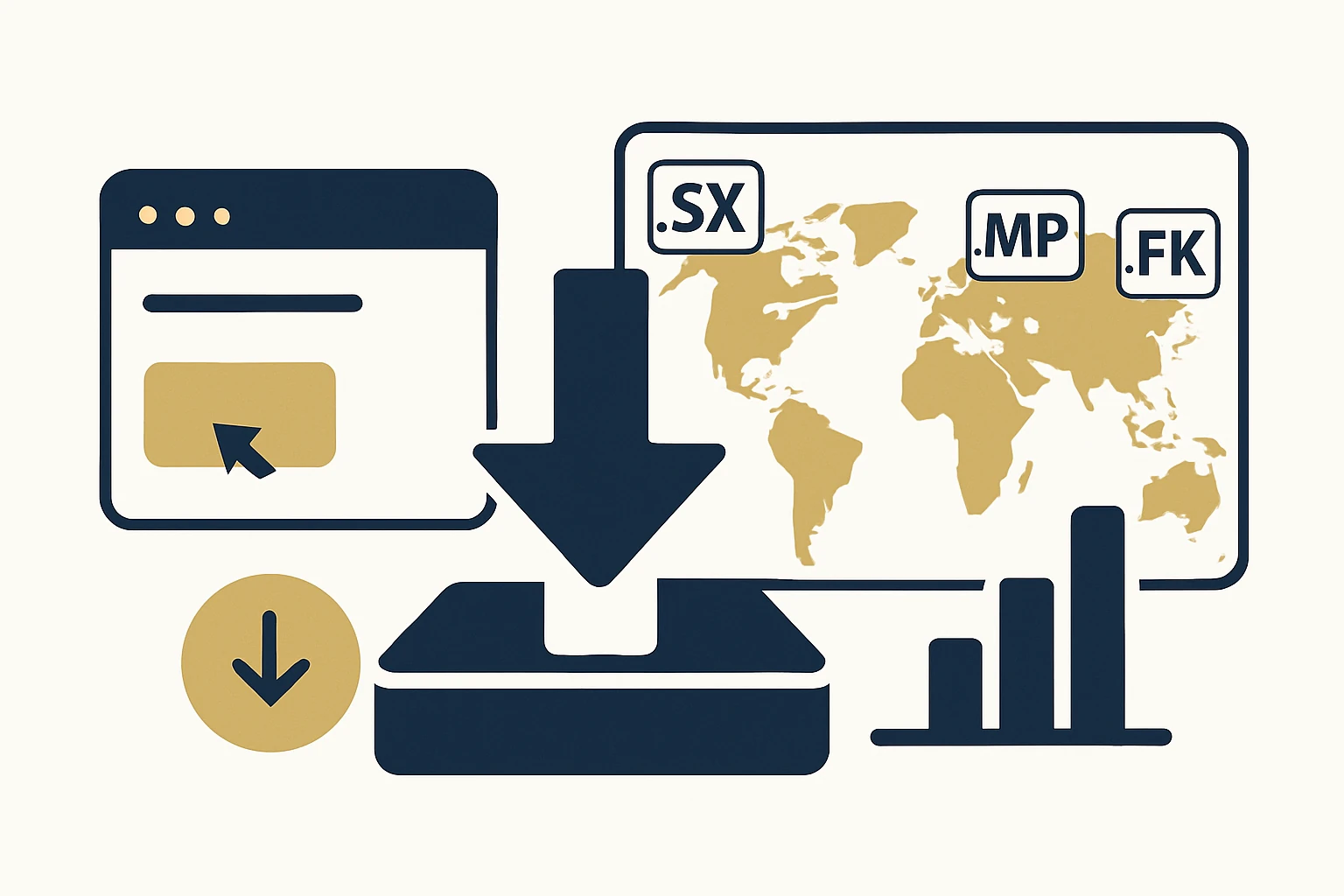
For global brands and savvy digital asset managers, micro-territories like Sint Maarten (SX), the Northern Mariana Islands (MP), and the Falkland Islands (FK) create outsized opportunities and unique risks. Their local digital ecosystems are dense with consumer touchpoints, local government sites, and regionally focused businesses that collectively shape how a brand is perceived in a market. The task is not merely to buy a handful of local domains, it is to design a region-first domain strategy that uncovers the actual surface area of online activity, flags potential impersonation risks, and informs allocation of premium assets across the portfolio. This article offers a practical, non-generic approach to gathering and validating website lists for SX, MP, and FK, with concrete steps you can apply to your brand protection and portfolio-management initiatives.
Regional snapshots: who runs the ccTLDs for SX, MP, and FK
Understanding who manages each ccTLD is foundational for any regional domain strategy. It informs lookup methods, renewal rhythms, and risk assessments for local domains that could pose brand- or compliance-related risks.
SX (Sint Maarten) is a country-code top-level domain delegated to SX Registry SA B.V. The registry operates under a framework approved by IANA, with the delegation record documenting the registry operator and its contact details. This is the defensible starting point for any SX-domain program. (iana.org)
MP (Northern Mariana Islands) is delegated to Saipan Datacom, Inc., with the IANA delegation indicating the registry operator and registration services. This affects how you verify registrations and what data you can rely on during due diligence. (iana.org)
FK (Falkland Islands) is delegated to the Falkland Islands Government. The FK delegation data records the government as the ccTLD manager, which has implications for local compliance and registration processes. (iana.org)
Why download lists of SX, MP, and FK websites matters for brand protection
High-quality, territory-specific website lists enable three core capabilities for brand owners and domain portfolios:
- Discovery: revealing the local digital landscape to identify potential typosquatting, impersonation domains, and related assets that could siphon traffic away from the brand.
- Risk signaling: surfacing nearby domains that could be used in phishing, counterfeit, or SEO-poisoning campaigns, especially in markets where consumer protection frameworks are evolving.
- Portfolio prioritization: guiding which territories merit defensive registrations or active negotiation strategies to protect market share and brand integrity.
In practice, a disciplined approach to collecting and validating local website lists reduces the guesswork that often accompanies regional brand protection programs. It also aligns with mature portfolio-management practices that treat digital assets as active, revenue-bearing components of a brand’s strategy.
How to approach building SX, MP, and FK website lists: a practical, step-by-step guide
The following process is designed to be actionable for a brand-lead or a domain-portfolio manager. It emphasizes defensible data collection, rigorous validation, and clear use cases for the lists you assemble.
- Define the scope for each territory. Decide whether you want a broad sweep (all subdomains and third-level domains tied to the territory) or a focused subset (top-level domains and high-traffic subdomains). This clarity will drive your data collection approach and the level of verification needed.
- Identify authoritative data sources. Start with the official ccTLD registry data for SX, MP, and FK, then supplement with government portals, business directories, and credible local media. The IANA delegation pages provide the official registry context you’ll rely on as you expand your data sources. SX delegation, MP delegation, FK delegation. (iana.org)
- Gather and normalize the list. Use automated crawlers and manual checks to collect domains encountered in SX, MP, and FK regions. Normalize by removing duplicates, cleaning up obvious non-territorial domains, and standardizing subdomain naming patterns (for example, government or edu-related subdomains).
- Validate ownership and registration state. Where possible, verify ownership through RDAP/WHOIS data, keeping in mind that some territories (notably MP) have limited or restricted public WHOIS visibility in certain contexts. This helps you distinguish active registrations from dormant or scam domains and informs your risk assessment. For SX and FK, registry data and official references should guide interpretation of registrations. (iana.org)
- Cross-check data quality with third-party signals. Compare your lists against credible business registries, local directories, and reputable media outlets to corroborate presence and usage patterns. This reduces false positives and ensures the list reflects material digital assets in each market.
One structured framework to turn lists into action: Region-First Domain Discovery
Use this five-step framework to convert the SX, MP, FK website lists into a defensible regional domain strategy. Each step builds on the previous one and centers on practical outcomes for brand protection and portfolio management.
- 1. Catalogue Compile territory-specific domains, prioritizing those with direct brand relevance, local keywords, or commercial intent. Map them to business units and brands that operate in the territory.
- 2. Cleanse Deduplicate and normalize data, remove obvious non-brand domains, and flag potentially malicious or misdirecting assets for targeted review.
- 3. Validate Confirm ownership and legitimacy using registry data and, where available, RDAP/WDS (RDAP-based data, or WHOIS if public, depending on the registry’s policy). This step helps separate legitimate risk from noise.
- 4. Prioritize Rank assets by risk, revenue potential, and strategic value to your brand portfolio. Priorities guide defensive registrations, domain acquisitions, and negotiations.
- 5. Act Execute a plan - defensive registrations where warranted, targeted negotiations for premium domains, and a monitoring program to detect future threats and opportunities in SX, MP, and FK markets.
This framework is designed to be adaptable to other small-market ccTLDs as needed and is compatible with broader portfolio-management practices you may already employ in larger markets.
Integrating the client’s tools into the workflow
To operationalize the framework, you can leverage the client’s assets to collect, verify, and monitor domains tied to SX, MP, and FK. The following resources are particularly useful as part of a broader data-collection and due-diligence workflow:
- RDAP & WHOIS Database: a centralized resource for validating domain registrations and ownership records.
- List of domains by TLDs: helps you understand how SX, MP, and FK fit within the broader top-level-domain landscape.
- List of domains by Countries: supports country-specific portfolio planning and risk assessment.
In addition to these client resources, always verify data against authoritative sources and registries when possible. When you need to explore the data horizon further, you can also reference official registry data for SX, MP, and FK from IANA to understand the governance framework behind each ccTLD.
For quick access, you can explore the client resources here: RDAP & WHOIS Database, List of domains by TLDs, List of domains by Countries.
Limitations, trade-offs, and common mistakes in regional domain lists
Even with a rigorous approach, there are important caveats when working with SX, MP, and FK lists:
- Data availability varies by registry. Some registries restrict public access to ownership data or offer limited RDAP/WHOIS visibility, which can complicate due-diligence efforts.
- Local policy matters. Each territory may have distinct registration rules, dispute policies, and renewal dynamics that affect how aggressively you defend or acquire domains. Always align with local governance considerations as you scale.
- Quality over quantity. A long list of domains is valuable only if it reflects assets that meaningfully intersect with your brand and markets. Prioritize high-signal domains to maximize ROI on defense and negotiation efforts.
- Costs can scale quickly. Defensive registrations, renewals, and ongoing monitoring in multiple territories can be expensive. Trade-offs between coverage and cost matter for every portfolio.
Limitations and common mistakes: a quick, practical checklist
- Assuming public data fully reflects active risk without validation.
- Neglecting local regulatory nuances or containment of sensitive subdomains.
- Over-indexing on low-traffic domains that do not materially impact the brand in the territory.
Conclusion: turning lists into a disciplined regional strategy
Downloading and validating SX, MP, and FK website lists is a practical starting point for a region-focused domain strategy. By combining registry context (as provided by IANA), careful data collection, and a clear framework for action, you can transform raw website data into defensible portfolio decisions, targeted acquisitions, and resilient brand protection programs. The approach outlined here emphasizes quality, verifiability, and relevance - core principles for any premium domain portfolio that aims to protect brand value across diverse, localized markets.
In the end, regional domain strategy is less about chasing every domain and more about building a defensible moat around the most valuable digital assets in each territory. When combined with the right tools and disciplined processes, SX, MP, and FK domains can contribute meaningfully to a brand’s growth and protection strategy - without wasting resources on noise.