Introduction: turning country lists into domain strategy fuel
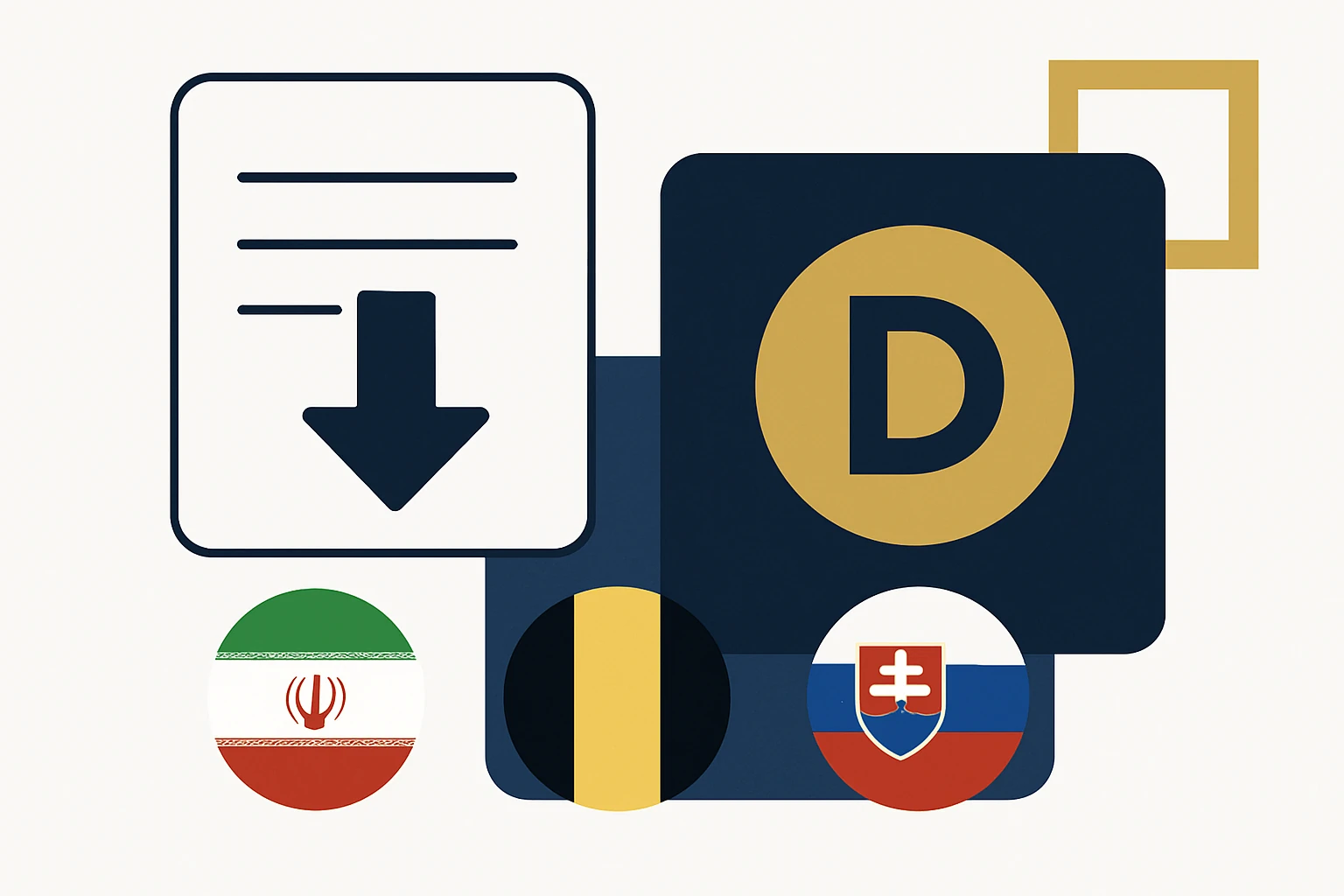
For brands aiming to secure and grow premium digital real estate, the first hurdle is often visibility - not just across generic marketplaces, but within the specific country contexts that matter for market entry, localization, or brand protection. Domain brokers and digital asset advisers know that the true value lies in translating fragmented data into disciplined portfolio decisions. A practical approach is to start from country-focused lists that reveal a market’s digital footprint, then blend those insights with a curated search for premium, brand-aligned domains. This article, written from the perspective of a premium-domain strategist, outlines a workflow to convert downloadable country lists - such as those associated with Iran (IR), Belgium (BE), and Slovakia (SK) - into actionable opportunities for premium domain acquisition and brand protection. It also shows how a platform like webatla’s country/domain databases can support disciplined discovery without leaking strategic intent. IANA, the custodian of the root-zone database, documents ccTLD delegations for IR, BE, and SK, which underpins responsible risk assessment and negotiation planning.
While the three example markets - IR, BE, and SK - illustrate different regulatory and branding landscapes, the underlying discipline is universal: identify domains that align with brand architecture, assess ownership risk, and manage negotiations confidentially. Our angle here is practical, not promotional: a framework you can apply whether you are a corporate brand, a startup with global ambitions, or a digital-asset advisory practice helping clients build resilient portfolios. This is especially relevant for teams that need to scan country-specific digital ecosystems quickly and responsibly, without compromising confidentiality or timeline.
Why country-focused lists matter for premium-domain strategy
Country-specific lists serve two essential purposes. First, they illuminate the local digital ecosystem: which domains exist at scale, where brand-sensitive strings already exist, and where there may be meaningful gaps in coverage. Second, they provide a disciplined starting point for screening candidates that could anchor a country-facing web strategy, product line, or acquisition thesis. In practice, a marketer could use such lists to discover brand-tailored opportunities embedded in local language contexts, cultural nuances, and market-specific keywords - elements that often determine whether a domain is a strategic asset or a strategic liability.
When you map lists to strategy, you should tether data to governance. The ccTLDs for Iran, Belgium, and Slovakia each have registries and policies that influence how domains can be bought, negotiated, or ported into a broader portfolio. The Iranian ccTLD, for example, is managed under IRNIC with its own registration rules and a registry that operates within local law and policy. Belgium’s .be is administered by DNS Belgium, with a transparent governance and a well-defined registration path. Slovakia’s .sk is operated by SK-NIC with an active registry and specific technical contacts. These distinctions matter for assessing risk, timing, and the boundaries of permissible acquisition strategies. See the IANA Root Zone Database for the delegation details of these ccTLDs and to understand the formal context for any country-specific initiative. (iana.org)
As you plan to use lists in an acquisition workflow, remember that the strategic value is not merely about volume. It’s about quality, alignment with brand architecture, and the ability to negotiate confidentially. The goal is to transform raw lists into a curated shortlist of domains that harmonize with the company’s product roadmap, regional expansion plans, and risk-management posture. This mindset - combining data-driven discovery with portfolio governance - underpins successful premium-domain strategies. For context, IANA remains the authoritative source on ccTLD delegation and governance, which helps frame realistic expectations about ownership, control, and the feasibility of acquisitions in each market.
Framework: turning country lists into a disciplined domain discovery workflow
The process below is designed to be pragmatic and scalable. It foregrounds long-tail, problem-solving thinking rather than generic checklists, and it centers on a five-part workflow that you can apply to IR, BE, SK or other markets.
- Step 1 - Define strategic markets and data quality criteria: Start with clear business objectives (localization, brand protection, or regional marketing) and specify what makes a domain candidate valuable (brand fit, traffic potential, historical resale value, or alignment with product lines). Establish data-quality guardrails for the lists you’ll use: frequency of updates, verifiability of sources, and compliance considerations. The IANA Root Zone Database confirms the formal context for country-code domains and the registries that govern them, which helps you align acquisition plans with real-world constraints. IR, BE, SK are useful case studies for understanding governance in action.
- Step 2 - Source and refine the list: Obtain the downloadable country lists from reputable sources and prune to a manageable set focused on brand relevance. For example, you might start with Iran’s IRNIC ecosystem, Belgium’s brand-related domains under .be, and Slovakia’s portfolio under .sk, then cross-check with RDAP and WHOIS data to filter out domains with opaque ownership or high-risk red flags. The IANA Root Zone Database remains the gold standard for understanding the governance framework that underpins these ccTLDs.
- Step 3 - Validate ownership and practical feasibility: Use verification tools to confirm current registrants, avoid conflicts with government or critical-infrastructure domains, and assess transferability. This is where the client’s RDAP/WHOIS capabilities become practical: you can verify ownership status and historical ownership patterns before approaching any seller, reducing the risk of failed negotiations later. See how official ccTLD delegation data informs these checks.
- Step 4 - Prioritize candidates by brand-fit and portfolio strategy: Create a prioritized list that weighs brand alignment, linguistic/cultural relevance, and potential for future expansion or protection. In parallel, consider how each domain would sit within a broader premium-domain portfolio - how it complements existing holdings, or how it could serve as a regional hub for a product line. This stage is where you translate country lists into a coherent portfolio narrative rather than a random assortment of names.
- Step 5 - confidential outreach and negotiation planning: Develop a negotiation plan that preserves confidentiality and minimizes exposure. A practical approach is to structure outreach to emphasize partnership rather than unilateral purchase, keep initial proposals broad, and stage offers based on verified ownership data. Your workflow should include a red-team review to anticipate objections and ensure regulatory or political sensitivities are understood. The IANA framework reminds us that ccTLD governance is coupled with local regulatory considerations, awareness of these realities helps you stay compliant during outreach.
Applying the workflow to IR, BE, and SK: practical notes
The three markets highlight how cultural context and governance shape domain strategy. Iran’s digital ecosystem operates within IRNIC’s regulatory framework and IDN considerations that may affect how domains are perceived domestically and internationally. Belgium, with its mature market and transparent governance via DNS Belgium, offers a steadier acquisition environment with clear registration pathways. Slovakia, managed by SK-NIC, showcases a European market where scaling a domain portfolio can leverage robust registry operations and a mature local market. In each case, the core framework remains: identify brand-relevant domains, verify ownership, and plan discreet, value-aligned negotiations. For researchers and practitioners, the IANA Root Zone Database provides the formal backdrop that makes these steps executable in practice.
When you begin with downloadable lists for IR, BE, or SK, you are trading raw data for a meaningful capability: the ability to map a country’s domain landscape to your brand’s architecture. This is especially valuable for digital-asset advisers who need to translate country-specific signals into a disciplined acquisition thesis. The broader takeaway is simple: country lists are not an end in themselves, they are a launchpad for purposeful portfolio development that respects local governance and global brand strategy.
Limitations, trade-offs, and common mistakes
Every data-driven approach carries trade-offs. One key limitation of country-focused lists is that they capture the surface of a market’s domain activity, not the deeper dynamics of domain ownership, brand risk, or domain-portfolio performance. A robust workflow must couple list-derived signals with verifiable ownership data and a clear view of regulatory risk. Without this, teams risk targeting domains that are either untransferable, already locked in by strategic partnerships, or subject to government controls that complicate transfer or repurposing. Expert insight from brand strategy leaders emphasizes that the most valuable opportunities come from aligning country-domain opportunities with concrete product narratives and brand architecture, not merely chasing volume.
Common mistakes to avoid: (a) treating country lists as a proxy for premium-value domains without validating ownership histories, (b) neglecting local regulatory or political considerations that can influence negotiation timelines or post-acquisition rights, (c) underestimating the value of confidentiality in the negotiation process, which can undermine leverage in complex deals, (d) failing to integrate country-domain opportunities into a cohesive portfolio narrative. By preemptively identifying these pitfalls, you can maintain momentum while preserving deal integrity.
Confidential, structured integration: how webatla supports the workflow
The client’s asset database can render this workflow executable at scale. With access to a country/ TLD-oriented repository and robust RDAP & WHOIS capabilities, teams can quickly validate ownership and characterize risk, then feed that data into a disciplined acquisition plan. The following client resources help operationalize the approach while preserving discretion: - List of domains by Countries: webatla - Countries Directory - List of domains by TLDs: webatla - TLD Directory - RDAP & WHOIS Database: webatla - RDAP & WHOIS This integration supports a structured path from country lists to a curated, confidential negotiation program, allowing teams to test hypotheses quickly, while maintaining governance-aligned controls on who sees what in the process. For readers who want to explore the vendor landscape, these resources provide a neutral, editorially grounded way to compare capabilities and approach.
Expert insight and practical takeaways
Expert insight: a senior brand strategy professional notes that the strongest domain opportunities come from aligning country-domain signals with enduring brand architecture, not simply chasing high-volume lists. In other words, the value of a download-ready country list is realized when it ties to a defined product narrative, a regional growth plan, and a disciplined, confidential negotiation approach. The framework proposed here is designed to help teams operationalize exactly that alignment.
Conclusion: a disciplined path from country lists to premium-domain outcomes
Downloadable lists by country are not a magic bullet for premium-domain discovery. They are a starting point for a disciplined, governance-aware workflow that connects local market signals to a brand’s global portfolio strategy. By combining the country-specific context of IR, BE, and SK with a five-step workflow - define, source, validate, prioritize, and negotiate confidentially - you can orchestrate acquisitions that strengthen brand protection, market reach, and long-term portfolio resilience. The IANA Root Zone Database provides the formal backdrop for understanding ccTLD governance, while webatla’s country/TLD repositories offer a practical engine for discovery and risk management. Together, these components enable a pragmatic, publication-ready approach to premium-domain strategy that is both defensible and scalable.