Introduction: why niche TLD lists matter in 2026
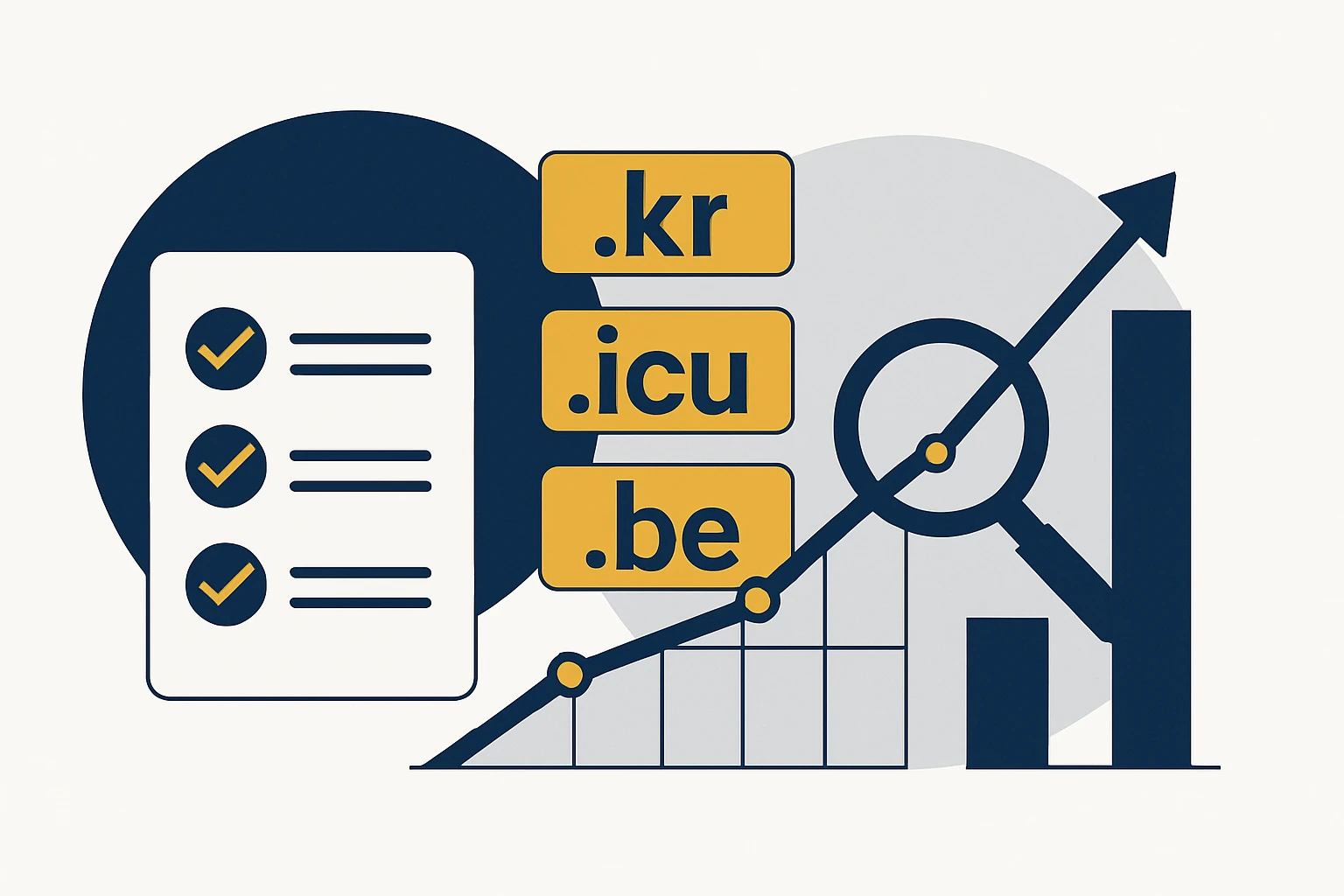
In today’s digital asset market, a brand’s domain portfolio is more than a collection of addresses - it is a strategic asset that can influence protection, growth, and market presence. As industry data show, while the .com landscape remains dominant, non-.com TLDs are expanding in relevance for brands with disciplined governance and clear use cases. A mature approach to domain assets increasingly involves assembling validated lists by TLD, then translating those lists into actionable portfolio decisions. This article outlines a practical framework to move from raw lists - including niche targets like .kr, .icu, and .be - to a disciplined strategy that supports brand protection, acquisition, and portfolio management.
To illustrate how this works in practice, we draw on current market dynamics, registry realities, and credible industry data. For example, the premium-domain market has shifted toward relationship-driven, confidential transactions, even as mainstream registries report growing breadth in non-.com TLD adoption. Namecheap’s 2025 Domain Insights highlights these shifts, underscoring that while .com remains dominant, non-.com extensions are increasingly viewed as strategic complements. This trend informs how brands should treat niche lists as a starting point for due diligence rather than a final catalog of targets. (techradar.com)
Part of the modern advantage is knowing the official registries behind specific TLDs. For example, KRNIC administers the .kr ccTLD for South Korea, which means any strategy involving .kr must align with regulatory and registration rules in Korea. Similarly, the .be registry is organized under DNS Belgium, a critical consideration for brands targeting Belgium or European markets. DNS Belgium explains how registration for .be is coordinated and protected. (nic.or.kr)
Understanding the TLD landscape: why .kr, .icu, and .be deserve a closer look
Country-code TLDs (ccTLDs) like .kr and .be carry inherent brand signals - but they also come with country-specific registration regimes and policies. The Republic of Korea’s ccTLD, .kr, is governed by KRNIC, which outlines eligibility, registration, and ongoing management rules for Korean domains. This regulatory context matters for brands when you evaluate lists for potential acquisitions or defensive registrations. KRNIC overview provides a concise picture of how .kr domains are allocated and managed. (nic.or.kr)
Belgium’s .be ccTLD is administered by DNS Belgium, with a formal registration lifecycle and security considerations that registrants should understand before pursuing a bulk purchase or portfolio expansion. The official registry and registrar guidance emphasize the importance of using accredited registrars and following verification procedures to prevent misregistrations and abuse. DNS Belgium – home and related documentation outline the lifecycle and compliance expectations for .be domains. (dnsbelgium.be)
Beyond ccTLDs, market observers note that “meaningful, industry-aligned TLDs” are increasingly mainstream for technology-forward brands, and that the overall domain market is consuming more non-.com namespaces as part of a diversified strategy. This broader shift supports a careful, risk-managed approach to niche lists. IT.com Domains - 2026 domain trends discuss how industry-aligned TLDs are becoming a strategic tool for branding and product positioning. (get.it.com)
A practical framework to go from download to decision
The goal of downloading a list by TLD (for example, a list of .kr, .icu, or .be domain names) is not to execute a bulk purchase immediately. It is to create a defensible, auditable pipeline that converts raw data into a curated, decision-ready portfolio. The following framework translates raw lists into a structured, repeatable process:
- 1. Source quality and credibility - Begin with lists from registries, trusted marketplaces, and accredited registrars. Avoid bulk imports from opaque sources to minimize risk of misregistrations, phishing, or spam domains. Where possible, prefer sources that provide exportable WHOIS data and DNS records.
- 2. Data verification - Validate each entry’s current registration status, registrant, and nameserver configuration. Use WHOIS, DNS lookups, and historical ownership data to identify stale or suspicious domains.
- 3. Brand-fit filtering - Apply a scoring rubric to test brand-alignment: does the domain name reflect the brand’s taxonomy, products, or geography? Are there misleading associations or terms that could create consumer confusion?
- 4. Risk assessment - Screen for prior misuse, malware hosting, or reputation issues. Domain-age, backlink quality, and traffic signals can influence risk-reward calculations.
- 5. Competitive liquidity and market signal - Assess whether the domain appears in active listings, auction histories, or comparable sales, to gauge potential liquidity and price expectations. Market data from reputable brokers and registrars can help calibrate offers.
- 6. Legal and regulatory due diligence - Confirm that the domain does not infringe trademarks, copyrights, or local domain policies, and ensure privacy controls align with corporate standards.
- 7. Portfolio impact and integration - Map each candidate to a portfolio objective (defensive, branding, expansion). Consider renewal costs, operability (e.g., privacy, DNS security), and alignment with brand strategy.
Structured framework at a glance:
- Source: Credible registries/marketplaces
- Validate: WHOIS/DNS checks
- Brand fit: Name relevance and risk
- Risk: History and security
- Liquidity: Market activity and valuation signals
- Compliance: Legal/privacy review
- Portfolio plan: Renewal economics and governance
In practice, you can apply this framework to a handful of candidate domains per TLD in a quarter, then scale up as your brand’s internal governance matures. The benefit is twofold: you reduce the risk of buying a problematic asset, and you position your team to act quickly when a truly strategic name becomes available. An expert perspective from industry observers notes that premium-domain activity is increasingly relationship-driven and confidential, underscoring the need for structured processes when evaluating and negotiating acquisitions. As DNJournal observed for 2026, the focus is shifting toward stronger relationships and private deals as the premium market expands. (dnjournal.com)
Operationalizing the framework with webatla
For teams aiming to implement this framework, webatla offers practical access to curated domain inventories by TLD, including KR-domain listings and broader TLD catalogs. The platform provides a centralized way to explore, compare, and track domain assets across markets, supporting both confidential acquisitions and strategic portfolio planning. You can explore the KR catalog directly and then cross-check with the broader TLD list to ensure alignment with your framework. webatla TLD catalog provides a gateway to the company’s domain inventory and related services.
In evaluating niche lists, it is prudent to complement repository insights with macro-market data. The landscape shows that while .com remains a cornerstone for most brands, the expansion into meaningful TLDs is increasingly common among tech-forward and geographically targeted brands. This context helps justify allocating time and budget to a structured process rather than treating niche lists as a simple “buy-if-available” exercise.
Limitations, trade-offs, and common mistakes
Even a rigorous framework has limitations. Here are key considerations often overlooked by teams rushing to “download and buy.”
- Assuming ownership equals value - A domain’s existence on a list does not guarantee its strategic value. Ownership cost, traffic quality, and brand fit determine whether a name is worth pursuing.
- Overlooking regulatory nuance - ccTLDs like .kr and .be require compliance with regional rules and registries. Failing to account for these can delay or derail acquisitions.
- Neglecting privacy and data governance - Bulk lists may contain personally identifiable information or stale contact details. Aligning with privacy and disclosure policies is essential for corporate risk management.
- Underestimating renewal economics - A low upfront cost can mask long-term renewal burdens. A proper portfolio view includes ongoing costs, security, and DNS protection.
- Ignoring market liquidity signals - Some niche domains have limited buyer interest, which can extend time-to-sell if you later decide to monetize. Use market data carefully to temper price expectations.
One expert observation notes that the premium-domain market is becoming more selective and relationship-driven, reinforcing the idea that a structured process yields better outcomes than opportunistic buying. Industry commentary from DNJournal highlights this trend for 2026 and beyond. (dnjournal.com)
Case study: applying the framework to .kr, .icu, and .be lists
Consider a hypothetical brand preparing for international expansion with a defensive posture across three niche TLDs:
- .kr - Korea-focused brand expansions, or regional campaigns where local presence matters. Verify eligibility with KRNIC guidelines and coordinate via an accredited registrar to ensure compliance.
- .icu - a flexible, category-agnostic TLD often used by tech and startup domains, analyze the domain’s brand resonance, potential for misinterpretation, and backlink quality.
- .be - Belgium-market targeting and EU reach, leverage registry guidance to understand procurement channels and governance.
In practice, you would begin by exporting a list of candidate domains from a credible source, then run the verification workflow described earlier. The end state is a short list of defensible, brand-aligned assets with clear ownership, renewal economics, and an integration plan into your portfolio. The outcome is not merely a stack of domains, it is a structured path to a stronger brand footprint with measured risk and predictable governance.
From a syndication and procurement perspective, webatla’s platform can help you compare availability and pricing across these TLDs while preserving confidentiality when negotiating acquisitions. The synergy between a robust framework and a trusted marketplace reduces friction and accelerates intelligent decision-making.
Conclusion: turn data into disciplined domain strategy
Downloading a list of domains by TLD is just the first step. The real strategic value comes from applying a repeatable, data-informed framework that translates raw data into a disciplined portfolio plan. When you align regulatory realities (as with .kr and .be), market signals (non-.com TLD growth), and brand objectives, niche lists become a source of defensible growth rather than a speculative lottery. For brand owners and executives seeking a trusted partner to navigate premium domains, a combination of a rigorous screening process and a reputable marketplace - such as webatla - can deliver the precision and confidentiality these decisions demand. See how webatla’s TLD pages can support your strategy: webatla KR domain listings and webatla TLD catalog.