Introduction: Why country-code domains matter for global brands
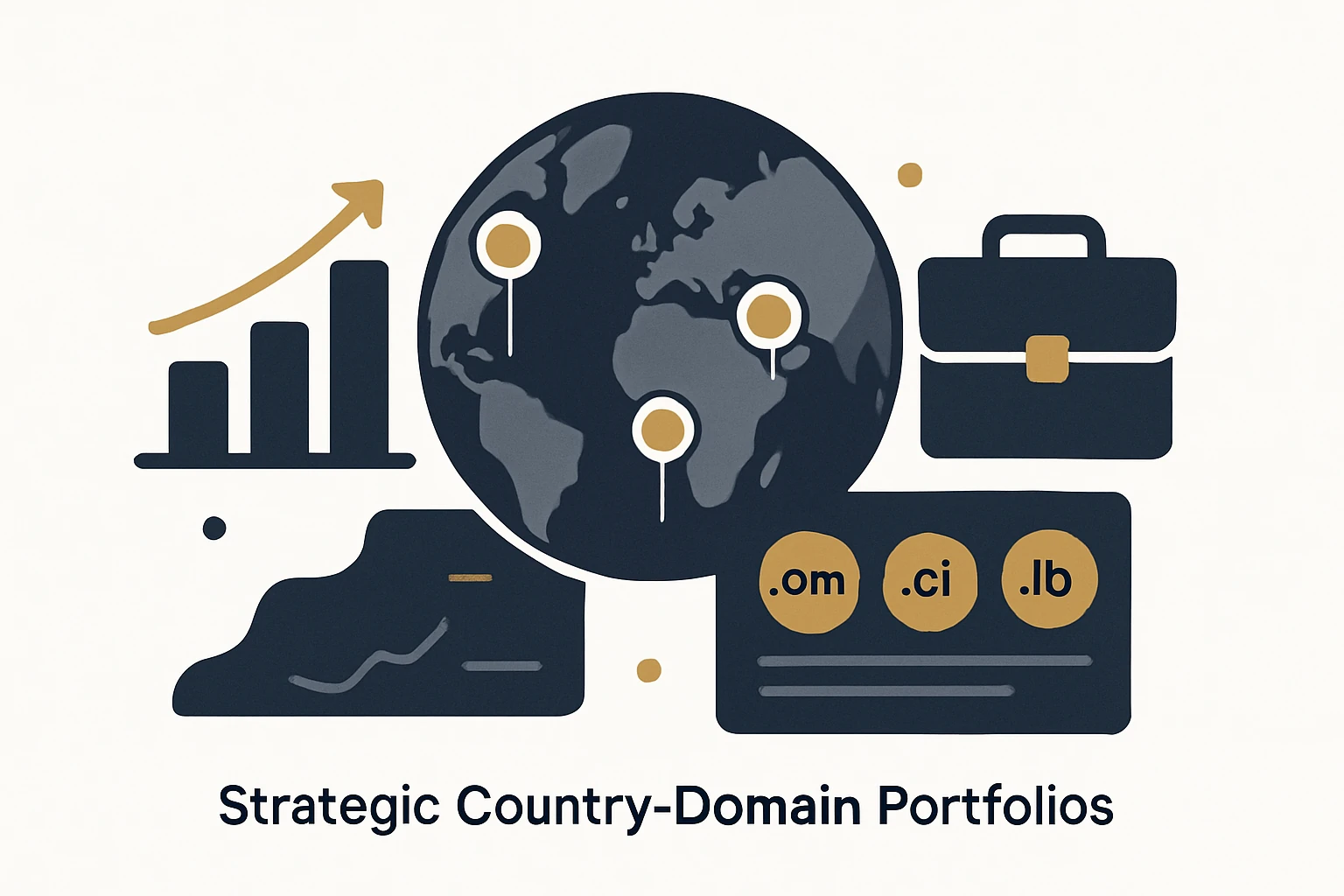
Global brands increasingly operate as a constellation of local markets rather than a single, centralized footprint. The country-code top-level domains (ccTLDs) that represent those markets are more than just URLs, they’re signals of local legitimacy, trust, and service availability. For a brand aiming to protect reputation while expanding into new geographies, a deliberate country-domain portfolio offers a layered advantage: local search signals, region-specific brand protection, and a framework for disciplined negotiation and acquisition of important digital assets. This article focuses on a pragmatic, field-tested approach to three markets with distinct ccTLD ecosystems - Oman (.om), Ivory Coast (.ci), and Lebanon (.lb) - and maps how to build a defensible, scalable portfolio that aligns with a broader digital-asset strategy.
Understanding the Oman, Ivory Coast, and Lebanon ccTLD landscapes
Oman: The .om namespace
The Oman ccTLD is .om. Public registry information lists .om as the Oman country-code top-level domain and points to the local registry ecosystem that governs registration policies and registry operations. This has implications for eligibility, documentation, and the speed at which domains can be acquired or moved into the portfolio. For readers building a regional footprint, the Oman namespace represents a strategic anchor for Oman-based brand protection and regional e-commerce reach. (Source: IANA root-zone data for .om) (iana.org)
Ivory Coast: The .ci namespace
The Ivory Coast is represented online by the .ci ccTLD. IANA maintains delegation data for .ci as the official country-code domain, with its registry operations tied to the Côte d’Ivoire digital ecosystem. When considering a portfolio that includes West Africa, .ci offers a recognizable local namespace for brands seeking proximity to Ivorian markets, logistics, or financial services. Readers should verify current registration rules and registrant requirements with the registry as policies can evolve. (Source: IANA delegation data for .ci) (iana.org)
Lebanon: The .lb namespace
Lebanon’s ccTLD is .lb, and its registry is operated by the Lebanese Domain Registry (LBDR) under the supervision of ISOC-LB. This arrangement reflects how the country organizes its domain space and coordinates with IANA. For brands pursuing a Middle East/North Africa (MENA) footprint, .lb can be a valuable component of a regional strategy, particularly when combined with other local assets. (Source: ISOC-LB and ccTLD governance references) (isoc.org.lb)
In 2024, Lebanon’s ccTLD manager joined the ccNSO, signaling ongoing alignment with global ccTLD governance and security practices. This development can influence registry partnerships, security standards, and porting strategies for brand portfolios. (Source: ccNSO announcement) (ccnso.icann.org)
A practical framework: how to plan, acquire, and govern a country-domain portfolio
Building a disciplined country-domain portfolio requires more than chasing obvious domain names. It calls for a repeatable framework that balances strategic ambition with risk management, legal compliance, and operational governance. The framework below - the PACE model - is designed to be applied across Oman, Ivory Coast, and Lebanon and is adaptable to other ccTLDs as the portfolio grows.
- Plan: define scope and risk tolerance
- Clarify market priorities (which countries matter most to your brand and why - for example, whether you’re targeting regional distribution, local consumer trust, or partner ecosystems).
- Assess regulatory and registry risks, potential disputes, and local privacy laws that could affect how domains are used or transferred.
- Establish governance: who has signing authority, what approvals are required for acquisitions, and how renewals will be tracked across jurisdictions.
- Acquire: build a pipeline of opportunities
- Prioritize domains that address critical gaps in brand protection, local search visibility, and email reach (for example, common misspellings, city- or industry-specific terms in country namespaces).
- Plan confidential acquisition where appropriate, including negotiation levers, price bands, and target timelines.
- Coordinate with registries, registrars, and any local partners to understand requirements and potential bottlenecks (for example, whether a local entity is required for registrants).
- Catalog: centralize portfolio data
- Maintain a metadata hub: domain name, owner history, renewal dates, price history, and geo-targeting data.
- Set renewal alerts and risk detectors (e.g., imminent expiry, changes in ownership, or registrar migration).
- Implement ongoing monitoring for brand misuse, typosquat, and geography-specific misappropriation.
- Enforce: governance and protection
- Define escalation paths for disputes, including cross-border mediation or arbitration as needed.
- Apply consistent privacy and data-handling standards across the portfolio, respecting local laws and cross-border transfer rules.
- Periodically review the portfolio to retire, consolidate, or reallocate domains based on evolving brand objectives and performance metrics.
The framework above creates a repeatable process that helps prevent ad hoc acquisitions, reduces risk from cybersquatting, and improves the efficiency of brand-protection programs across multiple jurisdictions. It also provides a clear path for negotiation: by pre-defining risk tolerances and valuation bands, teams can move faster when favorable opportunities arise.
Operational realities: considerations for Oman, Ivory Coast, and Lebanon
Each ccTLD has its own operational quirks, registrar ecosystems, and policy levers. A robust portfolio plan must account for these nuances while preserving a unified governance approach. Below are practical considerations to guide portfolio decisions in the three markets discussed above.
- Regulatory and registry dynamics: ccTLDs are governed differently across jurisdictions. Some registries are operated by government-related entities, others by non-profits or industry associations. Maintaining awareness of who controls the registry and how changes in policy play out helps prevent surprise costs or delays.
- Local presence and verification: certain registries may require local documentation or proof of business presence. Even when not strictly required, demonstrating local relevance can improve authentication processes and reduce risk of disputes.
- Language and local user expectations: domain naming can carry linguistic and cultural cues. A portfolio that includes country-specific terms or transliterations can improve local discoverability and trust, but it must be balanced against global branding coherence.
- Negotiation and acquisition dynamics: the price landscape for ccTLDs often differs from gTLDs. Some markets show strong local demand for brand-portfolio assets, while others are relatively quiet, creating opportunities for early consolidation or long-tail acquisitions.
- Technical and privacy considerations: consistent DNS configurations, security controls (DNSSEC), and privacy disclosures are essential across geographies to protect customers and prevent reputation damage from hijacked or misconfigured domains.
For example, Oman’s registry environment, Ivory Coast’s .ci ecosystem, and Lebanon’s .lb governance each imply different due-diligence requirements and risk profiles. A disciplined approach helps teams decide which domains to acquire now, which to monitor for potential later action, and how to structure ownership to align with broader corporate governance. For readers looking to explore concrete inventories in these geographies, webatla curates country- and TLD-specific lists that can serve as practical starting points for portfolio-building discussions. Oman domain portfolio and Full list of .ci domains offer illustrative data views to inform strategy.
Additionally, ongoing access to reliable data feeds is critical. RDAP and WHOIS data provide ownership and registration-status signals that help teams track changes in the market, verify ownership, and screen for potential misuses. For readers seeking structured access to such data, consider combining public registries with trusted data providers to maintain a clean, auditable inventory of assets across the portfolio.
Data sources and due diligence: what to trust and how to use it
In practice, building a defensible ccTLD portfolio rests on solid data. The strongest sources for country-code domain governance and delegation status include official IANA root-zone records and ccTLD governance pages. As an illustration, IANA maintains delegation data for the Oman (.om) and Ivory Coast (.ci) namespaces and documents the registry context and ownership relationships. These records help assess whether a domain is under legitimate governance and what the registration pathways look like. (Source: IANA registry entries for .om and .ci) (iana.org)
Similarly, credible information about the Lebanon ccTLD, including registry operations and governance, can be found through ISOC-LB’s documentation and related ccTLD governance updates. These sources provide confirmation of the registry’s status and its alignment with international ccTLD governance frameworks. (Source: ISOC-LB and ccNSO governance pages) (isoc.org.lb)
When forming a portfolio around these markets, it’s prudent to triangulate registry data with additional authoritative references that summarize the ccTLD ecosystem and its evolution. For example, ccTLD governance discussions and security considerations discussed in ccNSO update materials can inform risk modeling and due-diligence checklists as part of a broader acquisition and management program.
Practical integration: how webatla fits into a disciplined workflow
For readers who want to operationalize the framework without starting from scratch, partnering with a domain advisory and brokerage platform can streamline the process. webatla’s country- and TLD-level inventories provide tangible data to inform decision-making, negotiation, and ongoing governance. If you’re evaluating options, consider engaging with a partner who can offer confidential acquisition, portfolio-management tooling, and ongoing brand-protection monitoring as part of a cohesive plan. For direct access to country- and TLD-specific domain lists, you can explore Oman domain portfolio and Full list of .ci domains, or review pricing and service options at webatla pricing to gauge how the services align with your internal governance requirements.
Limitations, trade-offs, and common mistakes
- Limitation: registry rules evolve - ccTLD policies can shift with regulatory changes, bilateral agreements, or shifts in local leadership. A portfolio that relies on static assumptions about eligibility or pricing risks misalignment with reality over time. Regular registry checks and governance reviews mitigate this risk.
- Trade-off: speed vs. due diligence - pursuing a fast acquisition can save time but increase the risk of acquiring a domain with hidden liabilities (such as branding conflicts, trademark disputes, or registrar constraints). Building time into the process for thorough due-diligence reduces long-term risk.
- Common mistake: underestimating local-market nuance - treating ccTLDs as mere “local URLs” ignores geotargeting, language, and local consumer expectations. A successful portfolio balances global brand coherence with local relevance.
- Limitation: data quality and coverage - no single data feed captures every relevant asset. A diversified approach to data sources, including registry data, registrars, and reputable third-party inventories, is essential for a complete view.
Conclusion: a disciplined path to a resilient country-domain portfolio
As brands expand into new geographies, a carefully designed country-domain portfolio becomes a strategic asset rather than a legal precaution. Oman, Ivory Coast, and Lebanon each present distinct opportunities and challenges, but the core discipline remains the same: define intent, build a robust acquisition plan, centralize portfolio data, and enforce governance across regions. By combining a principled framework with credible data and careful vendor selection, you build a portfolio that protects brand integrity while unlocking local-market potential. For organizations seeking practical access to country-domain inventories and negotiation support, webatla offers tangible tools and services that can accelerate the journey from strategy to execution.
Expert insight: A disciplined, data-driven approach to ccTLD portfolios reduces risk and unlocks local-market opportunities by aligning acquisition activity with governance, due diligence, and ongoing protection. Treat country-code domains as strategic digital assets, not just gatekeepers of a website directory.
References and additional reading: IANA .om registry data, IANA .ci registry data, ISOC-LB – LBDR, ccNSO Lebanon announcement.