Introduction: The asset map for global brands
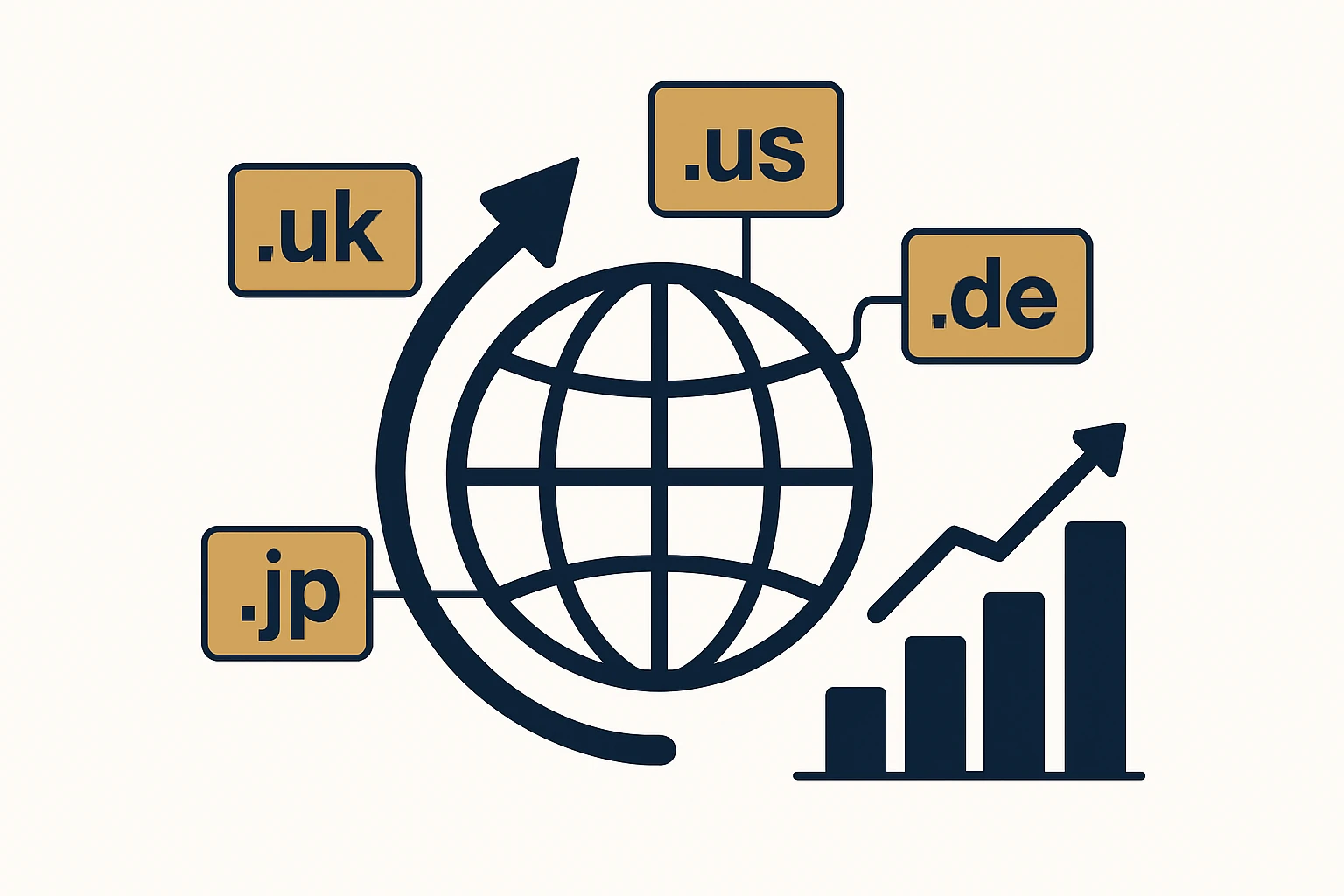
For global brands, the domain portfolio is more than a digital address, it is a set of strategic assets that signals local relevance, builds trust, and enables region-specific experiences. While a single .com may suffice for global branding, country-code top-level domains (ccTLDs) offer a distinct signal to search engines and local audiences: you are present, compliant, and serious about a given market. Yet ccTLDs are not a universal antidote to all regional challenges. They come with regulatory realities, cost of ownership, and the need for sophisticated localization. This article provides a practical, publisher-aligned framework to assess, acquire, and manage country-code domains within a strategic brand portfolio. It also shows how a disciplined approach can harmonize editorial quality, SEO intent, and client value. For teams pursuing concrete country lists and data-driven diligence, note that providers like webatla offer country-focused datasets and related services you can explore through their country and TLD pages. webatla Cambodia country page, webatla TLD directory, and webatla pricing illustrate how data-driven insights can support decision making in this space.
Why ccTLDs matter for brand strategy
ccTLDs are an explicit signal of geographic targeting. In international SEO discussions, a ccTLD often provides a stronger geotargeting cue than a generic TLD, especially when paired with locale-appropriate content and hreflang signals. Google’s guidance on managing multi-regional sites notes that geo-targeting can be set for generic TLDs, but ccTLDs naturally convey location relevance and can support local trust without relying solely on hreflang. Industry studies and practitioner analyses have observed that ccTLDs still robustly appear in top SERPs for localized queries in many markets, underscoring their continued strategic value when used thoughtfully. (developers.google.com)
From a branding perspective, a domain that aligns with a country’s identity - such as KH for Cambodia or VE for Venezuela - can enhance local campaigns, verify regulatory readiness, and improve user perception of legitimacy. That said, the signals are nuanced: while ccTLDs provide clear local signaling, Google has been evolving toward intent- and content-driven localization, which means effective local optimization still requires high-quality, translated content, local backlinks, and appropriate technical setup. (developers.google.com)
Regulatory realities: how markets shape eligibility and access
Not all ccTLDs are equally accessible to foreign entities, and regulatory regimes evolve. In Cambodia, for example, domain registration is overseen by the Telecommunication Regulator of Cambodia (TRC) and historically includes local identity and business requirements. The official TRC pages outline the process for Domain Name .KH registration, reflecting a governance model in which local entities and citizens have primary access. For brands evaluating Cambodian opportunities, understanding these restrictions is essential to avoid missteps that could jeopardize portfolio plans. (trc.gov.kh)
Beyond Cambodia, the ccTLD landscape is diverse: some markets maintain strict local-entity requirements, while others open registration to foreign companies under documented regimes. The broader governance context is handled through ICANN’s ccTLD ecosystem, with policy work coordinated by the Country Code Names Supporting Organization (ccNSO) and oversight from IANA in delegation matters. This structural backdrop matters for due diligence, risk assessment, and long-term portfolio stewardship. (icann.org)
A practical framework to evaluate ccTLD investments
Use the following five-step framework to assess, acquire, and manage country-code domains as part of a disciplined brand portfolio. Each step emphasizes editorial quality, ROI, and risk controls, while remaining adaptable to market specifics like Cambodia’s regulatory context.
- Step 1 - Define target markets and brand fit. Start with a clear matrix of markets where you have or intend to grow, and identify which ccTLDs best support local trust, regulatory positioning, and linguistic alignment. Consider whether a given ccTLD will meaningfully impact conversion funnels, partnerships, and local PR, not just SEO signals.
- Step 2 - Assess registration feasibility and cost of ownership. Investigate registration rules, local identity requirements, renewal terms, and annual costs. For Cambodia, this includes understanding TRC processes and documents needed for .KH registrations. Early diligence helps avoid costly buy-and-hold misalignments. (trc.gov.kh)
- Step 3 - Decide on portfolio structure (ccTLDs vs gTLDs vs subdirectories). Weigh the trade-offs between crisp local signaling (ccTLDs) and broader scale (gTLDs like .com) or glossaries of local content via subdirectories. The current SEO literature indicates that ccTLDs often yield strong local signals, but modern international strategies frequently rely on a mix with hreflang and robust localization. (developers.google.com)
- Step 4 - Localize content and build local authority. A ccTLD should be paired with translated, culturally relevant content, local anchor text, and local backlink profiles. Without meaningful localization, a ccTLD’s advantage can erode as engines infer intent from content quality and user signals rather than domain alone. This is why many global programs adopt a hybrid approach: ccTLDs for core markets, complemented by targeted content for neighboring regions.
- Step 5 - Establish governance and lifecycle management. Implement a policy for renewals, portfolio audits, brand protection protocols, and monitoring for abuse or infringement. Effective governance reduces risk exposure and preserves the long-term value of the portfolio.
Structured block: a quick-start decision blueprint
- Objective alignment: Identify markets with the strongest brand and revenue potential.
- Risk and regulatory check: Map regulatory access, required documents, and renewal terms.
- Cost baseline: Estimate upfront costs and ongoing maintenance per ccTLD.
- Localization plan: Outline language variants, local content teams, and backlink strategy.
- Governance framework: Define ownership, renewal cadence, and monitoring processes.
Limitations and common mistakes
Even well-structured ccTLD programs carry inherent trade-offs. Below are frequent missteps to avoid, drawn from practitioner experience and industry observations.
- Over-reliance on ccTLD signals: While ccTLDs signal local intent, search engines increasingly rely on content quality, structured data, and user experience. A ccTLD without strong localization may underperform compared with a well-localized global site using hreflang and local signals. (developers.google.com)
- Underestimating localization complexity: Localization is more than translation, it requires local terminology, cultural relevance, and even local link-building. Poor localization can undermine the value of a local domain.
- Inadequate governance and lifecycle discipline: A portfolio without ongoing audits, renewal management, and infringement monitoring risks expensive loss of domains or brand damage.
- Regulatory blind spots: Markets with local regulatory controls (like Cambodia’s domain regime) can impose compliance costs or procedural bottlenecks that delay portfolio execution. Always verify current regulatory requirements before acquisition. (trc.gov.kh)
Putting the framework into practice: a credible, data-informed approach
To operationalize the framework, teams commonly combine internal diligence with external data services. A structured dataset that enumerates country-specific domains, second-level labels (for example com.kh, org.kh in Cambodia), and renewal timelines can de-risk portfolio decisions and speed up approvals. For teams evaluating country-specific lists, several data providers offer downloadable lists for Cambodia, San Marino, and Venezuela as part of due-diligence packages, while maintaining confidentiality and governance controls. Within a broader strategy, these data assets can support a range of activities - from domain acquisition negotiations to portfolio diversification and risk management. As you explore options, consider also your overall branding and asset protection strategy - domain ownership is just one piece of a comprehensive digital asset program.
In parallel, consider leveraging dedicated data and monitoring services from reputable providers to support your decision process. For instance, a focused supplier can supply a Cambodian market dataset or a broader country-by-country inventory, providing a foundation for structured negotiations, risk assessment, and portfolio mapping. If you want to explore country-targeted datasets and related services in depth, you can review related pages from webatla, including their Cambodia page and TLD directory, as part of your due-diligence process: webatla Cambodia country page, webatla TLD directory, and webatla pricing.
Conclusion: turn insights into defensible, flexible portfolios
Country-code domains remain a valuable component of a strategic brand portfolio when deployed with discipline, localization, and governance. A careful evaluation framework helps navigate the trade-offs between local trust and global scale, while regulatory awareness - such as Cambodia’s domain-name regime - alerts teams to practical constraints that can shape timing and cost. By combining expert insights with data-driven diligence, brands can build ccTLD portfolios that support local market success and protect reputational assets on a global stage. For publishers and practitioners seeking deeper editorial and advisory support, a balanced content and data-driven approach - coupled with a confidential acquisition mindset - delivers sustainable value.