Introduction: why regional domain portfolios demand a disciplined approach
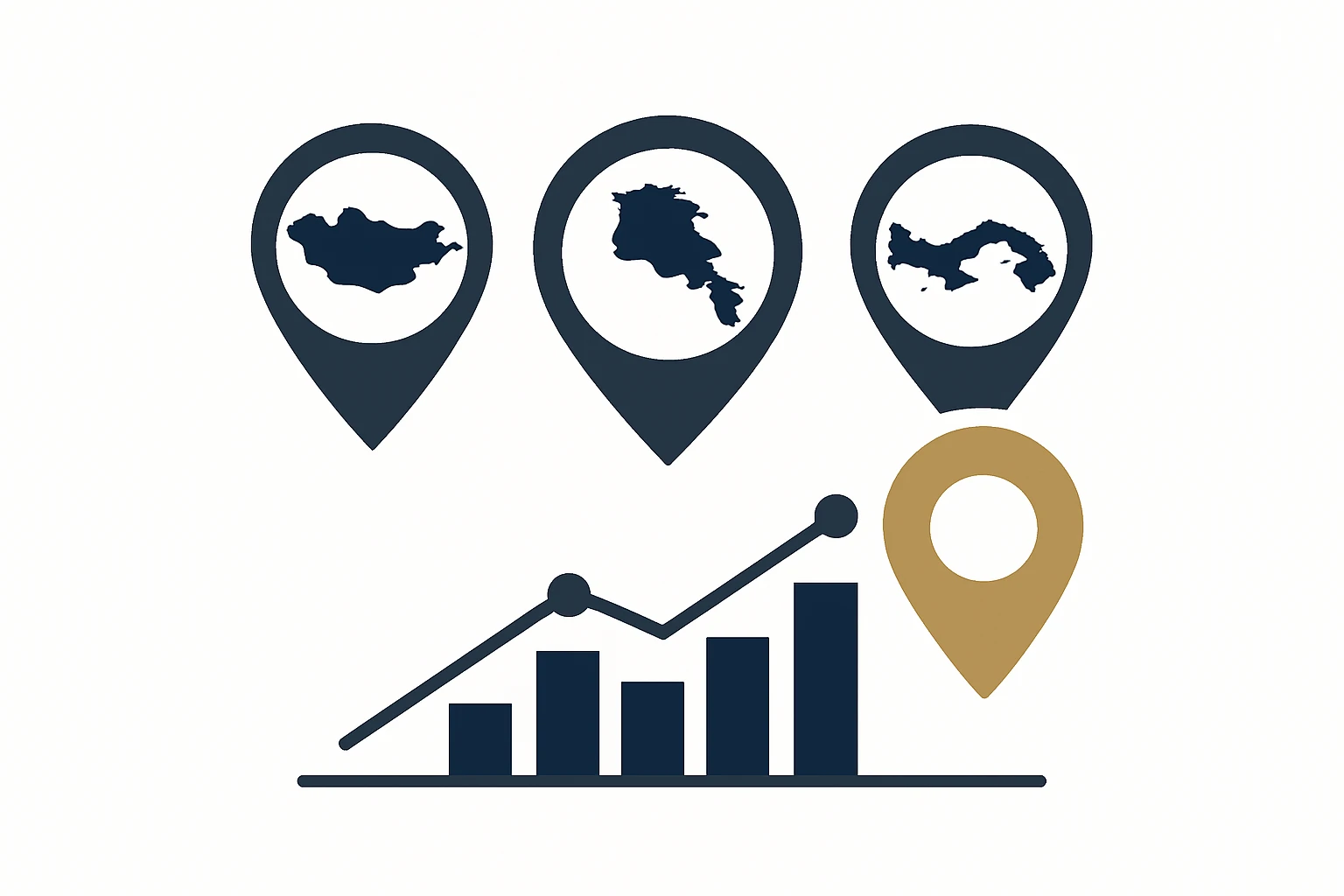
For global brands, owning a family of country-code top-level domains (ccTLDs) is more than a branding cue - it is a strategic asset. A well-considered ccTLD portfolio can improve local search presence, signal market-localization to customers, and protect brand equity in geographically focused growth initiatives. Yet ccTLDs operate under distinct national regimes, technical constraints, and market dynamics, which means a successful portfolio requires more than simply buying a handful of domain names. It requires a deliberate, research-driven process that balances brand objectives, regulatory realities, and practical execution. This article outlines a practical framework to approach ccTLD portfolios, using Mongolia (MN), Armenia (AM), and Panama (PA) as concrete reference points. It also shows how a professional domain advisory practice - such as a premium domain brokerage or digital asset consultancy - can guide discovery, diligence, and negotiation in a way that preserves confidentiality and alignment with business goals. Note: ccTLDs are country-specific domains managed by local registries with varying rules, eligibility, and processes. (itp.cdn.icann.org)
Understanding the ccTLD landscape: Mongolia, Armenia, and Panama
Mongolia: the MN namespace
The .mn ccTLD is Mongolia’s national domain, and it is operated by a local registry. Countries with active ccTLD programs typically require registrars accredited by the registry and can impose country-specific policies on registrations, transfers, and WHOIS disclosure. When exploring MN as part of a broader portfolio, buyers typically assess local hosting considerations, language-localization opportunities, and any residency or business presence requirements that registry rules may impose. For practitioners, the starting point is to consult the MN registry’s published guidance and work with trusted registrars to ensure compliance and continued portal stability. While the MN registry’s official guidance is the authoritative source, industry mappings and registries in similar markets illustrate the broader pattern of governance and process you’ll encounter across ccTLDs. MN Domain Registry – FAQ (domain.mn)
Armenia: AMNIC and the AM/.հայ ecosystem
Armenia’s ccTLD ecosystem is centered on AMNIC, the registry responsible for the .am and .հայ zones. AMNIC operates under ICANN delegation and coordinates with registrars accredited by the local Internet Society chapter. This structure allows foreign entities to acquire and manage .am domains through accredited registrars, often without mandatory local residency. For global brand portfolios, this means Armenia can be accessed through a legitimate, standards-compliant channel that supports both Latin and Armenian-script domains, enabling local-language branding and regional SEO signaling. Detailed registrar guidance and the role of AMNIC are described in registry-focused materials and industry summaries. AMNIC–AM/.հայ FAQ (itc.am)
Panama: PA and the NIC Panamá ecosystem
Panama’s .pa namespace is managed by NIC Panamá, a registry historically associated with the Universidad Tecnológica de Panamá. The PA registry coordinates with local and international registrars to provide domain name registration under the PA family, with a structure that includes both second-level registrations and a set of commonly used subdomains. In practical terms for portfolio managers, Panama represents an opportunity to anchor regional digital properties with a locally governed namespace while navigating country-specific rules for registrations, renewals, and dispute resolution. For a recent, government-aligned overview of NIC Panamá’s role, see Panama Digital’s explanation of NIC-Panamá’s administration of the PA zone. NIC-Panamá overview (panamadigital.gob.pa)
A practical framework for geo-domain due diligence
Building a regional ccTLD portfolio requires a structured approach that moves from broad discovery to careful valuation and finally to disciplined acquisition. The following three-stage playbook is designed to help brand teams and their advisors - whether in-house, a brokerage, or digital asset consultancy - operate with clarity, speed, and confidentiality.
Structured framework: the Three-Stage Geo-Domain Playbook
- Stage 1 - Discover
- Define target markets based on strategic growth plans (e.g., Mongolia, Armenia, Panama) and assess whether ccTLDs align with brand localization, product localization, or market access goals.
- Compile a comprehensive map of local digital footprints, including competitor domains, partner properties, and region-specific campaigns. Consider data collection methods such as publicly available lists and registry-provided feeds where permissible.
- Leverage publicly accessible domain lists to understand the current domain presence in each market. For example, one often-used search prompt in due diligence is the idea of “Download list of Mongolia (MN) websites” to gauge local footprints and competitor breadth. While this exact phrase can be used in market research workflows, ensure you comply with local rules on data gathering and do not infringe on privacy policies.
- Stage 2 - Validate
- Walk through registry rules for each target ccTLD to identify eligibility, residency or corporate presence considerations, and registrar accreditation requirements. This step helps avoid scenarios where a domain appears affordable but is technically difficult to register, renew, or transfer.
- Assess hosting and legal constraints, including local data-residency considerations, content localization needs, and country-specific dispute resolution processes. For example, Armenian and Panamanian ccTLD ecosystems emphasize accredited registrars and clear dispute mechanisms, which influence how you structure negotiations and post-acquisition use. See AMNIC guidance for registration and registrar eligibility, and registry operations for AM/.am domains. (itc.am)
- Cross-check the credibility and stability of registrars, and verify WHOIS data conservatively to protect confidentiality during the discovery phase. Registry transparency and the ability to maintain controls over who can register are essential in premium portfolios. The broader ccTLD framework, including how registries interact with registrars, is discussed in ICANN and related industry literature. (itp.cdn.icann.org)
- Stage 3 - Acquire
- Prioritize domains that offer meaningful brand- resonance in the target markets, while avoiding names that could trigger regulatory or social-praud concerns. In many markets, it’s prudent to focus on names that support regional campaigns, language localization, and safe brand expansion.
- Negotiate with a confidentiality-first mindset. When appropriate, enlist a trusted broker to manage non-disruptive negotiations and ensure that the deal aligns with broader brand and portfolio strategy. The aim is to secure a clean transfer path, favorable renewal terms, and clear post-acquisition ownership rights.
- Plan for post-acquisition governance, including local hosting considerations, privacy and data localization requirements, and ongoing domain portfolio management. The cognate process is part of a larger risk-management and brand-protection strategy that extends beyond a single purchase. For a broader view of ccTLD governance, see the ICANN and registry literature cited in the earlier sections. (itp.cdn.icann.org)
Country-specific considerations in practice
Mongolia (MN) in practice
When evaluating MN as part of a global ccTLD strategy, it is important to look beyond the price tag and consider the registry’s registration process, the availability of accredited registrars, and any local content-related requirements. The MN registry and its practices shape how you structure a potential MN-based property within a broader portfolio, including how to protect and renew domain interests and how to align with local consumer expectations. Practical due diligence typically involves engaging with a trusted MN registrar and validating the registry’s publicly available policies. A dedicated MN FAQ provides guidance on common questions surrounding registration and WHOIS data. MN FAQ (domain.mn)
Armenia (AM) in practice
Armenia’s ccTLD ecosystem is designed to accommodate international brand activity through AMNIC and accredited registrars. The AMNIC framework supports Latin-script (.am) and Armenian-script (.հայ) domains and emphasizes registrar accreditation through the Internet Society chapter, which can be a critical factor for confidential acquisition and cross-border brand protection. For teams building a regional footprint, this means you can pursue Armenian-language branding while maintaining compliance with local governance standards. A concise overview of the Armenian registry and registrar model is available in AMNIC-focused materials and Armenian Internet governance resources. AMNIC - Armenian domain registry overview (itc.am)
Panama (PA) in practice
Panama’s PA namespace is widely used for regional branding due to its stable governance framework and broad registrar support. While PA has a rich legacy in local governance and academic networks, prospective buyers should be mindful of the registry’s structure, renewal cycles, and dispute mechanisms. The Panama ecosystem demonstrates how ccTLDs can complement a global portfolio by enabling local relevance and identity for campaigns operating within or adjacent to Panama. For a high-level understanding of NIC Panamá’s role and PA’s registry ecosystem, reference the Panamadigital overview and related governance discussions. NIC-Panamá overview (panamadigital.gob.pa)
Limitations and common mistakes in ccTLD portfolios
Even well-structured ccTLD portfolios face constraints that can erode value if not anticipated. Common pitfalls include assuming ccTLDs automatically improve local SEO without local hosting or content localization, underestimating regulatory complexity, and misjudging renewals or dispute-resolution costs. A disciplined approach calls for regular audits of portfolio health, alignment with regional marketing plans, and ongoing risk assessment. It is also easy to overestimate the speed of value creation from a single ccTLD purchase, most benefits emerge through sustained, multi-channel regional strategies that combine content localization, local partnerships, and brand governance. As with any domain program, the margin of error tends to grow with scale, making risk controls, governance processes, and a clear escalation path essential. For context on how ccTLD governance works in practice, see ICANN’s ccTLD literature and related governance discussions. (itp.cdn.icann.org)
Structured block: a concise framework you can apply today
- Discovery - Build a regional landscape by market and language, identify target brands and competitors, and assemble a list of candidate domains for each ccTLD under consideration.
- Due diligence - Verify registry policies, registrar accreditation, hosting options, and dispute resolution mechanisms. Confirm ownership transfer pathways and renewal terms, and assess privacy considerations in line with local rules.
- Acquisition and governance - Execute with confidentiality, ensure clean transfer and ownership rights, and implement post-acquisition governance for ongoing protection and optimization of the portfolio.
Integration with client capabilities
This topic aligns with strategic domain advisory and premium domain brokerage objectives. For teams seeking to accelerate discovery and due diligence, referencing curated country lists and market intelligence hosted by trusted providers can help. In particular, webatla’s country-focused domain lists offer ready-made entry points for research in MN and AM markets (see Mongolia domain landscape and List of domains by Countries). Integrating these resources with a formal DD framework enables faster, confidential negotiations. If appropriate, the brokerage or advisory partner can also guide engagement with registrars and navigate local law implications, applying industry best practices across the portfolio. For a view of pricing and service levels, see the client’s pricing page. Pricing
Conclusion: a disciplined, globally aware approach to ccTLDs
ccTLD portfolios are a potent tool for brand localization, risk management, and digital asset strategy - but they are not a silver bullet. The most successful programs combine a rigorous discovery process, registry-aware due diligence, and disciplined governance post-acquisition. By applying a clear three-stage playbook to markets like Mongolia, Armenia, and Panama, brands can unlock meaningful regional value while reducing the risk of costly missteps. The field continues to evolve as registries adopt IDN capabilities, policy changes, and new security practices. A thoughtful approach, guided by credible registry policies and professional advisory support, remains the most reliable path to durable, confidentiality-preserving growth in premium domain portfolios.