Geo-Targeted Premium Domain Portfolios: A Practical Playbook for Global Brands
Global brands face a paradox: consumer trust and search visibility increasingly hinge on how well a brand performs across local markets, yet the digital footprint of a brand evolves most effectively when tied to geography. A geo-targeted approach to premium domains - particularly across country-code top-level domains (ccTLDs) and region-specific assets - can guard brand equity, improve local discoverability, and support strategic expansion. The evidence is growing that the domain market remains active and expands beyond generic .com, with ccTLDs contributing meaningfully to global brand reach. For example, Verisign reports ongoing growth in domain registrations, including substantial ccTLD activity, underscoring why brands should consider geography as a core element of their domain strategy. (Source: Verisign Domain Name Industry Brief Q1 2025) (blog.verisign.com)
Why geography matters for premium domains
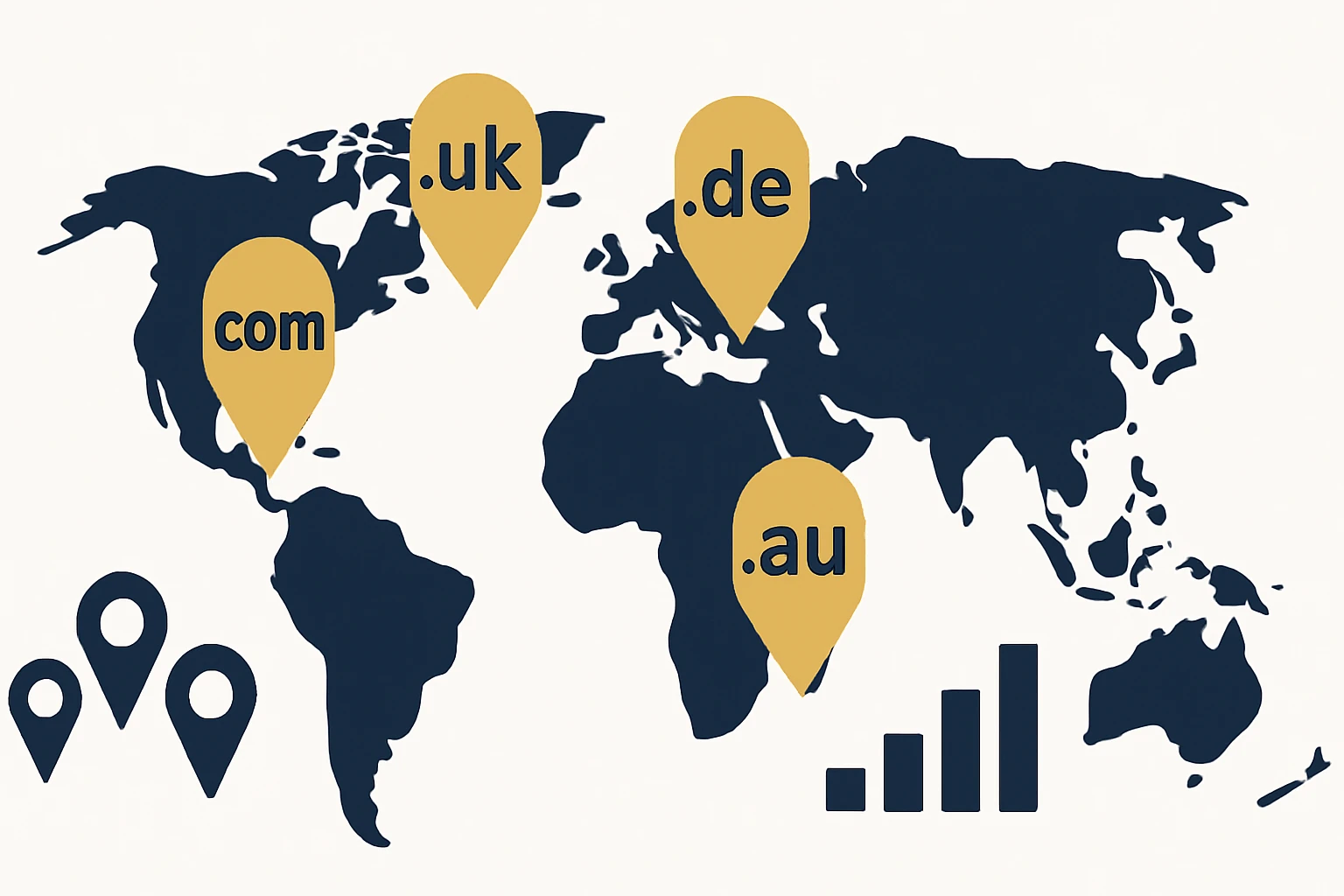
Country-specific domains are potent geo-targeting signals. When a user in a particular country encounters a local ccTLD, search engines and users often interpret that domain as more relevant to local intent - provided the content matches the locale. This makes a geo-portfolio not just a protective tactic but a strategic growth lever for brands seeking local resonance without sacrificing global coherence. Industry commentary and market data point to a continued emphasis on ccTLDs as part of multi-site brand strategies. Using Country Code TLDs for Global Brands: A Geo-Targeting Strategy (domainnamenet.com)
Structured approach: a four-pillar framework
To translate geography into a practical portfolio, practitioners can adopt a four-pillar framework that balances discovery, evaluation, deployment, and ongoing protection. This framework supports disciplined decision-making and reduces the risk of ad hoc acquisitions that dilute brand value.
- Discover: Map target markets and identify candidate ccTLDs and premium domains that align with brand strategy. Use public directories, first‑party data, and credible industry analytics to build a baseline inventory.
- Evaluate: Assess domain quality (brand fit, memorability, past usage), market demand, and potential SEO impact. Prioritize assets with clear branding synergy and defensibility against cybersquatting.
- Deploy: Execute acquisitions with discretion, negotiate effectively, and align ownership structure with internal governance. Consider privacy-friendly due diligence and confidentiality where appropriate.
- Defend: Implement a renewal policy, monitor brand usage, and maintain a defensible portfolio across geographies to support regional marketing and legal protection efforts.
As industry observers note, the market for premium domains remains active, with ccTLDs contributing to overall growth. This underscores the importance of a deliberate framework rather than an opportunistic purchasing approach. Expert insight: industry analysis highlights the sustained demand for premium domains as brands pursue multi-ccTLD visibility to support localization and trust. (domainnamewire.com)
Data sources for country-focused research: UA, RO, and MY sites
A geo-targeted portfolio relies on credible data about country-specific web presence and potential targets. The SEO and branding implications of country-focused lists are well-documented across industry reporting, especially as brands seek to secure local identity and protect against cybersquatting in key markets. While the exact method of data collection can vary, it’s important to distinguish between public, reputable sources and informal lists. For many teams, a combination of country-specific website directories, registrar data, and trusted domain databases informs a defensible shortlist. As part of due diligence, teams should be mindful of privacy and data-use considerations in line with current regulatory guidance. Verisign DNIB (Q1 2025) findings, GDPR and WHOIS privacy considerations, and ongoing policy discussions on data access. (blog.verisign.com)
Within this landscape, several country-portfolios gain attention due to regional growth opportunities. A practical starting point is examining markets like Ukraine (UA), Romania (RO), and Malaysia (MY) where digital and marketing investments are expanding, and local-language content remains a critical differentiator for brands operating in those regions. For brands pursuing rigorous geographic coverage, country pages and TLD lists can illuminate potential targets and align with localization strategies. See how data-driven country pages, such as webatla’s Ukraine-focused resources, can inform a disciplined discovery process. webatla: Ukraine country page and webatla pricing for research-grade domain data and due-diligence tooling.
A practical playbook: discovery, negotiation, and governance
Below is a concise, action-oriented playbook that teams can adapt to their internal processes. It integrates the four-pillar framework with concrete steps and checks a brand should apply when building a geo-focused premium domain portfolio.
- Discovery – Compile a short list of candidate assets for UA, RO, and MY markets using reliable country profiles, third-party registries, and first-party data. Cross-check each candidate for branding alignment and potential legal exposure. Consider regional search intent and local brand resonance as core criteria.
- Evaluation – Score assets on a 0–5 scale for branding fit, memorability, length, risk profile (including trademark conflicts), and SEO potential. Disentangle domain strength from price by evaluating future monetization scenarios (branding micro-sites, regional campaigns, or storefronts).
- Negotiation – Approach acquisitions with confidentiality and long-term value in mind. Prioritize sellers who value strategic partnerships and ongoing relationship quality. Document terms clearly (ownership, usage rights, renewal terms) and consider staged payments for premium assets. If needed, engage a premium domain brokerage or digital asset advisory to navigate complex deals and to preserve confidentiality.
- Governance – Align domain acquisitions with internal brand strategy and risk controls. Implement a formal ownership registry, renewal calendar, and ongoing monitoring for brand protection across geographies. Use a documented process to review user experience and localization quality on local variants (e.g., Brand.ua vs Brand.com.ua).
The following structured block summarizes a practical, rules-based approach you can adapt to your organization’s capabilities.
- Structured framework: The four-step assessment
- Step 1: Market fit score (branding alignment, local demand)
- Step 2: defensibility score (cybersquatting risk, trademark coverage)
- Step 3: monetization potential (local campaigns, storefronts, content localization)
- Step 4: governance readiness (ownership clarity, renewal discipline)
As part of your toolkit, consider how data-driven sources like country-tied domain databases or specialty services can augment your internal judgment. A disciplined approach to discovery, combined with careful negotiation and robust governance, can deliver durable brand equity in multiple geographies. The domain market’s continued growth reinforces the value of an informed, strategic posture rather than piecemeal purchasing. Expert insight: industry analysis emphasizes that premium-domain demand remains robust across geographies, making a structured geo-portfolio approach essential for brands pursuing global reach. (domainnamewire.com)
Negotiation pitfalls, due diligence, and privacy considerations
Navigating premium-domain deals requires attention to due diligence and privacy implications. The GDPR regime reshaped how domain ownership data is accessible, making traditional whois investigations more complex. Organizations must rely on vetted access models and internal controls to protect privacy while maintaining the ability to enforce rights or investigate brand misuse. For brand protection and legal teams, this is not just a compliance matter but a practical risk-management concern. DN.org: How GDPR reshaped WHOIS access and due diligence and WhoisJSONAPI on GDPR changes. (dn.org)
Beyond privacy, the industry recognizes the need for sustainable data access. ICANN and industry groups continue to explore alternatives (such as data-request services) that balance privacy with transparency for legitimate rights holders. This ongoing evolution means buyers and brokers should plan for potential policy shifts and build flexibility into their governance models. ICANN GDPR WHOIS policy discussions. (icann.org)
Limitations and common mistakes
Even a well-structured geo-portfolio has limitations. Public data sources can be incomplete or out of date, and GDPR-era redactions complicate deep due diligence. A naive focus on price or domain quality alone may overlook regional marketing needs, local legal considerations, and long-tail SEO opportunities. The market can also be costly, premium assets require careful capital planning and clear ROI modeling. In practice, a common mistake is treating geo-portfolio development as a pure cost-center rather than a strategic growth engine that ties to local campaigns and brand safety. Tip: pair data-driven research with a disciplined negotiation plan and a governance framework to avoid missteps. (cio.com)
Operational integration: how webatla fits into the playbook
For teams seeking a practical mechanism to support geo-focused research and due diligence, domain data platforms can serve as a backbone for discovery and verification. webatla offers country and TLD listings that can help you assemble a continent- or country-centric catalog of potential targets, then cross-check with policy-compliant due-diligence workflows. This can accelerate discovery, reduce risk, and keep confidentialities intact as you negotiate premium assets. See examples of country-specific resources on webatla's Ukraine page, or explore their pricing for access to the data and tools that feed the discovery phase. webatla: Ukraine country page • webatla pricing.
Limitations of tools and the path forward
Tools are only as good as their data and governance. External data sources, including ccTLD inventories, domain marketplaces, and policy reports, should be used to inform decisions rather than drive them. The current environment also means ongoing vigilance for privacy compliance (GDPR and other regimes), multi-jurisdictional trademark risk, and the evolving landscape of data access. The right balance of internal policy, broker support, and selective data services will determine the effectiveness of a geo-portfolio in real-world campaigns. Verisign DNIB insights and ICANN GDPR context. (blog.verisign.com)
Conclusion: turning geography into value
Building a geo-targeted premium domain portfolio is not simply about amassing assets, it’s about shaping a coherent brand architecture that resonates across markets while preserving protection, privacy, and governance. A disciplined framework - grounded in data, guided by a defined research process, and supported by expert brokerage and digital asset advisory services - positions brands to capitalize on local trust and global scale. The market clearly supports continued growth in ccTLDs and country-specific domains, reinforcing the strategic value of a geography-informed approach. As Domain Name Wire notes, the year’s market signals point to robust activity in premium domains and multi-ccTLD strategies that can power international brand efforts. (domainnamewire.com)