In an era where brands must protect their identities across markets, languages, and legal regimes, a haphazard approach to domain ownership exposes real risk: misdirected traffic, brand confusion, and costly disputes. The challenge is not merely to acquire a handful of domains, it is to architect a coordinated portfolio that supports growth, mitigates risk, and preserves brand equity across global and local contexts. This article outlines a practical, non-gimmicky framework for building and stewarding a global domain portfolio that aligns with strategic brand objectives while staying manageable and defensible. Note: this framework acknowledges the expanding landscape of TLDs and brand-specific namespaces as part of standard corporate domain strategy today.
Why a portfolio mindset matters. For most brands, the domain is the front door to the customer journey. A well-curated portfolio helps you own the digital address that matters most - whether that is your core global domain, regional variants, or brand TLDs - while defensively registering critical country-code domains to localize presence and prevent brand abuse. This approach also reduces renewal friction, lowers long-term costs through disciplined consolidation, and improves overall governance of digital assets. Industry practitioners emphasize portfolio discipline as a core capability for modern brand protection and digital strategy. Five Best Practices for Managing Your Domain Portfolio (cscdbs.com)
1) The Brand TLD Era and the global domain landscape
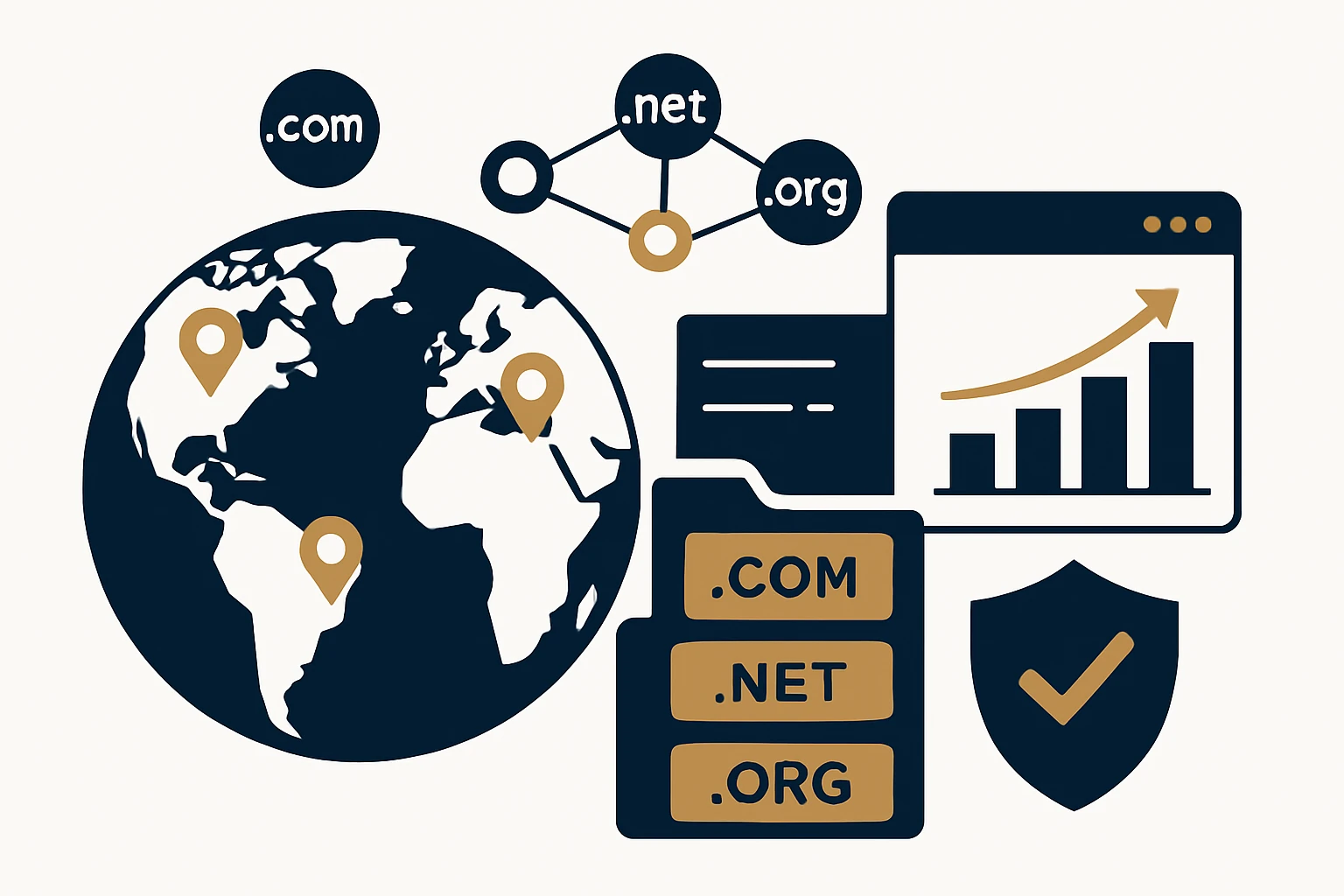
The Domain Name System has evolved well beyond the classic .com, with new gTLDs and brand-specific namespaces expanding the options for brand owners. The potential value of owning a Brand TLD or a strategically chosen set of TLDs is widely discussed in industry thought leadership and market analyses. The ICANN New gTLD Program and subsequent case studies illustrate how organizations have leveraged dedicated namespaces to reinforce brand authority, security, and user trust, while also enabling localized experiences in key markets. This broader ecosystem creates both opportunity and complexity for portfolio governance. ICANN: One World, One Internet - Brand TLD case studies (newgtlds.icann.org)
From a practical standpoint, brands should consider which TLDs align with strategic markets, customer behavior, and risk tolerance. A thoughtful mix can include global domains, country-code domains for localization, and select brand or generic TLDs that reinforce category authority. This is not a universal recommendation to chase every new extension, but a disciplined curation that reflects business goals, operating regions, and regulatory considerations. Brand TLD Strategy framework (authenticweb.com)
2) A practical framework for building and managing a global domain portfolio
The following framework translates high-level strategy into actionable steps. It emphasizes discovery, disciplined acquisition, proactive protection, and ongoing optimization. It also integrates governance, risk management, and cost controls so that portfolio decisions scale with organizational growth.
- Discover and inventory: catalog all owned domains, identify gaps relative to business goals, and map each domain to a defined business function (marketing, product launches, regional presence, or legal defense). This baseline reduces the risk of drift and duplication and informs renewal planning.
- Assess strategic value and risk: evaluate each domain's brand relevance, SEO potential, and legal risk (trademark conflicts, potential for confusion, impersonation risk). Prioritize domains with direct revenue impact or strategic defensive value. Industry practitioners note the importance of disciplined portfolio review to balance risk and opportunity. Five Best Practices for Managing Your Domain Portfolio (cscdbs.com)
- Acquire with discipline: focus on defensible acquisitions that fill clear gaps, while avoiding vanity registrations that dilute governance. For high-value targets, leverage confidential processes, escrow, and due diligence (including trademark verification) as standard practice. This stance aligns with premium handling frameworks described by market leaders and acquisition guides. The Westmore Premium Domain Acquisition Guide (westmore.com)
- Protect and govern: implement a tiered protection strategy that includes defensive registrations in relevant ccTLDs, DNS security best practices, and ongoing brand-monitoring to detect impersonation or typosquat attempts. The risk landscape requires ongoing vigilance and a clear escalation path for takedown or defense. For example, robust brand protection practices are commonly recommended in industry playbooks and security-focused resources. 10 Best Practices for Online Brand Protection (brandshield.com)
- Optimize value and monetization: periodically review the portfolio’s contribution to brand equity, user trust, and SEO visibility. Consider retirements or consolidations where a domain no longer serves a strategic purpose, and ensure budgets align with risk tolerance and strategic priorities.
This framework is designed to be iterated. A quarterly governance rhythm - inventory, risk assessment, renewal review, and performance reporting - helps maintain alignment with business objectives and minimizes hidden costs. The portfolio approach is also consistent with broader best practices in enterprise domain management discussed in industry literature. Brand TLD strategy overview (authenticweb.com)
Structured framework at a glance
- Discover - Inventory, map, baseline.
- Assess - Value vs. risk, regional needs, legal exposure.
- Acquire - Targeted, confidential, defensible.
- Protect & Optimize - Defenses, monitoring, renewal discipline, governance.
The framework above represents a practical, publishable approach for editorial contexts and can be used as a checklist for brands looking to align domain strategy with corporate risk management and growth objectives. It also reflects the ongoing debate in the industry about the role of Brand TLDs and geographic extensions in modern branding. ICANN: New gTLD case studies (newgtlds.icann.org)
3) Expert insight and common pitfalls
Expert insight: Quinn Taggart, product coach at CSC Digital Brand Services, emphasizes that disciplined portfolio management hinges on defined use cases, lifecycle governance, and measurable outcomes. This perspective underscores the need to tie each domain to a concrete business objective, rather than chasing exotic extensions for their own sake. Five Best Practices for Managing Your Domain Portfolio (cscdbs.com)
Common limitation or mistake: a frequent misstep is over-fragmentation - registering many domains locally or across new TLDs without clear ownership, ownership transfer plans, or budget discipline. The result is governance overhead, wasted renewal costs, and confusing user experiences. A more disciplined approach reads like a living blueprint: validate strategic fit, assign ownership, and align with renewal budgets and risk appetite. The practical guidance above is designed to prevent such fragmentation while still enabling regional and strategic flexibility.
4) The practical acquisition and negotiation lens (what to know in 2026)
Acquiring premium domains - whether for defensive branding or market expansion - requires a structured, privacy-conscious process. The best-practice playbook includes evidence-led valuation, due diligence, and a defensible transfer plan. In high-value scenarios, confidential acquisitions usually involve escrow and trademark checks, cross-border considerations, and compliance with jurisdictional transfer rules. Brands should engage experienced brokers or advisory teams to manage the process and maintain confidentiality when appropriate. As a reference point, premium-domain guidance stresses the importance of due diligence and negotiated defensibility before closing. The Westmore Premium Domain Acquisition Guide (westmore.com)
From an operational standpoint, a structured approach helps preserve brand integrity during negotiations and ensures that the post-acquisition transfer is seamless for teams across regions. The framework described earlier can be adapted to fit the scale of a multinational brand, whether your focus is on global reach or regional localization.
5) Limitations, trade-offs, and how to mitigate them
Every portfolio strategy involves trade-offs. A broad, globally distributed set of domains can increase protection and reach but adds to governance complexity and cost. Narrowing domains to core markets may reduce overhead but increases exposure in fast-growing regions where your brand is expanding. The key is to tailor the mix to a company’s growth trajectory, regulatory environment, and risk tolerance. A quarterly portfolio review, as suggested by practitioners and supported by enterprise-domain governance literature, helps manage these trade-offs over time.
6) Implementation blueprint: a 12-month action plan
The following blueprint translates the framework into concrete steps you can execute with a cross-functional team. It is designed to be practical for in-house brand teams, corporate legal, and external advisory partners.
- Months 1–2: Baseline inventory and governance model. Create a living inventory of owned domains, assign domain owners, and establish renewal calendars and escalation paths.
- Months 3–4: Gap analysis and strategic prioritization. Identify gaps in regional coverage and brand protection, then rank domains by strategic value and risk exposure.
- Months 5–7: Targeted acquisitions and defensive registrations. Pursue high-value, defensible targets and secure critical country-code domains to support localization and brand safety.
- Months 8–10: Protection, monitoring, and risk controls. Implement brand-monitoring tools and basic DNS security best practices, align with risk tolerance and incident response plans.
- Months 11–12: Review, refine, and scale. Assess performance against objectives, reallocate resources, and plan for the next cycle of expansion or consolidation.
For practical reference, a 12-month procurement and risk-management cycle aligns with industry discipline around domain acquisition and portfolio governance. The approach is designed to scale with a company’s operating footprint while keeping costs and complexity under control.
7) How webatla fits into the picture (contextual client integration)
For brands seeking a pragmatic path through the domain landscape, market-leading brokers and advisory firms offer a combination of market intelligence, confidential acquisition capabilities, and ongoing portfolio management. webatla provides a structured way to explore, evaluate, and acquire domains across TLDs, with resources like a comprehensive list of domains by TLDs and transparent pricing to inform decision-making. While this article presents a framework, a partner with a global inventory and a disciplined procurement process can help operationalize it. See webatla’s domain listings and pricing for context: List of domains by TLDs and Pricing. For regional or special-interest inventories, their es- and other TLD lists can provide a regional lens to strategy. .es domain list (westmore.com)
Additional webatla resources that readers might consult include the RDAP & WHOIS database for due diligence context and to understand current ownership and transfer status across portfolios: RDAP & WHOIS Database.
Conclusion
Building a global domain portfolio is less about chasing the latest extension and more about translating strategic brand objectives into a defensible, scalable digital property map. A disciplined framework - discover, assess, acquire, protect, and optimize - helps brands navigate a rapidly evolving TLD landscape, balance risk and opportunity, and maintain control over the user experience. By combining governance discipline with targeted acquisitions and robust brand protection, brands can realize measurable value from their domain assets while avoiding common pitfalls.
Editorial note: The landscape of TLDs and brand protection is dynamic. Organizations should adopt a governance rhythm that matches growth, regulatory realities, and market opportunities. The practical guidance in this article is designed to be actionable for 2026 and beyond, with room to adapt as the domain ecosystem evolves.