Introduction
For brand teams navigating 2026, the question is not just whether to buy domains, but which domains to buy - and why. In an environment where traditional .com remains dominant while a growing universe of niche TLDs competes for attention, a disciplined approach to evaluating lists of domains by TLD becomes essential. Rather than chasing popularity or flashy pricing, best-in-class organizations adopt a framework that aligns domain choices with brand strategy, risk management, and cost of ownership. This article outlines a practical framework for assessing lists of domains across niche extensions such as .site, .co, and .pl, with actionable steps you can apply to real-world portfolio decisions. The goal is to help you separate signal from noise, balance immediate needs with long-term risk, and partner with a trusted advisor to protect your brand online.
Market dynamics support a cautious yet opportunistic stance. The Domain Name Industry Brief (DNIB) track records show continued growth in total domain registrations and ongoing resilience in aftermarkets, underscoring that premium domain acquisitions remain a strategic lever for brands. Recent reports indicate that global domain registrations expanded through 2024 and into 2025, with varied contributions from .com, new gTLDs, and ccTLDs. This context informs why a niche-TLD evaluation framework matters now more than ever. Verisign Domain Name Industry Brief Q4 2025 and Domain Name Wire: 2025 in Review summarize the scale and evolution of the market, while security research highlights the risk landscape associated with lower-cost TLDs. Registration, Detection, and Deregistration: Analyzing DNS Abuse for Phishing Attacks provides a sobering reminder of why due diligence cannot be an afterthought.
Why niche TLDs matter for brand strategy in 2026
Even as brand managers seek the credibility of .com, niche extensions can offer distinctive advantages when used thoughtfully. Niche TLDs often come with lower registration costs, shorter domain availability for branded terms, and opportunities to map specific product lines, regional markets, or campaigns to dedicated domains. However, these advantages must be weighed against brand perception, user behavior, and long-term maintenance costs. Verisign’s ongoing market reporting confirms that while the core of the market leans on established extensions, the ecosystem is expanding, with new gTLDs and ccTLDs contributing to overall growth. That growth, in turn, elevates both the opportunity and the risk associated with niche-domain strategies. Verisign DNIB Q4 2025, see also the Q1 2025 update for broader context on quarterly dynamics. Verisign DNIB Q1 2025.
Topic focus: evaluating .site, .co, and .pl lists for brand strategy
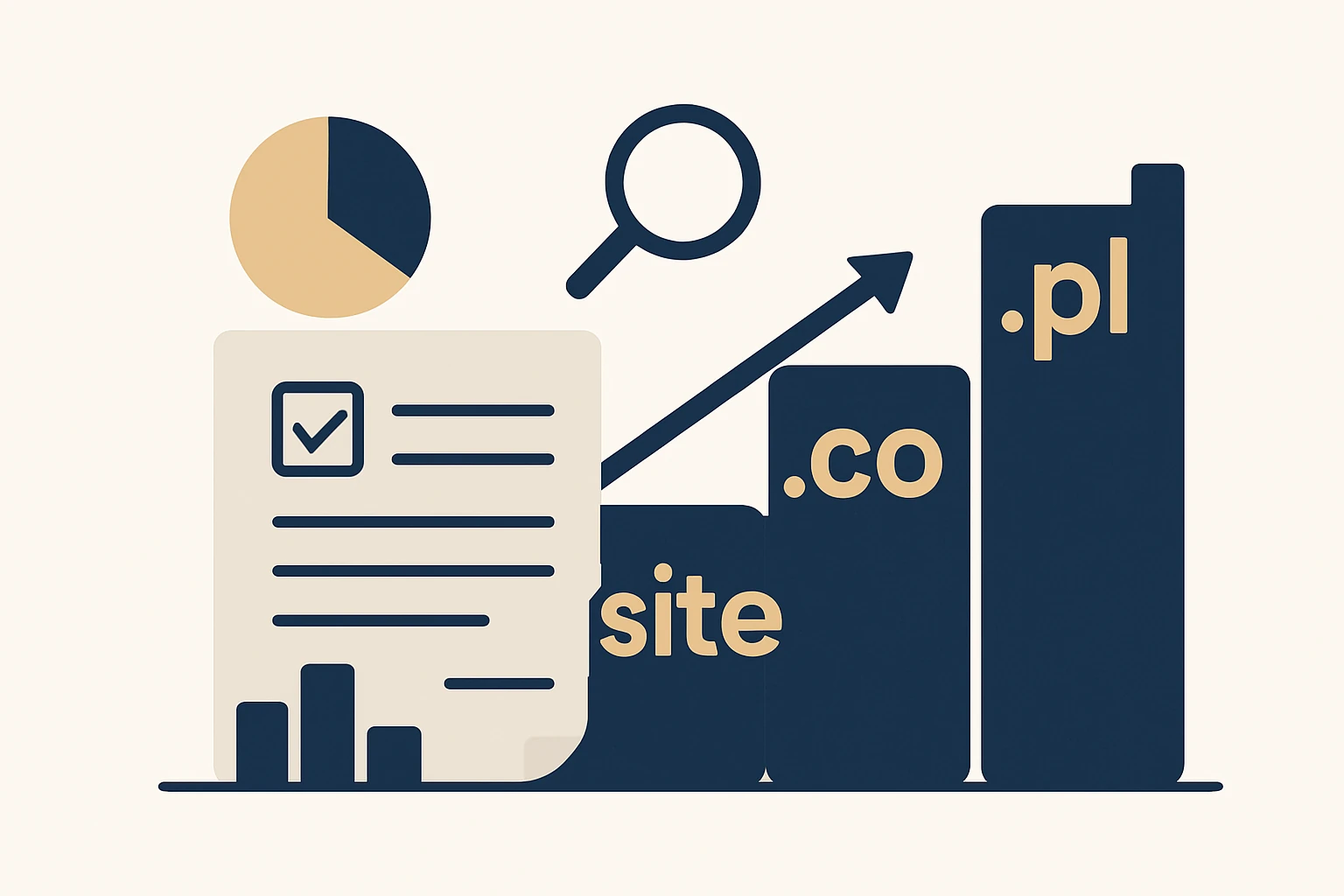
For brand teams, the decision to pursue lists of domains in niche TLDs should rest on a clear set of criteria that connect to strategic objectives: protecting brand identity, expanding market reach, and enabling efficient domain governance. Lists such as .site can be attractive for specific campaigns or product launches, .co is often used as a memorable stand-in for .com when the latter is unavailable, and .pl can serve as a regional or industry-aligned signal in certain markets. The practical question becomes how to assess lists of potential registrations or acquisitions against these objectives, with attention to lifecycle costs, security risks, and the potential impact on search and user behavior. The evidence base for this topic is evolving, with market data indicating ongoing growth and continued interest in premium and strategic domain names. Domain Name Wire: 2025 in Review, Verisign DNIB Q4 2025.
Framework: four-axis evaluation for niche TLD domain lists
Use this four-axis framework to assess lists of domains by TLDs. The framework helps you compare alternatives consistently and justify decisions to internal stakeholders and external partners.
- Axis 1 - Brand-fit and memorability: Assess whether a given TLD supports clear, memorable brand storytelling. Do users recognize and trust the TLD in the context of your brand? Is the domain name legible, easy to spell, and aligned with product lines or campaigns?
- Axis 2 - Market and user behavior: Consider how your audience searches and navigates. Do users type the brand name plus .com by default, or are they likely to click a well-branded alternative? Where applicable, test recognition and recall within target markets.
- Axis 3 - Risk management and security: Evaluate exposure to typosquatting, phishing, and DNS abuse. Cheap or less-regulated TLDs may attract misuse or confusion that could harm your brand. This dimension also covers renewal risk and potential changes in registrar policies over time. See research on DNS abuse and phishing risks in lower-cost TLDs. DNS abuse research.
- Axis 4 - Cost of ownership and governance: Include upfront registration costs, renewal pricing, privacy protections, and ongoing monitoring. Weigh the total cost of ownership against potential branding and marketing benefits, and plan for governance across product lines, regions, and brand assets.
Structured decision block: a practical short framework
- Step 1 - Brand-map the niche TLDs: List all candidate domains under .site, .co, and .pl that align with your brand terms, product names, and regional strategies. Keep a separate column for potential campaign-specific domains.
- Step 2 - Rule-of-thumb quality filters: Filter for obvious quality signals: short length, minimal ambiguity, consistent brand spelling, and absence of conflicting marks. Flag domains with obvious trademark or public-safety concerns for early legal review.
- Step 3 - Risk and regulatory checks: Run a quick assessment for typosquatting risk, known abuses in the TLD, and registrar reliability. Use trusted sources and, where relevant, legal counsel input to screen for brand conflicts.
- Step 4 - Value and feasibility test: Estimate total cost of ownership and potential marketing impact. Shortlist 2–4 domains per product line or campaign, then pilot usage in internal testing before committing.
One expert insight and practical limitations
From a security perspective, researchers emphasize the real risks associated with low-cost TLDs, including typosquatting and phishing. When brands over-rely on these extensions without systematic risk assessment, they expose themselves to downstream costs in customer trust and incident response. An interdisciplinary view from security research highlights these risks and suggests a lifecycle-aware approach to domain strategy. DNS abuse research underscores why governance and continuous monitoring should be baked into any plan involving niche TLDs.
In practice, market data also reminds us that the core value of a brand still hinges on strong, consistent adoption of the brand across channels. While the DNIB data show ongoing growth and an active aftermarket, .com remains a dominant anchor for brand discovery and direct navigation, which means any niche-TLD strategy should be designed to complement, not replace, your core assets. For context, the latest market reviews confirm resilient overall domain growth, with premium domains and aftermarket activity continuing to play a meaningful role in corporate strategy. Domain Name Wire: 2025 in Review, Verisign DNIB Q4 2025.
Limitations, trade-offs, and common mistakes to avoid
- Limitation 1 - Perception vs. performance: A great-looking domain list does not guarantee improved brand performance. The user experience, content quality, and onsite authority matter just as much as the domain choice.
- Limitation 2 - Renewal surprise: TLDs with lower upfront costs may come with higher renewal rates or additional renewal fees. Include a multi-year budget in the governance plan to avoid budget surprises.
- Common mistake - Over-indexing on novelty: Picking a flashy TLD to look trendy can undermine trust and memorability if the brand’s core audience expects conventional, easily recallable URLs.
- Common mistake - Under-checking trademarks: Before purchase, perform comprehensive trademark clearance to avoid later disputes and costly rebranding efforts. The risk of brand conflicts across jurisdictions is real and non-trivial.
Putting it into practice: a practical implementation path
Here is a practical path you can adapt, using your existing vendor relationships or a trusted advisory partner like a premium domain brokerage and digital asset advisor. This approach blends editorial rigor with commercial prudence and aligns with the four-axis framework above.
Phase 1 - Discovery and alignment: Begin with a brand-wide discovery of terms, product lines, and regional considerations. Create a matrix that maps brand terms to potential TLDs and flags high-potential candidate domains for deeper due-diligence. Phase 2 - Quality screening: Apply the Rule-of-Thumb quality filters and the risk checks from Axis 3. Phase 3 - Legal clearance and governance: Run trademark clearance and establish governance for ongoing monitoring. Phase 4 - Pilot and monitor: Test shortlisted domains in controlled campaigns, monitor performance metrics (traffic, recall, conversions), and adjust ownership strategy as needed.
Throughout, consider using an integrated approach where portfolios are reviewed quarterly, ensuring renewal schedules, brand protection measures, and investment plans stay aligned with evolving market realities. A well-structured approach to domain portfolio management not only guards against risk but also clarifies the path to value realization from niche TLDs. For readers exploring broader domain lists, webatla’s resources by TLD can help with initial scoping: webatla: List of domains by TLDs. For organizations weighing cost considerations, review the client-friendly pricing and options that a domain advisory partner can provide: webatla pricing.
Internal-linking and related concepts
- premium-domain-brokerage
- tld-analysis-framework
- brand-protection-domains
- domain-portfolio-audit
- confidential-domain-acquisition
- strategic-domain-consulting
- domain-valuation-methods
- domain-risk-management
- renewal-monitoring
- digital-asset-advisory
- tld-list-by-country
- tld-list-by-technology
Conclusion
Niche TLDs like .site, .co, and .pl can be powerful tools in a brand-strategy toolkit when used with discipline. A four-axis evaluation framework, grounded in market realities and security considerations, helps teams decide where to play and how to govern their domain assets effectively. By combining rigorous due diligence, practical cost modeling, and a clear governance plan, brands can unlock the potential of niche TLDs without compromising brand integrity or user trust. For organizations seeking a structured, editorially-sound perspective - backed by market data and risk analysis - this approach offers a balanced path forward. And if you want to explore curated TLD lists and governance options tailored to your portfolio, consider engaging a trusted domain advisory partner to guide the process.