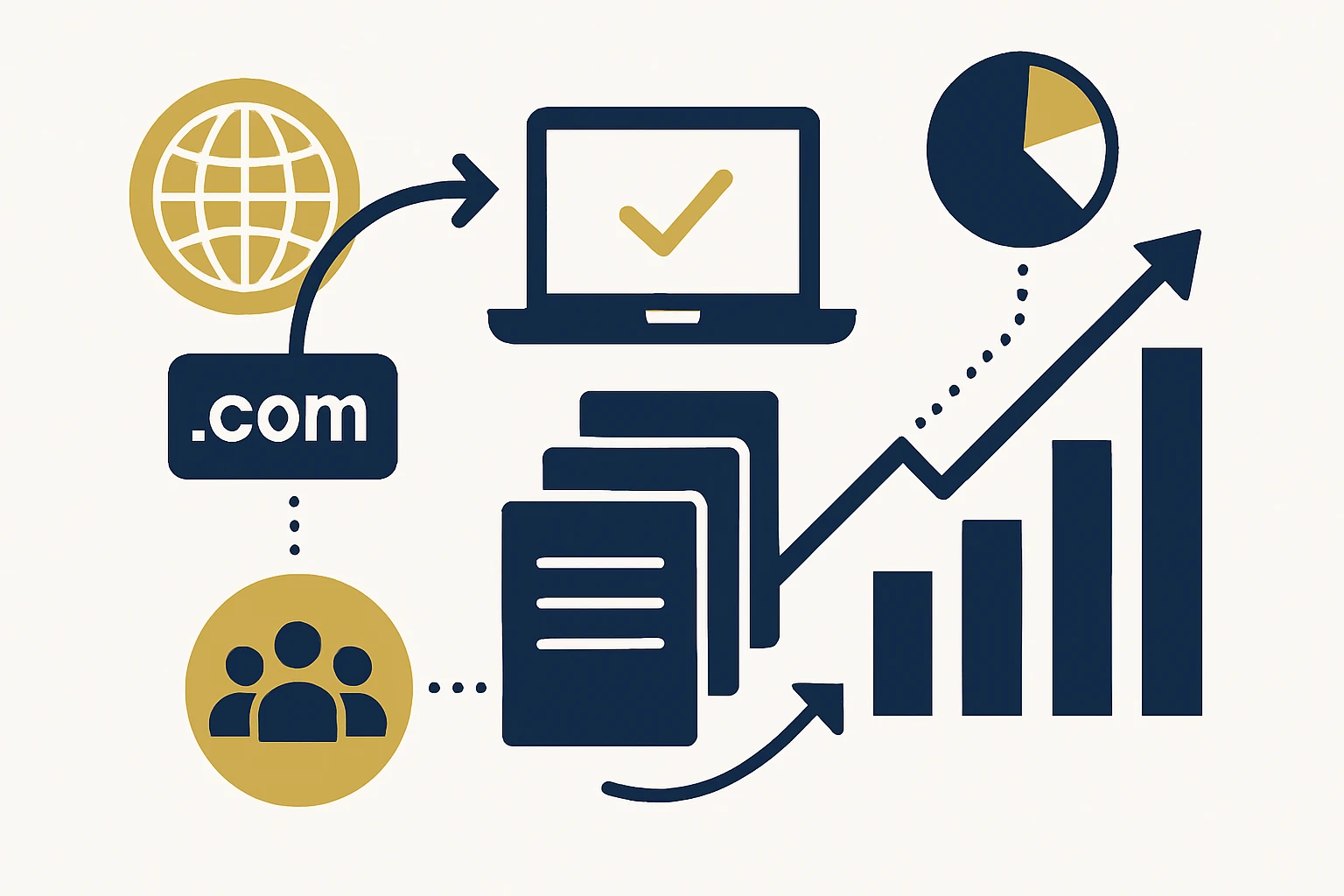
In the modern marketplace, a brand’s most valuable asset is often not a product but its digital real estate. A well-constructed domain portfolio can fortify brand protection, unlock international growth, and become a strategic lever for marketing and e-commerce. Yet for many global brands, the path to a strong domain portfolio is not about amassing names - it’s about a deliberate, confidential acquisition program that aligns with business goals, risk tolerance, and growth plans. This article offers a practical, editor-focused view of how to design and manage a premium domain portfolio while safeguarding confidentiality during acquisitions.
Why a strategic domain portfolio matters for global brands
Brand protection and domain strategy are increasingly intertwined. As trademark and cybersquatting risks rise, a disciplined portfolio helps ensure your brand is safeguarded across markets, while enabling consistent digital experiences for customers. Industry thought leaders emphasize that robust brand protection goes beyond defensive registrations, it requires governance, monitoring, and proactive acquisition of domains that close gaps in a brand’s online footprint. GoDaddy’s Brand Protection solutions underscore the importance of automated protection and rights-protection tooling in mitigating infringements and enabling faster response to threats. (gcd.com)
Editorially, a domain portfolio is most powerful when it’s married to governance: renewals tracked, domains mapped to business units, and a clear decision framework for whether a name should be developed, parked, or sold. A modern portfolio also supports search visibility and user trust, reducing confusion and lifting conversion when customers arrive via brand-consistent domains. In practice, this means translating technical hygiene into strategic value for marketing, product, and legal teams. As enterprise-grade practices mature, the market for premium domain sales and acquisitions reflects growing demand for assets that accelerate brand objectives. Recent market intelligence suggests that premium domain activity and associated valuations have remained resilient as brands seek scalable, brand-safe assets. (domainproai.com)
Expert input from the domain-portfolio space highlights a practical truth: even the best portfolio won’t deliver unless it’s paired with clear negotiation and governance. Quinn Taggart, a product coach at CSC’s Digital Brand Services, emphasizes the need for disciplined processes to align portfolio growth with brand strategy, risk management, and digital marketing goals. This perspective reinforces the article’s core thesis: structure your portfolio around business outcomes, not merely historical acquisitions. (cscdbs.com)
A pragmatic framework for building a premium, confidential portfolio
The following five-step framework is designed to help brand leaders and their brokers move from scattered registrations to a cohesive, value-driven portfolio. It emphasizes confidentiality in the acquisition process, a cornerstone of premium transactions, and it integrates brand-protection considerations with growth-oriented opportunities.
1) Discovery and goal framing
- Define core markets, product lines, and customer journeys that demand distinct domain presence (for example, country or language variants, product-specific domains, or regional campaigns).
- Identify brand risk gaps (missing geographies, potential typos, or aspirational variants) and align domain decisions with legal, SEO, and marketing objectives.
- Establish confidentiality boundaries, escalation paths, and decision rights for acquisitions to protect deal terms and brand strategy.
2) Portfolio mapping and risk scoring
- Inventory all owned, pending, and target domains, assess renewal dates, usage status, and alignment with business units.
- Assess risk across three dimensions: legal/brand risk (trademark matches, conflicts), operational risk (email delivery, website availability), and reputational risk (typosquatting or look-alike domains).
- Prioritize domains by potential value, risk mitigation impact, and speed to market for campaigns or product launches.
3) Confidential acquisition planning
- Develop target lists with rationale, including likely owners, market context, and potential acquisition vehicles (direct purchase, broker-assisted negotiation, or development-led strategies).
- Put in place non-disclosure agreements (NDAs) and clear terms for how information will be shared and who will engage on behalf of the brand.
- Engage trusted brokers or platforms with a track record in confidential premium deals, ensure escrow and payment terms support discretion and risk transfer.
4) Negotiation, closing, and post-deal integration
- Define acceptable price bands, payment terms, and contingencies (e.g., post-deal privacy commitments, domain transfer timing).
- Use structured negotiation tactics that de-risk the deal - staged payments, price holds, or earn-outs tied to performance milestones where appropriate.
- Plan post-deal steps: domain authentication, DNS changes, brand-alignment updates, and monitoring for brand-protection signals.
5) Ongoing governance and value realization
- Institute a renewal governance cadence: who approves renewals, what triggers divestitures, and how often the portfolio is reviewed against brand strategy.
- Implement monitoring for cybersquatting, trademark changes, and market shifts that could affect domain value or risk profile.
- Measure ROI through KPI trays like improved brand sentiment, reduced risk exposure, and enhanced SEO visibility tied to owned domains.
Limitations, trade-offs, and common mistakes
No framework is perfect, and domain strategy carries inherent trade-offs. A few practical limitations to acknowledge:
- Valuation versus strategic value: Premium prices don’t always translate into proportionate marketing or revenue gains. A disciplined emphasis on strategic fit often yields higher long-term ROI than chasing the highest bid. See industry discussions on premium domain market dynamics for context. (domainproai.com)
- International footprint versus local relevance: Registering many ccTLDs can bolster local presence but may strain governance and cost. International branding considerations should be guided by market entry needs and local legal considerations. (nominus.com)
- Confidentiality versus transparency: While confidentiality is desirable in premium acquisitions, complete secrecy is rarely possible in every jurisdiction or transaction type. Establish clear NDA terms and limits from the outset. (gcd.com)
Brand protection, rights, and the legal framework
Brand protection is not a standalone initiative, it relies on robust legal and governance structures. The domain system includes rights-protection mechanisms designed to shield brand owners from infringement. The Trademark Clearinghouse and dispute-resolution frameworks like the UDRP help set boundaries for trademark holders and domain owners, reducing the risk of confusing similarity or infringement. Understanding these tools is essential for any premium-domain strategy seeking durable results. (en.wikipedia.org)
Editorial insight: expert perspectives from the field
Industry practitioners consistently emphasize that a successful premium domain strategy blends legal safeguards with strategic growth objectives. As noted by CSC’s Quinn Taggart, a disciplined, business-outcome-driven approach is essential to align domain decisions with broader brand strategy, risk management, and marketing goals. This view underscores the need for a coherent framework rather than ad-hoc acquisitions. (cscdbs.com)
Practical integration: how brands can execute today
For organizations seeking a concrete path forward, the following steps can be initiated within a quarter:
- Audit existing registrations for coverage gaps in key markets and product families.
- Draft a confidential acquisition plan for 3–5 high-priority targets, coupled with NDAs and a negotiation playbook.
- Establish a governance routine that ties domain decisions to budget cycles, marketing calendars, and risk management reviews.
To support due diligence and ongoing portfolio research, consider trusted platforms that centralize domain data. For example, the RDAP & WHOIS database and pricing analyses can be useful inputs during evaluation and negotiation. You can explore such capabilities on the client platform here: RDAP & WHOIS Database and Pricing.
Conclusion
A strategic, confidential approach to premium domain portfolios enables brands to protect their identity, unlock international growth, and create tangible marketing value. By combining governance, disciplined discovery, and professional negotiation, organizations can build a durable asset base that supports long-term strategy rather than short-term wins. Remember: the goal is not merely to own more domains, but to own the right domains - those that strengthen your brand, improve customer experiences, and contribute to measurable business outcomes.