Region-Specific Premium Domains: A Practical Framework for Lebanon, Kuwait, and Puerto Rico
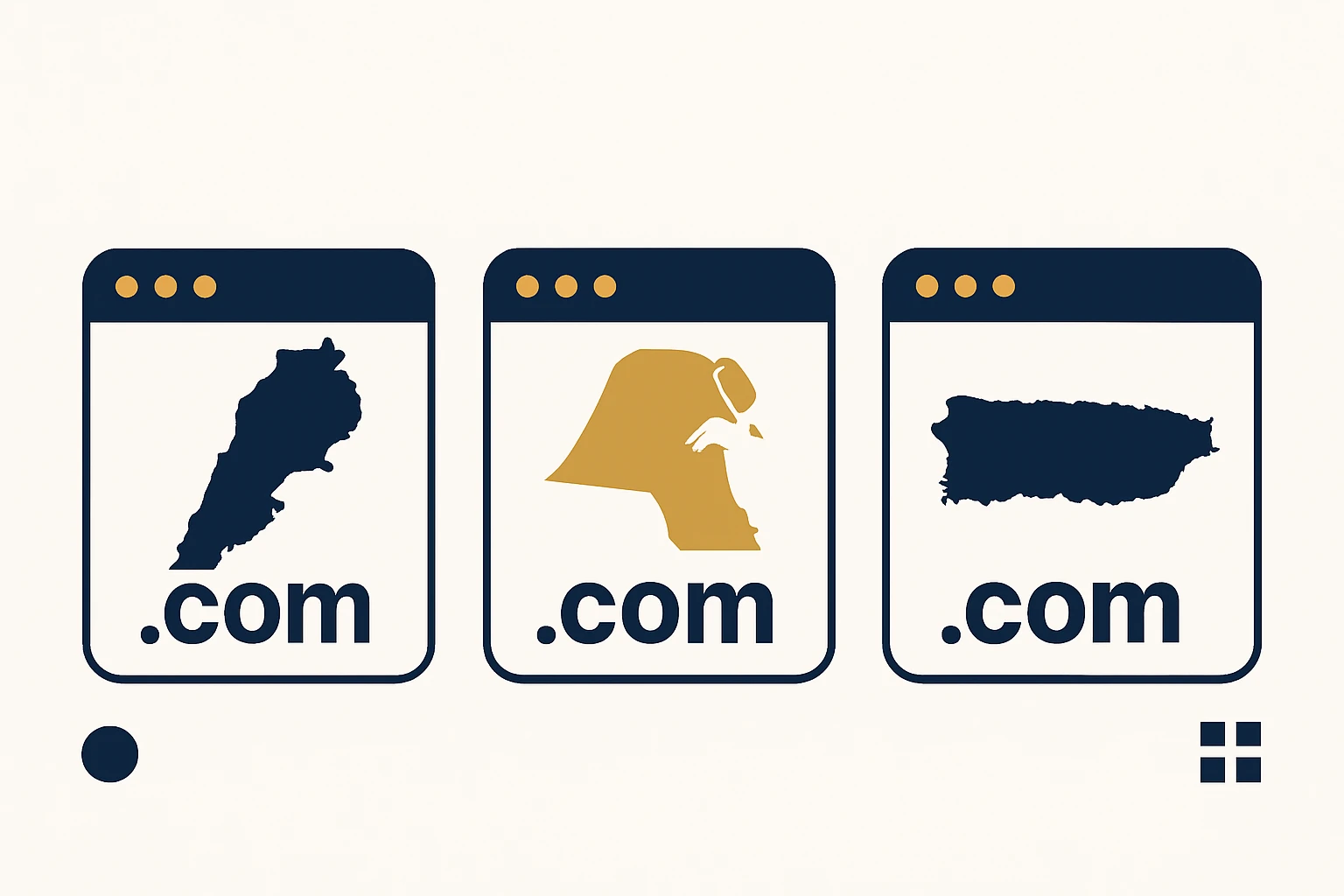
Global brands increasingly view premium domain names not merely as digital addresses but as strategic assets that anchor brand equity across markets. Yet a one-size-fits-all approach to domain strategy often falls short: what works for a U.S.-centric brand may misalign with regulatory environments, consumer behavior, or competitive dynamics in Lebanon (LB), Kuwait (KW), or Puerto Rico (PR). This article provides a practical framework for building region-aware premium domain portfolios - balancing editorial integrity, data-informed decision making, and discreet acquisition practices - so your brand can grow safely in diverse markets.
Why region-specific domains matter for global brands
Region-specific or country-code domain strategies are more than cosmetic branding. They impact discovery, trust, legal posture, and user experience. In markets like Lebanon and Kuwait, local digital ecosystems, language preferences, and regulatory landscapes shape how audiences search, recognize, and engage with your brand. Puerto Rico, while geographically close to the United States, has its own regulatory and consumer context that can influence naming choices and trademark considerations. A region-aware approach helps ensure that a brand’s digital footprint in each market supports local intent, mitigates risk, and preserves consistency across the portfolio. credible sources note the broader shift toward structured domain data access and brand protection practices as part of modern domain strategy. For example, the industry is transitioning from legacy WHOIS to RDAP for registration data, a shift that affects how teams conduct due diligence and monitor ownership across regions. (icann.org)
Regional dynamics that influence domain decisions
- Local language and search behavior: Domains that are easy to spell and remember in the target market can improve click-through and brand recall.
- Regulatory posture: Some ccTLDs impose registration prerequisites or local presence requirements, influencing domain accessibility and risk.
- Competitive landscape: Local competitors may own relevant keywords or brand terms, a regional lens helps you evaluate potential defensibility.
- Trust and perception: A locally relevant domain can enhance credibility in a market where consumers expect regional resonance.
A practical framework for a region-aware domain acquisition strategy
The framework outlined below emphasizes rigor, confidentiality where needed, and a structured approach to building a resilient regional domain portfolio. It aligns with the core services of premium domain brokerage and digital asset advisory, while remaining adaptable to different market contexts - including LB, KW, and PR. When relevant, consider supplementing your workflow with credible data sources and technology that streamline due diligence and monitoring. For context on recent shifts in domain data access, see industry overviews of RDAP replacing WHOIS for most registries and registrars.
Step 1 - Define regional priorities and defensible criteria
Begin with a clear map of regional priorities. Which markets are strategic for your growth (e.g., Lebanon, Kuwait, Puerto Rico) and why? Establish defensible criteria for target domains, such as brand-name alignment, keyword intent in the local language, trademark risk profiles, and renewal economics. This stage should align with your broader brand strategy and risk appetite. A defensible framework reduces ambiguity in later negotiation and helps measure the impact on brand protection across the portfolio.
Step 2 - Compile a region-targeted target list
Develop a region-specific target list by combining several data-driven inputs. Local consumer search patterns, local language considerations, and explicit brand- need signals help prioritize targets. In many cases, teams also map potential defensive domains to preempt cybersquatting. If you’re gathering regional inputs, you’ll likely rely on curated datasets, partner databases, and disciplined due diligence rather than ad hoc searches. A practical approach is to assemble a shortlist of candidates that meet a core set of criteria (length, memorability, pronunciation, and relevance to local markets) and then expand to defensive variants across related TLDs. In the context of LB, KW, and PR, regional specificity can yield higher resonance and lower risk of misalignment with local audiences. For reference on the ongoing evolution of registration data, see ICANN’s RDAP transition guidance. (icann.org)
Step 3 - Conduct due diligence with regional nuance
Due diligence is more than verifying ownership. It includes assessing local brand exposure, potential trademark conflicts in the target market, and the risk of state- imposed or jurisdiction-specific restrictions related to local ccTLDs. Since January 2025, RDAP has become the standard mechanism for accessing registration data in many registries, replacing legacy WHOIS in many contexts. This shift can affect how you verify ownership, monitor changes, and track ownership history across markets. Use RDAP-enabled tools and reputable data sources to ensure you’re acting on current, accurate information. (icann.org)
Step 4 - Align with brand protection and governance
A region-focused portfolio should be integrated with a broader brand-protection program. This means monitoring for new registrations that could infringe your marks, securing defensive registrations where warranted, and ensuring that regional domains are managed under consistent ownership controls and security practices. Experts emphasize that proactive domain management is essential for protecting brand identity in a multi-market environment. A practical governance approach includes lock/transfer controls, routine reviews, and clear ownership records across markets. (brandshield.com)
Step 5 - Execute confidential negotiations with discipline
Confidentiality is often a core constraint in premium domain transactions, particularly for highly strategic assets. Structure deals to protect pricing information, terms, and counterpart identities while still achieving a favorable outcome. Your negotiation stance should balance speed and discretion, leveraging an experienced broker when appropriate, and ensuring that all terms align with your brand-protection objectives. The objective is to secure the asset at a fair price without compromising ongoing brand governance.
Step 6 - Integrate into a coherent portfolio and establish metrics
Once you acquire regionally relevant domains, integrate them into a structured portfolio with explicit governance, renewal calendars, and performance metrics. Establish a semi-annual review process to reassess regional relevance, user behavior, and any new competitive or regulatory changes. This step helps translate regional diligence into ongoing value and risk mitigation across your digital assets.
Structured framework for region-aware domain portfolio building
The following framework distills the above steps into a concrete, repeatable process you can apply to LB, KW, PR, and beyond. Use it as an internal checklist or as a basis for a client-ready playbook.
- Define regional priority map: markets, objectives, risk tolerance
- Assemble a region-targeted target list with criteria
- Verify ownership and regional restrictions (RDAP/WHOIS context)
- Assess brand-protection fit and defensibility
- Negotiate with confidentiality and clear milestones
- Governance: portfolio integration, renewal discipline, performance tracking
Limitations, trade-offs, and common mistakes
Even with a robust process, region-aware domain strategies face constraints that require discipline and humility. Here are common limitations and missteps to avoid:
- Over-optimizing for a single market: Local relevance matters, but excessive localization may hinder global scalability or create maintenance burdens across multiple markets.
- Under-investing in brand protection: Defensive registrations are a balancing act, under-allocating can invite infringement, while over-allocating can drain resources.
- Inadequate due diligence due to data gaps: RDAP transitions improve data access but require updated tooling and processes to avoid blind spots, especially in ccTLDs with varied regulatory frameworks. (icann.org)
- Neglecting governance: Without clear ownership, lifecycle management, and renewal policies, premium assets can become liabilities rather than strategic advantages.
- Underestimating local market nuance: A domain that seems strong on keywords may underperform due to language, cultural resonance, or local search patterns.
Structured data and practical tools for regional domain work
In practice, teams benefit from combining governance frameworks with data-driven tooling. Regional portfolios gain from a disciplined approach to data management - verifying ownership, tracking changes, and evaluating market signals. For teams seeking practical access to large sets of domain data and regional lists, providers and data partners that offer structured RDAP/WHOIS databases can help maintain accuracy and confidentiality. For example, platforms that maintain RDAP and WHOIS databases can streamline due diligence while supporting ongoing monitoring. As markets evolve, such data foundations become a core capability of a resilient portfolio strategy. For more about data access transitions, refer to ICANN’s RDAP guidance and related background materials.
To support region-specific intelligence and asset management, consider supplementing your workflow with credible regional datasets and property lists available through trusted providers. For example, webatla’s database offerings provide structured access to RDAP/WHOIS data and domain inventories that can complement your internal workflows webatla RDAP & WHOIS Database and webatla List of domains by TLDs and webatla List of domains by Countries.
Conclusion
Region-aware premium domain portfolios are not a checkbox exercise, they are a strategic capability that supports brand protection, market entry discipline, and long-term value creation. By combining a clear regional prioritization, disciplined due diligence (now aided by RDAP-era data access), and careful governance, brands can secure regionally resonant domains that reinforce trust and growth across LB, KW, PR, and beyond. The integration of expert brokerage services with robust data platforms - such as those that provide confidential acquisition capabilities and RDAP/WHOIS databases - enables teams to move with confidence in a landscape where data quality and regional nuances matter as much as price.
For teams seeking to operationalize these practices, partnering with experienced domain brokers and digital asset advisors can help translate regional insights into executable acquisitions, defensive strategies, and ongoing portfolio management. This approach ensures your region-specific domains remain strong assets within an integrated, brand-protective framework.
Related resources and credible data sources can guide ongoing work, including industry discussions on RDAP adoption and regional ccTLD considerations (e.g., .lb, .kw, .pr). To deepen your regional domain research toolkit, explore regional domain lists and data services as part of a broader portfolio-management strategy.
Further reading and data access can be explored through credible sources like ICANN on RDAP and background materials on the transition from WHOIS to RDAP. RDAP - ICANN RDAP Background - ICANN RDAP overview.