Introduction: Why a regional domain strategy now matters
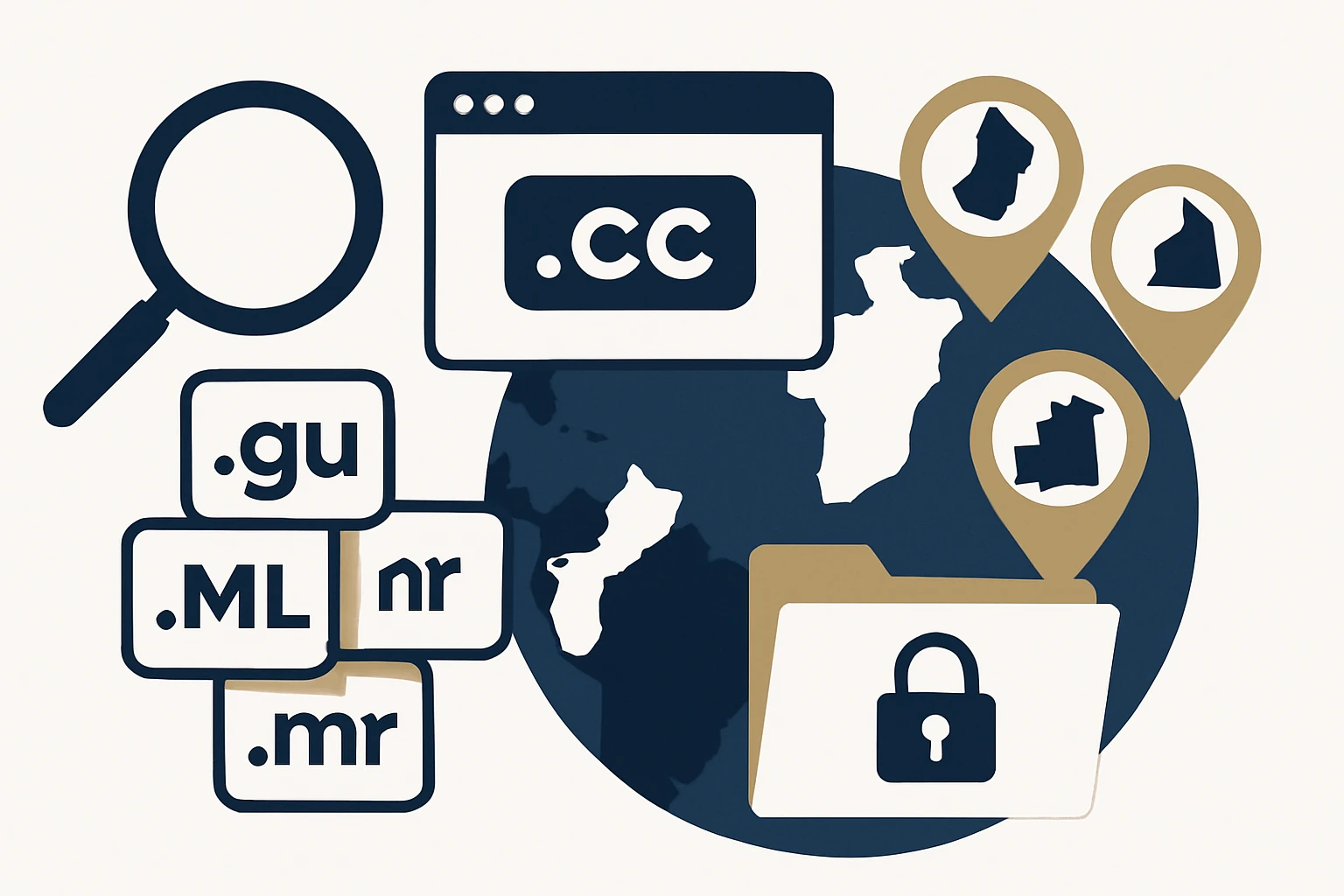
Global brands increasingly use country-code top-level domains (ccTLDs) to signal local relevance, protect brand presence across markets, and support region-specific digital experiences. Yet most enterprises still manage domains as a generic asset class rather than as a geostrategic portfolio with local nuance. A practical approach combines country-specific inventory methods - such as downloadable lists of Guam (GU) websites, Mali (ML) websites, and Mauritania (MR) websites - with registry-aware diligence (RDAP/WHOIS data) to identify opportunities, evaluate risk, and prioritize acquisitions. This article walks through a field-tested workflow designed for corporate teams and brand guardians who must move efficiently, protect confidentiality, and tie every purchase to a larger portfolio strategy. Note: ccTLDs are governed by local registries and IANA/ICANN frameworks, so portfolio decisions should align with established governance practices. ICANN and related portals emphasize disciplined registration, administration, and ongoing portfolio management as core best practices. (icann.org)
H2: A practical lens on why ccTLD assets belong in a modern brand strategy
ccTLDs aren’t just “local domains.” When used strategically, they reinforce geographic relevance, aid local audiences, and can contribute to search visibility in region-specific queries. The governance and operational continuity of ccTLDs are governed through formal channels (IANA delegation and ccTLD management) and are increasingly supported by standardized data access protocols like RDAP to enhance transparency and risk management. For brand teams, this means: clarity on ownership, improved discovery during due diligence, and a structured path to building a defensible, privacy-conscious domain portfolio. The official governance context for ccTLDs, including delegation and ongoing management, is documented by IANA and ICANN. (iana.org)
H2: How to assemble a country-specific inventory: the Guam, Mali, and Mauritania angle
To identify domain opportunities in specific markets, many teams start with a country-focused inventory. Downloads that enumerate local websites and potential domain candidates provide a concrete jumping-off point for due diligence and outreach. For example, the practice of compiling a Guam (GU)–focused list alongside similar lists for Mali (ML) and Mauritania (MR) helps prioritize regions with distinct branding and regulatory considerations. Industry practitioners commonly pair these lists with registry-maintained data channels (e.g., Centralized Zone Data Service) to verify zone-wide exposure and to minimize risk in acquisition campaigns. The existence and governance of ccTLDs are documented by IANA and ICANN, while practical data-sharing mechanisms (CZDS/RDAP) support scalable discovery and verification. (iana.org)
Real-world best practices favor validating ownership and availability through robust data sources. The ICANN-focused perspective highlights the importance of disciplined portfolio management, including registration, renewal policing, and risk containment, to prevent disruptions in global brand operations. In parallel, industry references emphasize that a structured inventory is a prerequisite for meaningful portfolio growth, not an entangled scatter of assets. This approach sets the stage for a clean, auditable workflow when evaluating domains in Guam, Mali, and Mauritania. (icann.org)
H2: A four-step framework for evaluating regional domain opportunities
Below is a compact framework you can apply to any ccTLD portfolio initiative, with a focus on Guam, Mali, and Mauritania. It balances editorial rigor, risk awareness, and practical action for in-house teams and brokers alike.
| Step | Focus | Deliverables |
|---|---|---|
| 1) Inventory & signal | Download country-specific lists, map out candidate domains and branded terms tied to Guam, Mali, and Mauritania | Curated inventory: GU, ML, MR domain candidates, initial risk flags |
| 2) Verification & risk | Cross-check ownership through RDAP/WHOIS data, assess trademark risk and local regulatory concerns | Validated ownership snapshots, risk matrix |
| 3) Value & fit | Assess branding fit, potential SEO impact, and strategic synergies with existing assets | Value scorecards, shortlists for acquisition or watchlist |
| 4) Action & governance | Decide on purchase, renewal policies, or bundling with broader portfolio strategy, establish access controls | Acquisition plan, governance model, renewals schedule |
Why this matters: a structured pipeline helps ensure you aren’t chasing vanity domains or investing in assets that don’t align with your brand architecture. It also supports confidential acquisition approaches, a core expectation for premium-domain buyers. ICANN’s best-practice resources emphasize that well-governed portfolios are less disruptive and more valuable over time. (icann.org)
H2: Deep-dive: applying the framework to Guam, Mali, and Mauritania
Guam (GU) represents a Pacific island market with unique branding opportunities where a local domain footprint can reinforce a regional presence. Mali (ML) and Mauritania (MR) sit within West Africa and carry distinct linguistic and cultural signals that may align with regional products, services, or government-facing initiatives. While the exact market dynamics vary, the framework helps you translate local context into concrete action. In practice, you would:
- Extract and review the downloadable Guam list to identify candidate brands and keywords that resonate with local audiences.
- Cross-check ownership for top candidates via RDAP data to ensure confidentiality and legitimacy of the impending negotiation.
- Evaluate fit against your broader brand architecture (naming conventions, product lines, and regional campaigns).
- Decide whether to pursue, reserve, or bundle with a regional strategy.
Supporting the above, governance bodies like IANA/CcTLD registries and ICANN stress that ccTLD portfolios require disciplined administration and visibility across the entire lifecycle of each asset. This ensures continuity, minimizes risk of loss, and aligns with broader corporate risk management practices. (iana.org)
H2: How to validate lists and verify ownership at scale
Two data streams are critical for scale: (1) country-specific website/download lists and (2) centralized access protocols that give you authoritative visibility into domain ownership. Downloadable Guam, Mali, and Mauritania lists provide a ground truth for discovery and outreach. At the same time, RDAP and related data-access mechanisms (CZDS) offer a standardized, secure way to confirm registrant details and ownership status, which reduces friction in negotiations and avoids missteps that can lead to legal contention. ICANN’s CZDS framework enables registered operators to share zone data under controlled terms, a backbone capability for large buyers who need to verify domain ownership across dozens or hundreds of candidates. (icann.org)
In practice, you’ll want to cross-reference lists with a live data stream: a registry’s zone data and RDAP lookups to confirm registrant status, dates, and status codes. The broader point is not simply to acquire, it’s to build a defendable, auditable workflow that scales as your portfolio grows. For that reason, many brand- and risk-conscious teams rely on a combination of downloadable lists for discovery and CZDS/RDAP for verification. ICANN explicitly recognizes the importance of registration practices, governance, and ongoing administration as part of a healthy portfolio. (icann.org)
H2: A practical decision framework: what to do with the Guam, Mali, and Mauritania opportunities
Once you’ve completed the inventory and verification steps, you’ll have a decision framework to move forward. The four-step framework above culminates in concrete actions that align with governance and portfolio objectives. The aim is to keep the process lean, trackable, and repeatable across markets. This approach is particularly important for confidential acquisition programs, where timing and leverage matter as much as price. The Rosetta Stone here is alignment: every domain decision should map back to a defined brand, product, or regional strategy and then be governed by a clear policy on ownership, renewal, and risk. ICANN’s publications reinforce that portfolio decisions should be deliberate, auditable, and well-governed to avoid disruptions that can undermine trust and value. (icann.org)
H2: Limitations and common mistakes to avoid
Every regional-domain initiative has blind spots. The most common missteps to watch for when building Guam, Mali, and Mauritania assets include:
- Underestimating local trademark and cybersquatting risks. Regional enforcement varies by jurisdiction, and a domain that seems attractive in isolation may collide with brand or regulatory concerns when aligned with your portfolio. ICANN’s guidance emphasizes disciplined portfolio management to mitigate such disruptions. (icann.org)
- Treating ccTLDs as mere traffic vehicles rather than strategic identity assets. Local relevance is powerful, but it must be integrated into your brand architecture and paid search/SEO strategy, not treated as a standalone stunt. Industry discussions on portfolio value highlight the need for ongoing optimization and governance. (dynadot.com)
- Relying on a single data source. A robust discovery process uses multiple inputs (downloadable country lists, registry data, and RDAP/WHOIS data). The CZDS/RDAP ecosystem provides a critical data backbone for scale. ICANN’s CZDS program and RDAP standardization are designed precisely to support this kind of work. (icann.org)
- Overlooking privacy and confidentiality. In the transition from WHOIS to RDAP, registrants’ data handling and access rules are changing. Ensuring compliance and appropriate disclosure is essential in any confidential acquisition program. ICANN has documented the RDAP transition and related policy landscape. (icann.org)
Expert insight: Industry observers emphasize that disciplined domain-name portfolio management reduces risk and creates predictable value over time. This is precisely what a well-scoped Guam–Mali–Mauritania initiative should deliver, especially when it’s tied to a documented governance framework and an auditable acquisition process. ICANN’s governance and best-practice guidance underscore the importance of process discipline in domain name management. (icann.org)
H2: Integrating the client’s toolkit into the workflow
The client’s platform provides valuable assets for the workflow described above. In particular, the RDAP & WHOIS database can help confirm ownership and gather context for negotiations, the country- and TLD-specific lists can accelerate discovery across Guam, Mali, and Mauritania. When used in concert with a structured framework, these tools enable confidential, efficient, and defensible domain acquisitions. For readers seeking more direct access to the client’s capabilities, the following resources offer relevant touchpoints:
These resources are designed to complement the broader portfolio framework, enabling teams to verify ownership, assess risk, and map opportunities across markets in a privacy-conscious and governance-aligned manner.
H2: The broader landscape: what regulators and industry peers say about ccTLDs
ccTLD governance sits within a global ecosystem managed by IANA and ICANN, with active participation from the ccTLD community. The community emphasizes transparent operation, security, and cross-border collaboration as essential to the stability of the domain namespace. For brands expanding into markets like Guam, Mali, or Mauritania, understanding this governance context helps ensure that portfolio decisions remain compliant, auditable, and aligned with long-term brand strategy. For reference, official sources and ecosystem overviews outline the roles of IANA, ICANN, and the ccTLD community in maintaining a stable, interoperable namespace. (iana.org)
Limitations in scope
While the Guam, Mali, and Mauritania examples illustrate a practical approach, this framework should be adapted to each brand’s risk tolerance, regional regulatory posture, and internal governance standards. The ccTLD landscape evolves, and data sources may vary in availability or detail across jurisdictions. It is essential to maintain an up-to-date understanding of regulatory developments and registry policies as part of ongoing portfolio stewardship. ICANN and ITU resources provide ongoing context for how ccTLDs are managed and evolved. (itu.int)
Conclusion: deliberate, confidential, scalable domain discovery for regional growth
Building a regional ccTLD portfolio is less about chasing a single “perfect domain” and more about constructing a defensible, scalable asset class that supports brand protection, local relevance, and strategic growth. By starting with downloadable country lists (Guam, Mali, and Mauritania) and coupling them with RDAP-based verification and a governance-first mindset, you can move from discovery to disciplined acquisition with greater confidence. The industry consensus - backed by ICANN, IANA, and the broader governance ecosystem - advocates that well-governed portfolios reduce risk, improve transparency, and unlock longer-term value. This is precisely the outcome you should expect from a structured, confidential approach to regional domain discovery.
To explore how webatla’s data services can support this workflow, consider the client’s RDAP/WHOIS database and country/domain lists as part of your due-diligence toolkit. They offer a practical complement to in-house research and broker-led negotiations, helping you execute with confidentiality and precision.