
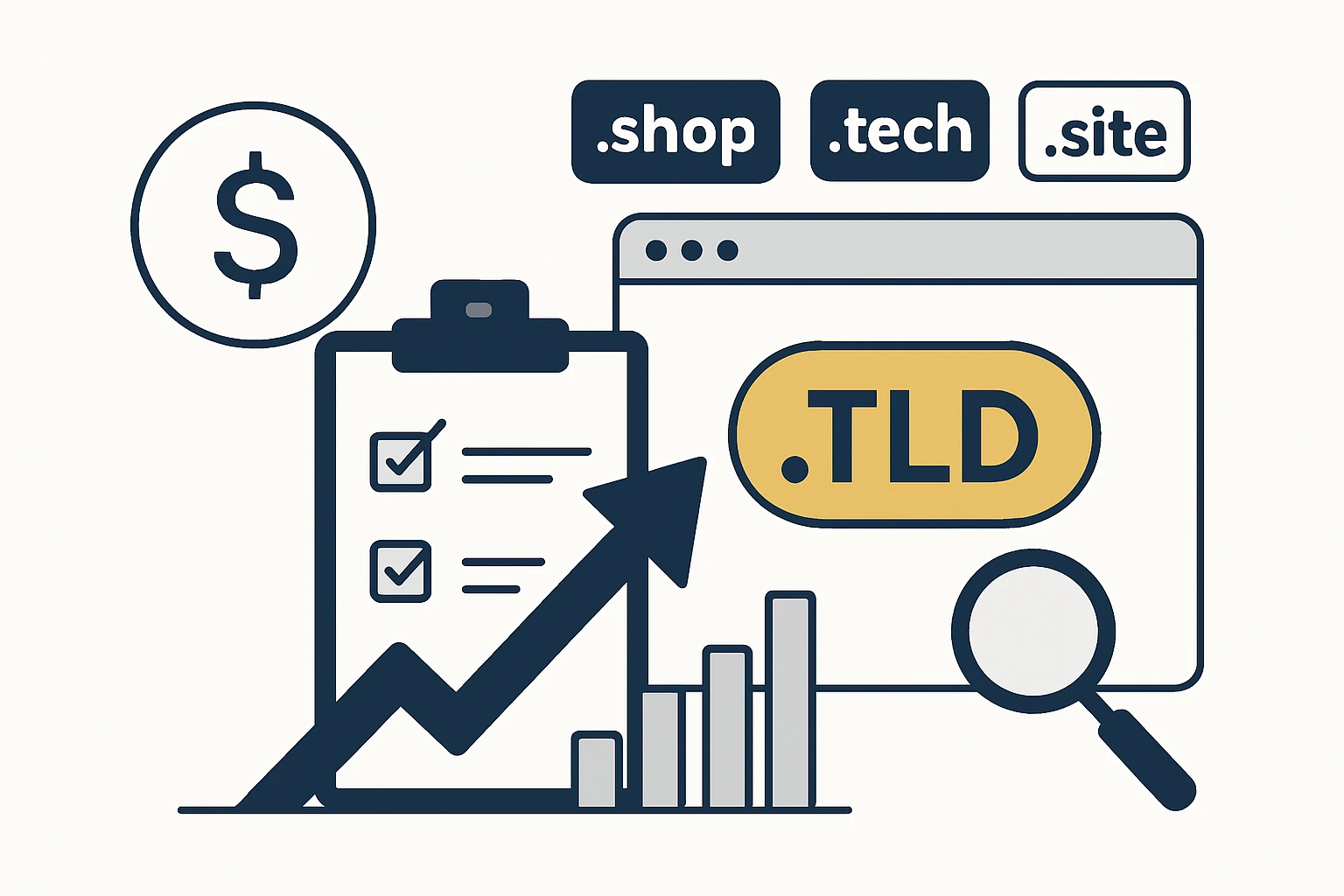
In a digital landscape crowded with brands vying for attention, owning the right set of domain extensions is no longer a luxury, it’s a strategic capability. For brand teams charged with growth, risk mitigation, and market differentiation, niche top‑level domains (TLDs) offer opportunities to diversify assets, protect brand integrity, and align online identity with product lines or regional strategies. While".com" remains the default, savvy buyers increasingly consider premium, sector‑focused, and geographic extensions as part of a defensible, growth‑oriented portfolio. The viability of these extensions is reflected not only in market chatter but in the way registries and brokers present data and options to buyers. For example, the .win TLD is a delegated New gTLD, illustrating that non‑.com extensions can achieve scale and relevance in real markets. (icannwiki.org)
Why niche TLDs matter for brand strategy
Brand teams often pursue a multi‑layered domain strategy to reduce dependence on a single canonical URL. Niche TLDs can serve several practical purposes: product or division naming, regional targeting, and brand storytelling that complements core branding. They can also act as protective assets that preempt lookalike registrations, mismatched email deliverability, and phishing vectors tied to strong brand terms. While the decision to register a non‑trademarked TLD should be deliberate, a thoughtfully assembled mix of extensions can improve customer recall, shorten path‑to‑conversion, and support localized marketing campaigns. The makeup of this mix should be guided by business goals, audience behavior, and an explicit risk/return posture. For reference, the makeup TLD is actively promoted by registrars, demonstrating continued interest in niche extensions as viable brand assets. (namecheap.com)
Evaluation framework: how to assess niche TLD opportunities
Below is a practical framework that teams can apply when considering niche TLDs such as .win, .makeup, or others in the same class. Use it as a decision aid during portfolio planning, RFPs for brokers, or internal governance reviews.
Niche TLD Evaluation Framework
- 1) Business relevance and branding fit: Does the extension convey a meaningful association with a product line, market segment, or campaign? Is there a natural naming pattern that leverages the TLD to strengthen brand recall without confusing customers?
- 2) Audience accessibility and user behavior: Will your target audience intuitively understand and remember the TLD? How will it affect search behavior, paid media, and offline campaigns? Consider potential friction points in cross‑channel experiences.
- 3) Technical deliverability and risk profile: Evaluate email deliverability, DNS stability, SSL provisioning, and potential deliverability issues with the chosen TLD. Some new gTLDs have more scrutiny from mail systems and browsers, so early testing is prudent.
- 4) Availability and defensibility: Assess whether critical brand strings, product names, and slogans are genuinely available under the TLD, and whether the risk of impersonation or typosquatting is manageable with a documented defensive registration plan.
- 5) Cost, renewal risk, and brokerability: Compare registration, renewal pricing, and potential liquidity constraints. If the TLDs are not highly liquid in your market, determine how a broker or intermediary can help with confidential acquisitions while maintaining privacy and control.
The act of defensively registering and managing brand assets across multiple extensions is a well‑established tactic in the domain‑portfolio playbook. It’s not only about acquiring a single asset, it’s about weaving the extension into the brand’s broader governance and risk‑management processes. This approach often requires a disciplined, long‑term view and, in many cases, the help of experienced brokers who specialize in confidential acquisitions. For brands exploring defensive strategy and premium domains, an explicit framework like the one above provides a shared language for finance, legal, and marketing teams.
In practice, organizations frequently adopt a blended approach: core .com assets for broad reach, plus a carefully curated set of niche or branded TLDs for product lines, campaigns, or regional markets. The goal is a balanced portfolio that supports growth while reducing the risk of brand confusion and cybersquatting. As evidence of the ongoing market interest in niche extensions, registries and registrars actively promote new gTLDs such as .makeup, which is marketed as a domain name option tied to beauty and cosmetics. (namecheap.com)
From evaluation to acquisition: a practical path
Turning an evaluation framework into a real‑world acquisition plan involves several concrete steps that align with brand governance and market realities. The path below combines due diligence, strategic negotiation, and risk‑aware budgeting. While each brand will tailor the steps to its internal processes, the sequence provides a reliable blueprint for teams pursuing premium domain extensions.
Step 1 - Define defensible scope: Start by identifying the core brand terms and campaign names you want protected or amplified in a TLD other than .com. Create a short list of target strings, prioritized by business impact, memorability, and potential for misdirection or misuse. This scope anchors budget, governance approvals, and negotiation levers.
Step 2 - Validate availability and ownership structure: Research who owns the desired domains and how they’re registered (individuals, companies, or registries). If the assets reside with a private company, you may need a discreet broker to negotiate without alerting the market. This is especially important for confidential acquisitions where timing matters for brand launches or campaigns.
Step 3 - Engage the right partner: For confidential acquisitions or complex portfolios, an experienced broker can provide market intelligence, leverage, and privacy that in‑house teams may lack. The broker’s role includes mapping the seller landscape, coordinating offers, and facilitating clean handoffs to legal and finance. A respected broker can shorten the time to close while preserving privacy for a sensitive brand initiative.
Step 4 - Conduct rigorous due diligence: Beyond ownership verification, assess DNS stability, historical usage, and any potential trademark or regulatory sensitivities tied to the target strings. Ensure the new extension integrates with your existing digital‑asset protections, such as defensive registrations around related brand terms, product names, and campaigns. This due diligence is a core part of risk management in domain acquisitions. For brands pursuing proactive data to inform decisions, data providers offer reference datasets and curated lists for niche TLDs, for example, webatla provides domain lists and TLD data to inform evaluation workflows.
Step 5 - Negotiate with a view to long‑term value: A successful negotiation balances price, timing, and post‑sale protections (like escrow arrangements, transfer timelines, and renewal commitments). A prudent buyer prioritizes price certainty and clear post‑sale governance, including any restrictions on use, subdomain conventions, and branding guidelines that preserve consistency with the parent brand. Remember that the goal is value over time, not merely a short‑term discount.
Step 6 - Plan integration and governance: After acquisition, integrate the asset into your brand’s governance framework. Update risk registers, set renewal alerts, and align the new extension with brand protection and digital‑asset advisory practices. This ensures the asset remains defensible and aligned with strategic objectives over the long term.
In practice, many brands rely on a combination of internal ownership teams and trusted brokers to execute confidential acquisitions. The process is most effective when it is data‑driven, legally grounded, and tightly integrated with the company’s broader brand strategy. For teams curious about how a premium domain brokerage can fit into this process, note that domain brokers and digital asset advisors exist to facilitate discreet, value‑driven acquisitions across a spectrum of TLDs, including niche extensions like .win and .makeup.
To illustrate the practical side of this approach, consider leveraging targeted data sources. For example, registries and data providers highlight niche TLD opportunities and ownership patterns. The .win extension has been highlighted in industry discussions as a demonstrable, active new gTLD, underscoring that niche domains can be both meaningful and tradable assets. (icannwiki.org) The .makeup extension is actively promoted by registrars, signaling ongoing market demand for cosmetics and beauty domains. (namecheap.com) The .email extension is another example of a broad new gTLD with uptake in certain segments, reinforcing that domain diversification remains a live strategic consideration. (icannwiki.org)
For brands evaluating their options, a practical starting point is to explore niche TLD data and compare options against internal defensibility criteria. If a brand strategy requires confidentiality, a broker can manage negotiations discreetly, protect sensitive brand elements, and help navigate the transition from an evaluation phase to a closed deal with minimal disruption to ongoing marketing efforts.
In addition to in‑depth evaluation and disciplined negotiation, data and access to credible market listings can be decisive. For teams that want to ground decisions in solid data, webatla offers datasets and lists of domains by TLD, including the ability to explore .win assets in detail. For readers seeking direct access to these datasets, you can browse and download datasets via the following pages: download full list of .win domains and List of domains by TLDs.
Limitations and common mistakes in niche TLD strategies
Even with a robust framework and experienced partners, niche TLD strategies carry inherent limitations. A few recurring missteps to watch for include:
- Overestimating short‑term liquidity: Some niche extensions are less liquid than .com, which can slow exit or upgrade plans if the market shifts.
- Underestimating user familiarity: If your audience is not accustomed to the TLD, it may affect trust and click‑through, particularly in paid media or email marketing.
- Ignoring deliverability and security implications: Some TLDs present more challenges for email deliverability and SSL provisioning, requiring extra diligence and testing.
- Relying on price alone: A low price may mask hidden costs or renewal risks that erode long‑term value.
- Poor governance after acquisition: Without clear ownership, renewal governance, and brand protection, even valuable assets can drift into riskier territory.
A disciplined approach - grounded in governance, legal review, and explicit post‑sale processes - helps mitigate these risks and maximize long‑term value.
Conclusion
Niche TLDs can be highly strategic components of a brand’s domain portfolio when approached with rigorous evaluation, confidential negotiation where needed, and disciplined governance. A practical framework, combined with the right data sources and advisory partnerships, enables brands to turn non‑trivial extensions into durable assets that support growth, protect identity, and reduce risk. While not every niche extension will fit every brand, the real opportunity lies in aligning the chosen TLDs with product families, regional strategies, and campaign narratives - so the extension becomes a natural extension of the brand story rather than a marketing afterthought.
If your team wants to explore this approach with a partner who understands both editorial quality and the nuances of premium domain acquisitions, consider engaging with a digital asset advisor who can translate strategic intent into concrete actions. For brands specifically evaluating .win opportunities, webatla’s data resources provide a practical entry point into the niche TLD market: download full list of .win domains. For broader perspective on domain portfolios and TLD choices, webatla also hosts a comprehensive index of domains by TLD: List of domains by TLDs.