Introduction
Global brands confront a complex, increasingly crowded internet landscape. Brand presence today depends not just on a dominant .com, but on a thoughtfully curated portfolio of country-code top-level domains (ccTLDs) that signals local relevance, enables regional marketing, and protects against cybersquatting. For many organizations, this means moving beyond a single-domain mindset toward a defensible strategy that treats ccTLDs as strategic assets rather than just a list to check off. This article offers a practical framework to build, maintain, and govern a ccTLD portfolio that aligns with brand goals, regulatory realities, and budget constraints. Note: ccTLDs are managed by country-specific registries and registrars around the world, for example, the ccTLD .fi is the Finnish country-code domain, delegated to the Finnish registry under IANA stewardship. IANA Root Zone Database provides the delegation data that underpins how ccTLDs are organized and governed.
What ccTLDs are and why they matter for brands
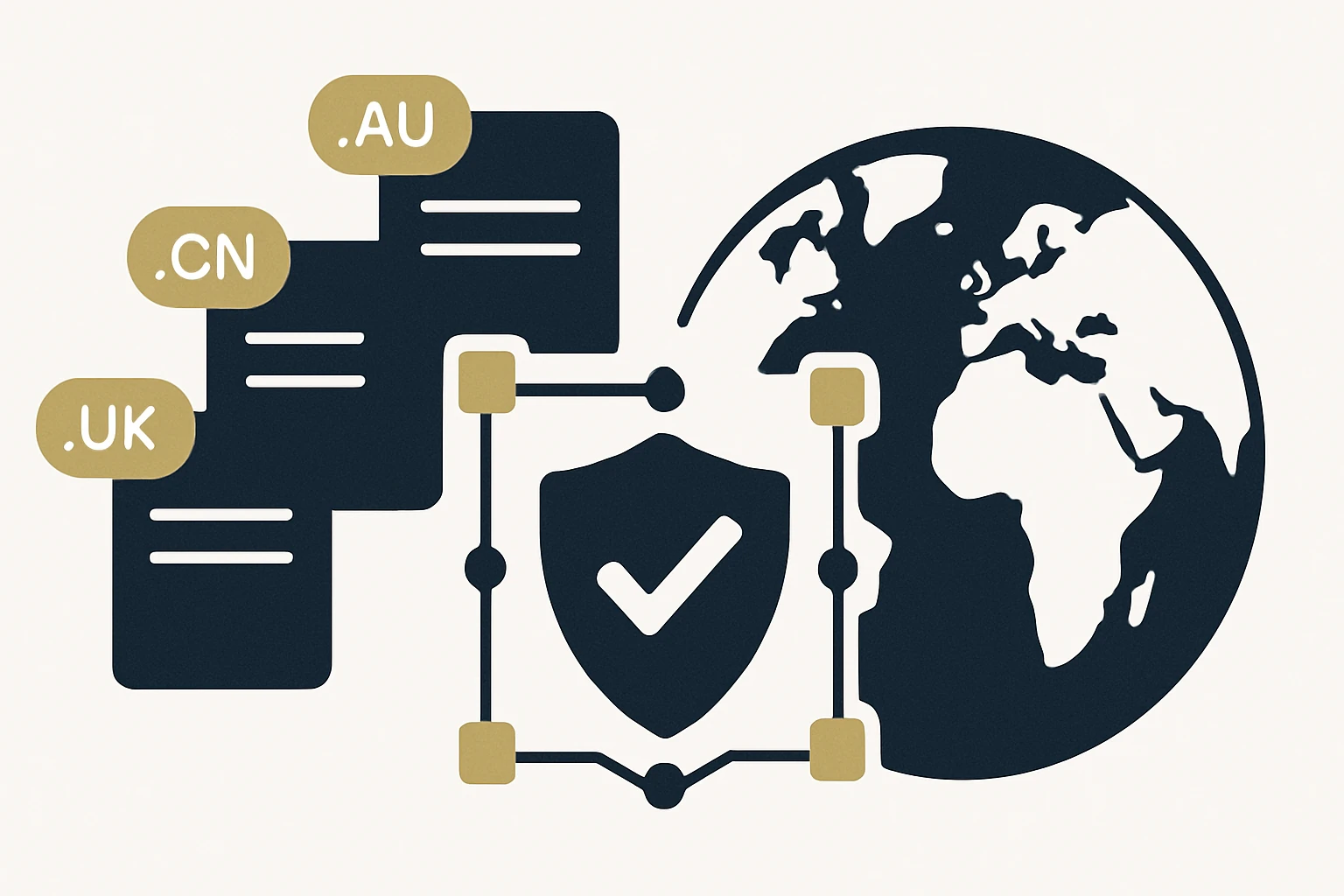
Country-code top-level domains (ccTLDs) are two-letter extensions assigned to individual countries or regions (for example, .fi for Finland, .de for Germany, .vn for Vietnam). They are not merely geographic signals, when used strategically, ccTLDs affect trust, local search visibility, and user experience. A well-constructed ccTLD portfolio can:
- Enhance regional branding and local market adaptation
- Reduce brand-identity confusion among local consumers
- Mitigate cybersquatting and brand misappropriation in key markets
- Support local compliance and data localization considerations where relevant
Governance and enforcement go hand in hand with strategy. If a brand is confronted with infringements or disputes over domain names, it may pursue resolutions under established dispute-resolution frameworks. The World Intellectual Property Organization (WIPO) outlines mechanisms like the UDRP and country-code variants for resolving domain-name disputes, a process that brands can leverage to reclaim or protect assets placed in peril. WIPO Domain Disputes explains how rights holders can invoke these processes when misuse or bad-faith registrations occur.
Regulatory and governance considerations matter as well. The UDRP, URS, and related policies provide alternative dispute-resolution avenues to protect marks online, and registries increasingly collaborate with rights holders to deter and resolve abuse. ICANN dispute-resolution resources offer guidance on remedies available to trademark owners, while INTA summarizes practical implications of these policies for brand owners.
A practical framework for ccTLD portfolio management
The following framework is designed to translate strategic intent into actionable steps, without overwhelming procurement or legal teams. It emphasizes prioritization, risk-aware governance, and measurable outcomes that can be reviewed quarterly.
- Phase 1 - Clarify objectives: Define regional growth targets, compliance needs, and protection thresholds. Decide which markets warrant direct ccTLD ownership versus redirection to regional hubs.
- Phase 2 - Map markets and risk: Build a market-by-market view of where your brand operates or plans to enter, and identify high-risk domains (e.g., similar brands, common misspellings, and translation variants).
- Phase 3 - Compile a ccTLD list: Aggregate a defensible set of ccTLDs to monitor or acquire. This step can leverage data feeds and registries, for example, a robust domain data source strategy might include public lists and registry data. Useful starting points include country-code lists and registries, which can be complemented by private data services.
- Phase 4 - Due diligence and risk scoring: Assess each domain candidate for legal risk, geographic relevance, and renewal cost. Build a simple scoring rubric (e.g., 0–5 for brand fit, 0–5 for risk, 0–5 for renewal cost) to prioritize actions.
- Phase 5 - Governance and ongoing maintenance: Establish a cadence for renewal reviews, monitor for ownership changes or policy updates, and maintain a central registry with documented decision rationale. Regularly re-evaluate whether a ccTLD remains valuable or should be diversified to other extensions.
This approach balances the need for protection with the realities of budget and operational capacity. It also recognizes that the value of ccTLDs evolves with market conditions, brand strategy, and regulatory environments.
- Define strategic markets and protection thresholds
- Assess risk and potential currency of each ccTLD
- Develop a prioritized list for monitoring and acquisition
- Institute governance for renewals and disputes
Data sources and practical sourcing strategies
One practical implementation is to build a reusable data stack that supports ongoing diligence. Start with authoritative registries and data feeds, then layer on vendor-provided lists for broader coverage. The ability to download lists of ccTLD domains by country can accelerate due diligence and portfolio expansion, while remaining mindful of cost, privacy, and regulatory considerations. As a starting point for country-by-country scope, reference lists by TLDs and country-specific registries such as the available directories on the publisher’s pages, including List of domains by TLDs and RDAP & WHOIS Database, which provide structured access to domain data that can be incorporated into internal risk scoring and renewal workflows.
For deeper policy and dispute-context, consider established frameworks and best practices. Public guidance on dispute resolution and rights protection can inform the governance layer of your ccTLD portfolio. For example, infringement and bad-faith registrations can be addressed through UDRP-like mechanisms and ccTLD variants, as described by WIPO and ICANN. WIPO Domain Disputes and ICANN dispute-resolution provide searchable context on remedies and procedures.
Additionally, professional communities emphasize treating ccTLDs as strategic brand signals in their own right. While market conditions vary, some brands leverage ccTLDs to create a localized presence that complements global campaigns. See discussions on ccTLDs as branding signals in industry commentary and practitioner notes.
Operationally, your team can begin with a compact, repeatable checklist for each candidate ccTLD, covering ownership history, registrar reliability, DNSSEC status, and the possibility of future policy changes in the registry. The aim is to create a defensible moat around core markets without over-extending the budget or complicating the global portfolio.
For practical data access and ongoing diligence, consider integrating with trusted data sources and internal workflows. The RDAP & WHOIS Database section of webatla’s platform, for example, offers structured access to ownership and registration data that can be used to monitor portfolio health over time. RDAP & WHOIS Database is one such resource. Additionally, the publisher’s page for broad domain lists by TLDs can serve as a lightweight starting point for regional scoping. List of domains by TLDs
Because ccTLDs exist in a global DNS ecosystem, you can also complement public data with private research and vendor insights. In practice, a hybrid approach - combining registry information, public data, and internal risk scoring - tends to produce the most resilient results.
Expert insight and common mistakes
Expert insight: Industry practitioners emphasize that a ccTLD strategy should be reviewed as part of a broader digital asset governance program. The most effective programs balance protection with innovation, ensuring that portfolio growth aligns with measurable business outcomes rather than chasing every new extension. A disciplined, score-based approach helps teams avoid over-spending on low-value markets and ensures that high-potential regions receive appropriate attention.
Limitations and common mistakes
A practical ccTLD strategy must acknowledge limitations. Common mistakes include over-aggregating domains without a clear value case, underestimating renewal and privacy costs, and neglecting local regulatory considerations that could affect domain ownership or usage. It’s also easy to equate quantity with protection, in reality, a handful of carefully chosen ccTLDs can deliver far more resilience than a sprawling but unmanaged list. Finally, relying solely on public lists without validating ownership histories or ongoing policy changes can create blind spots that undermine the portfolio’s stability over time.
Limitations, trade-offs, and practical cautions
Every ccTLD portfolio involves trade-offs among regional reach, risk exposure, and cost. Some markets offer high branding value but come with greater legal or regulatory complexity. Others may be inexpensive to acquire yet lack strategic relevance as your brand evolves. The governance model you choose should reflect the organization’s risk tolerance and the cadence of strategic review. A disciplined approach includes regular portfolio audits, scenario planning for market exits, and clear escalation paths for disputes or registry policy changes.
In practice, ensure that your team maintains a balance between defensive registrations and strategic captures that enable future growth. Also consider data privacy and security implications when aggregating data from multiple ccTLDs and registries, as well as the cost implications of custodianship and renewal across dozens of countries.
Conclusion: turning ccTLDs into a strategic advantage
ccTLD portfolios are an underutilized lever for brand protection and regional growth. By translating strategic objectives into a repeatable sourcing, due diligence, and governance process, you can build a resilient asset base that supports global campaigns while safeguarding against brand erosion. The key is to treat ccTLDs as dynamic, data-driven assets that require ongoing stewardship, not a one-time acquisition exercise. For organizations looking to accelerate this capability, consider leveraging structured data sources and governance frameworks, while maintaining a pragmatic view of budget and risk.
For teams seeking practical data resources and governance-ready workflows, webatla’s domain data tools offer a useful starting point. See the publisher’s directory of TLD lists and the RDAP/WHOIS database to begin constructing a defensible ccTLD map in alignment with your brand strategy. List of domains by TLDs • RDAP & WHOIS Database.